
Burano in half a day: a walk beyond the colourful houses
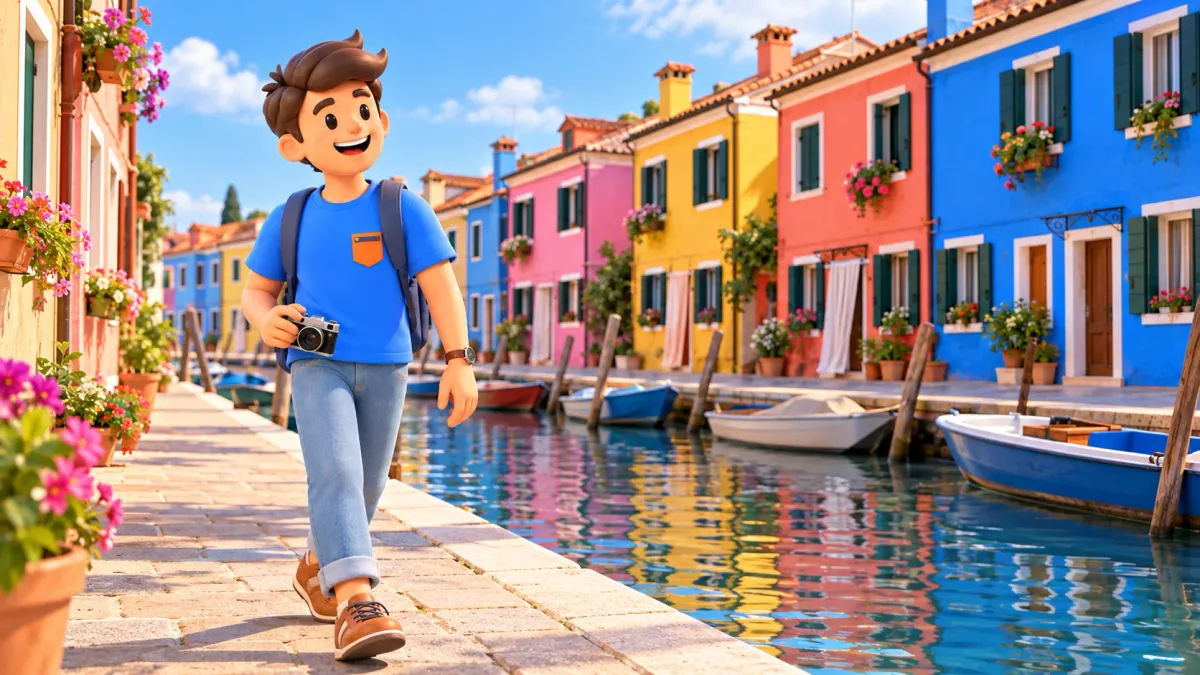
Give Burano about three and a half hours on the island itself: follow the canals, make a short detour to Casa Bepi, reach Piazza Galuppi, visit the Lace Museum and return via Tre Ponti. Add the boat journey, waiting and your walk to the Venice departure landing separately. The painted houses then become the beginning of the visit rather than its only subject.
The main plan includes an hour in the museum, but no church interior or long restaurant lunch. The museum closes on Mondays; removing it leaves about two and a half hours outdoors. If lace is your main reason for coming, choose another day. There is also a separate two-hour exterior version below.
Decide which Burano you want to discover
Burano readily becomes a postcard: bright walls, a boat and a reflection. The visit gains depth when you add a second subject. Here that subject is lace, a craft asking for a different speed of looking. Large blocks of street colour and tiny patterns inside a display case make an engaging contrast without requiring specialist knowledge.
Try RoadMe for a fully worked-out personal trip plan based on your interests, dates and pace. Planning in the app makes it much easier to connect Burano, art and Venice walks into a programme that suits you, with room for transfers and rest.
This visit suits travellers willing to pause over details as well as take pictures. With children, try finding one colour on a wall, a shutter and its reflection, then compare a large street pattern with a small lace motif. It is an invitation to notice things, rather than a task to collect a fixed number of photographs.
The island remains a residential place. A colourful doorway is not a portrait prop, and washing or flowerpots should not be rearranged for a composition. Stay on public paths and ask before photographing someone closely. Respecting those ordinary boundaries reveals more than trying to occupy the perfect doorstep.
Work out the boat journey first
The route begins and ends at the ACTV Burano landing. From Fondamente Nove, line 12 is a main option, but check the actual service and direction for your date. A hotel, the railway station and San Marco create different starting journeys, so one universal transfer time would be misleading.
Count the whole journey: walking to the correct landing in Venice, waiting, crossing and getting ashore. Allow the same elements on return. Short island distances do not mean you can finish sightseeing and instantly reach central Venice. Be particularly careful when an evening ticket has a fixed admission time.
On arrival, note the return departure area and read the current boarding information. Move out of the passenger flow before heading towards San Mauro. The first few minutes are useful for orientation and deciding when to reach the museum, rather than immediately hunting every famous camera angle.
A three-and-a-half-hour island plan
These are estimated planning allowances, not an on-the-ground timing test by the author. All walking between stops is collected in one line, including the route back to the boat. Arrange the museum early enough to avoid a rushed finish; the exterior stops around the square can change order.
- 15 minutes: disembarking and orientation.
- 25 minutes: canals and painted houses around San Mauro.
- 10 minutes: Casa Bepi from outside.
- 20 minutes: Piazza Galuppi, San Martino and its tower outside.
- 60 minutes: the Lace Museum.
- 15 minutes: Tre Ponti and the canal junction.
- 30 minutes: all walking between stops.
- 25 minutes: a small snack or drink.
- 10 minutes: flexibility.
The total is 210 minutes on Burano. Extend it for substantial shopping or a proper restaurant meal. A church interior needs its own addition too; it cannot be fitted simply by deleting all movement from the calculation. An estimate helps you choose priorities, not guarantee the same outcome in every crowd.
San Mauro and Casa Bepi: colour without rushing
Begin along the canal paths around San Mauro and work towards Via Baldassarre Galuppi. Look at one group of houses from different distances: across the canal, then at nearby doors and shutters on your own side. A pale frame, dark opening and narrow strip of plaster can affect the impression as much as the wall’s brightness.
A reflection need not be perfect. Ripples, a passing boat or overcast light create another pattern rather than a failed visit. Compare a wall with its changing reflection instead of waiting for complete stillness. This small shift keeps the experience from becoming a search for one photograph that thousands of people already have.
The story that fishermen recognised their painted homes through the fog is best treated as local legend, rather than a proven explanation of every facade. The walk offers enough that is visible now: neighbouring houses, small entrances, boats and paths beside water. A pleasing story does not need more certainty than the evidence supports.
From Via Baldassarre Galuppi, make a short detour to Casa Bepi around Calle del Pistor, then return to the main route. Its geometric decoration provides a contrast with a single-colour wall. The ten-minute allowance is for looking outside, not entering the house or staging a lengthy photo session in a narrow residential space.
If other visitors are already gathered, look quietly and move on. Choosing one fragment of the composition to remember can be enough without another photograph. There are still a museum, a square and more canals ahead, so the first unusual facade does not need to absorb the entire spare allowance.
Piazza Galuppi changes the scale
Return to Via Baldassarre Galuppi and follow it towards the square of the same name. Both commemorate the eighteenth-century composer Baldassare Galuppi, born on the island. That brief context adds another cultural connection beside craft. You do not need to recognise his music to see that Burano’s links with Venice extend beyond boat routes.
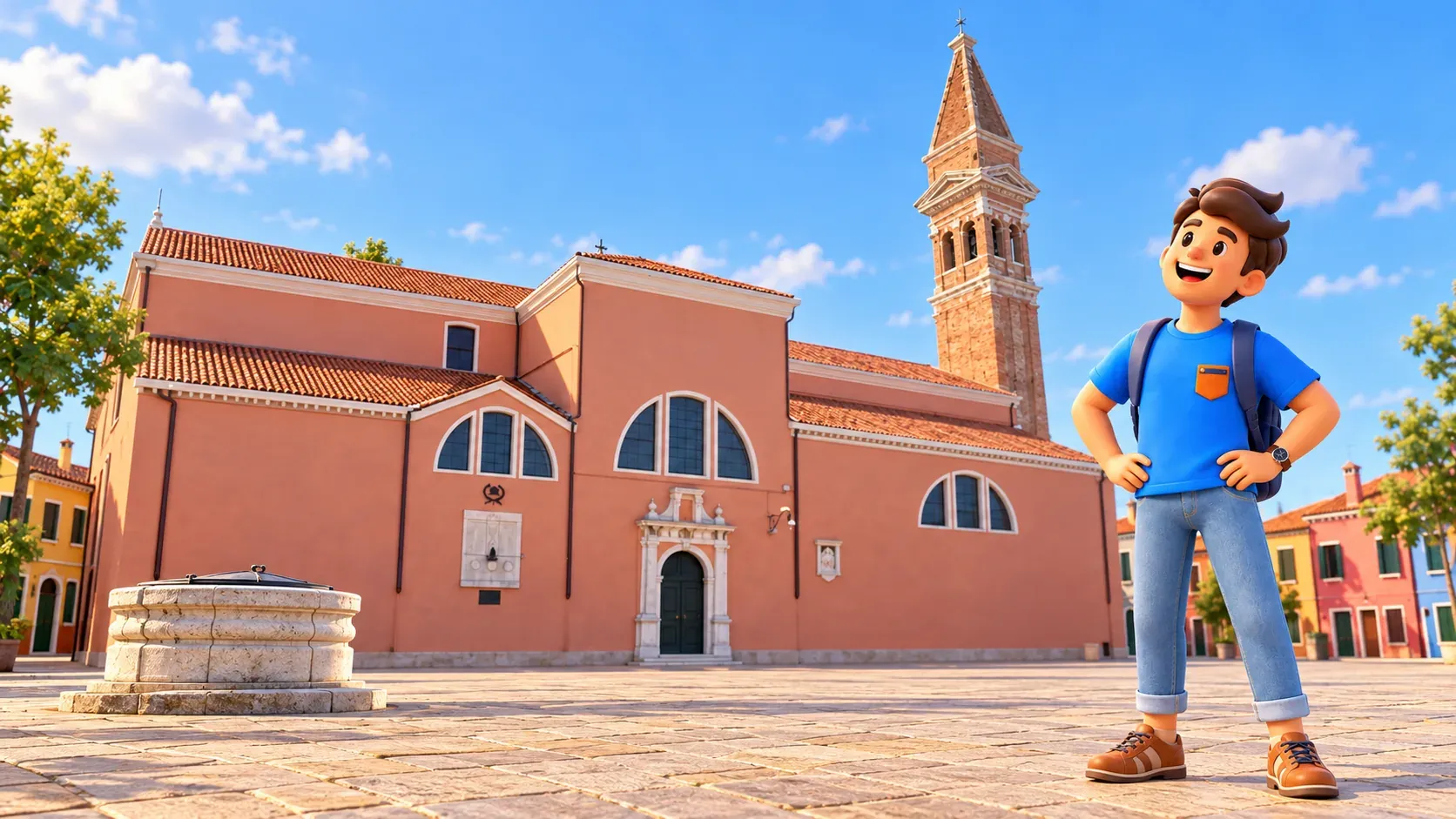
After narrow passages, the square gives you space to see church and museum together and reconsider the order of your visit. Do not search for San Martino as though it were an enormous ceremonial basilica in central Venice. Notice the long wall facing the square, the windows and the tower’s position among the surrounding roofs.
The basic stop allows twenty minutes outside. If the museum slot is better now, enter first and return to the church exterior afterwards. Those small movements around the square permit flexibility. They do not justify leaving the whole collection until closing time: attractive evening facades do not extend the museum’s day.
The Lace Museum rewards a different kind of attention
The museum opened in 1981 in the historic lace school established in 1872. This connects the collection with its setting: it is not simply beautiful textiles gathered in a convenient building, but a place associated with preserving knowledge through teaching. Think of the displays as work and learning as well as decorative objects.
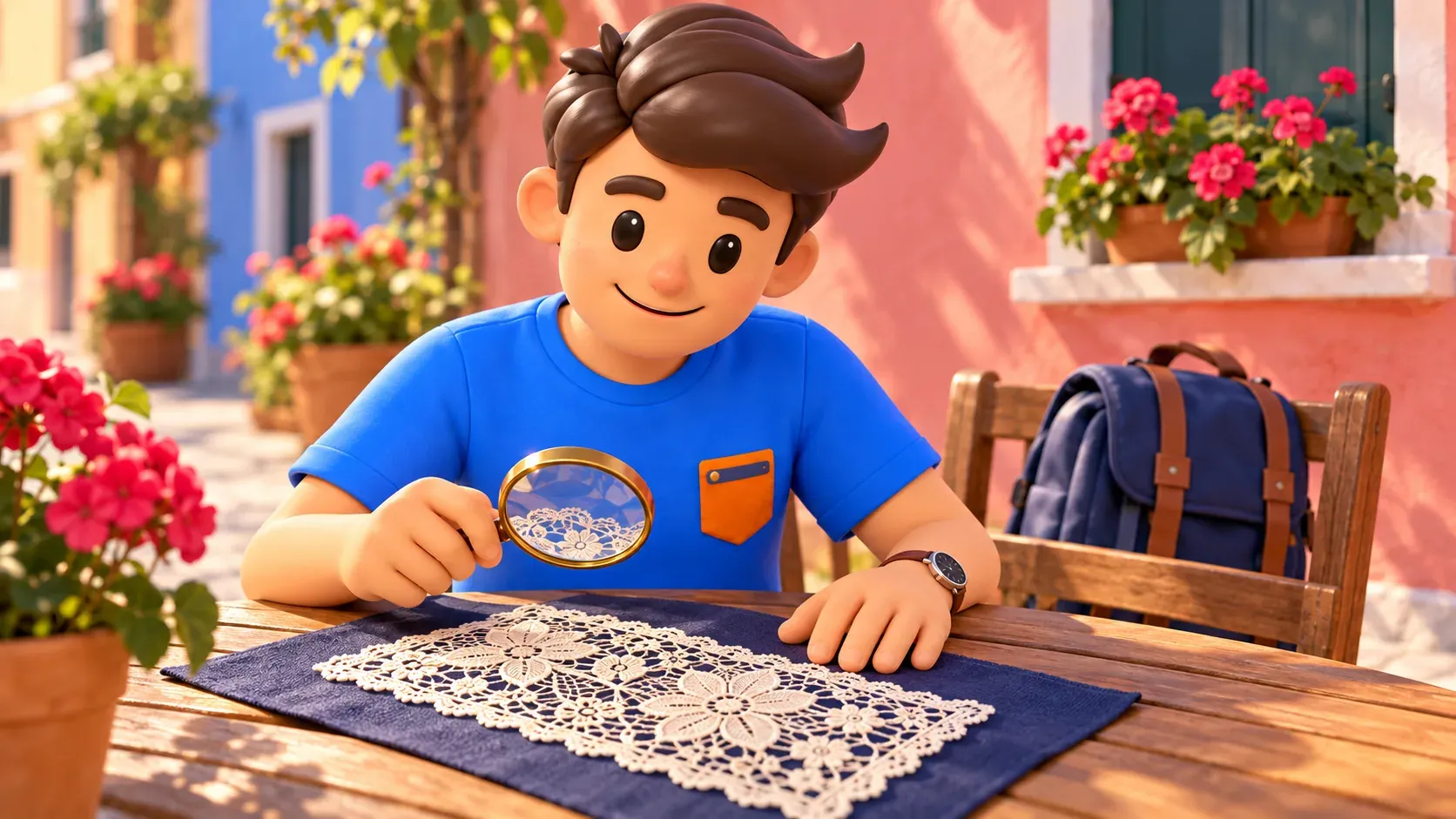
Allow roughly an hour for an introduction. Choose several pieces and look at the relationship between open and filled areas, where a pattern becomes dense and where it almost disappears. Learning every technique is unnecessary. If a small piece of lace looks more interesting afterwards, the visit has already changed your understanding.
Checked on 17 October 2026, the museum lists 10am–4pm, last admission at 3.30pm, and Monday closure. Arriving at last admission does not leave a full relaxed hour. Choose a suitable part of the day first, then arrange the canals and break around it. Recheck the calendar before travelling.
The museum also describes lacemakers working there, with its Italian history page mentioning mornings. If watching live work matters, ask about your chosen date. A collection visit is not a guaranteed personal demonstration at every moment. Do not promise children an activity with a needle until that specific format has been confirmed.
Leave buying lace as a separate decision after seeing the collection. Ask about a particular item’s origin, technique, maker, care and documentation. The place of sale does not establish that every object was handmade locally. Neither price nor neatness alone is a reliable authenticity test; answers about the actual piece matter more.
San Martino and Tre Ponti: two different landmarks
The present San Martino reflects rebuilding in the sixteenth and seventeenth centuries and was consecrated in 1645. Its bell tower belongs to the early eighteenth century. They are different historical parts of one familiar silhouette. Compare the tower with neighbouring vertical edges rather than tilting your horizon to exaggerate the lean.
A tower climb is not included. For the church interior, add about thirty minutes and check access. The parish currently lists opening from 8am to noon and 3pm to 7pm, with tourist visits suspended during liturgical celebrations. This differs from continuous hours in some directories. Tiepolo’s Crucifixion offers a reason to consider the interior when it fits, while services retain priority.
After the square, head towards Tre Ponti on the western side of this loop. The name identifies a distinctive connection of banks and waterways, not three attractions scattered around the island. Look along several canal directions and compare the houses with those at the start. Keep the crossing clear rather than taking a long sequence of nearly identical pictures.
With RoadMe, you can get a personal itinerary for the whole trip, giving craft, history or relaxed walks the emphasis you prefer. Try planning in the app to make each day’s pace and island experiences fit more comfortably with the rest of Venice.

Finish without a race to the next boat
The 25-minute break suits a drink or small snack, not a promise of a quick multi-course lunch. You could try a ring-shaped bussolà biscuit or the S-shaped version. Choose from the actual selection and ask about ingredients if needed. A simple edible souvenir can be a pleasing alternative to a prolonged search for a complicated purchase.
Return from Tre Ponti to the original Burano landing. Mazzorbo and Torcello are not hidden additions to these three and a half hours: each needs its own journey and allowance. Without the museum, remove sixty minutes for an approximately 150-minute outdoor visit. For a still shorter introduction, omit Casa Bepi as well and use the separate two-hour version.
That version gives fifteen minutes to arrival, twenty-five to canals, twenty to the square, fifteen to Tre Ponti, twenty-five to all walking, and ten each to a pause and flexibility. Boats remain additional. For mobility needs, check the specific crossings and museum access; a lift inside one building does not make every island bridge step-free.
Bring water, account for wind and rain, and watch children beside open banks. For another craft subject, use the Murano half-day walk; the three-day Venice plan with art and islands helps distribute visits across days. Burano can have a clear half-day of its own, rather than becoming a hurried interval between crossings.


