
NoLo and Casoretto: An Unhurried Neighbourhood Walk in Milan
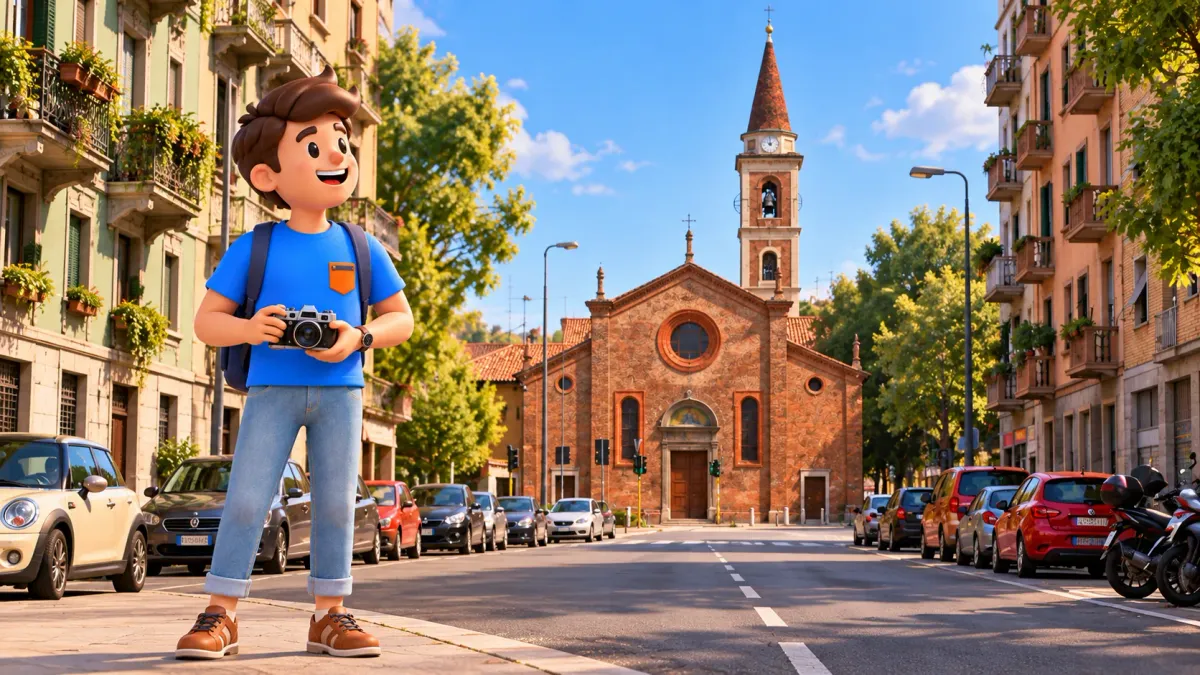
For a quieter change of focus in Milan, give NoLo and neighbouring Casoretto about two and a half hours. Begin at Piazza Morbegno, walk towards Parco Trotter for a short loop among its trees and school pavilions, then finish outside the brick abbey church on Piazza San Materno. Choose a weekend morning for the simplest version: Trotter is a working school compound, so its public opening hours differ from those of an ordinary city park.
Choose a neighbourhood walk with room to notice
This outing suits a second visit, an unhurried morning or anyone interested in the spaces between Milan’s major attractions. The two main places drawn from our city collection are Parco Trotter and the Abbazia di Casoretto, also called Santa Maria Bianca della Misericordia. Piazza Morbegno gives the walk a sociable beginning. You will spend more time looking at streets and public space than following a sequence of indoor visits.
Try RoadMe to develop a personal trip plan around your interests, dates, pace and budget. Preparing the whole stay in the app is more convenient and efficient when you want neighbourhood time, major visits and rest to fit naturally together.
The suggested allowance is 150 minutes, including a short refreshment stop and flexibility. Expect roughly 2.5–3.5 kilometres outdoors with changes of viewpoint and a modest park loop. That is an editorial estimate, not a measured navigation track. Start the clock on Piazza Morbegno and finish on Piazza San Materno; getting there and travelling onwards require additional time.
| Part of the outing | Suggested allowance |
|---|---|
| Piazza Morbegno and its street fronts | 20 minutes |
| Parco Trotter: a short public-path loop | 35 minutes |
| Casoretto abbey: square and exterior | 20 minutes |
| All connections, crossings and viewpoint changes | 50 minutes |
| A drink or seated pause | 15 minutes |
| Flexibility | 10 minutes |
The fifty minutes covers the connecting walking throughout the programme; do not add it again between stops. A full meal, a long church visit or a film needs a larger allowance. The pleasure of this walk comes from keeping its scale modest enough to enjoy the places you have chosen.
NoLo: a newer name for established streets
NoLo means North of Loreto. It is a contemporary neighbourhood name rather than the surviving title of a medieval village. Around it are established residential streets, businesses and a mixture of communities. Casoretto lies towards Lambrate and supplies a different historical anchor at the end of the outing. Think of the walk as a connection between neighbouring areas, not a rigid boundary tour.
You may find descriptions of NoLo centred on bars, galleries or street art. Those are useful ways into the district, but they do not need to control your visit. Here the focus is daytime street life, a park with an educational history and an older religious building surrounded by housing. A place can be interesting without supplying a famous monument at every turn.
Bring attention to ordinary things: the way a shop occupies a ground floor, the depth of a balcony or how trees change a residential street. There is no promise that every business is open or that the neighbourhood is always quiet. Deliveries, traffic and people going about their day are part of the setting you have come to see.
Piazza Morbegno: begin at the scale of everyday life
Start on Piazza Morbegno and spend a few minutes understanding its shape before walking away. Early-twentieth-century buildings and the streets meeting around the square make it a useful introduction to NoLo. Look upwards from the ground-floor businesses to the residential fronts: the relationship between public activity and the floors above is part of its character.
Choose two details rather than trying to classify every façade. A balcony with decorative ironwork might lead you to compare window spacing on another building. A corner can explain how a street opens into the square. These observations are available from public space and do not require entering courtyards or treating residential doorways as attractions.
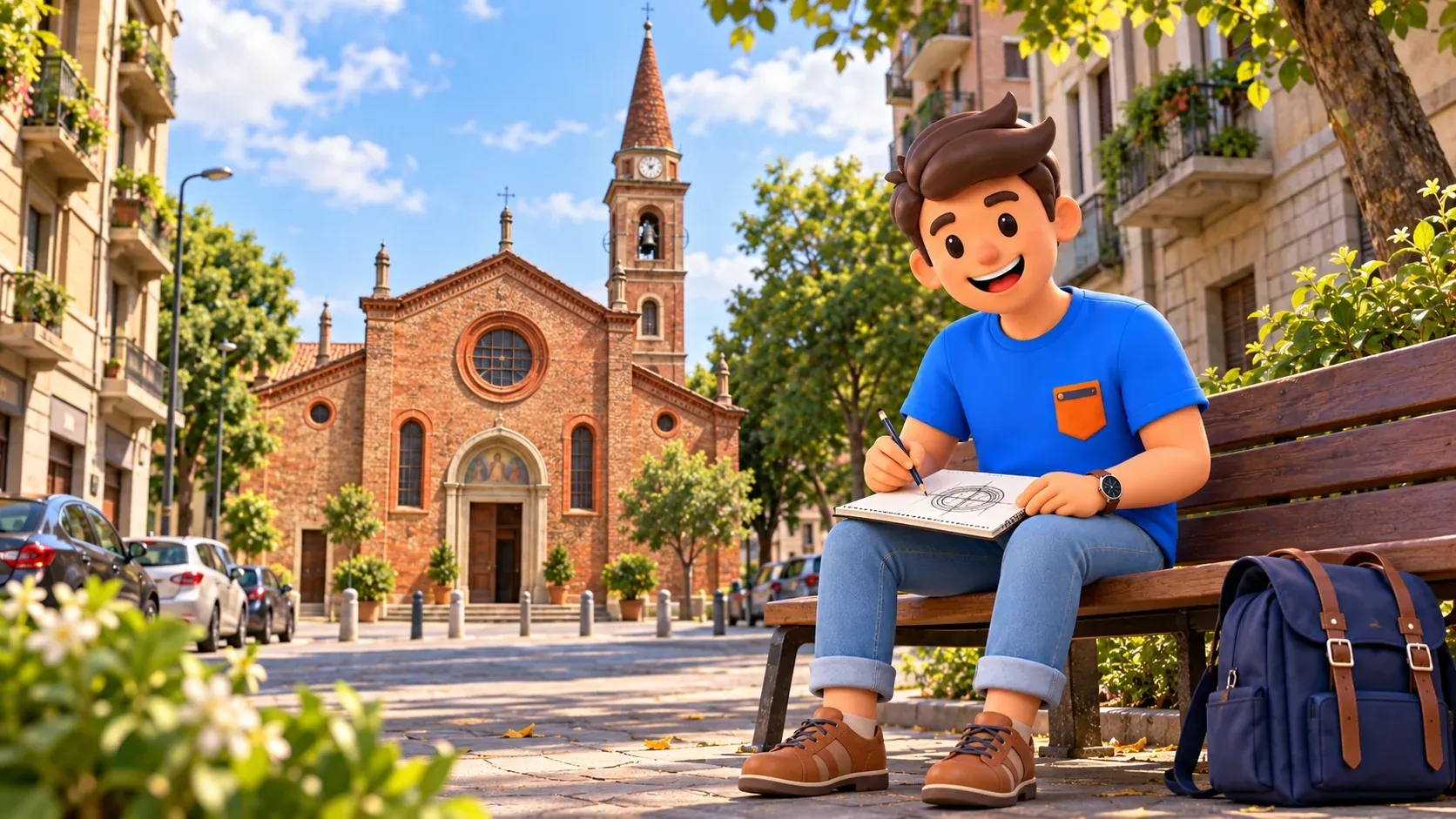
If you like sketching, a few lines recording the square’s proportions can be more useful than a page of architectural labels. If you prefer photographs, include the street setting as well as an isolated detail. Leave space for people using entrances and keep any photographic pause on the pavement. You are observing a working neighbourhood, not entering a closed museum set.
Continue north along Via Venini towards Via Rovereto, then head east across Viale Monza using the permitted crossing towards Via Giacosa and Trotter. Save the place names before leaving the square. The park entrance, rather than a particular café or a tram departure, is the next practical destination.
Trotter’s timetable changes the best time to go
The park has entrances on Via Giacosa and Via Padova; Via Giacosa, around number 46, is the reference used here. Check the current notice at the public gate. Because schools operate inside, a weekday morning is generally not a public sightseeing window. An open school entrance does not establish permission to walk through the compound.
The municipality’s Italian timetable currently gives these public hours:
- October–March: Monday–Friday, 16:30–19:00; Saturday–Sunday, 08:00–19:00.
- April–June and September: Monday–Friday, 16:30–21:00; Saturday–Sunday, 07:00–21:00.
- July: Monday–Friday, 16:30–22:00; Saturday–Sunday, 07:00–22:00.
- August: daily, 07:00–22:00.
A weekend outline of 10:00–12:30 places the park around 10:35–11:10. A weekday outline starting at 16:00 would reach it around 16:35, after the usual public opening, and finish around 18:30. These are planning examples, not bookings. In winter, daylight can fade during the later version; choose the weekend morning if seeing the streets in daylight matters to you.
Special notices and actual gate arrangements take priority over the normal timetable. If the park is closed, keep to the surrounding public streets and leave its 35-minute block out: the shortened programme is about 115 minutes. Alternatively, use that block for a longer seated break. There is no need to replace it with a distant canal walk and keep calling the outing two and a half hours.
Inside Trotter: a former track and a different idea of school
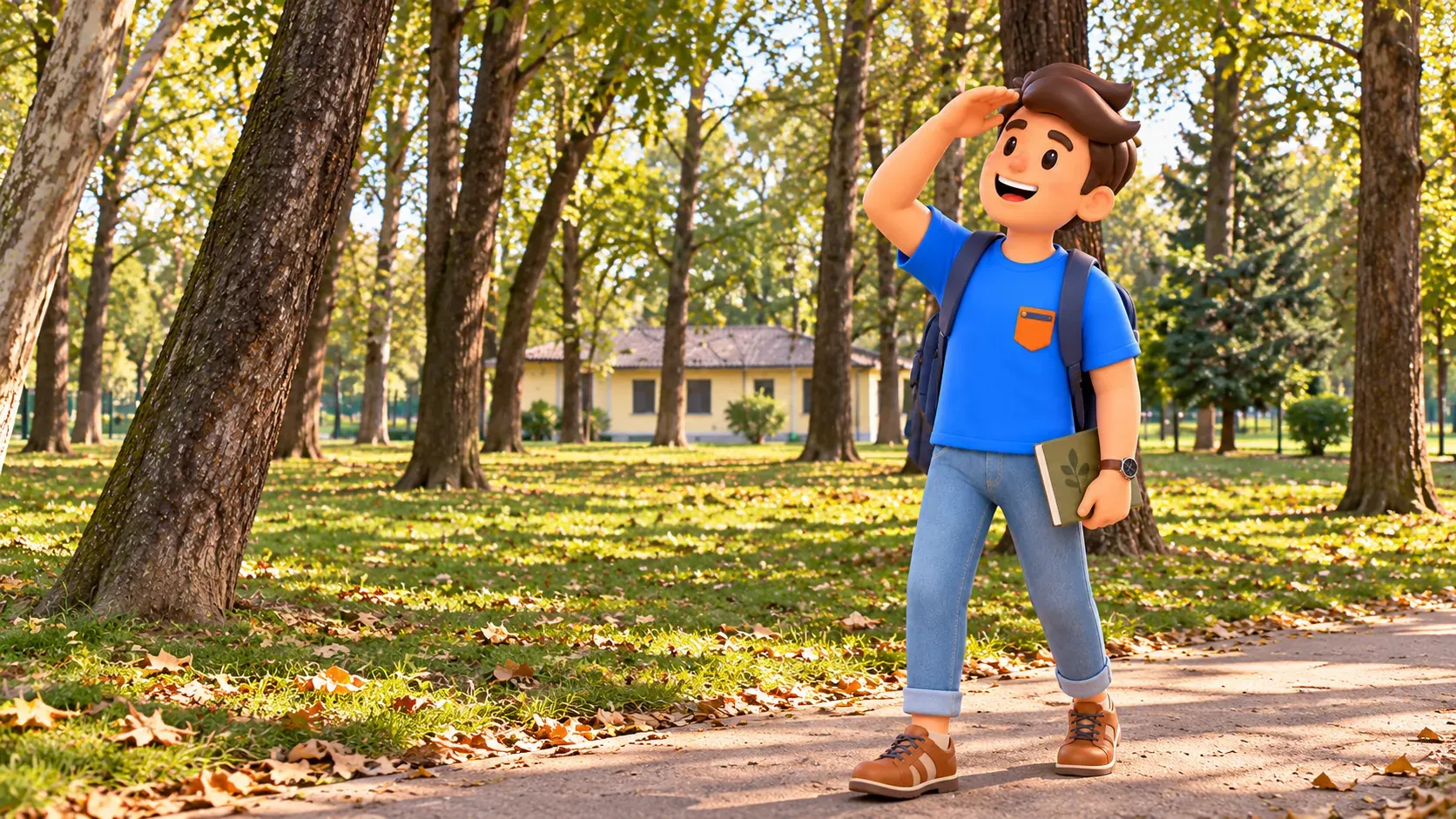
When public access is available, make a short loop on the permitted paths and return to the same Via Giacosa entrance. This avoids relying on a through-route across school areas. The broader curved avenue preserves the memory of a trotting track, which explains the name Trotter. Notice the shape of your movement as well as the mature trees around it.
During the 1920s the site became associated with Casa del Sole, an open-air school created for children whose health benefited from a different environment. Pavilions distributed through greenery linked education with outdoor activity. The important point for a brief visit is the relationship between building and landscape: a school could be conceived as a collection of smaller places within a park.
Look at the low buildings from the public path, giving equal attention to the trees and the gaps between pavilions. The greenery is not simply a decorative border around one large institution. It helps explain the historical educational idea. You do not need to enter a classroom to see that the arrangement differs from a dense street-front school block.
Schools and local associations continue to use the site. Stay within the areas open to the public and let school activity remain school activity. Former sports facilities are part of the place’s history; they do not establish an invitation to swim or join an activity without checking its arrangements. The route includes an outdoor walk, not a tour of every building.
From the park towards Casoretto
Return to the street and continue towards Piazza San Materno using public connections through the Via Giacosa, Via Padova, Via Leoncavallo and Via Casoretto area. Follow current crossings and any works notices. The church’s address, Piazza San Materno 5, is the useful destination to save; it is not a reason to cut across a private courtyard when a map appears to offer a shorter line.
Let this stretch remain part of the visit. Look at how the size of buildings changes, where a side street gives a longer view and how ground-floor businesses sit beneath homes. You are moving towards an older religious complex within a residential district. That setting is easier to appreciate if the connections are treated as more than empty time between two attractions.
For another day, our short walk through Milan’s Quadrilatero del Silenzio offers a different reading of residential architecture. It belongs to another part of the city and has its own programme. Keep it as a separate choice rather than adding it to this neighbourhood outing.
Casoretto abbey: a small historical ending
On Piazza San Materno, take in Santa Maria Bianca della Misericordia from outside. The brick front, large round window and bell tower make a strong contrast with the surrounding apartment buildings. Give yourself enough distance to see that relationship before approaching the doorway. The square and exterior are the main visit in this plan.
The religious community’s origins reach back to 1404, when Pietro Tanzi supported a church and invited canons to serve it. The complex developed with ducal patronage and later held an important humanist library. Its history includes fifteenth-century work associated with the Solari architects and subsequent transformations. The date of its origins does not mean every visible feature belongs to that same year.
The White Madonna image inside helps explain the church’s name. If access is appropriate and the church is open, it can give a short interior visit a focus. Check current parish arrangements and respect worship; the exterior allowance does not promise access to the library, chapter room or every part of the former monastic complex.
Use RoadMe to turn an interest in neighbourhood life, green spaces or history into a personal plan for the whole trip. Organising your days in the app makes it easier to balance these quieter discoveries with major visits, meals and the pace you actually enjoy.
Keep the finish comfortable
Use the fifteen-minute pause for a drink or a short rest in a place that suits you, checking the current menu and opening. It can come before the final church stop if that works better on the day. There is no indispensable restaurant attached to this walk, and a proper lunch deserves more time.

The public-street views and ordinary park access require no museum ticket; refreshments, transport and organised activities have separate costs. Conditions were checked on 17 October 2026. If you prefer a substantial museum alongside a green walk, our Montanelli Gardens and GAM outing offers that different balance. Here, finish on Piazza San Materno with the street, the school park and the abbey as three distinct impressions of residential Milan.


