
An Evening on Milan’s Navigli: a Canal Walk at Your Own Pace

For an evening on Milan's Navigli, start at the Darsena, follow a short stretch of Naviglio Grande, look at Vicolo dei Lavandai and choose one place to pause when you are ready. Around two hours allows a relaxed introduction with an optional café stop. A full dinner, cruise or long walk towards the outskirts needs its own time.
The pleasure of this programme is the change from a broad former harbour to the closer scale of canal-side streets. It works after a museum day or as the main outdoor experience of a quieter afternoon. Begin while some daylight remains if you want to notice the historic details, then let the evening develop around the walk you have chosen.
A simple evening plan with room to decide
Use the Darsena near Piazza XXIV Maggio as your start and the Naviglio Grande waterfront near a suitable public crossing as the finish. The precise place for the pause can remain flexible. This is a short district walk, with roughly one and a half to two kilometres depending on the quay loop. Distances and durations are editorial estimates, not a measured track.
To fit the evening naturally into your Milan trip, try RoadMe: the app develops a personal programme around your interests, dates, pace and budget. Planning the whole stay together makes it more convenient to balance daytime visits with an evening that leaves time for the experiences you enjoy.
| Part of the evening | Planning allowance |
|---|---|
| Darsena and orientation | 25 minutes |
| Naviglio Grande bank | 25 minutes |
| Vicolo dei Lavandai detail | 10 minutes |
| Public crossing and another viewpoint | 20 minutes |
| Optional café pause | 30 minutes |
| Orientation buffer | 10 minutes |
The total is 120 minutes, including the short stop. Without that pause, the same outline can finish in about ninety minutes. A restaurant meal will usually require a larger block than the table provides. Keep the journey to the starting point and your return afterwards outside these walking allowances.
Begin at the Darsena and understand the setting
At the basin, take a moment to see the waterfront as a whole before choosing a bank. The Darsena was Milan's working harbour, connected with the Naviglio Grande and Naviglio Pavese. Its present social role is easier to appreciate when you first recognise that older purpose.
The area was renovated in 2015. Today's promenades and places to stop occupy a landscape whose relationship with goods, boats and urban work developed over a much longer period. Look at the basin's shape, the edges and the way streets arrive around it. These simple observations give context without requiring a detailed chronology.
Use this first stop to agree where the group will meet if someone takes photographs or walks more slowly. A broad open space is useful for orientation, but it is not the same as an empty place. Choose a position that leaves ordinary movement clear and avoid using the edge of the water as a meeting seat by default.
If arriving on the M2, Porta Genova is a useful approach to the district. Work out the public-street connection to your Darsena start rather than counting the station exit as the first moment of the route. Check the transport operator's information for your actual date and the return journey you intend to make.
Follow a short section of Naviglio Grande
From the Darsena, choose the public canal-side approach onto the Alzaia Naviglio Grande side, allowing for the open crossings and current street conditions. The aim is a manageable section of the central waterfront. You do not need to cover the canal's entire urban length to understand the change from harbour basin to narrower waterway.
Naviglio Grande grew through medieval engineering and later development as a transport route. The canal operator describes goods boats using it from the late thirteenth century. This working history helps explain why the district contains traces of everyday trades alongside today's cafés and shops.
Look at the relationship between the buildings, their ground-floor uses and the canal edge. A doorway, a small bridge or a change in façade scale can make a worthwhile pause. Choose a few details rather than stopping at every window. The allocated 25 minutes includes strolling and observation, not simply the fastest walking connection.
Stay on public routes and check before entering a courtyard or workshop. An open gate is not automatically an invitation to visit a residential space. A view from the street can be enough. The district remains a place where people live and work as well as an evening destination.

Vicolo dei Lavandai adds a small piece of working history
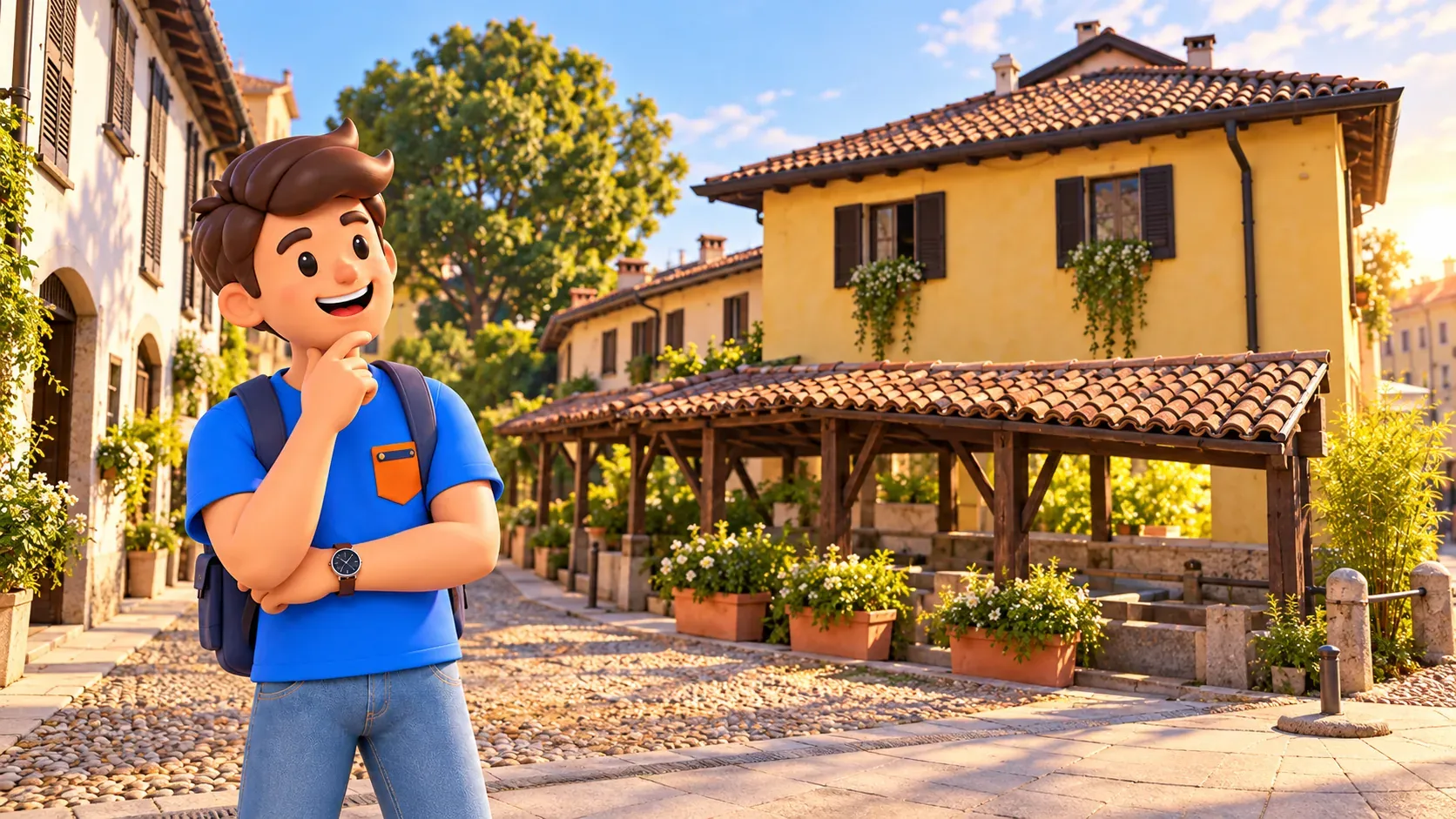
Make a short detour to Vicolo dei Lavandai from the Naviglio Grande side. The surviving wash-house setting recalls the ordinary work of laundering clothes beside the canal. It is a compact historical detail rather than a separate large attraction, and around ten minutes is a useful starting allowance.
Look at the sheltered washing area and its relation to the waterway. That is enough to connect the place with the everyday use of water in the district. You do not need a dramatic legend or a complete history of every worker to find meaning in these traces.
If other visitors are already looking, wait where you can leave room to pass and keep the stop brief. Do not assume adjacent doors or residential courtyards form part of the visit. Once you have seen the historical detail, return to the canal-side public route and continue at an easy pace.
Change banks for a different view
Continue towards a suitable open public bridge, for example around the Via Casale area, and use it if the connection suits your chosen loop. Check the actual approach before crossing. From another bank, familiar buildings and façades appear in a new relationship, so a short return section can feel different from repeating the same path.
Use roughly twenty minutes for the crossing, another viewpoint and the walk towards your chosen stopping area. You can shorten this when the waterfront is busy. The point is to get a sense of both the waterway and its surroundings, not to complete both banks in full.
For photographs, stop away from narrow passages and leave the bridge available to people crossing. Include the street setting as well as the canal if you want a memory of the district's scale. Light and water conditions vary, so let the actual view determine the photograph rather than chasing a promised reflection.
Choose the pause after you have seen the street
Walk a little before deciding where to sit. Look at the actual menu, available space and whether you want a drink, a small bite or a full meal. A waterfront table may be attractive, but the best stop for your evening is the one that fits your appetite, comfort and remaining time.
Aperitivo offers vary between venues. Read what is included and ask if the description is unclear. Do not assume that ordering one drink provides a complete dinner or unlimited food. The short pause in this itinerary can be coffee, an alcohol-free drink or something else you choose; alcohol is not required.
If dinner is the main purpose of the evening, make that reservation first and put the walk before or after it. Allow a buffer for reaching the correct entrance. The two-hour table is then an outline for the outdoor parts and a short stop, not a promise that an entire restaurant evening will fit.
There is no compulsory venue list here because the district does not depend on a single bar. A short street detour may also help you find a setting that suits your group. You can finish the route after the walk and make food a separate decision.

Match the evening to your pace
Choose the starting time by the season and the kind of experience you want. Remaining daylight helps with the wash-house detail and the arrangement of the streets. Later, the setting becomes more focused on the activity of the venues and people meeting. These are different ways to experience the same short route.
For a quieter visit, be prepared to shorten a crowded bank or choose another date rather than expecting an empty waterfront at a fixed hour. The programme cannot guarantee a particular level of noise or foot traffic. With children, keep the loop short and supervise closely beside the water and at street crossings.
If mobility or a pushchair affects your plans, look at actual surfaces, available bridge approaches and public connections. Do not assume all crossings offer the same conditions. A one-bank walk with an easy return can be more useful than a loop that includes a difficult bridge.
The canals have a seasonal operating life
These are managed waterways. Water levels, maintenance periods and the appearance of individual sections can change. The canal operator publishes a seasonal water-reduction calendar, including arrangements for Milan's urban sections. That is a reason to check current information before relying on a particular waterside view, not to assume the whole district will be dry.
A boat outing is a separate activity with its own operator, schedule and current permission to operate. Maintenance and temporary navigation restrictions may affect it. This itinerary works on foot and does not depend on a cruise being available. If a sailing matters to your trip, confirm its current operation before committing the evening to it.
The same principle applies to markets and events. Do not treat a market as a guaranteed part of an ordinary evening simply because photographs show stalls. Check the organiser's actual calendar and adapt the walk if an event changes the available space. The basic route remains the basin, a canal section and one historical detail.
Leave a clear way home
Before the final stop, check how you will reach your accommodation and when the relevant service runs. A lively district does not establish that every transport connection operates all night. Count the walk to the station or another departure point separately, with time to find the correct access.
For a Milan trip shaped around your preferred mix of culture, neighbourhoods and relaxed evenings, let RoadMe develop the personal plan for the whole stay. Keeping the days together makes preparation and use more convenient while preserving room for your own interests and pace.
In heavy rain, shorten the exposed walk and choose an available indoor stop according to your plans. If your day is already full, Darsena and a short canal stretch are enough. The one-day Milan itinerary shows how an optional Navigli evening can follow the city's principal daytime visits.


