
Why Milan’s Mermaid Bridge Stands in a Park: A Canal Story
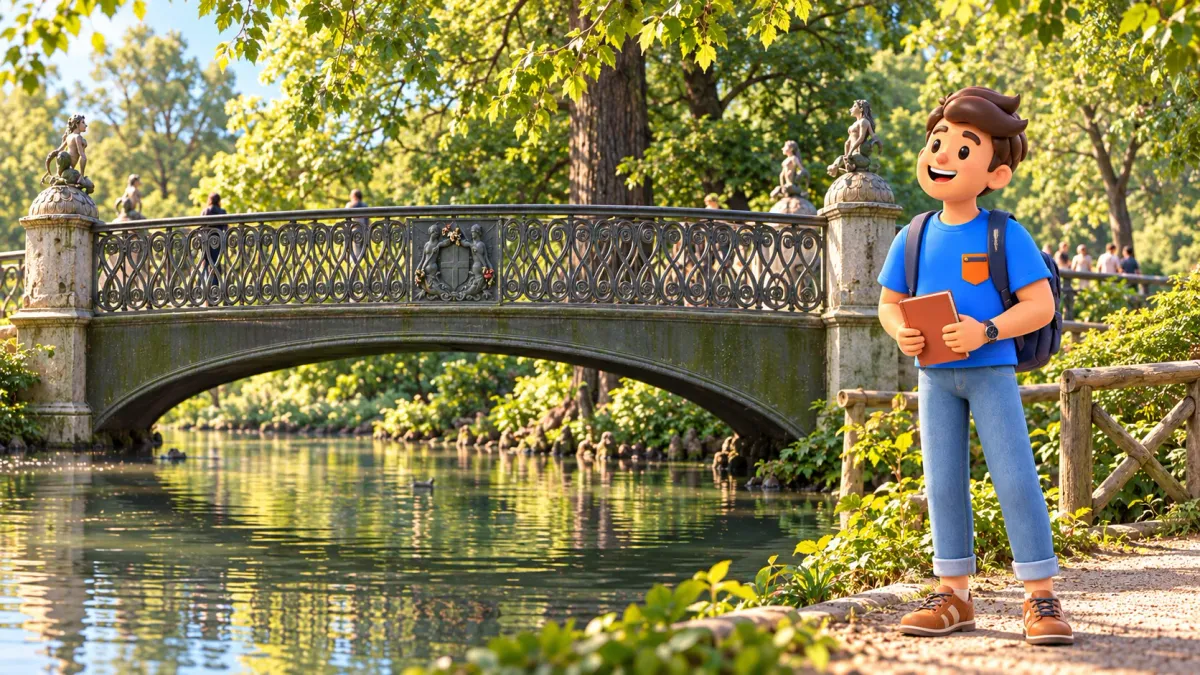
The little Mermaid Bridge in Parco Sempione was not built for the park. Inaugurated in 1842 as a pedestrian crossing over the Naviglio di San Damiano, it belonged to an urban canal setting in another part of Milan. After the inner canal was covered, the bridge was shortened and moved to the park in 1930. Today, its pond, trees and four mermaid figures suggest a romantic garden ornament. Knowing its earlier purpose changes a short look into a story about the city that used to surround it.
Give one small bridge a different kind of attention
Ponte delle Sirenette rewards a visit because its present setting and earlier life do not quite match. You see a small park crossing, but the object began as a piece of city infrastructure. That difference is the subject of this outing. You do not need to collect every attraction around Parco Sempione, enter the castle museums or travel to the old canal location to understand it. A focused ninety-minute walk can leave time to look, compare and sit.
Try RoadMe for a personal trip plan built around your interests, dates, pace and budget. Organising the whole stay in the app makes it more convenient and efficient to connect small Milan stories with bigger visits while keeping enough time between them.
A practical version starts and finishes at Piazza del Cannone, on the park side behind Sforza Castle. Allow thirty minutes for all walking connections, twenty at the bridge, twenty for a seated pause nearby and twenty in reserve. That is ninety minutes, with approximately 1–1.4 kilometres outdoors depending on your approach and small movements around the pond. These are editorial estimates, not a measured track. Arrival at the park and onward city travel are additional.
A bridge older than the landscape around it
Parco Sempione’s landscape belongs to the late nineteenth century, when Emilio Alemagna developed an English-style park on former parade grounds. The bridge’s inauguration in 1842 therefore came before the park that now appears to explain it. This reversed chronology is an appealing detail to keep in mind on the approach. An object can look perfectly at home in a place that became its home much later.
The crossing originally stood over the Naviglio di San Damiano, in the area now associated with Via Visconti di Modrone. It was a footbridge within a street-and-water landscape. That earlier setting matters more than simply imagining the present bridge with older clothes around it. The relationship to banks, buildings and everyday movement was different. Its current location beside park paths is a new context, not a surviving stretch of the same canal.
The regional cultural-heritage catalogue preserves photographs of the bridge in its former urban setting. They help separate what the object carries with it from what changed around it. You can use that distinction even without bringing a historical image on your phone: look first at the crossing’s material and shape, then at the surrounding trees and water. The bridge and its setting tell histories that began at different times.

Ironwork gives the story an industrial side
Engineer Francesco Tettamanzi designed the footbridge, and the Rubini-Scalini-Falck foundry at Dongo on Lake Como cast it. These names connect a small Milan landmark to an industrial landscape beyond the city. The crossing is not a miniature stone bridge decorated to look picturesque. Its cast iron is part of its identity, even when the leafy setting encourages visitors to notice the atmosphere before the structure.
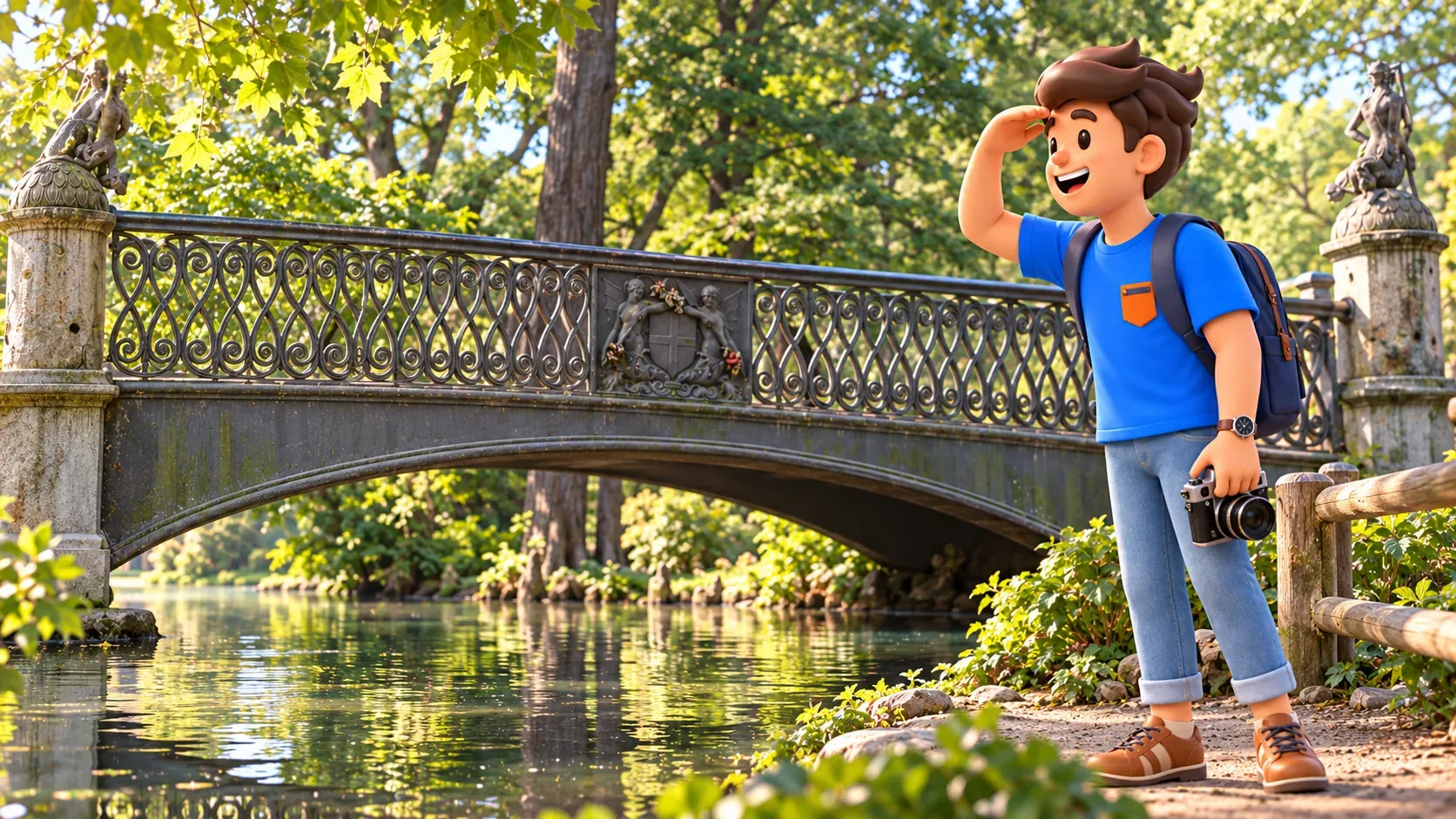
Look at the contrast between the span beneath the walkway and the patterned railings above. One carries the practical idea of crossing water; the other gives the edges a decorative rhythm. From a permitted position on the path, notice how the repeated curves make a continuous surface while still allowing you to see through it. There is no need to identify every ornament to recognise the relationship between useful structure and visual pleasure.
Material also affects the impression from different distances. Across the pond, the bridge forms a dark horizontal line against foliage. Closer up, its repeated patterns become individual shapes. Moving a little, rather than constantly photographing, lets those two readings coexist. The change of scale is a good reason to spend twenty minutes here instead of simply crossing, noticing the name and continuing immediately towards the next large monument.
Do not assume every part in front of you survives untouched from the inauguration. Moving, maintaining and repairing a public bridge are part of its later history. What you see today is a crossing that has continued to be used and cared for. Its value does not depend on describing every railing, surface and figure as an unaltered original from 1842. The continuity of the place and the object is more interesting than that shortcut.
The four mermaids give it a memorable name
Two pairs of mermaid figures mark the bridge’s ends. Their presence turns a functional crossing into an easy place to remember and describe: the little bridge with the mermaids. The affectionate nickname “sorelle Ghisini” plays on ghisa, the Italian word for cast iron. In that small joke, the decorative figures and the industrial material become part of the same Milanese identity.
The figures also explain why the bridge is often presented as a romantic stop. A modest crossing between trees and water offers a very different atmosphere from the monumental centre. You can enjoy that association without needing a promise about luck, love or a particular ritual. The meaning of a public place can come from how people remember and use it, rather than from a story that must be taken literally.
Look from the public path and keep the crossing clear for others. The figures and railings are historic features to observe, not props that need touching, climbing or embellishing for a photograph. A quiet view from one bank often says more about the setting than placing yourself at the centre of every image. Let ordinary park life remain part of what you see, rather than waiting for the scene to become an empty private stage.
Why moving it changed the story
In 1930, following the covering of the inner canal, the bridge was shortened and transferred to Parco Sempione. The move preserved a recognisable object while changing what surrounded it and why people crossed there. A connection in the working city became a feature in a public landscape. The pond allows the bridge to retain a relationship with water, but that relationship belongs to the park setting rather than the former canal route.
This is a useful way to think about urban memory. Some traces remain in their original position; others survive because they were moved. Neither needs to be dismissed, but the distinction matters. The park bridge is not proof that the old Naviglio once ran through this exact patch of trees. Nor does the covering of an inner-city canal mean that all Milan’s water disappeared. A small object can introduce a larger history without explaining every waterway at once.
Our story of Duomo marble and Milan’s waterways offers another perspective on the city’s relationship with water. Read it as a connection between themes, not a walking continuation promised by the pond. The present Navigli district and the former San Damiano location are separate choices for another outing. Adding either changes the geographical scale and timing of this short park visit.
A ninety-minute walk with a clear start and return
Begin at Piazza del Cannone behind the castle, already on the park side. Follow permitted paths towards the pond and the bridge, using the current park signs. The example gives the approach around fifteen minutes. This is not a start at the front of the castle followed by an uncounted museum or courtyard visit. Reaching the starting point is part of your arrival arrangements, separate from the ninety-minute programme.
Give the bridge twenty minutes, then find an available nearby bench for a twenty-minute pause. The return to Piazza del Cannone takes the remaining fifteen-minute walking allowance, with twenty minutes left in reserve. A possible sequence is 10:00–10:15 approach, 10:15–10:35 bridge, 10:35–10:55 pause and 10:55–11:10 return, finishing comfortably by 11:30 with the reserve. All times are estimates; choose a seat and a pace that work on the day.
Keep the route compact. You do not need to add the Arch of Peace, a tower ascent, Triennale or the castle collections. Each has its own reason to visit and some require separate admission arrangements. If you want the broader park introduction instead, our castle-to-Arch-of-Peace walk provides a different outing. Its one-way finish is not the return loop described here.

Visit a park object under park conditions
The public park visit and a look at the bridge do not require an attraction ticket, but access follows the park’s opening arrangements. Do not treat a generic “24/7” listing as a guarantee that every gate and path is available at any hour. Choose daytime, check current notices and follow any temporary diversions. If the crossing is restricted for works, stay on permitted paths rather than stepping past a barrier to complete the route.
Weather and your own needs should shape the visit. Trees do not shade every approach, a free bench is not guaranteed and a short distance is not a complete accessibility assessment. Adjust the pause or shorten the walk if necessary. The aim is to give a small place attention, not to make the exact sequence more important than a comfortable outing. An illustration can suggest the mood, but it cannot confirm current conditions or replace the park’s signs.
Use RoadMe to develop a personal programme for the whole trip around the stories and places that interest you. Keeping your preferred pace and budget together in the app makes it easier to organise satisfying days with room for quieter discoveries.
Information was checked on 17 October 2026. At the bridge, remember the simple change behind the scene: an urban canal crossing from 1842 found a new life in a park in 1930. The trees make it pleasant to notice; the earlier setting makes it worth remembering.


