
How Marble Reached Milan’s Duomo: A Story of Canals and Stone

The marble that gives Milan’s Duomo its pale, pink-streaked appearance came from Candoglia in Piedmont. Blocks travelled through a connected sequence of rivers, a lake and canals: the Toce, Lake Maggiore, the Ticino and Naviglio Grande. Within Milan, docks and locks brought the material towards a landing basin a few hundred metres from the cathedral works. Understanding that journey connects two places often visited separately: the monumental centre and the Navigli. Today, you can explore selected traces on foot, although the historic water route no longer runs continuously through the city.
Look at the cathedral and the canals as one story
Begin with a practical question: how did a large piece of mountain stone become a carved figure high above a city square? Between quarry and sculpture stood boat crews, engineers, workshops and the people organising the building site. The waterways belong to the cathedral’s history just as much as its architects. This perspective makes a modest lock or an ordinary street name worth noticing alongside a famous façade.
Try RoadMe for a personal trip plan based on your interests, dates, pace and budget. Organising the whole stay in the app makes it more convenient to connect the Milan stories you enjoy with cultural visits, neighbourhood walks and time to rest.
You need not visit every associated place to understand the connection. A look at the Duomo’s stone and a daytime canal walk already offer two sides of it. Add Conca di Viarenna if engineering interests you; include Via Laghetto if you would enjoy finding the memory of a disappeared harbour in the present streets. Choose the thread that gives your day meaning, rather than collecting every location with a link to marble.
Why Candoglia mattered to the building
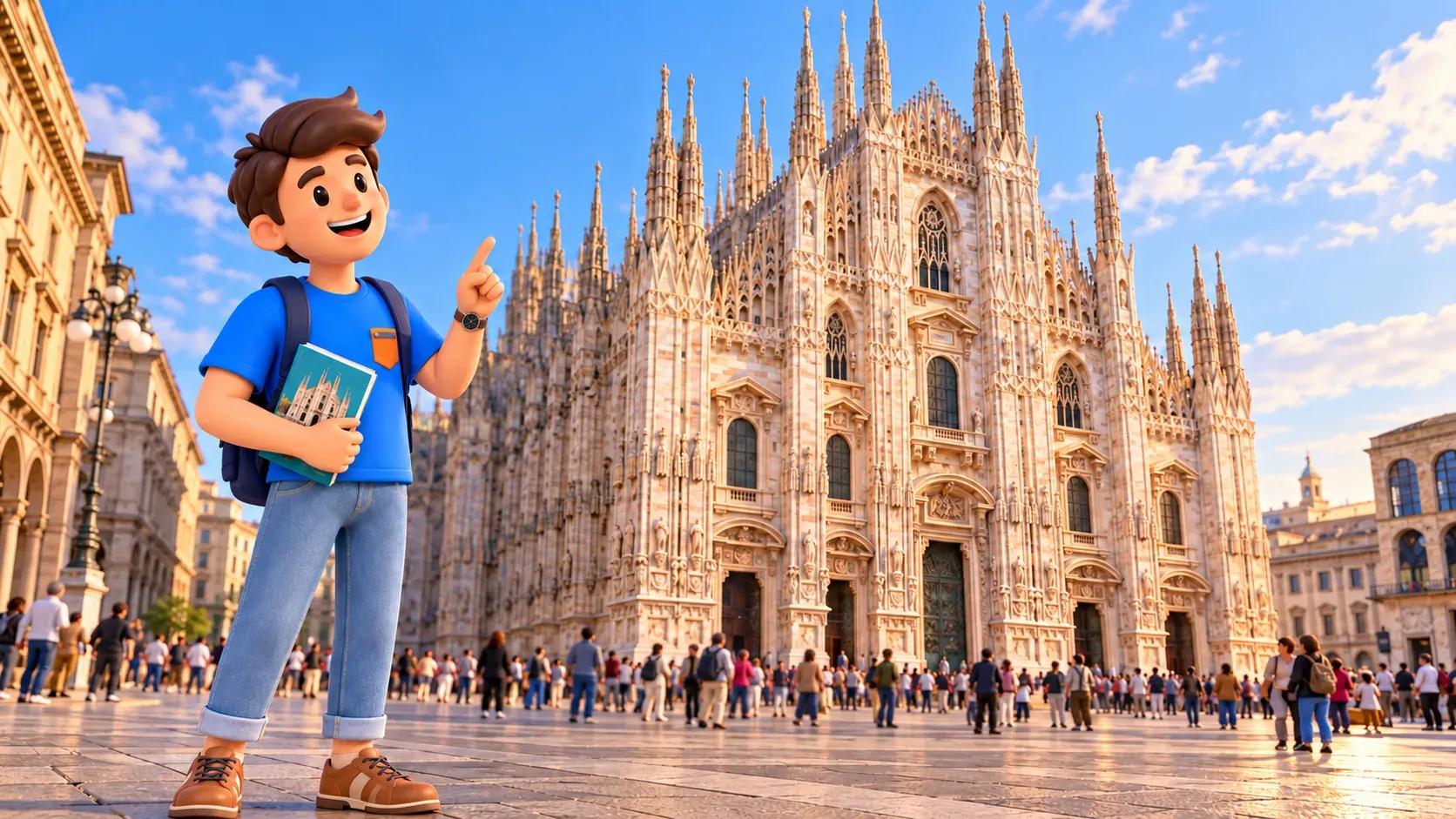
Construction of the present cathedral began in 1386. The following year brought an important decision about its material: Gian Galeazzo Visconti made the Candoglia quarry available to the Veneranda Fabbrica, the institution responsible for the works, and granted free water transport for its marble. The dated concession is 24 October 1387. Candoglia lies above the Toce near Mergozzo, at the entrance to the Ossola valley, rather than in the Carrara quarry district.
The marble’s crystalline appearance and rose-coloured streaks helped shape the building’s identity. Its use accompanied the choice of Gothic architecture and an exchange of skills involving architects, sculptors and stonecutters from different parts of Europe. The result should not be reduced to one designer or one uninterrupted building campaign. The façade seen from the square belongs to a much longer development than the project’s fourteenth-century beginning.
Look from a normal public position at a few details instead of trying to identify every statue. Notice the relation between broad wall surfaces, thin carved edges and the repeated vertical rhythm. Differences in light make the material easier or harder to read. The aim is to recognise stone as something selected, moved and worked, without assuming every pale surface dates from the same century.
A chain of waterways, not a canal from the quarry door
The journey began with getting the stone from the quarry to the water. Boats then used the Toce and Lake Maggiore before continuing along the Ticino and Naviglio Grande towards Milan. Different stretches required different knowledge and handling. Saying simply that marble arrived “along the canals” leaves out the lake and rivers that made the wider connection possible.
Naviglio Grande already had a medieval history before work on the Duomo began. It was not created by Leonardo da Vinci for this cathedral. Nor did the full system appear in its final form in 1387: connections, navigation works and landing arrangements developed over time. Thinking of a changing network is more accurate than imagining one purpose-built channel, finished at once, linking a mountain directly to the square.
The waterway approach brought heavy loads into the city before modern road haulage. But arrival was only one stage. Stone still had to be unloaded, moved, shaped and fitted into the building. The impressive part is the relationship between those tasks. A carved detail on the cathedral was the end of a supply chain extending far beyond central Milan, not an object made entirely beside the place where you see it.
Darsena and Viarenna explain the last difficult connection
The historic Sant’Eustorgio landing area lay in the district now associated with the Darsena. Do not picture today’s harbour basin and renovated pedestrian edges as an unchanged scene from 1386. The place developed through later phases. Its present broad water space is nevertheless a useful setting for considering Milan’s former life as an inland port, before following the story towards the smaller lock.
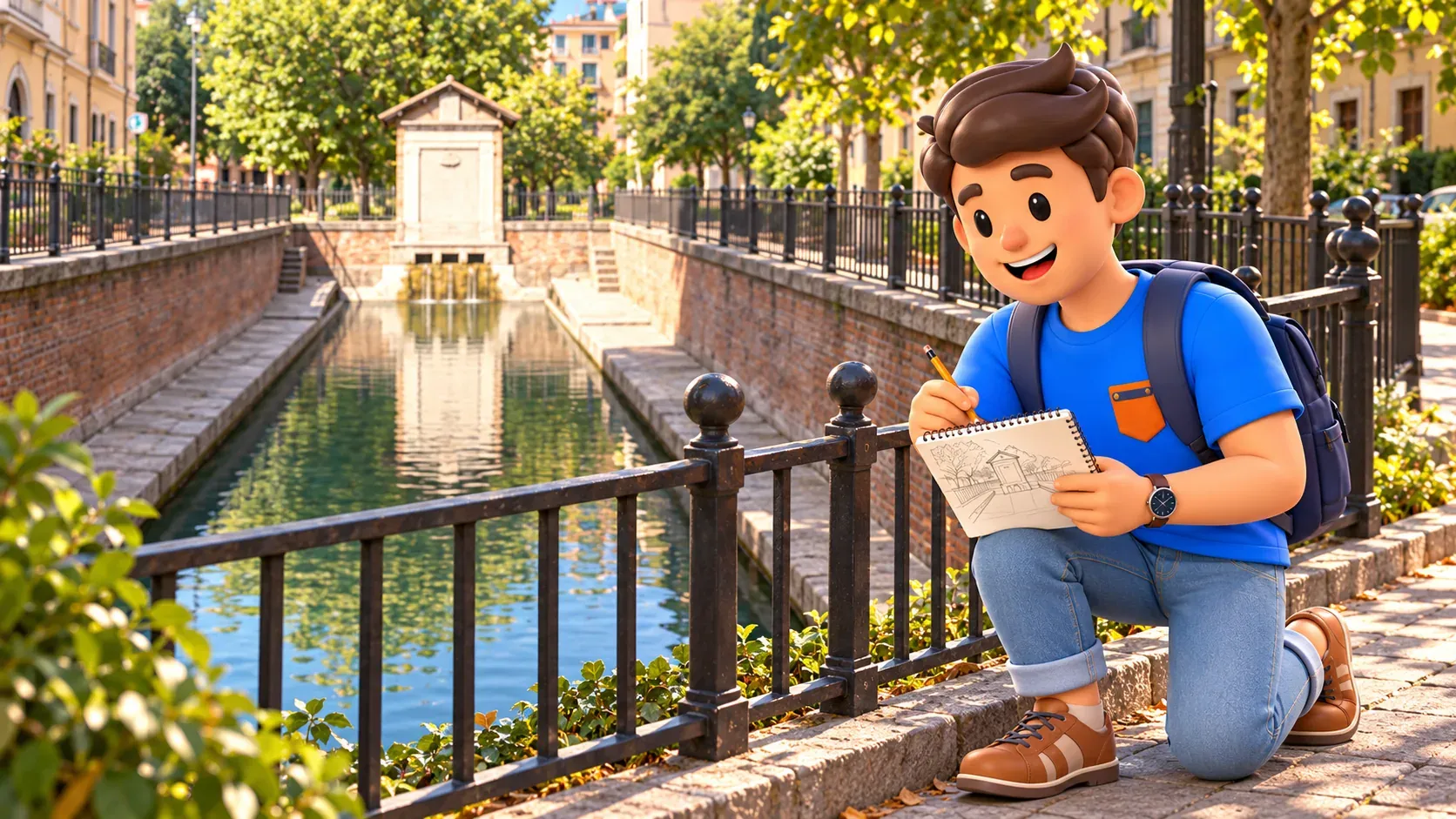
A difference in water levels made the connection with the inner canal system a technical problem. A navigation lock lets a boat move between levels by controlling the water in an enclosed chamber. Viarenna helped connect the incoming route with the inner waterways, improving the final approach towards the cathedral’s building site. Its interest lies in solving a practical transport problem, rather than resembling a grand monument.
The first Viarenna lock belongs to 1438–39. The surviving structure on Via Conca del Naviglio is its sixteenth-century replacement, built in 1551–58 when fortification works required a change. That distinction matters: the remains visible today are not the original fifteenth-century lock preserved untouched. View them from the public exterior and respect the enclosure. This is not a working demonstration through which visitors can take a boat.
A historic inscription associated with the lock recalls privileges for cathedral-bound materials. The letters AUF, from Ad Usum Fabricae, identified material intended for the Fabbrica and linked it with exemption from duties. That was a condition for transporting building supplies; it says nothing about today’s cathedral admission. You can enjoy the historical detail without turning a traditional story about an expression for “free” into a certain linguistic origin.
Via Laghetto preserves the memory of the arrival
From the inner waterways, boats reached the Laghetto di Santo Stefano near the cathedral works. The name means a small lake or basin. It was a place to unload material, not the large natural lake that the cargo had crossed much earlier. The street name Via Laghetto keeps a trace of that destination, although you will not find an open harbour there today.
Stand back from the traffic and consider what an absent feature can explain. A small street near a monumental square may once have belonged to a working landscape of arrivals, storage and workshops. The value of the stop is the connection between name, location and history. There is no need to promise a hidden navigable tunnel, a surviving waterside crane or a view of every historical stage.
Closure of the landing basin did not mean that marble immediately stopped arriving by water elsewhere in Milan. The Fabbrica dates the end of water transport for its marble to 1920, followed by road transport. That is different from the end of all commercial shipping in the city. The changing workshop locations and transport methods remind us that the cathedral’s practical organisation adapted as Milan changed around it.
The stone’s story continues in conservation
Candoglia still belongs to the cathedral’s conservation story. Quarrying a narrow vein of marble requires specialist work, and the marble yard turns suitable stone into architectural elements, ornament and sculpture. Modern machinery assists preparation, while skilled hands remain essential to finishing. Maintenance is part of the monument’s life, not evidence that a medieval project has simply failed to reach an arbitrary finishing date.
This offers another way to look at scaffolding or a carefully worked surface. Behind the visitor’s view are decisions about material, form and the survival of a complex building. You do not need to identify which individual block was replaced to appreciate that continuing responsibility. Also distinguish a working quarry or workshop from a public attraction: access requires a specifically announced visit, not an assumption that you can walk in and watch carving.
Bring the story into a manageable city walk
For an outdoor version, start on a short central stretch of Naviglio Grande near Vicolo dei Lavandai and finish in Piazza del Duomo. Allow about three hours and fifteen minutes. Use 30 minutes for the canal and the approach towards Darsena, 20 for the basin, 15 to reach Viarenna and 15 to look from outside. Then allow 50 minutes on public streets towards Via Laghetto and the cathedral, 25 for the exterior, a 25-minute break and 15 minutes of flexibility: 195 minutes altogether.
The central connection can use the Via Molino delle Armi, Via Santa Sofia and Via Francesco Sforza area towards Via Laghetto before reaching the Duomo. It involves city streets and crossings, not an uninterrupted canal bank or an exact reconstruction of the barges’ course. Expect roughly three to four kilometres outdoors, depending on your chosen approaches. Distances and durations are planning estimates, not a measured navigation track. Travel to the start and from the finish is additional.
Use RoadMe to turn your interest in Milan’s history into a personal programme for the whole trip. A day-by-day plan built around your preferences is easier to organise and use than separate lists of places, while leaving room for the visits and pauses that suit you.
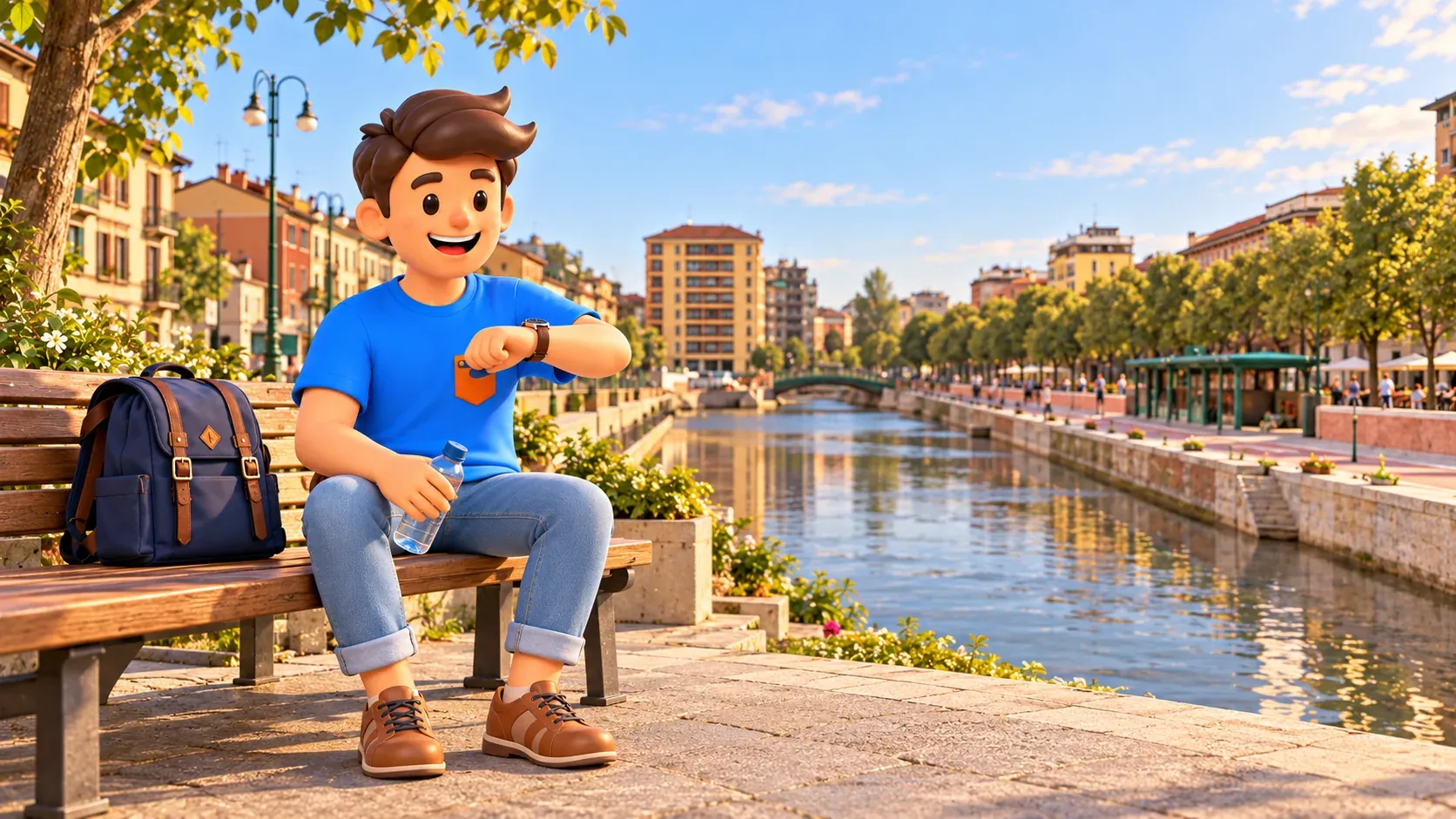
The outline covers public exterior views. Cathedral interiors, the terraces, the museum, a cruise and quarry visits are separate activities with their own admission, opening and access conditions. Ordinary tourist admission to the cathedral complex is paid. Adding one means allowing its full visit and entry time; a lift ticket does not by itself describe a wholly step-free terrace route. If you want a lighter waterside evening instead, our Navigli evening walk keeps the programme within that district.
Conditions were checked on 17 October 2026. Canal water levels are managed, and maintenance periods can change the appearance and navigation of individual stretches; this does not mean every Milan canal is empty. Confirm actual operation before adding a boat trip. For a closer look at carved stone above the square, our guide to Milan’s viewpoints explains the distinct Duomo terrace experience. The reward here is a connection: the stone seen at the cathedral begins to tell the story of the water elsewhere in the city.


