The Madonnina and Milan’s Skyscrapers: A City Growing Taller
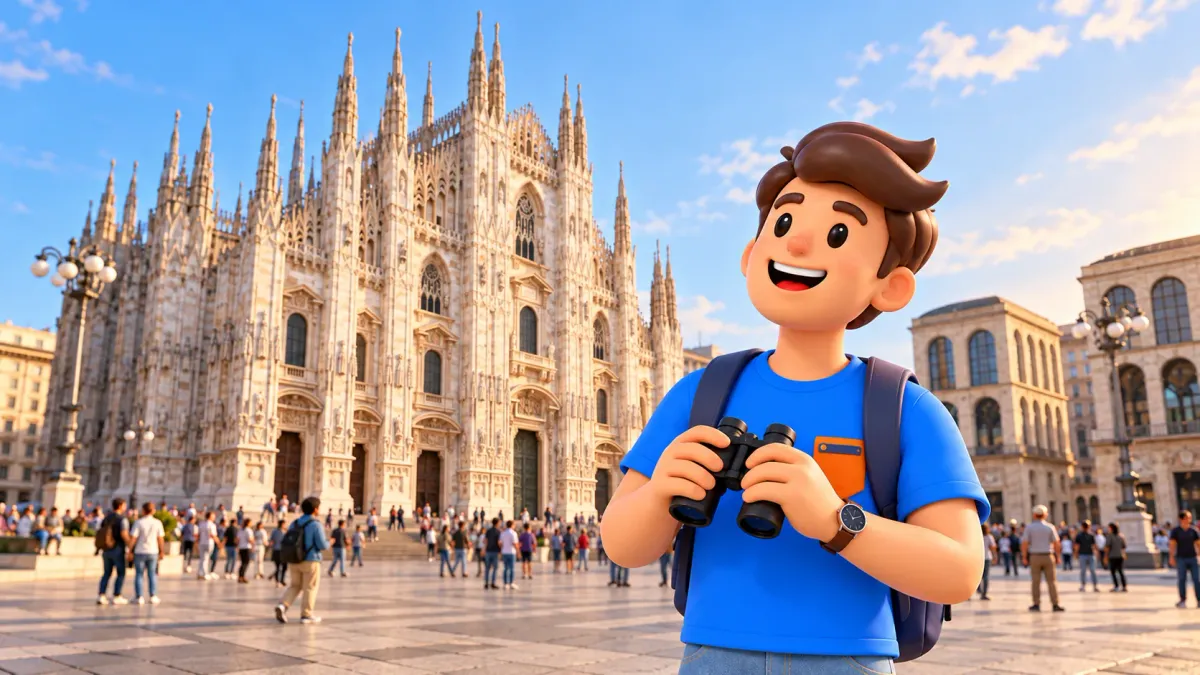
Milan’s Madonnina has not left the Duomo for a taller address. The gilded figure placed on the cathedral’s Great Spire in 1774 remains there, while separate copies stand on the Pirelli skyscraper, Palazzo Lombardia and the Allianz tower. Their story offers an engaging way to connect the historic centre with modern Milan. It is about a city carrying a familiar symbol into new architecture, rather than simply abandoning its old skyline whenever a taller building appears.
A small figure with a place in a much larger city
From Piazza del Duomo, the Madonnina is a small golden presence above a great mass of pale stone. Her importance does not depend on being the easiest detail to photograph. The figure of the Virgin Mary belongs to both the cathedral’s religious identity and Milan’s civic imagination. Knowing this makes the appearance of related statues on modern office buildings less surprising: the same image can connect very different chapters of the city.
Try RoadMe for a personal Milan trip plan shaped around your interests, dates, pace and budget. Organising the whole stay in the app makes it more convenient to connect architecture, cultural visits and pauses in a programme that suits you.
You can follow this story without climbing every building. Begin with the original’s setting, then choose one modern district in which to look at the architecture. A copy high above an office roof may be too small or poorly positioned to distinguish from the pavement. The pleasure is understanding why it is there, not treating a tiny golden speck as a compulsory photograph.
The original is gilded copper, not a marble statue
The cathedral’s marble makes it tempting to imagine the Madonnina as another carved stone figure. In fact, its exterior consists of shaped copper plates covered with gold. Giuseppe Perego supplied the sculptural design, and the goldsmith Giuseppe Bini worked the copper over a model. Installed in the last days of December 1774, the statue represents the Virgin’s Assumption into heaven. Its materials distinguish it from the pale architectural setting below.
Two measurements are worth keeping apart. The figure itself is 4.16 metres tall; the cathedral’s highest point with the Madonnina reaches approximately 108.5 metres above the ground. The second figure already includes the statue. Adding the two produces an imaginary new height. From the square, neither measurement tells you how large a detail will appear in a photograph, because distance and the angle of view matter too.
The glittering surface also has a history of care. In 1967, the corroded internal iron framework was replaced with stainless steel, and the copper covering was regilded. Another regilding took place in 2012. These interventions help explain why a familiar silhouette can endure while its material condition requires attention. The continuing original, its supporting structure and later rooftop copies are different things, even when all are described using the same affectionate name.
A tradition that allowed the story to continue upwards
The best-known account says that Milan should not build above its Madonnina. Treat that as the starting point of an urban tradition, rather than a complete explanation of contemporary planning permission. The copies express respect for a symbol as the skyline changes. They are not evidence that placing a statue automatically grants permission to build, or that every tower above the cathedral must follow an identical legal procedure.
This distinction makes the story richer. A city can preserve a sense of continuity without freezing every roof at the same level. Repeating a recognisable image gives a new building a relationship with something older than its own development. It does not turn the building into a church, and the copy does not replace the cathedral original. Religious meaning and civic affection overlap here, without requiring every visitor to read the gesture in exactly the same way.
Keep another qualification in mind when reading popular accounts: the Pirelli tower is a famous example, but should not be described as the first Milanese building ever to exceed the Madonnina. The history of tall construction is more complicated than a single before-and-after date. You can enjoy the memorable rooftop gesture without turning the city’s architectural development into a competition with one undisputed winner.
Pirelli: a modern headquarters acquires a familiar guardian
Near Milano Centrale, the Pirelli skyscraper offers the most approachable next chapter. Designed by Gio Ponti and his collaborators, it was inaugurated in 1960 as the headquarters of the Pirelli company. At around 127 metres, its slender outline stood well above the cathedral’s traditional reference point. A small Madonnina on its roof linked a confident twentieth-century building with an image already deeply associated with Milan.
Look first at the tower as architecture. Compare its broad glazed face with its narrow profile, and notice how different it appears when you move a short distance. Its strength as a landmark lies in proportion as much as height. You do not need to identify the rooftop copy with the naked eye to understand the relationship between modern corporate ambition and a familiar local symbol.
The regional administration acquired the building in 1978, and it now houses the Lombardy Regional Council. This helps distinguish it from Palazzo Lombardia, where the regional executive is based. It also prevents a different confusion: the Pirelli historical archive’s address elsewhere in Milan is not the skyscraper’s visitor entrance. For the exterior view, use the public space by Piazza Duca d’Aosta; any announced interior visit needs its own arrangements.
Palazzo Lombardia: another tower, another copy
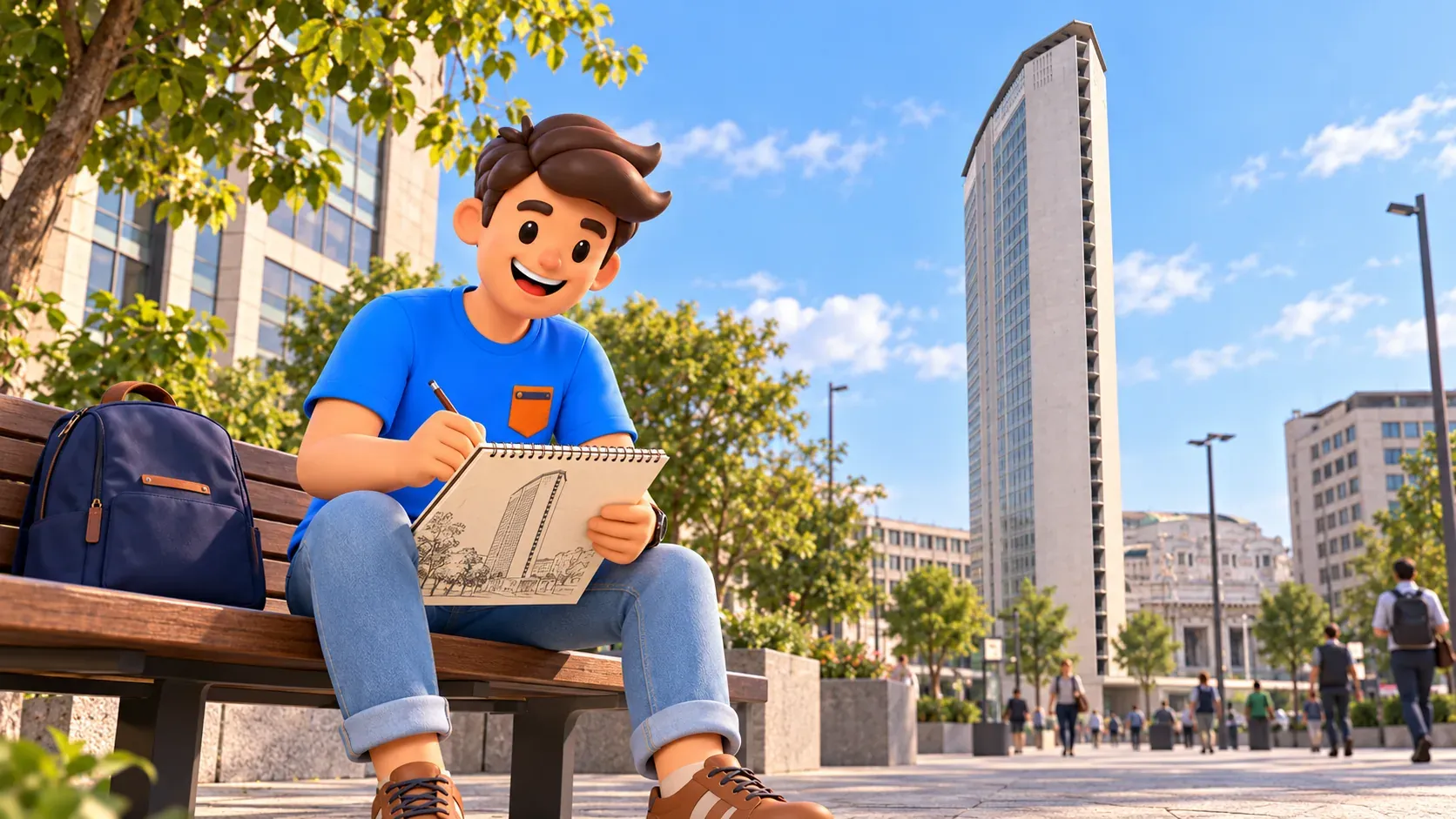
Palazzo Lombardia continues the story a short walk away. Its tower rises to about 161 metres, surrounded by lower parts of the regional headquarters and public spaces. The change in scale makes a useful comparison with the Pirelli building: one is a sharply defined modernist tower, while the other belongs to a larger complex with curved volumes and a covered square.
The important detail is that the regional buildings have separate copies of the Madonnina. Do not imagine a single statue repeatedly being taken down and carried to the newest tower. Above all, the eighteenth-century original remains on the cathedral. Thinking in terms of a growing family of images makes the continuity clearer than a story about one object constantly changing address.
At ground level, let the piazza explain the complex before looking towards the roof. Notice the relationship between the covered space, the building edges and the tower beyond. The belvedere on the 39th floor is a separate visitor possibility when an opening is announced. That floor is not the roof occupied by the Madonnina, and public office hours do not establish tourist access to either. Keep your outdoor plan independent of a lift ride.
CityLife carries the same symbol into a different skyline
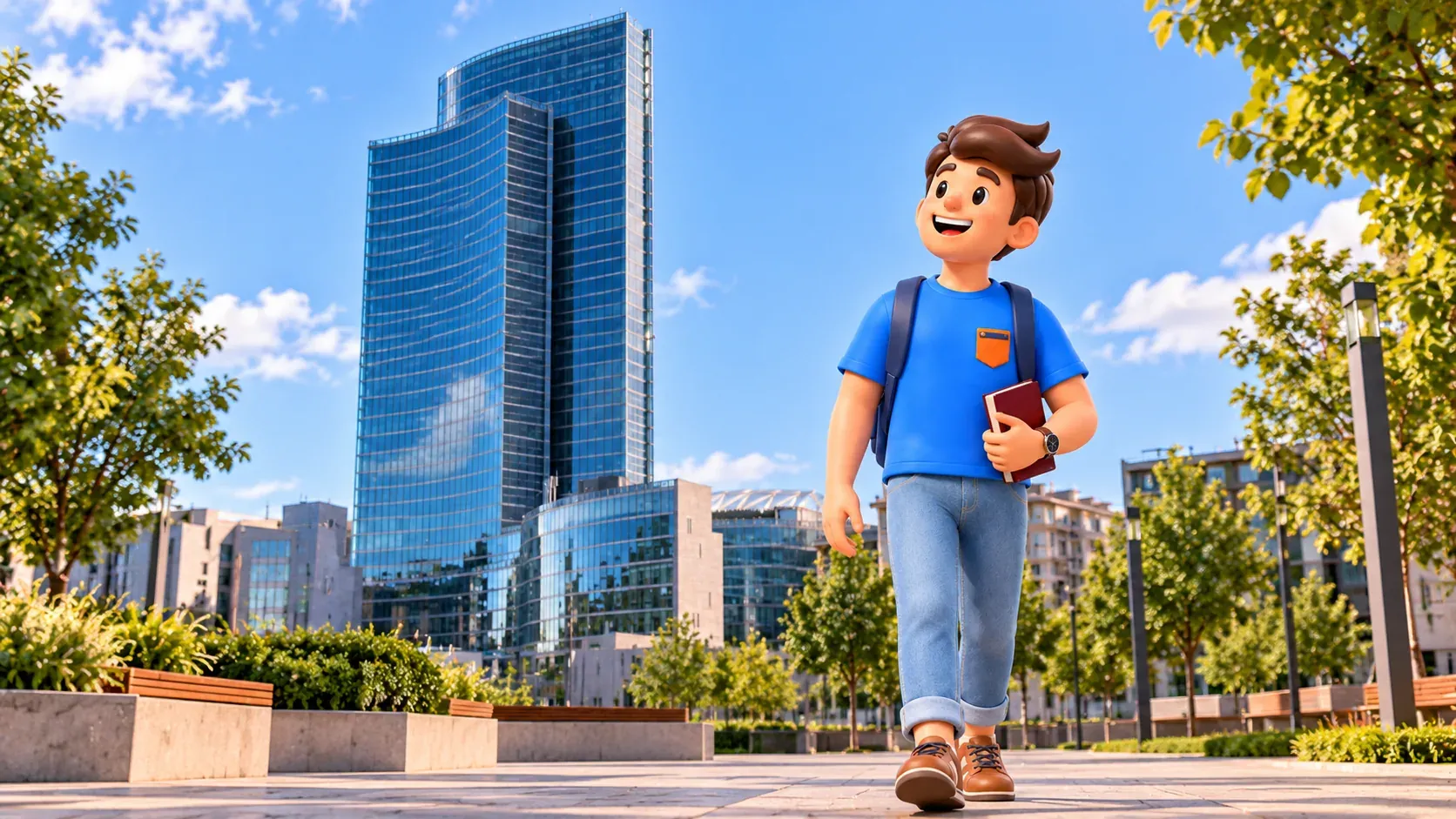
The Allianz tower in CityLife supplies a further chapter. Designed by Arata Isozaki with Andrea Maffei, the straight tower belongs to the group also associated with Zaha Hadid’s twisting profile and Daniel Libeskind’s curved one. A Madonnina copy appears on the Allianz building too. A traditional image has entered an architectural setting that otherwise looks far removed from the cathedral square.
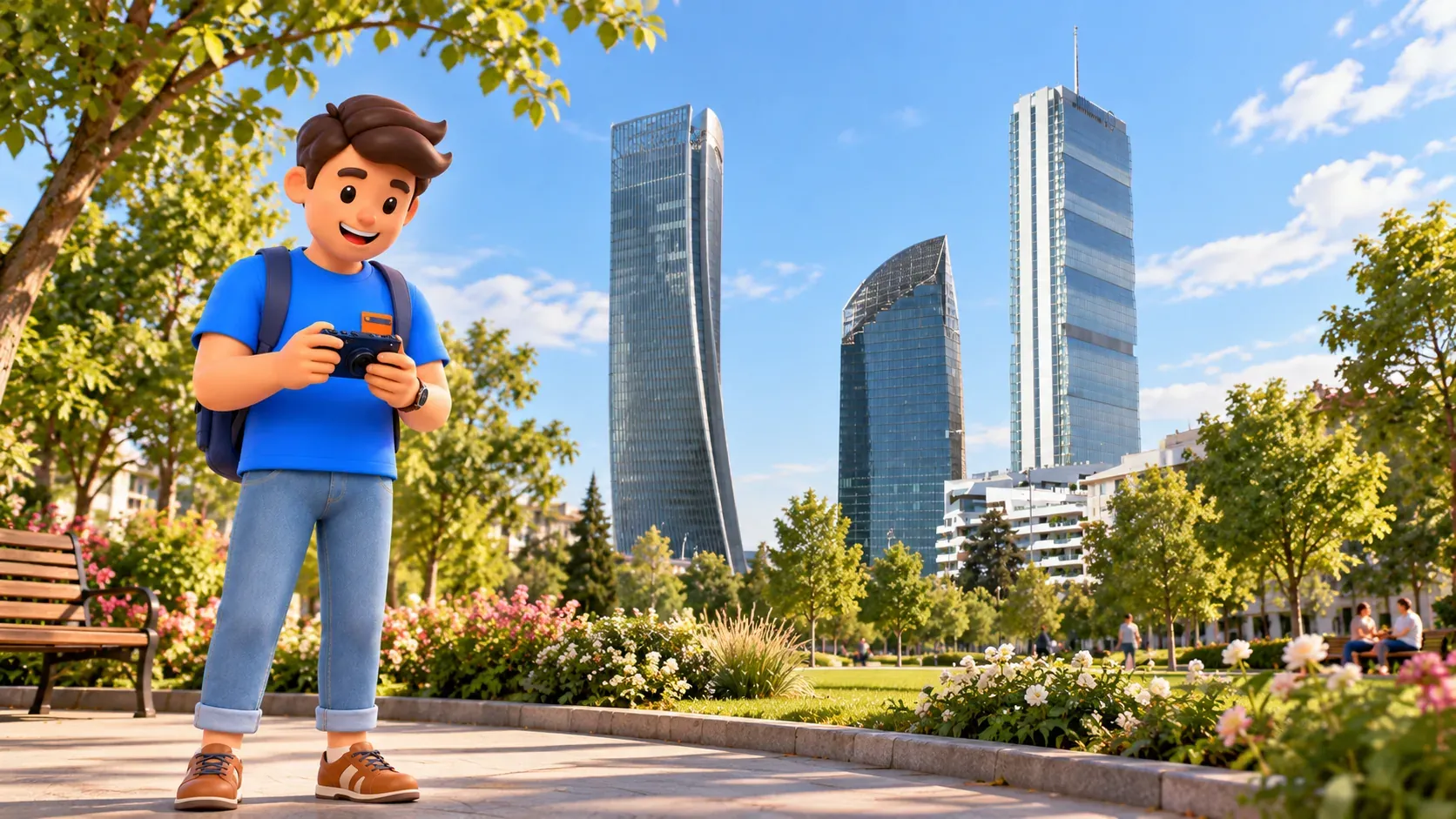
Here the question is less “Can I collect another statue?” than “What changes when the same symbol belongs to this composition?” Step back in a suitable public space and compare the profiles. The modern district gives the repeated image a different context, while leaving the Duomo’s role intact. The three towers are offices; an architectural walk does not include an assumed visit to their upper floors.
Height tables can confuse this comparison. A roof, a decorative spire and an antenna are different endpoints, so figures from different lists need not measure the same thing. This article does not award a current tallest-building title. For a visit, the meaningful comparison is between three urban settings: cathedral square, regional headquarters and CityLife. Choose the one that interests you instead of chasing a ranking.
Turn the history into a realistic short outing
For one manageable programme, begin in Piazza del Duomo and finish at Piazza Città di Lombardia. Allow about two hours and forty minutes, covering exterior observation and a metro connection. Spend 25 minutes in the cathedral square, then allow 45 minutes for the entire transfer: reaching the M3 platform, waiting, travelling towards Comasina to Centrale FS and emerging near the Pirelli tower. The train ride alone does not take all that allowance.
Give Pirelli 20 minutes, then allow 20 to walk through the Via Galvani area towards Piazza Città di Lombardia, using public pavements and crossings. Spend another 20 minutes looking at the regional complex. A 20-minute break and ten minutes of flexibility bring the total to 160 minutes. Expect roughly one to one and a half kilometres outdoors, depending on your approach, plus walking inside stations; these are planning estimates, not a measured route.
Use RoadMe to develop this architectural interest into a personal programme for the whole trip. Planning the days together in the app makes it easier and more efficient to give your favourite themes enough time while keeping space for meals, rest and other interests.
Travel to the start and onward from the finish is additional. The outline includes no cathedral interiors, terrace admission or tower ascent. Ordinary tourist access to the Duomo terraces is paid, and visitors remain well below the statue’s 108.5-metre summit; the upper central terrace is around 45 metres high. Adding a visit requires its full entry and viewing time, together with a check of current access arrangements.
Conditions were checked on 17 October 2026. Confirm transport changes and any specifically announced building opening for your dates; do not assume a weekly belvedere schedule from an old account. For a longer outdoor extension nearby, our Porta Nuova walk explores a different relationship between squares, park and residences. Save CityLife for another slot with our two-hour architectural walk. One well-chosen comparison is enough to see how Milan kept a familiar presence while learning to build higher.