
La Scala in Milan: Why the Museum and a Performance Feel Different
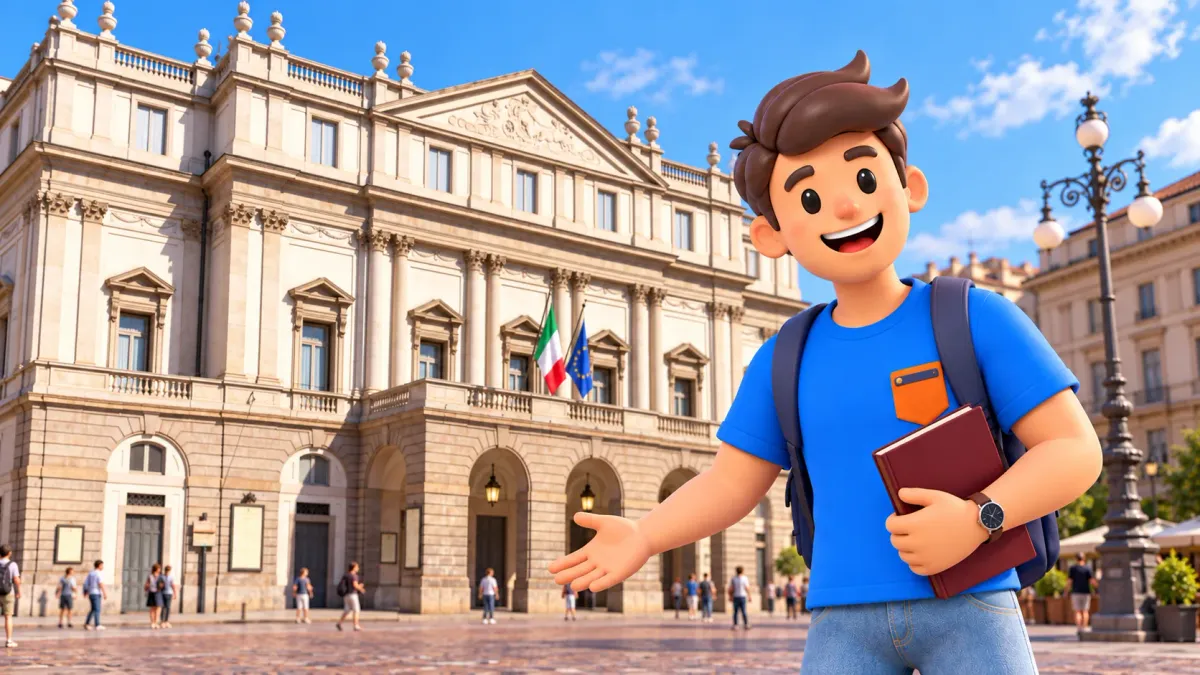
Choose La Scala’s museum when you want to explore the theatre’s history through objects and, if the working schedule permits, look into the auditorium from a box. Choose a performance when you want to spend time with a particular opera, ballet or concert as an audience member. These are different experiences, with different tickets and demands on your day. A museum visit does not include a show, while a performance is more than a convenient way to photograph the interior. A separate official guided theatre tour offers a third possibility.
Decide what you want to remember
Start with a question more useful than “How do I get inside La Scala?” Would you like to understand the people and objects behind its musical history, examine the building through a guided visit, or hear a work unfold in the room for which you bought a seat? Those interests lead to different choices. You can enjoy one without feeling obliged to complete all three during a short stay.
Try RoadMe for a personal Milan trip plan based on your interests, dates, pace and budget. Organising the whole stay in the app makes it more convenient to give a museum or performance proper time alongside the rest of the city.
Your available attention matters too. A museum fits a daytime cultural block and allows you to concentrate on selected displays. An evening performance asks you to arrive at a fixed time and stay with the work. If you are tired after travel, neither buying the most prestigious ticket nor fitting in another museum automatically produces a better experience. Choose the encounter you actually want and prepare the day around it.
One famous address, different layers of history
Giuseppe Piermarini designed the theatre, which opened in 1778 with Antonio Salieri’s L’Europa riconosciuta. It replaced the Royal Ducal Theatre after that building burned in 1776. The name La Scala comes from the earlier church of Santa Maria alla Scala on the new theatre’s site. This helps explain why a relatively restrained neoclassical frontage carries such a large cultural association: its importance developed through what happened inside.
The museum opened much later, in 1913, with the acquisition of the Jules Sambon collection central to its beginnings. It tells a history of music and theatre through material traces. That is a different task from presenting the next performance. A portrait, an instrument or a personal memento can explain a career and its setting, but none recreates an entire evening of live music simply by standing near the auditorium.
The building has also changed over time. Do not imagine that every visible surface remains exactly as it was on opening night in 1778. The useful connection between museum and performance is continuity through changing practices, people and spaces. A little history is enough to make the difference meaningful without trying to memorise every premiere or conductor before visiting.
Visit the museum for stories carried by objects
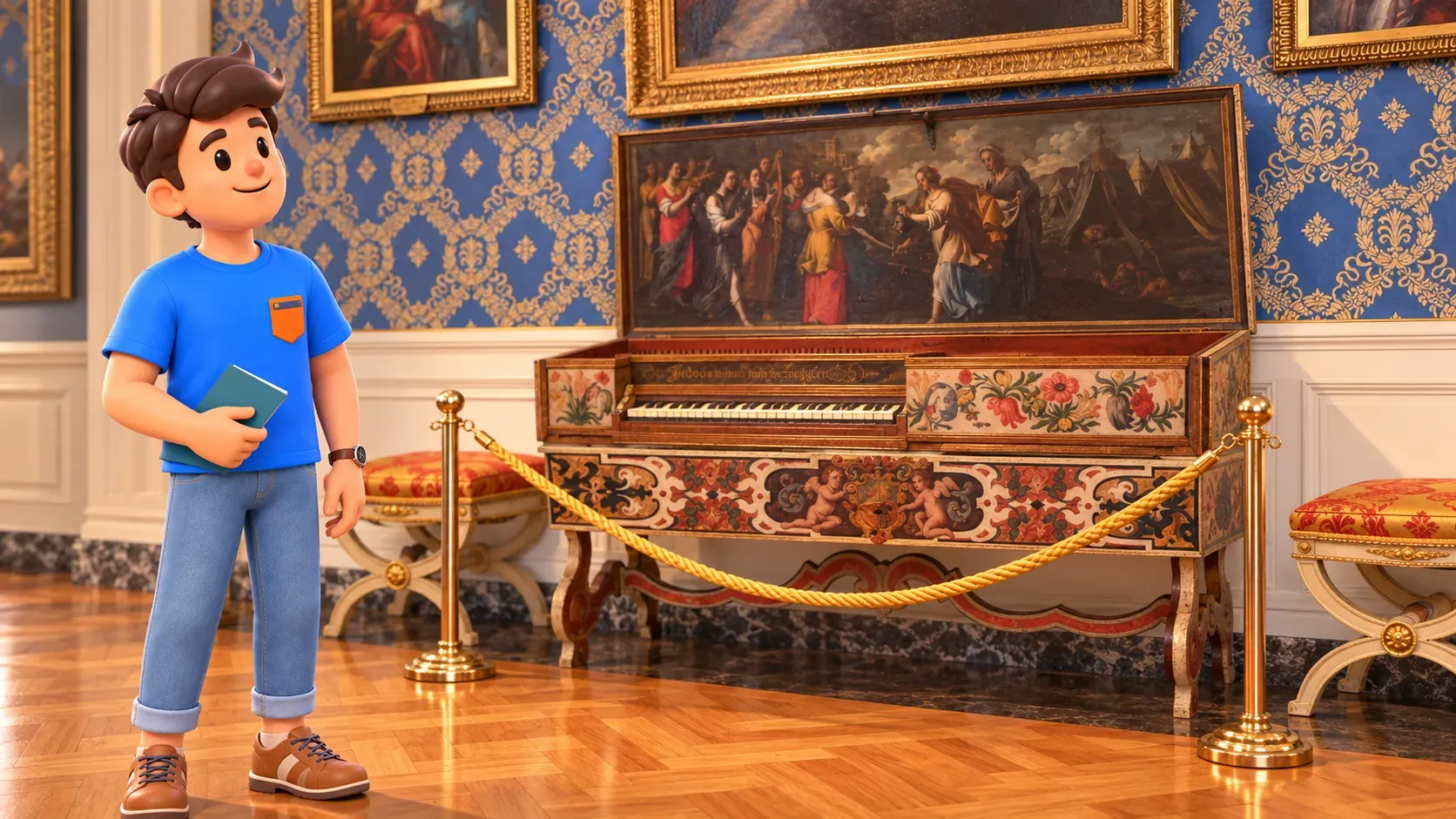
The collection includes portraits and busts of major musical figures, mementoes and musical instruments, with temporary exhibitions adding other perspectives. Choose a small thread to follow. You might compare how a portrait presents a performer with what a surviving object suggests about their working life. Or consider how an instrument becomes part of a larger theatrical culture. Read the labels before assigning a famous owner or date to something that catches your eye.
This is a museum visit, not an opportunity to try the instruments or handle historical material. Leave displays untouched and do not assume that every object seen in an older photograph remains in the same room. A selected collection can be satisfying without a checklist of celebrity possessions. The most useful result may be one person or one theme that you want to explore further afterwards.
The museum gives an average visiting reference of about 45 minutes, but your own pace can be slower. In the daytime outline below, 75 minutes allows a more considered selection, including the auditorium glimpse only if available. A complete longer audio route, an exhibition or lengthy reading can require more time. Plan for the visit you intend rather than assuming that every possible museum activity fits one advertised duration.
A view from the boxes is conditional
An ordinary museum ticket can allow a view into the theatre from third-tier boxes when rehearsals, performances and events permit it. This is a look at the auditorium, not admission to a rehearsal, a performance seat or a general backstage pass. The theatre remains a workplace. Its artistic and technical needs determine whether the view is available and what visitors may see at that moment.
Before buying, check the museum’s theatre-visibility information for the date and period you are considering. Do not select a ticket solely on a promise of an empty, fully illuminated hall. A morning arrival does not override the working calendar, and an online booking does not automatically remove every wait. Decide whether the collection itself interests you enough for the visit to remain worthwhile if the view is restricted.
If your main interest is a broader architectural visit, examine the separate official guided theatre tour. Its current format lasts about 60 minutes and includes museum admission, with a route through spaces such as historic boxes, the Royal Box, the entrance foyer and the Toscanini Ridotto. The route can change. Museum admission being included does not mean that a substantial independent museum visit is already contained in those 60 minutes.
The official guided product is currently scheduled Monday to Saturday, subject to rehearsals, performances and events. It is not suitable for children under 12 or people with walking difficulties. Those conditions belong to this particular tour, not to ordinary museum admission. The museum has staff-assisted lift access to its rooms and viewing boxes; performance access has separate arrangements. Ask about your chosen format rather than treating all visits to the same address as equally accessible.
For a performance, choose the work as well as the place
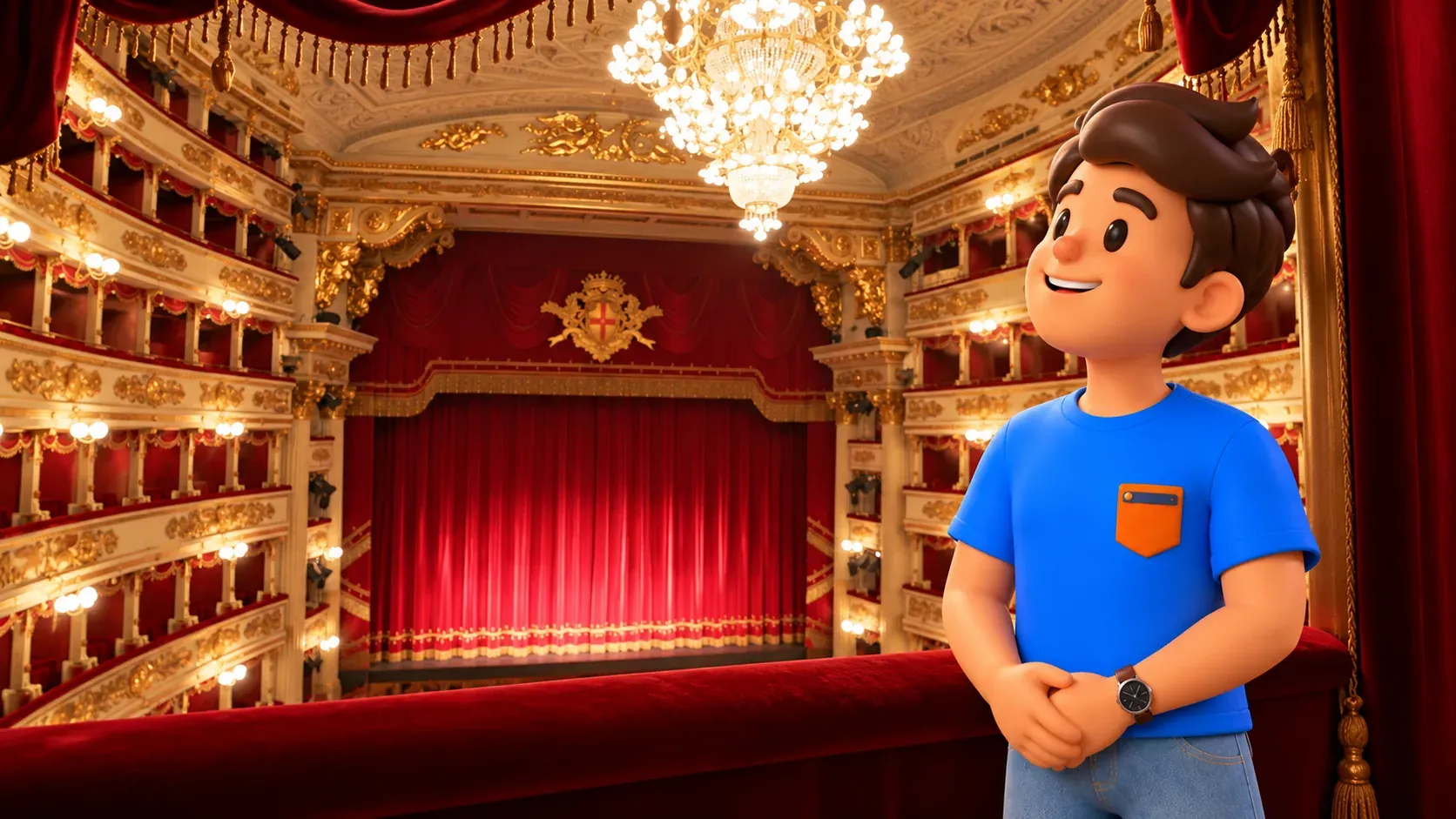
An opera, a ballet and a concert require different kinds of attention. Look at the actual programme for your dates, its starting time and running time, then decide what appeals to you. Do not choose solely because a famous title appears somewhere in the season. The work, performers and availability belong to a particular date, and not every production is presented every week.
Before selecting a seat, read its position and any visibility information. A lower price does not establish an unrestricted view, while the word “box” does not mean every seat in it offers an identical perspective. Check subtitle languages and the arrangements for your seat if following an opera’s text matters to you. Neither your article’s language nor the language of a ticket website determines the language of the performance.
A little preparation helps without becoming homework. Read a short synopsis before an opera or learn the broad structure of a ballet you do not know. Leave time to experience the performance rather than trying to document it. The theatre prohibits photography, recording and ordinary mobile-phone use in the auditorium. A live evening asks for sustained attention; the museum’s freedom to pause beside an object is a different pleasure.
Practical conditions shape both experiences
The museum normally opens daily from 09:30 to 17:30, with last admission at 17:00. Its regular closing dates include 1 January, Easter, 1 May, 15 August and 7, 25 and 26 December. On 24 and 31 December it closes at 15:00, with last entry at 14:30. Check exceptional changes for your date. A museum day and an evening performance do not share one interchangeable opening timetable.
Ordinary museum admission, the official guided theatre tour and a performance are paid choices with separate conditions. Buy the product you need through the institution’s official channels. For shows, follow the actual sales calendar rather than assuming that every ticket becomes available a fixed number of days ahead. A commercial city tour mentioning La Scala may include only its exterior or a museum visit; read what is covered before comparing it with a performance ticket.
At the museum, backpacks and large bags must go in the entrance lockers, and food, water bottles and other drinks are not allowed in the rooms. Photography in the collection is for personal use without flash; in the theatre boxes, follow the signs, which may prohibit it. A show has its own cloakroom requirements for bags, cameras, outerwear and bulky items. Check what you will carry before arriving with a full sightseeing day’s luggage.
Give a museum visit a comfortable two-hour block
One daytime version starts at the museum entrance on Largo Ghiringhelli and finishes in Piazza della Scala. Allow ten minutes for entry, lockers and orientation, 75 for selected museum rooms and a conditional auditorium view, ten for the square, 15 for a short pause and ten for flexibility. The total is 120 minutes. Starting around 10:00 would mean finishing around noon under the normal calendar, without promising a particular theatre-visibility slot.
Expect roughly 0.3–0.6 kilometre outdoors, depending on the pause and your movement around the square, plus indoor walking. These are planning estimates, not a measured route. Arrival and onward travel are additional. A guided theatre tour, a full lunch or another museum needs its own allowance. Our two-hour central Milan walk is a separate outdoor programme, not another activity already included here.
Use RoadMe to turn your interest in music or museums into a personal programme for the whole trip. Preparing the days together in the app is more convenient and efficient than assembling isolated bookings, with room for your preferred pace, meals and rest.
Let a performance become the evening’s main commitment
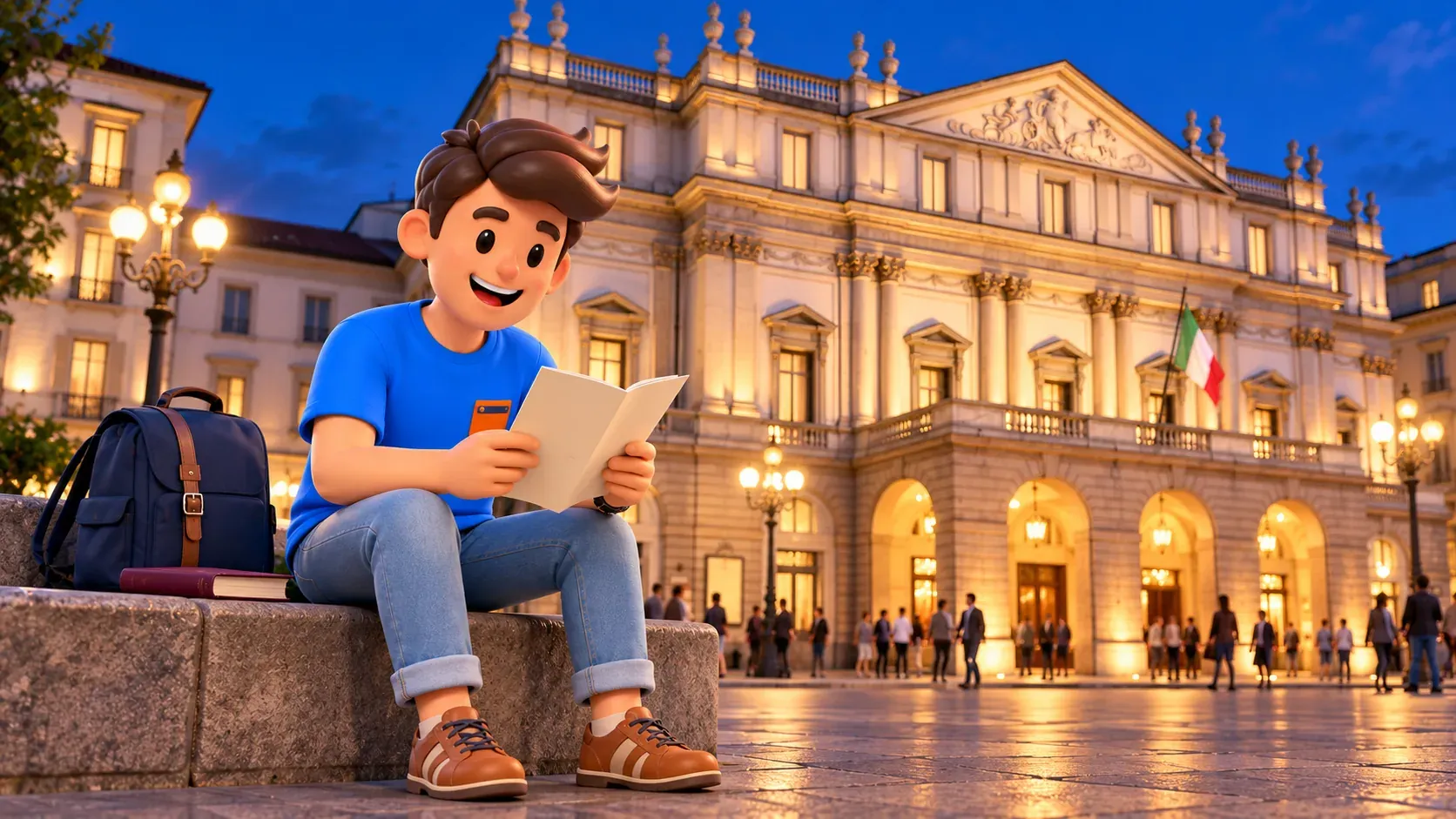
For a show, work backwards from the time on the actual ticket. The theatre advises arrival at least 20 minutes before curtain-up; allowing about 45 minutes is a calmer planning choice. Find the correct entrance: the main one faces Piazza della Scala, while gallery ticketholders use the museum entrance on Largo Ghiringhelli. Leave time for cloakroom arrangements and finding your assigned seat. A restaurant meal belongs before this arrival allowance, not inside it.
Choose clothing appropriate to the theatre. Shorts and sleeveless T-shirts are not admitted; do not reduce the requirement either to compulsory black tie for every event or to permission to wear anything else. Late entry conditions differ by seating area, so avoid relying on reaching your seat after the start. Use the production’s full running time, including intervals, and leave a further practical margin after it ends. Confirm the actual return transport rather than assuming the metro will still be running whenever the curtain falls.
Conditions were checked on 17 October 2026. If a gallery day suits you better, our comparison of Brera, the Ambrosiana and Novecento offers a different art choice. La Scala does not need to provide every possible experience in one visit. A thoughtful museum hour and a carefully chosen performance are worthwhile for different reasons; knowing which one you want makes the whole Milan day easier to enjoy.


