
Medieval Paris on the Right Bank: A Tower, a House and a Church
A medieval Paris walk can begin with the ordinary streets of the Right Bank. A palace staircase, a carved inscription on a house and a church altered across the centuries reveal different sides of city life. This compact route brings together Tour Jean-sans-Peur, the house of Nicolas Flamel and Saint-Leu-Saint-Gilles. The reward is understanding a few surviving buildings through their use, rather than collecting every medieval site in central Paris.
Allow approximately three hours, starting and finishing at Étienne Marcel on Métro line 4. The main plan includes a full tower visit, Flamel’s exterior and a short church stop when ordinary visiting is possible. Wednesday to Saturday, beginning around 1:30 p.m., fits the regular opening arrangements most easily. Alternatives below cover closed doors, a shorter outing and mobility needs without treating every attractive entrance as public access.
A three-hour route with one substantial visit
The sequence is Étienne Marcel → Tour Jean-sans-Peur at 20 rue Étienne Marcel → Nicolas Flamel’s house at 51 rue de Montmorency → Saint-Leu-Saint-Gilles on rue Saint-Denis → the same Métro station. Head west from the station to the tower first. Its interior has a defined opening time and several levels to explore, while the following house stop is a façade viewed from a public pavement.
Budget roughly 90 minutes for the tower, 15 for Flamel’s house, 20 for the church, 15 for a pause and 40 for all street transfers, crossings and the station approaches. That totals three hours. These are planning estimates, not timings from an author’s walk. A full meal, shopping and travel from your accommodation require extra time. If you enjoy reading every exhibition panel, give the tower a longer block instead of squeezing the rest.
To fit this historical afternoon into your stay, try RoadMe: the app works out a complete personal day-by-day plan around your dates, interests, pace and budget. It is much more convenient to use a coherent programme in the app, with time assigned to the experiences you actually want.
A 1:30–4:30 p.m. example leaves a daytime window for the later stops. Agree on a pause after the museum with your companions. If the tower takes longer, choose fewer façade details afterwards and preserve the return journey.
Tour Jean-sans-Peur: a surviving piece of a palace
The tower is a remnant of the Paris residence of the Dukes of Burgundy, the Hôtel de Bourgogne. Built in 1409–1411, it rises approximately 27 metres. Its small present-day address represents a much larger palace complex that has largely disappeared. Keeping that wider setting in mind makes the tower easier to understand as a place of urban residence and status, rather than an isolated castle on a shopping street.
This is late medieval civil architecture, with rooms, circulation and comforts for a powerful household. The tower and palace were attached to the earlier wall of Philippe Auguste, but a visit can go beyond military history. The building communicated its owner’s position while also serving daily life. That makes it a useful first stop for visitors who prefer to learn history through spaces and objects instead of a long chronology.
Look at the narrow stone volume and its position in the courtyard before following the interior route. Several levels, the staircase and exhibition material deserve a substantial visit. The operator recommends about an hour and a half for the tower, temporary exhibitions and garden access. Do not plan a complete visit as a brief interruption between photographs on the street; the interior is the main time commitment of this outing.
As checked on 13 October 2026, ordinary individual visits run Wednesday to Sunday, 1:30–6 p.m. Self-guided admission is paid and does not require advance reservation for individual visitors. Organised groups and special events have different arrangements. Monday and Tuesday are unsuitable for the ordinary interior version. A lecture scheduled outside regular hours does not make the usual daytime museum visit available.
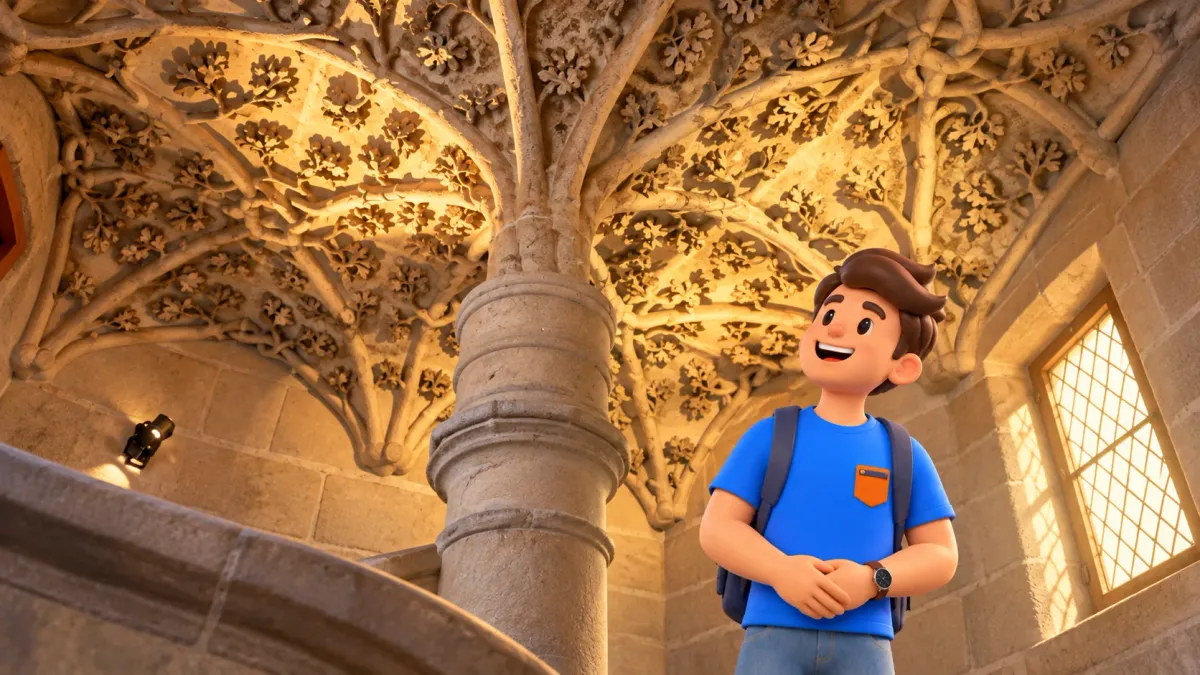
A stone tree above the staircase
The vegetation vault over the grand spiral stair is the most distinctive detail. Sculpted stems, branches and leaves spread out above the central support. The decoration carries a family meaning: oak represents Jean’s father, hawthorn his mother and hops Jean himself. A piece of carving thus connects a visible form with the owner’s lineage and the position he wished to express.
For a first visit, take in the whole composition and the way the branches connect the ceiling. You need not identify every leaf or memorise a genealogy. Compare this elaborate decoration with the more practical features of the living spaces. Fireplaces and surviving latrines give a brief sense of domestic comfort, making the palace story about use as well as visual display.
Take the stairs at your own pace and leave room for other visitors. This is an interior architectural visit, with no open rooftop viewing platform included. Keep a separate part of your trip for panoramas if they are a priority.
Walking to rue de Montmorency
After the tower, return east along rue Étienne Marcel. Cross rue Saint-Denis and boulevard de Sébastopol at marked pedestrian crossings, then continue east on rue aux Ours. Turn north along rue Saint-Martin, followed by east on rue de Montmorency towards number 51. Reading the street names is useful because the surrounding junctions can otherwise look similar at first glance.
Nicolas Flamel’s house: charity before legend
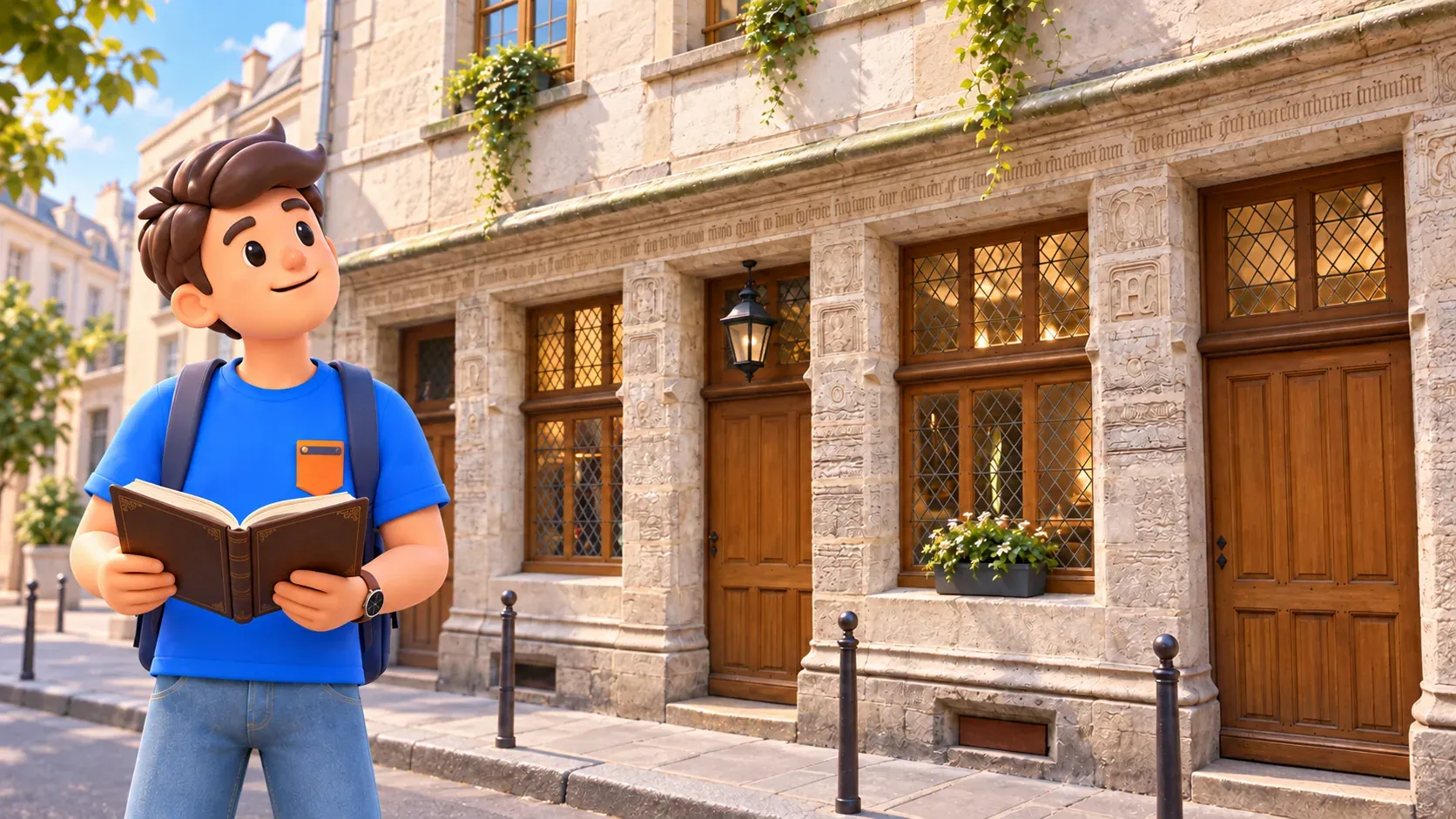
The stone house at 51 rue de Montmorency was commissioned by Nicolas Flamel in 1407. It is often described as Paris’s oldest house, although the national heritage record cautiously says “probably”. For this walk, it is enough to see it as one of the oldest surviving houses with a known date. The date and the connection between its façade and original purpose matter more than making an absolute age ranking.
Commerce occupied the ground floor, while the upper rooms accommodated poor people who were expected to say prayers. That charitable use explains the long inscription on the façade. It gives the building a social story that can be understood even without knowing the famous name. Here an ordinary city property was organised to combine income-producing activity with help for others.
View the building from the public pavement. First notice the pale masonry and the rhythm of wooden doors and windows, then the carved piers and inscription band. Choose a single detail and a wider view within the neighbouring buildings. Reading every old letter is not necessary to understand why the inscription belongs to the history of the house. Leave the narrow pavement and entrances usable for other people.
Flamel’s name also brings stories of the philosopher’s stone and turning metal into gold. Treat these as legends that became part of cultural memory. The house is not presented here as a visitable alchemist’s laboratory with hidden rooms. Its documented date and charitable purpose already make a worthwhile stop, while the legend provides a different kind of story attached to the same place.
A restaurant operates in the building today. Looking at the exterior from the street is free, but that does not establish unrestricted public access to the rooms. If you want to eat there, plan a separate restaurant visit with its own arrangements and time allowance. It is outside the three-hour programme. This stop is about stone carving, a short historical connection and continuing towards the church.
Saint-Leu-Saint-Gilles: a church shaped by successive centuries
Walk back west along rue de Montmorency and south on rue Saint-Martin. Turn west on rue Grenier Saint-Lazare, which continues as rue aux Ours. Cross boulevard de Sébastopol at the pedestrian crossing and head south along rue Saint-Denis to the church by rue du Cygne and rue de la Grande Truanderie. Its main address is 92/92 bis rue Saint-Denis.
The church’s origins go back to 1235, but the building you see is not an untouched survival from that year. The choir and side areas were altered later; in the nineteenth century, the opening of boulevard de Sébastopol affected the eastern end. This is an important part of the route’s historical theme: a medieval foundation continued to function and change within an expanding city.
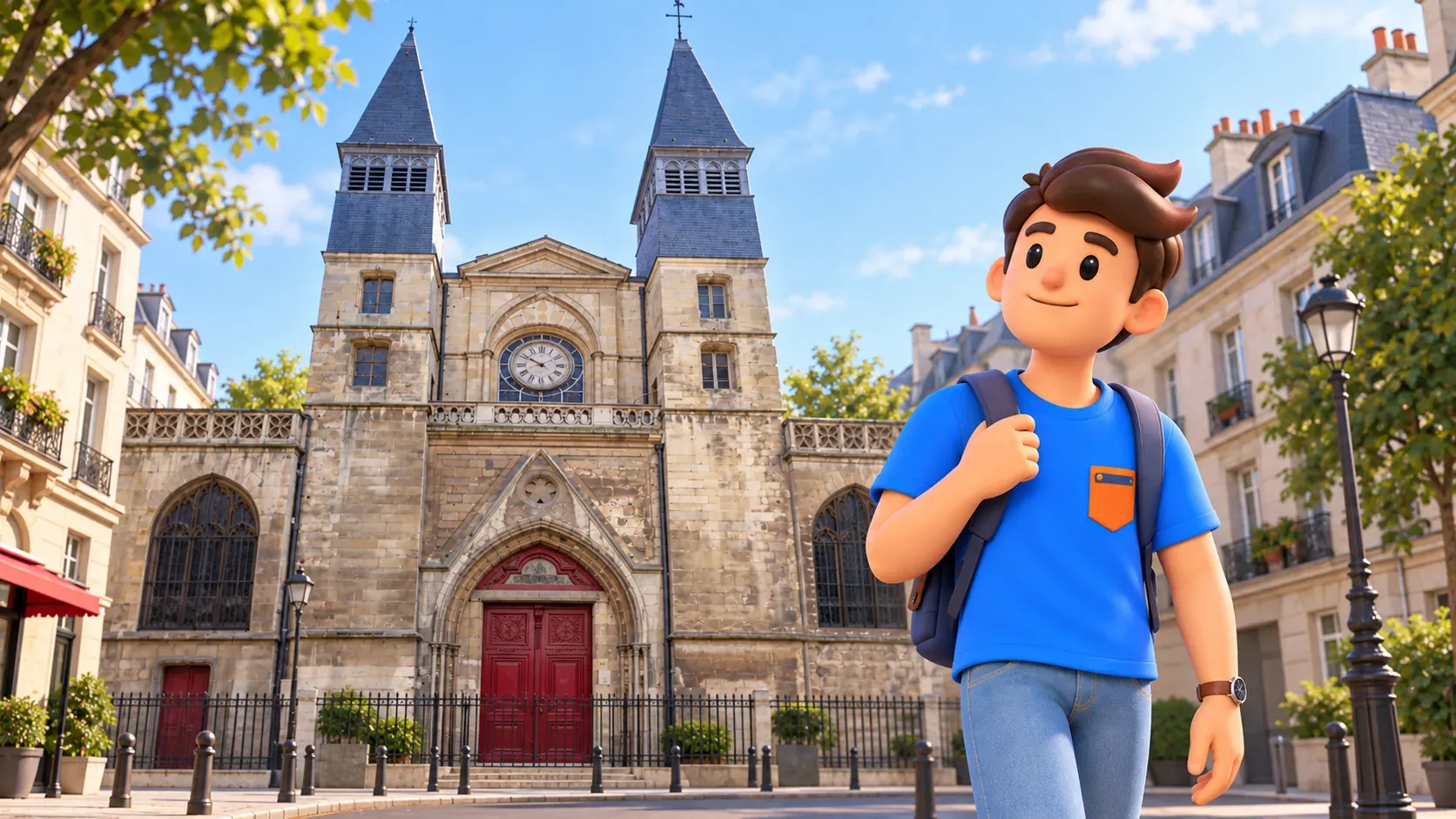
Outside, look at the two towers, central entrance and clock. If the church is open for quiet sightseeing, step in for a selected short visit. Pay attention to the height of the space, arches and window light rather than attempting every chapel in twenty minutes. Compared with the tower’s domestic rooms, this is a shared place of worship, giving a different perspective on how old buildings are used.
The parish currently lists Monday to Saturday, 1–6:30 p.m., for ordinary church opening. Normal entry is free. Sunday worship is announced, but a separate Sunday sightseeing window is not treated as confirmed here. When a service or parish activity is taking place, use the exterior stop or wait for a suitable opportunity. The welcome of an active church is different from a guarantee of uninterrupted tourist access.
Return north along rue Saint-Denis to Étienne Marcel to finish the loop. You have seen three distinct kinds of city space: a princely residence, a charitable house and a parish church. Compare one feature from each, such as the stair, inscription and light. This gives the walk a memorable shape without extending it into a catalogue of every old address nearby.
Closed doors, mobility and the rest of the trip
For step-free entry to Saint-Leu, the city lists an entrance on rue du Cygne opposite number 2, available on request with advance contact. Arrange it with the parish beforehand. This is a condition of a specific church entrance, not confirmation that the Métro, every street crossing or upper tower rooms are step-free. The tower operator identifies an accessible ground-floor temporary exhibition for visitors with physical mobility limitations.
If the climb is unsuitable or the tower is closed, choose a shorter street version. View what is accessible from the public street approach, then continue to Flamel’s house and the church. Do not rely on entering the tower courtyard outside visitor hours. Roughly 90 minutes can cover exterior stops, transfers and a pause, depending on your pace; if the church is also unavailable, keep its façade as the stop.
Most transfers are outdoors, so rain still affects the walk even when the museum is open. Bring appropriate protection and shorten time spent standing at façades when necessary. Keep a longer meal or another large museum as a separate part of the day. This preserves attention for the selected buildings rather than turning every stop into another calculation against the next appointment.
For a stay that combines old Paris with museums, greenery and time to rest, use RoadMe to work out a complete personal trip plan around your interests and pace. The app makes a carefully organised sequence of days much more convenient and effective to use than repeatedly assembling a programme from separate ideas.
For another day, consider our Marais walk through squares, mansions and small gardens. It explores a different city setting and is a separate outing rather than an extension of these three hours. After this route, decide what you want to investigate further: the workings of a palace, charitable housing or the life of a parish. That preference can guide the next part of your Paris trip.


