
Marseille in two days: the historic centre and a day by the sea

Two full days in Marseille work well when each has a different character. Give the first to the Old Port, Le Panier and one cultural visit on the northern waterfront. On the second, go up to Notre-Dame de la Garde, descend towards Saint-Victor and finish around the Pharo gardens. If you still have energy, continue towards the Corniche and Vallon des Auffes.
This is a city itinerary with time for lunch and pauses, rather than a programme that also squeezes in islands or a Calanques hike. Suggested time blocks are editorial estimates, not measured walking times. Check the operating days before choosing the order: Mucem and Fort Saint-Jean normally close on Tuesday, so swapping the two days can be useful.
Plan two contrasting days, with one main choice each
Keep the first day mainly north of the Old Port and the second on the southern side. That simple division reduces repeated crossings and gives each walk a clear direction. You will see the central harbour from several angles without using it as a place to return between every unrelated attraction. Leave the more distant parts of Marseille for another visit.
For the first afternoon, choose exhibitions or outdoor architecture. A proper museum visit needs a substantial block of attention; a walk around an ensemble is a different experience. On day two, decide whether the basic hill-and-gardens programme is enough or whether you want the longer coastal extension. Neither decision needs to be made more ambitious simply because the trip is short.
Start both mornings after breakfast and protect a real lunch break. The suggested sequence assumes that you can walk through parts of the old quarter and manage some changes in level. Using transport to reach the basilica can reduce effort, while specific access needs require checking the actual approaches and entrances. Keep the plan responsive to the people travelling with you.
It is much more convenient to have RoadMe develop a personal two-day itinerary around your interests, dates and pace than to assemble each visit separately. Try the app to turn the kind of Marseille trip you want into a clear programme for both days.
Day one morning: the harbour leads into Le Panier
Begin around 09:00 at the eastern end of the Old Port, near the mirrored Ombrière. Spend time looking across the basin before following the northern quays towards the town hall. The hilltop basilica, harbour entrance and changing waterfront facades provide a first understanding of the city. You are gathering a sense of place, not trying to identify every building immediately.
Continue into Le Panier, using a few anchors such as Place de Lenche, Place des Moulins and the Vieille Charité. Allow roughly the rest of the morning for the neighbourhood, including the approach from the quay. Narrow streets, slopes and small squares invite a slower pace. Choose a limited loop that leaves space for what catches your eye.
At the Vieille Charité, the change from a building associated with care for the poor to a cultural ensemble adds a useful historical thread. For this itinerary, a short look at the exterior or courtyard, where accessible, is enough. A full visit to its museums would replace the main afternoon visit, rather than becoming an additional obligation.
Have lunch in or near the area you have reached. There is no need to cross the harbour for a particular address and then return. If you would like a more detailed first-day sequence, our one-day Marseille walk covers this central introduction. For a two-day stay, the important point is to finish the morning with enough energy left for the afternoon.

Day one afternoon: La Major and one Mediterranean experience
After lunch, continue towards La Major. The cathedral’s scale and contrasting stonework offer a different perspective from the smaller streets behind you. Look at the ensemble before deciding on a short interior visit, if access and religious use permit it. The older cathedral nearby reminds you that the area’s religious history was not created in a single moment.
Next, head towards the J4 waterfront for Mucem. If exhibitions are your priority, allow around two hours, adapting that estimate to the current programme. The museum’s exploration of Mediterranean societies can connect the harbour outside with movement, work and everyday life across the sea. Choose the topic that interests you most rather than feeling obliged to see every room.
If you prefer architecture and views, use the same block for the permitted outdoor spaces around Mucem and Fort Saint-Jean. The pedestrian links between contemporary museum and historic fort help explain the waterfront as an ensemble. Access still depends on opening arrangements. Finish around the fort and sea-facing area in the late afternoon, leaving the journey to your accommodation separate.
Keep the evening uncomplicated: dinner nearby and time to recover before the hill and southern waterfront tomorrow.
Day two morning: Notre-Dame de la Garde and the city below
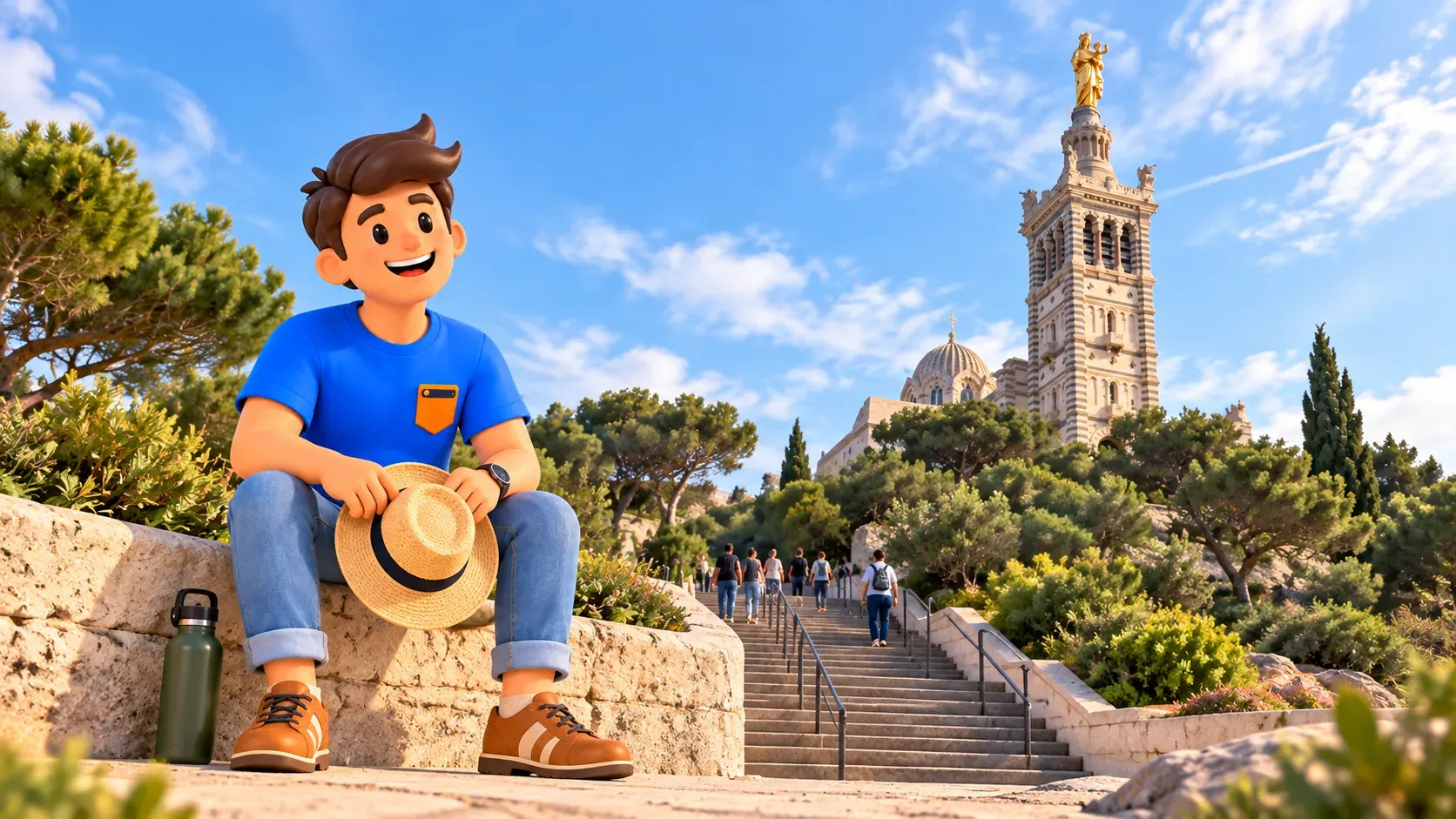
Aim to reach Notre-Dame de la Garde around the middle of the morning, allowing for your approach beforehand. You can walk up if that suits your fitness, or use an appropriate current transport connection and keep more energy for the rest of the day. Do not turn the hilltop visit into a promise of an easy walk: the ascent is part of the experience.
Give the sanctuary and its surrounding viewpoints about an hour to an hour and a half, according to access, services and your interest. From above, the Old Port you explored yesterday becomes part of a much larger city. Look for the relationship between water, ridges and neighbourhoods instead of trying to name every distant landmark.
The basilica’s familiar name, the Bonne Mère, belongs to a long connection between the sanctuary, local people and mariners. That context gives the visit more meaning than a panorama alone. Inside, remain attentive to worship and the atmosphere of a working religious place. Ordinary public visiting is distinct from special guided experiences or access to restricted terraces.
Towards midday: descend gradually and pause near Saint-Victor
After the hill, make a deliberate decision about the descent. A walking route can lead towards the lower streets and the Saint-Victor area; the Jardin de la Colline Puget may provide an optional green pause if its approach suits you. Allow generous time for slopes and street crossings rather than converting a short straight line on the map into a fixed arrival promise.
Have lunch before the next substantial part of the day. The area around Saint-Victor is a useful place to stop because you are already on the southern side of the port. Lunch is part of the programme, not the first thing to disappear if the morning ran longer. If you are tired, use the pause to simplify the afternoon before setting off again.
The abbey introduces another strand of Marseille’s religious history. Its robust exterior and early Christian heritage create a different impression from the hilltop basilica. A modest visit to the upper church, when appropriate, can fit the route. Treat the crypts or a guided visit as a separate choice with its own access and timing, not as an automatic addition.
Day two afternoon: the Pharo gardens and a different harbour view
From the Saint-Victor area, continue towards the Pharo and its Jardin Émile Duclaux, keeping time for the walk between them. Here the aim is a garden visit, sea views and an exterior appreciation of the palace. The building now serves a congress function; seeing it on the route does not mean that the interior operates as a permanently open visitor attraction.
The palace’s origins as an imperial residence add a short historical contrast to the fortifications and religious buildings already seen. Its setting matters as much as the facade. In the gardens, change your position and compare the port entrance, the opposite waterfront and the sea. Yesterday’s walk will begin to make sense as a line across the view.
Allow roughly an hour for a relaxed visit, adjusting to the open areas and weather. Sit before deciding on the rest of the afternoon. You can finish this second day around the Pharo without missing the point of the itinerary. The harbour, old town, hill and southern garden already form a varied introduction to Marseille.
Optional extension: the Corniche and Vallon des Auffes
If time, weather and energy still favour walking, continue towards the Catalans area and then along the Corniche in the direction of Vallon des Auffes. This is an additional coastal section, not a short step immediately outside the garden gate. Reserve time for the journey out, a pause at the little harbour and the return or onward transport.
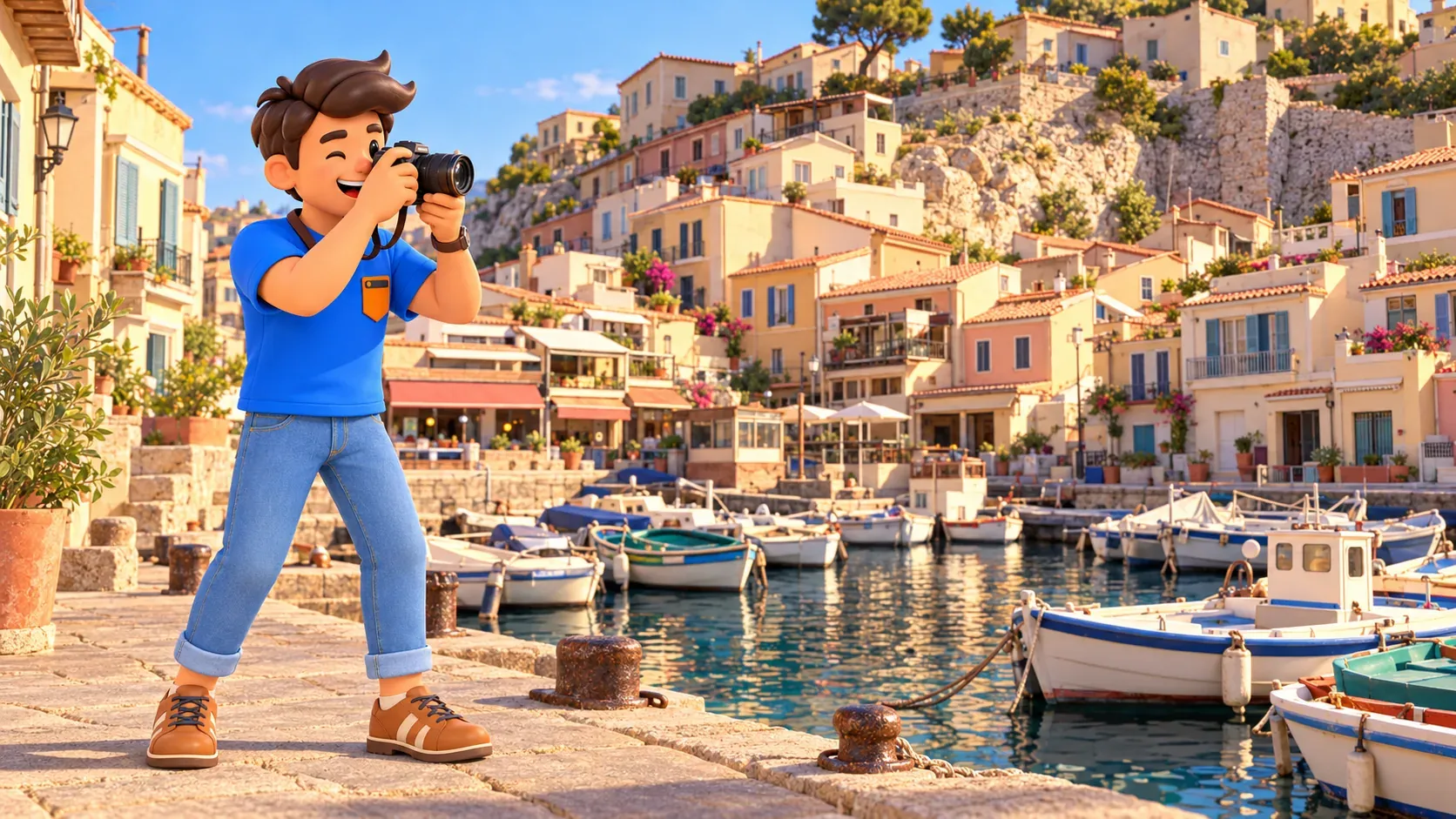
Vallon des Auffes changes the scale again. Small boats and houses gathered around the sheltered basin offer a more intimate maritime scene than the Old Port. Its name is associated with a plant once used for ropes and fishing nets. That simple connection helps you look beyond an attractive photograph towards the working traditions behind the setting.
Decide whether to approach the harbour itself or remain with a view from an appropriate public position above. Steps and changes of level may affect that choice. This itinerary proposes a walk and a pause, not a swimming session. If the extension would leave you rushing to a departure or arriving exhausted, choose a shorter coastal section and turn back.
Fit the calendar, weather and travel arrangements around the route
If one of your days is Tuesday, place the hill-and-south programme on that day when sanctuary and garden access permit it, and give the other day to Mucem. Check exceptional closures as well as the usual weekly pattern. If the museum cannot fit at all, retain a central street walk and choose an open cultural alternative only if it genuinely suits the trip.
In hot weather, start the exposed walking sections earlier and use lunch or an indoor visit to break up the hottest hours. In rain or strong wind, shorten the coast and reassess the hilltop portion. The next day’s weather may justify changing the order even when all the buildings are open. A useful itinerary makes those decisions easier rather than resisting them.
Keep arrival and departure transfers outside the sightseeing blocks. Two nights do not necessarily mean two full days. For a late arrival or early departure, remove a section while preserving your priorities. Check the current local services for any transport you plan to use.
For a weekend that balances culture, neighbourhoods and the sea, RoadMe makes the organisation more convenient by working out a personal trip plan around your interests. You can concentrate on enjoying Marseille while the app brings the programme together.
Make two days feel like one coherent trip
For a balanced version, keep one main indoor visit, two proper lunches and a clear distinction between the basic route and the coastal extension. The first day introduces the harbour at street level; the second shows the same city from a hill and another shore. That relationship is more memorable than fitting in a longer list of unrelated places.
Choose a personal emphasis before adding anything else. An interest in history may justify a longer abbey visit and a shorter coast; a love of neighbourhoods may mean less museum time and more room in Le Panier. Someone seeking sea views can finish slowly at the Pharo. Each version remains a complete two-day visit when its choices are intentional.


