
One day in Marseille: the Old Port, Le Panier and the sea
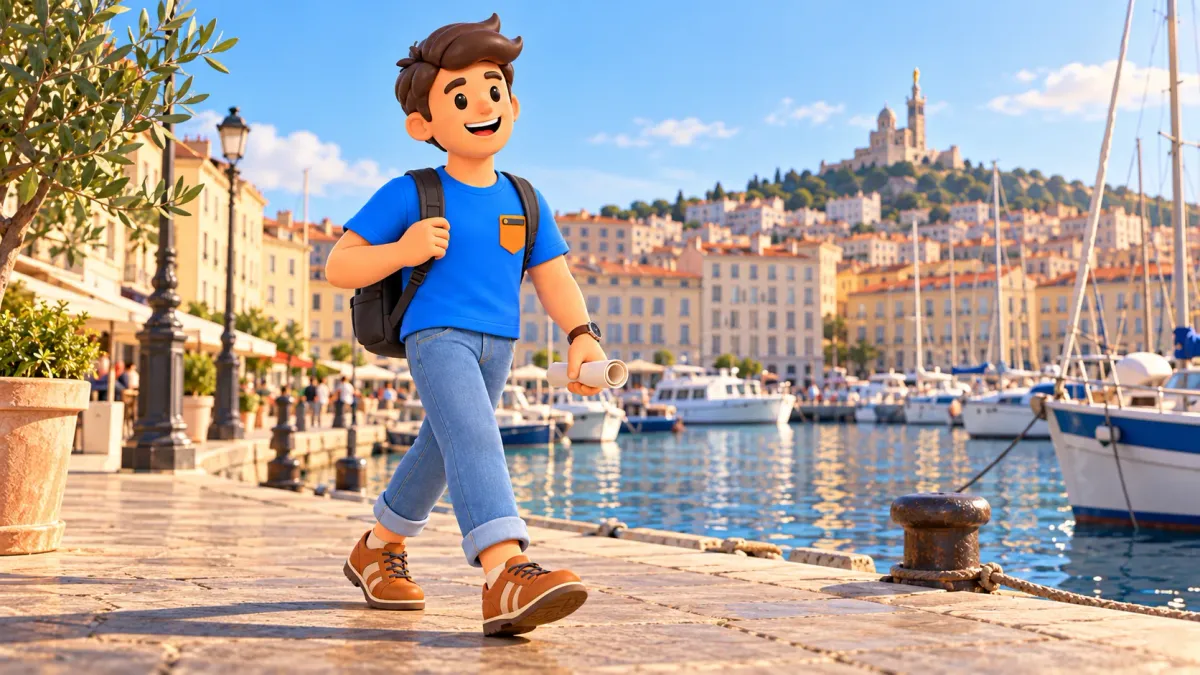
For one full day in Marseille, stay on the northern side of the Old Port and follow a clear sequence: the waterfront, Le Panier, La Major, then Mucem and Fort Saint-Jean. Give the afternoon to either a museum visit or more time outdoors. This introduces several sides of the city without trying to include an island crossing, Longchamp and a hilltop climb as well.
The suggested day runs from roughly 09:00 to 17:00 and includes lunch and short pauses. Times are editorial allowances, not measurements from a timed walk. It is best suited to a day when Mucem and the fort are operating; both normally close on Tuesday. A separate Tuesday option below keeps you on public streets instead of depending on closed entrances.
Choose one main visit before you start
The basic route begins at the mirror canopy on the eastern end of the Old Port and finishes in the waterfront area around Fort Saint-Jean. Walking between the main areas is only part of the day: exploring Le Panier, taking breaks and looking at buildings also need time. Do not interpret the short gaps between map markers as the whole visit.
Choose your afternoon priority now. If you want to understand Mediterranean societies through exhibitions, reserve a substantial block for Mucem. If you are more interested in architecture, neighbourhoods and sea views, spend that time in the permitted outdoor spaces instead. Treat this as a choice between two versions of the same day, rather than trying to complete both programmes in full.
Before setting out, check the museum and fort calendars for your actual date, including exceptional closures. A specific exhibition may have its own conditions, while access to a courtyard, bridge or terrace depends on the relevant site being open. Keep the morning flexible enough that one delayed visit does not unsettle everything that follows.
It is much more convenient to have RoadMe work out a personal day around your interests, available time and pace than to assemble every stop yourself. Try the app to turn the kind of Marseille you want to see into a coherent itinerary.
09:00: meet the Old Port at water level
Start beneath or beside the mirrored Ombrière, then give the harbour your attention before opening another list of sights. Look across the moored boats, towards the entrance to the sea and up towards Notre-Dame de la Garde. You are using the view to understand directions, not adding the basilica to this day’s route.
The morning can also bring the harbour’s working life into focus. If the fish market is operating when you arrive, observe it without assuming it will be present in exactly the same form every day. Leave room for people conducting their business and avoid treating the stalls as a staged attraction. A short look is enough to establish the mood of the waterfront.
Allow about forty minutes for this first section, including a slow approach along the quay. If you have already had breakfast, there is no need to manufacture another stop. If not, eat before starting the uphill part of the day. This small decision can make the later walk through the lanes far more comfortable.
09:45: follow the northern quays towards the town hall
Continue around the harbour’s eastern end and along its northern side towards the town hall. The water remains your main reference point. Pause occasionally to look back across the basin; changing position reveals the relationship between the two banks more clearly than staying in a single famous viewpoint.
Around the town hall, public buildings and older houses introduce a different scale from the wide quay. The Pavillon Daviel, the Maison Diamantée and the surroundings of the former Hôtel-Dieu provide possible points of attention. You do not need to enter these buildings or collect every historical detail to enjoy the contrast between monumental waterfront and smaller streets.
Choose two or three exterior pauses, then continue towards the old quarter. Allowing roughly forty-five minutes here includes looking, not just walking. If you want photographs, take them without blocking doors or the working space of public institutions. Much of the interest comes from how the buildings sit together rather than from an isolated facade.

10:30: explore Le Panier through a few small anchors
Use Place de Lenche, Place des Moulins and the Vieille Charité as a loose framework for the morning. Streets between them are part of the experience. Notice a change in height, a patch of shade or the way a small square opens unexpectedly between houses. Leave time for these observations instead of racing from one named stop to the next.
The Vieille Charité adds a useful historical thread. Its association with assistance to the poor and its later cultural role show how Marseille has reused important buildings. For this itinerary, keep a courtyard visit or exterior appreciation short, subject to access. A full museum visit here would replace the substantial afternoon visit rather than simply adding another hour.
The quarter contains slopes and steps, so the most comfortable line will depend on your needs and the streets that are open. If the climb feels tiring, shorten the loop and keep the Vieille Charité as your main anchor. A map helps locate the next area, but it does not remove the physical effort of the route.
Around noon: stop for lunch, then approach La Major
Keep approximately an hour for lunch rather than eating while trying to reach the next monument. Choose a place in the area you are already exploring or on your way towards La Major. There is little advantage in crossing the harbour for a particular restaurant when you must immediately return to this side for the afternoon.
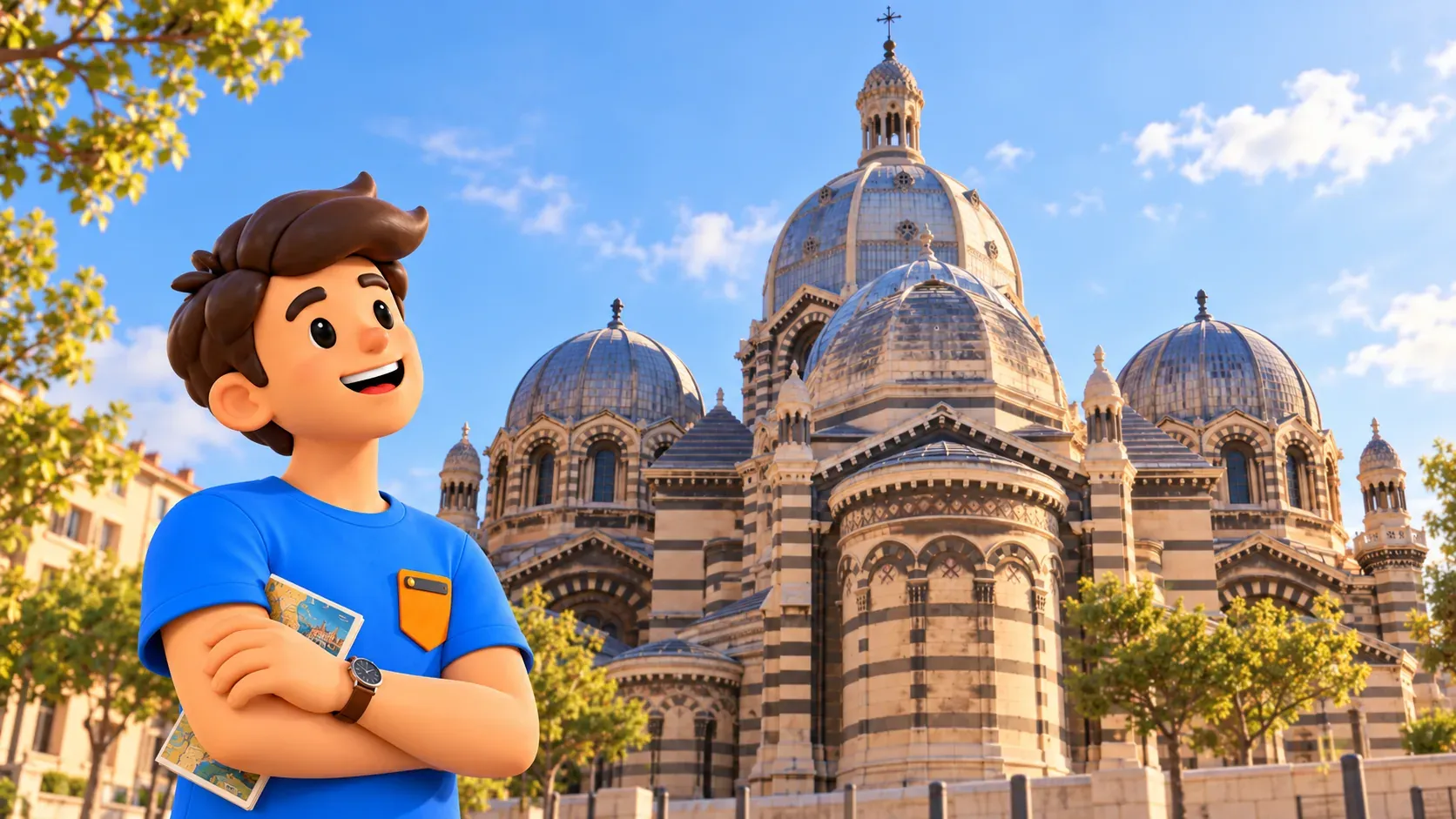
After lunch, continue towards the cathedral. Its large scale and patterned stonework create a striking contrast with the tighter lanes behind you. Look first from a distance so the whole building is legible. If entry is possible and appropriate, a short interior visit can follow; a religious service or restricted access should change that decision.
The neighbouring older cathedral is a reminder that this district contains different stages of the city’s religious architecture. You do not need a complete architectural history to appreciate the relationship. Allow a modest block for the cathedral area, then move towards the J4 waterfront with enough margin for the museum option you have chosen.
Around 14:15: give Mucem a proper afternoon block
If exhibitions are your priority, allow roughly two hours inside Mucem, adjusting to the actual exhibition and your attention. This is a planning allowance, not a promise that every gallery can be covered. Begin with the subject that interests you most and accept that a thoughtful partial visit can be more rewarding than passing through every room.
Mucem’s focus on Mediterranean societies gives the day a different register after the morning’s urban walk. Objects and displays can connect movement, work, belief and everyday life across the sea you have been looking at outside. Read the current programme before choosing: the building’s presence in a sightseeing list does not tell you which exhibition will suit you.
If you prefer the outdoor version, use this same afternoon block for the architecture and permitted paths around the ensemble. Separate ticketed exhibitions from outdoor access and check which spaces are actually open. Do not assume that skipping a museum ticket means you can enter every roof, passage or temporarily closed area.
Later afternoon: finish with Fort Saint-Jean and sea views
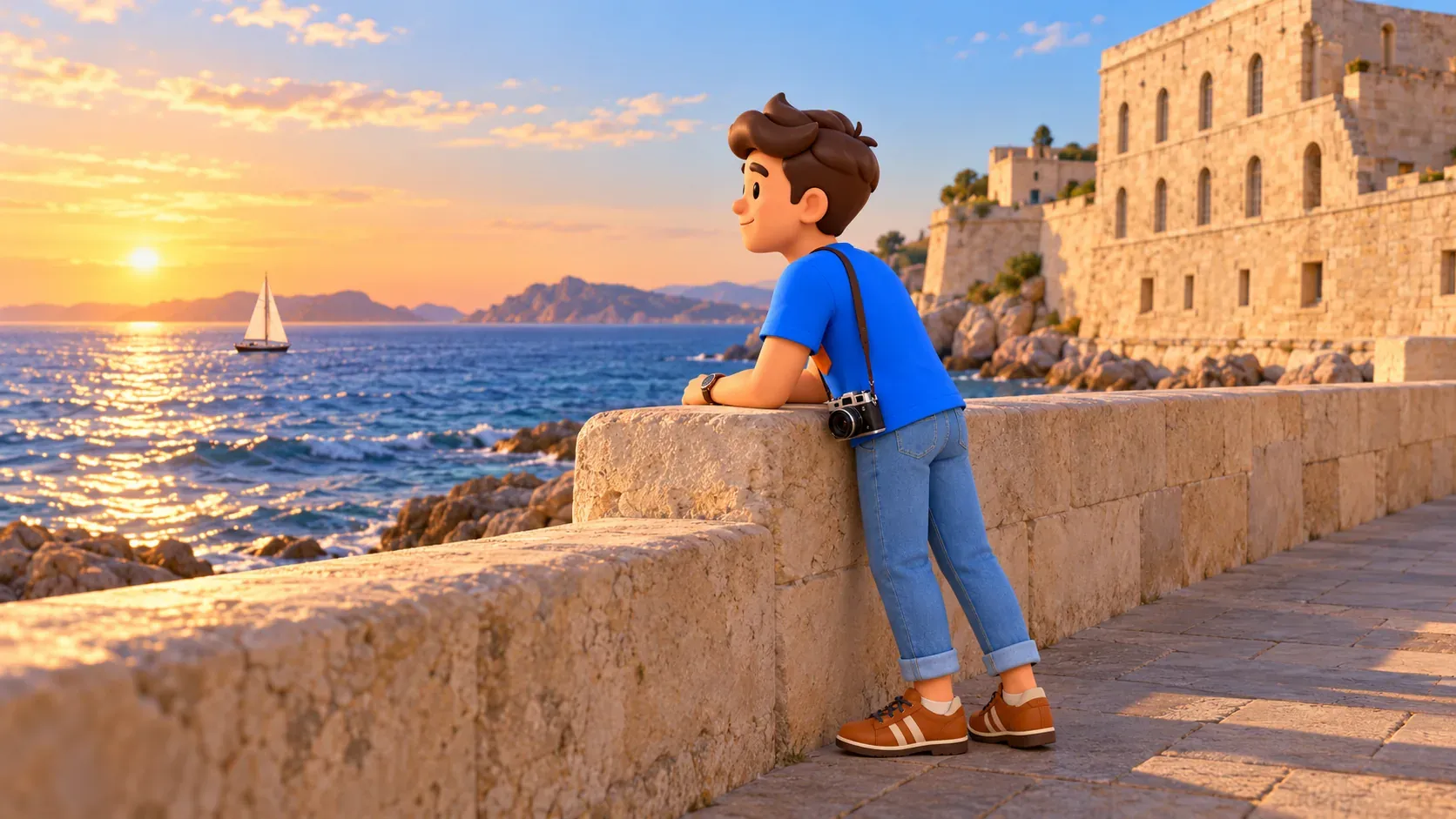
When access is open, the relationship between the contemporary J4 building, its pedestrian bridge and Fort Saint-Jean provides a strong finish. Here Marseille’s waterfront becomes readable through different materials and periods: the museum’s modern structure, the fort’s masonry and the sea beyond. Let that contrast be the subject rather than trying to identify every tower.
Keep around forty-five minutes after the museum for a modest fort walk and a pause. Do not turn the last part into another large visit. Gardens and outdoor routes still follow the site’s opening arrangements, and an exceptional closure can affect them. Use the open entrance and the route indicated on the day rather than relying on an old description.
Finish in the waterfront area by roughly 17:00, earlier if you are tired or the site closes sooner. The way back to your accommodation is additional to the visit itself. Before leaving the ensemble, check the practical exit rather than choosing a route solely because it looks short across a bridge on the map.
How to shorten the route without losing its character
If you begin late, keep the Old Port, a smaller section of Le Panier and one afternoon focus. Reduce optional exterior stops near the town hall before cutting lunch or the time needed to walk uphill. The route still works when fewer things are seen carefully; it becomes uncomfortable when the same full list is squeezed into fewer hours.
If walking is the main concern, choose fewer diversions through Le Panier and rest before continuing to the cathedral. There are slopes and stairs in this district. For specific access needs, check the actual streets and entrances rather than relying on distance alone.
If a museum matters more than the old quarter, shorten the neighbourhood loop and preserve the exhibition block. If the weather is pleasant and you would rather remain outside, choose the architecture version and linger on permitted paths. Making that decision explicitly prevents an enjoyable pause from feeling like a failure to keep up.
For a first day shaped around museums, neighbourhoods or time by the sea, RoadMe makes the planning more convenient by preparing a personal itinerary for your interests. You can focus on enjoying the walk while the app puts the programme together.
Tuesday, rain or wind: make the substitution before you leave
On Tuesday, do not plan to enter Mucem or Fort Saint-Jean through a different gate: their regular closure affects the intended afternoon. Keep the morning route, spend more time around La Major and the publicly accessible waterfront outside the closed ensemble, then return towards the Old Port by open streets. You can finish earlier without adding a distant attraction.
For rain, preserve a short central introduction and move the main cultural visit earlier if the institution’s opening allows it. Cut the long optional lane loop rather than rushing between exposed stops. A few minutes of rain are different from a day when conditions make walking unpleasant, so let the real weather determine how much of the outdoor plan remains.
Strong wind can make exposed waterfront paths uncomfortable even under a clear sky. Use the museum version when appropriate, follow any closures and finish in a more sheltered part of the city if necessary.
What this one day gives you, and what to leave for another
By the end, you will have used the harbour as an urban reference, explored an old neighbourhood, seen the cathedral ensemble and chosen a Mediterranean cultural or waterfront experience. Pauses and transitions connect those impressions into a coherent day.
Leave Notre-Dame de la Garde, Longchamp, Le Corbusier and the islands for another itinerary. They each deserve time for their own approach and context. If you return for a longer stay, use this first day as an introduction and build the next one around a contrasting interest. There is no need to exhaust the city to begin understanding it.


