
South of Marseille’s Old Port: an architecture walk from the opera
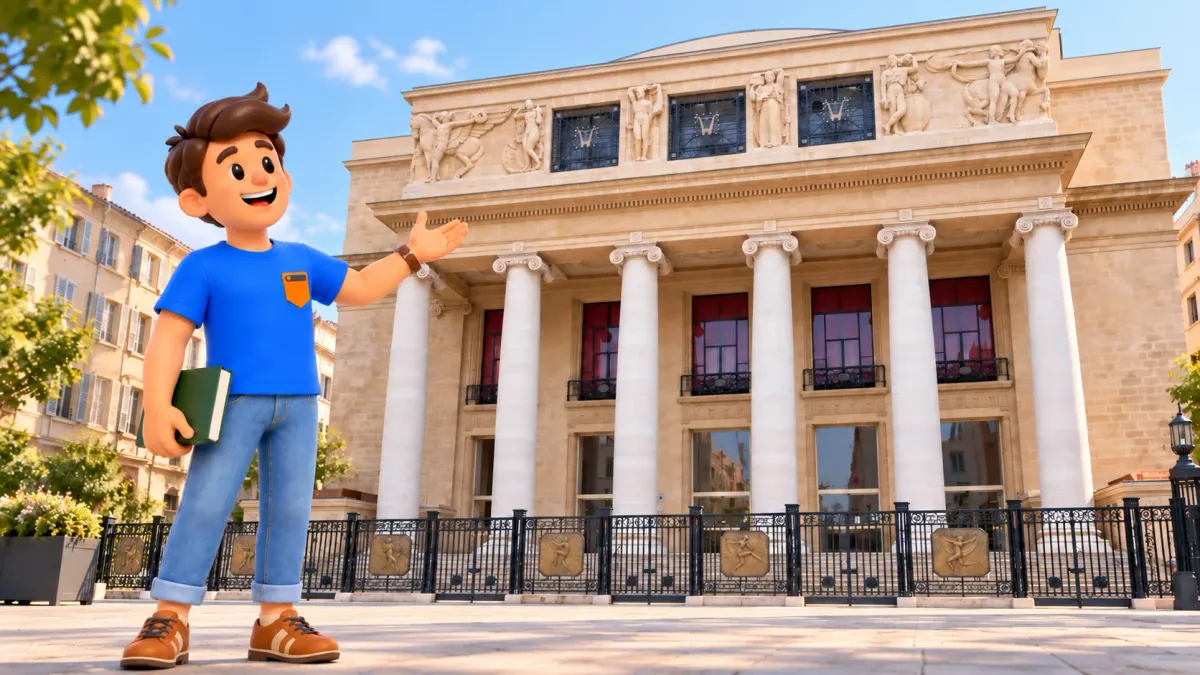
For a different view of central Marseille, leave the waterfront for the streets immediately south of the Old Port. This compact architecture walk connects the opera, the courthouse, the Estrangin fountain, the prefecture and two former townhouses. The interest lies in looking at buildings from public space, with no interior visits required. Allow roughly two to two and a half hours, including a twenty-minute pause; these are editorial estimates.
Start outside the opera and finish near Hôtel Pascal on Rue Paradis, with a return towards the Old Port if it suits your next plan. The sequence makes a small loop through the southern centre. A shorter version ends at Estrangin after the opera and courthouse. Choose daylight for looking at details and leave the exact pace open: a street facade can hold your attention longer than its size on a map suggests.
A compact walk with a clear beginning and end
The full order is opera, Palais de Justice, Estrangin fountain, prefecture, Hôtel Roux de Corse and Hôtel Pascal. These places belong to the same central outing, but the walk includes ordinary streets and crossings. Follow public pedestrian routes between them, checking current street access rather than treating a line on the map as a direct path. The destination sequence is the framework; it does not replace directions for each junction.
As a starting allocation, use about twenty minutes around the opera, another twenty near the courthouse, and a shorter look at the fountain. Leave time for the connecting streets, the prefecture frontage and the two townhouse exteriors. Add the pause you actually want. You can redistribute this freely. Looking carefully at one building is more rewarding than arriving at all six with no attention left for the final pair.
Let RoadMe work out a personal Marseille itinerary around your interests, available time and pace. The app makes it much more convenient to fit an architecture walk into the whole trip: try it with the places and experiences you care about most.
Begin at the opera: older columns, a later building
Outside the Opéra de Marseille, give yourself room to see the whole front before moving closer. The columns, upper sculpted band and repeated openings give several scales of observation. Start with the broad composition, then choose one detail. The building is still a place for performance, so keep its access clear. You can enjoy the architecture without joining an entrance queue or assuming the auditorium is available to visitors.
The opera’s appearance carries more than one period. A fire in 1919 devastated the theatre, while parts of the earlier exterior survived. The rebuilding in the 1920s brought a different artistic language into contact with the older colonnade. That makes the facade a useful first lesson for the walk: a building need not be a pure example of one style to be interesting. Look for how surviving and newer elements share the same elevation.
If you want to hear music here, treat that as a separate experience. Check the actual venue, event and admission through the current programme. The institution’s programme also uses other spaces, so a title associated with it does not automatically mean a performance in the main opera auditorium. A future evening can complement today’s exterior look, but this short walk does not depend on a show or a guided interior visit.
The courthouse: understand the front from the square
Continue towards the Palais de Justice on Place Montyon, also identified with Square Pierre Michel. Choose a position in the public space where the facade reads as a whole, without obstructing the approach. The classical columns and triangular pediment make a strong contrast with the opera’s layered front. Their similarity at first glance is a useful comparison, not a reason to assume the buildings have the same history or purpose.
The palace was designed by Auguste Martin and completed in the nineteenth century. Sculpture on the pediment presents an allegory of Justice; Eugène Guillaume also produced reliefs associated with protection and repression. You do not need to identify every figure to see that the decoration communicates the building’s institutional role. Observe the relationship between the entrance, the elevated front and the open space before it.
Keep this an exterior stop. A judicial building is not a museum with casual access to halls and offices, and public service arrangements are not sightseeing hours. Do not build time for security or a speculative interior detour into the programme. The architectural point is visible from outside. If your interest is specialist or you have separate business inside, check the appropriate official arrangements independently of the walk.

Estrangin: change scale at the fountain
Continue to the fountain on Place Estrangin-Pastré. After two large institutional fronts, the sculpture gives your attention a more concentrated subject. Look first at the overall arrangement, then at a figure or the way forms overlap. Move only where the pavement and crossing allow it. There is no need to stand in the roadway to obtain a perfectly symmetrical view or to climb onto the basin for a closer photograph.
The fountain was a gift associated with the merchant Henri Estrangin and the city’s commercial life. This small piece of context connects the urban ornament to Marseille beyond the waterfront. It is an ornamental fountain, not a drinking-water recommendation. Its effect should not depend on water running during your visit: the sculpture and its setting remain the reason for the stop, even when operation or maintenance changes.
This is also the decision point for the short route. After opera, courthouse and fountain, you have already compared three kinds of public expression: performance, justice and civic ornament. End the architectural walk here if time or energy is limited. Keep the rest for another day rather than turning an intentionally light outing into something you must finish. The complete route continues towards the prefecture from this area.
The prefecture: look at the city’s official face
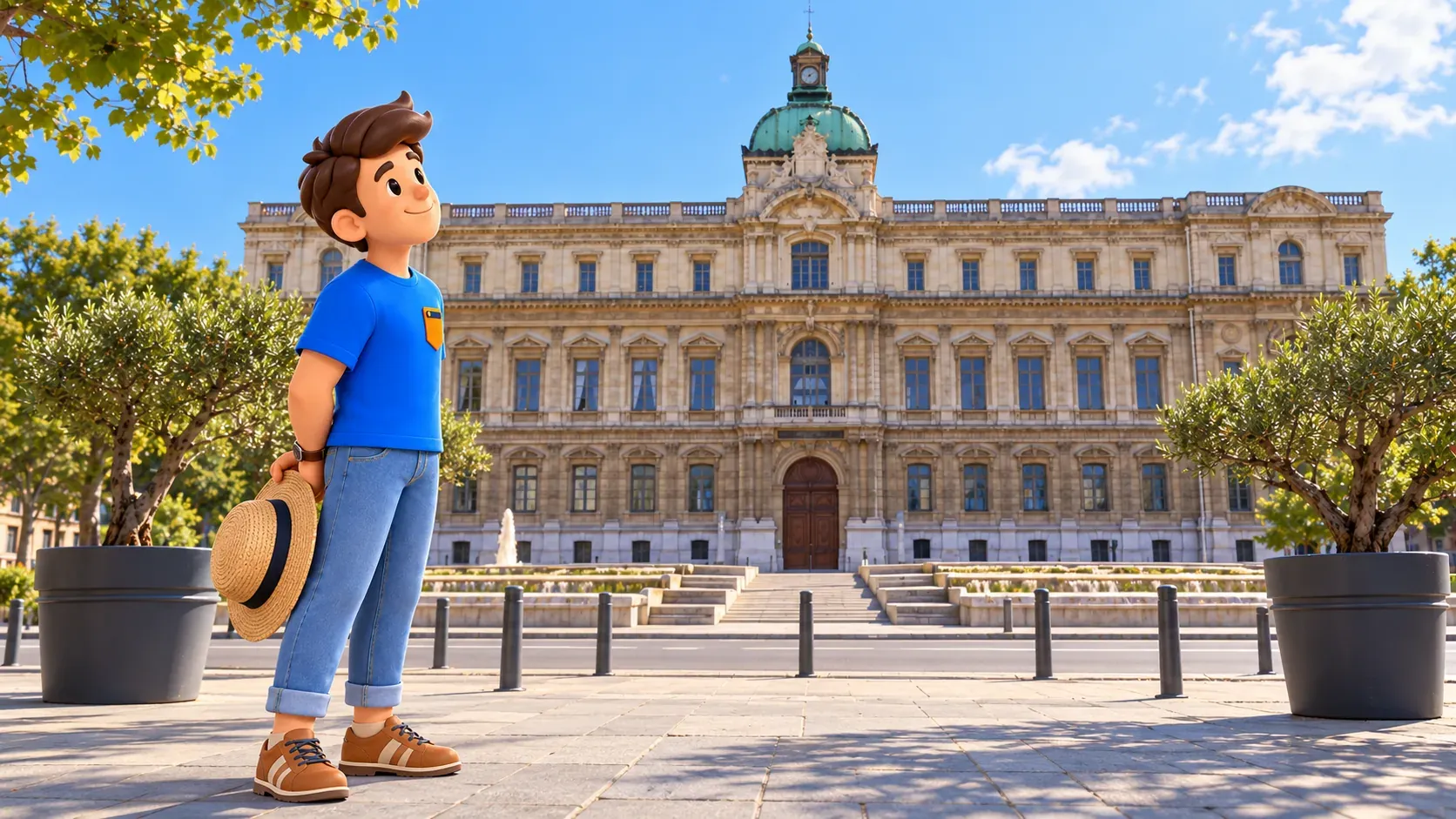
The prefecture adds another large public building to the sequence. Approach its exterior from the public streets and choose a comfortable viewing position. Compare its central emphasis, window rhythm and overall scale with the courthouse rather than trying to memorise a new catalogue of decorative terms. You may notice how architecture can give different institutions a formal presence while using related ideas of balance and repetition.
The Hôtel de la Préfecture belongs to Marseille’s nineteenth-century building history. Its heritage record protects parts of the building, including facades and roofs, but protection is not a promise of visitor entry. This distinction matters here and at the later townhouses: recognition as heritage describes value and conservation. It does not create a daily public tour. The exterior is sufficient for the purpose of this route.
Keep administrative entrances and any temporary boundaries clear. If an officially announced heritage opening interests you, plan it separately under its own current terms. Do not borrow a past event’s arrangements for an ordinary afternoon. The walk remains coherent without access to reception rooms or courtyards. Its central idea is that the working city can be understood through buildings seen in everyday public space.
Two townhouses bring the walk back to street scale
From the prefecture area, continue towards Rue Montgrand for the former Hôtel Roux de Corse. In these names, hôtel means a substantial historic residence rather than a recommendation for tourist accommodation. The house was built in the eighteenth century for a Marseille shipowner, later served a prefectural role and is now part of Lycée Montgrand. That changing use provides a concise link between private wealth, administration and education.
View what is visible from the public street without treating the school as a sightseeing courtyard. The value of this stop is the change in scale after the larger institutions. Notice the relationship of the frontage to the street and compare it with the broad presentations seen earlier. If activity around an entrance makes a long stop awkward, a brief look is enough. There is no need to photograph pupils or wait for a door to open.
Continue towards Hôtel Pascal on Rue Paradis. Its heritage listing concerns the facades and roofs; the property is privately owned. Keep this another exterior observation. You do not need an invented story about former residents to make the final building worthwhile. Compare the entrance, window spacing and upper outline with what you have already seen. Near this frontage, finish the architectural sequence, then decide whether to return towards the Old Port or pause nearby.
Look for a pattern, then one difference
A simple method helps the route stay interesting without specialist knowledge. At each stop, begin by looking at the whole frontage from a safe distance. Ask where the building directs attention: an entrance, a central bay, a row of columns or a sculpted upper section. Then choose one detail that changes the impression. This gives you something to remember without requiring a complete inventory or architectural vocabulary.
Between the named buildings, notice ordinary facades too. Their repeated windows, balconies and doorways give the monuments a setting. Avoid assigning a period or architect simply from an appearance you recognise. A visual comparison can remain a personal observation rather than an unsupported historical claim. The useful question is how the street feels different after the large public fronts, and which detail makes that change apparent to you.

Place the pause where you need it
Around the Estrangin or prefecture section, allow a proper break in a suitable open café or another comfortable place you find. No particular business is required for the route, and its current opening should be checked on the day. The suggested twenty minutes is a starting allowance. A longer lunch changes the total duration, so let it replace part of the programme rather than pretending it takes no time.
In heat, shorten exposed stops and carry drinking water. In rain, remember that this is an outdoor walk with street crossings, not a sheltered museum circuit. If pavement conditions, steps or fatigue affect someone in the group, choose the simpler available public path and reduce the number of stops. Compact geography does not make every surface, crossing or viewpoint equally easy for every visitor.
You can also split the sequence. The opera, courthouse and fountain make the first part; prefecture and townhouses make a later continuation. If you want the route within a wider first day, our one-day Marseille route supplies the broader central context. Do not automatically attach a distant attraction just because this area is near the port. A successful short walk can remain the only major plan for its block.
RoadMe can develop the whole personal trip around your interests, with this short walk fitting naturally into the days. Use the app to organise Marseille more efficiently and keep your attention on the city’s details.
Finish with the streets still in mind
Choose a detail to take away: the opera’s meeting of periods, the courthouse’s formal front, the fountain’s concentrated sculpture or a doorway at the end. That small memory explains why these streets deserve their own outing. A couple of hours outside the waterfront can reveal another scale of Marseille while leaving the rest of your day flexible, with the important buildings understood as part of a living city.


