
From Saint-Victor to the Pharo: a walk along the south side of Marseille’s Old Port
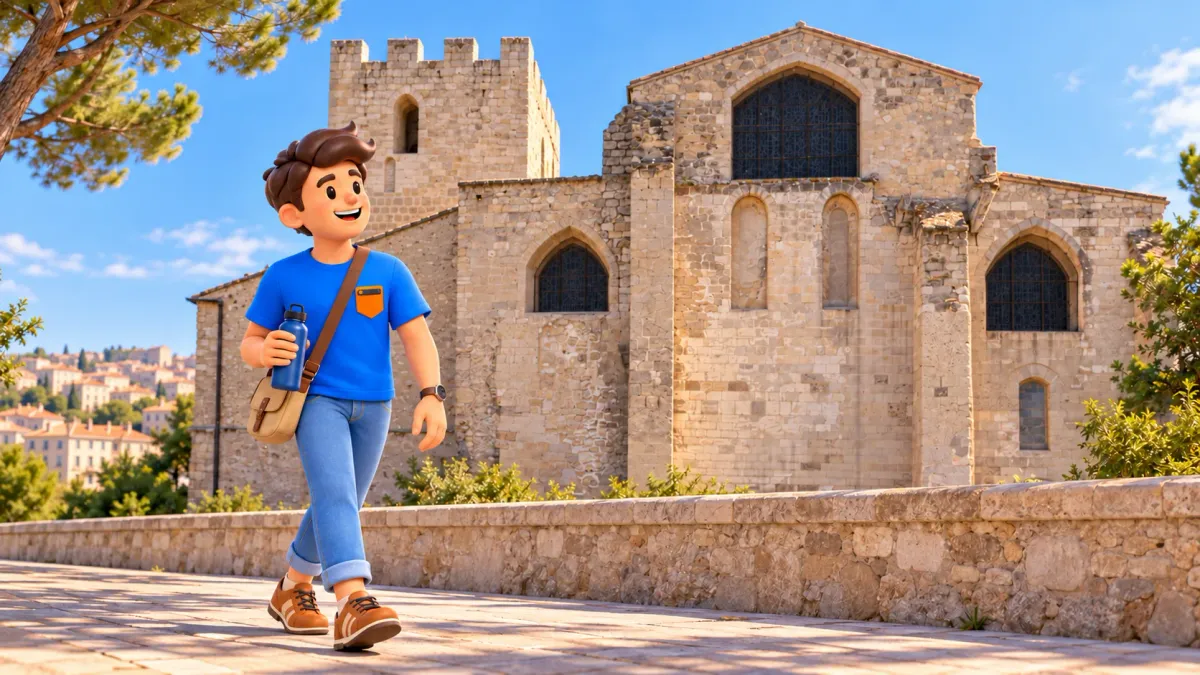
The southern side of Marseille’s Old Port offers a walk with a clear progression: the weight of stone at Saint-Victor, the walls around the Citadelle district, then open space and sea views at the Pharo. Allow roughly two and a half to three hours for the basic version, including a short upper-church visit when appropriate and a proper pause in the gardens. Start at the abbey and finish at the Pharo garden exit on Boulevard Charles-Livon.
This is a walk through a neighbourhood and around the harbour entrance, rather than a continuous waterside promenade. It includes streets, crossings and changes of level. The basic programme does not assume entry to the fort, the abbey crypts or the palace. Each of those places has a different relationship with public visiting; understanding that distinction keeps the afternoon enjoyable.
Choose the version before setting off
Keep three anchors: the abbey, the Citadelle area and the Pharo gardens. A useful allowance is thirty to forty minutes at Saint-Victor, around forty for the streets and exterior fort stop, and an hour or slightly more at the Pharo. These are editorial estimates, not measured times or admission slots.
For the simplest outing, make the middle section an exterior architectural stop. In 2026, the Citadelle’s official visitor information says its gardens open only during events; they are not a reliably open park between the abbey and the Pharo. If a guided visit interests you, arrange it before deciding the walking schedule and give it its own time.
The route is one way. Count the journey to the abbey and the trip after the garden separately, especially if you are meeting someone or catching a train. You need not return to the eastern end of the Old Port to complete the experience.
RoadMe makes this kind of afternoon much easier to organise by developing a personal route around your interests and available time. Try the app to turn a preference for history, gardens or harbour views into a plan that fits your trip.
Start at Saint-Victor with the building, not the timetable
Begin outside the abbey and give the fortified silhouette your attention before going through a doorway. Its sturdy outline makes an immediate contrast with the harbour’s masts and open water. Saint-Victor has early Christian roots, while the standing church reflects later construction. That distinction is enough historical context for a first look: the age of the site is not the age of every visible stone.
If the upper church is open and worship permits a visit, allow a quiet interval inside. Look at the scale and atmosphere before trying to identify details. For this walk, a short visit can be sufficient. The abbey remains a religious place, so a service or restricted access should change the stop gracefully rather than become an obstacle to completing a sightseeing list.
Outside again, orient yourself towards the south side of the harbour. The point of beginning here is to understand the city from a place slightly removed from the main waterfront flow. Do not start by rushing downhill for a photograph and immediately climbing back. Keep the abbey visit together, then continue west with a sense of where the walk is heading.
Crypts and a neighbourhood pause are separate choices
The crypts deserve a deliberate decision. They contain the deeper historical interest for visitors drawn to early Christian remains and sarcophagi, but they are not simply the next room of a quick upper-church stop. Check current visiting conditions, the relevant entrance and any admission arrangement. A longer or guided exploration needs its own allowance rather than being squeezed into the basic thirty to forty minutes.
If you choose the crypts as your main visit, reduce something later: keep the fort as an exterior glance and make the Pharo a shorter garden pause. Trying to preserve every original block while adding a substantial visit usually shifts the cost to lunch, rest or the journey home, which makes the rest of the day harder to enjoy.
The surrounding streets also offer a natural moment for a small refreshment before continuing. Navettes, the boat-shaped biscuits associated with the area, can provide a local detail without turning the walk into a food tour. Choose according to what is open and what you want; no particular shop or purchase is necessary. A full meal should be planned as a longer stop.

Connect the abbey and the fort through the streets
Continue towards the Citadelle district and the Boulevard Charles-Livon area using the public street network. The short-looking distance on a map does not describe every slope or crossing. Allow time to find the appropriate pedestrian approach on the day, and stay on routes clearly intended for public passage. There is no need to seek a shortcut through an institutional entrance or a closed gate.
This connecting section is part of the visit, not empty time to be eliminated. Notice how the city changes from a religious landmark and neighbourhood streets to the larger scale of defensive walls and roads around the harbour mouth.
For a group with mixed walking ability, agree on the pace before this section rather than at the steepest point. If the approach is uncomfortable, shorten the fort stop or use a suitable current transport connection to the Pharo area. A practical route may contain a ride. Avoid describing the entire outing as step-free merely because the final garden has paved paths.
The Citadelle: read the walls, then respect the access
Fort Saint-Nicolas belongs to the southern side of the harbour entrance, opposite Fort Saint-Jean. Its construction under Louis XIV was connected with royal authority over Marseille as well as military control. Looking at the walls from an appropriate public position adds that political and defensive layer to the earlier religious history.
The public street walk and a visit inside the Citadelle are different experiences. Look at the current programme if you want to enter: tours, workshops and events follow their own arrangements. An available reception period does not mean every part of the grounds is open for casual wandering. Do not plan a break at the fort’s refreshment venue without confirming that it is operating during your chosen event.
If you have a booking, reach the stated entrance and follow the organiser’s instructions. Otherwise, keep this as an exterior stop and continue. The fort is not a necessary passage through to the Pharo; the basic route remains outside. That makes the walk workable even when the historic site cannot be visited, while leaving enough attention for the much more open final setting.
Reach the Pharo as a garden visit
Continue along the public approach towards the Pharo and enter the Jardin Émile-Duclaux through the available public garden access. Leave time for the approach rather than treating the palace marker on a map as the garden gate. Once inside, slow down. The useful change here is from movement through streets to a place where you can choose a path, a view and a moment to stop.
The garden surrounds the palace but has its own visiting conditions. Check current municipal opening information and any exceptional closure before the walk. Wind or another safety restriction can change access, so it is not a guaranteed outdoor finish in every weather. Keep the practical check short and specific: whether the garden is open for your planned visit matters more than collecting a long list of general opening hours.
Use the first part of the visit to understand the layout and choose a permitted public viewpoint. With companions who tire more quickly, agree on a comfortable resting place first. That lets a keen photographer take a short additional loop without making everyone else follow the same route.
The palace gives the view a historical frame
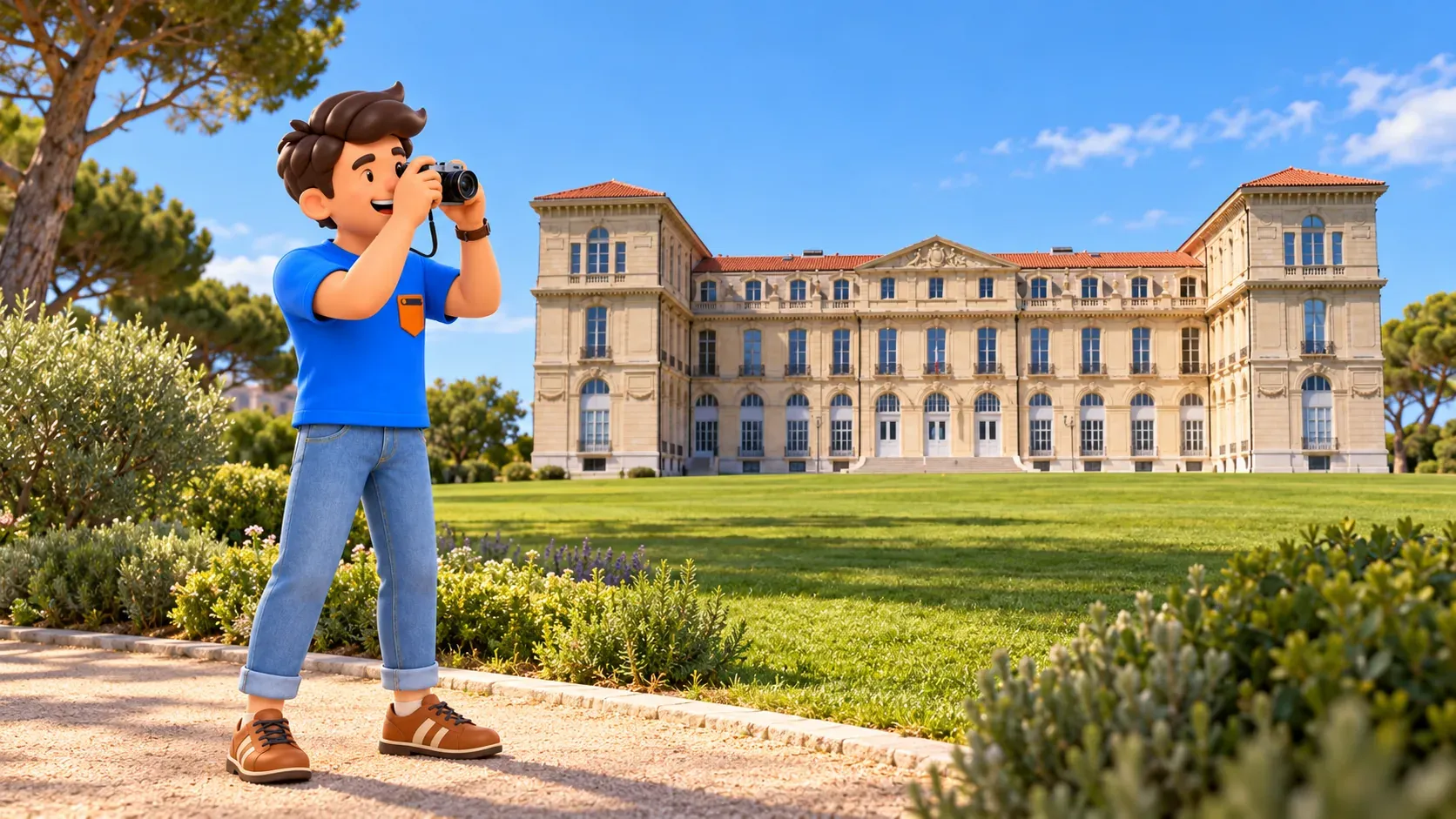
The Palais du Pharo was intended as an imperial residence for Napoleon III, who never stayed there. Today it is an international congress centre. That short change of purpose is a useful story to carry as you view the exterior: the building is part of the city’s ongoing life, not a palace museum that must be entered to count as visited.
Look at the facade from the public garden and consider its relationship with the headland. A building intended for such a setting makes the harbour entrance feel different from the busy quays farther inland. You can appreciate that relationship without listing rooms, speculating about interiors or assuming a professional event welcomes walk-in visitors. Any specific public event would be a separate activity with its own access.
Keep the palace and garden as two connected but distinct parts of the same stop. If the main purpose of your afternoon is the view, you may spend only a few minutes on the architecture and much longer looking over the water. Someone interested in buildings can reverse that balance. Both versions fit the route without needing another attraction added to justify the time.
For a Marseille visit that gives your favourite places the time they deserve, let RoadMe work out a personal itinerary. The app makes it more convenient to build the trip around what you enjoy instead of assembling each part separately.
A pause at the harbour entrance, then a clear finish
Give the final pause around twenty to thirty minutes, whether seated in a suitable public place or resting along an open path. Look towards the harbour entrance and the opposite waterfront. The fortifications, boats and changing layers of the city now relate to the walk you have just made.
Light and weather will shape the experience more than a fixed photographic formula. On a clear afternoon, compare a broad view with one smaller detail; in hazier conditions, simply enjoy the open setting. Stay within public paths and permitted viewing areas. A dramatic picture is not worth approaching a restricted edge, and an illustration of a view should not be used as a precise guide to a viewpoint.
Finish by returning to the garden exit on Boulevard Charles-Livon. Decide there whether to travel on, eat nearby or head back towards the port. If this walk forms one part of a weekend, our two-day Marseille itinerary shows how the southern side can follow a central first day.

Shorten the walk by choosing a priority
With around ninety minutes, keep a brief abbey exterior stop and the Pharo garden, using the fort district mainly as the connection between them. Omit crypts and any booked fort visit. This shorter version depends on a comfortable pace and open garden access; it is a suggestion, not a promise for every traveller. If time is tighter, choose one site instead of racing through three.
If the garden is closed, do not arrive expecting to wait beside the gate until the route becomes possible again. Retain the abbey and a modest street walk, or move the outing to another day. Heavy rain, strong wind and uncomfortable heat can also justify a shorter programme. A scheduled interior visit may improve one part of the day, but it does not automatically solve every exposed connection.
Leave the Corniche, Vallon des Auffes and a climb to Notre-Dame de la Garde for separate choices with additional time. Its reward is the progression from the abbey’s enclosed stone world to the broad entrance of the harbour. Finish while you still have the energy to remember that change, rather than only the distance covered.


