
From Saint-Charles station to the Old Port: your first hours in Marseille
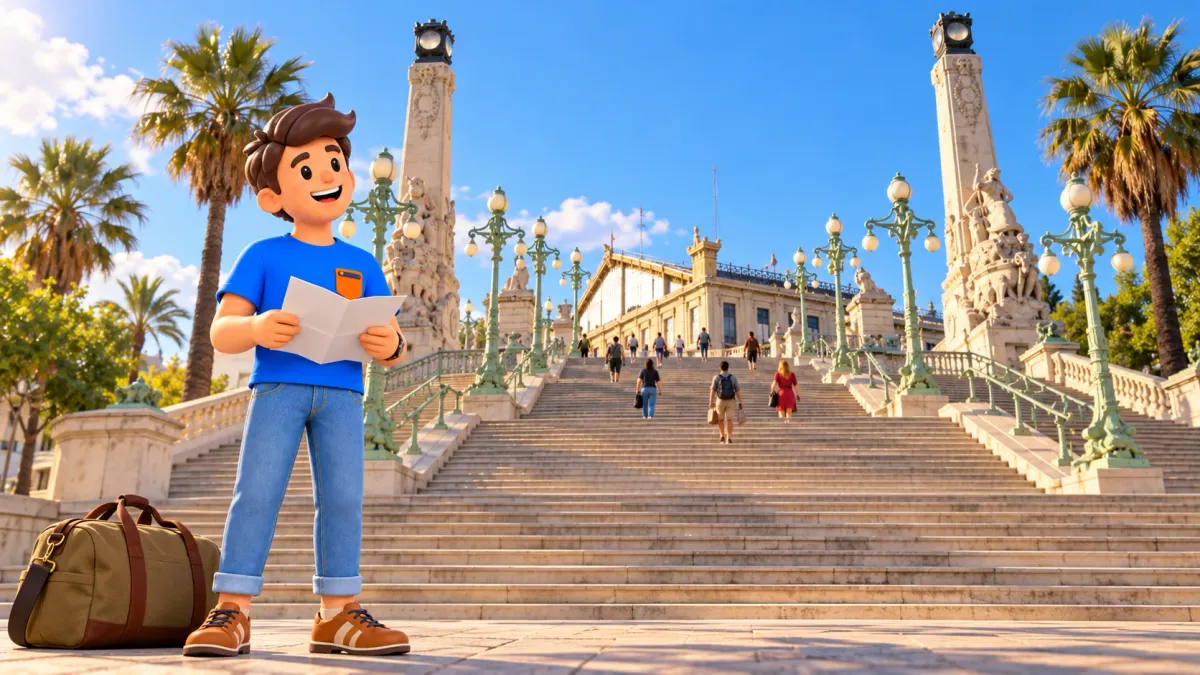
If you arrive at Marseille Saint-Charles in daylight with manageable luggage, make the descent to the Old Port your first small city walk. Start around the station’s monumental staircase, continue down boulevard d’Athènes and boulevard Dugommier, then turn towards the harbour along La Canebière. The Fossati fountain, Building Canebière and Palais de la Bourse give the journey a few useful anchors.
Allow roughly an hour and a half to two hours once you are ready to leave the station, including a short break and time at the water. This is a leisurely introduction, not the fastest possible transfer. Getting off the train, arranging luggage, finding assistance and checking into accommodation are separate tasks. Their duration should not be hidden inside the sightseeing estimate.
Make the arrival practical before making it scenic
Choose this walk when the first aim is to orient yourself. You move from the station plateau into busy central streets and finally into the harbour’s open space. Most interest comes from that progression. You do not need to identify every statue or enter every building to get a rewarding first impression. Keep the programme light enough for the journey you have already made.
Luggage is the main decision. A small bag that you can comfortably carry down steps is different from a heavy suitcase, a pushchair or several bags after a long train ride. If carrying them would dominate the experience, go to your accommodation or a confirmed storage service first and return to the walk later. Verify the provider’s location, opening and collection arrangements; a generic station listing is not a reservation or a promise of availability.
Treat the time budget as flexible: fifteen minutes to orient yourself outside, ten for the staircase, around twenty to reach and notice the Fossati area, twenty-five for the Canebière with a brief architectural stop, fifteen for a drink and twenty near the harbour. Some blocks can overlap. These are editorial estimates, not measured travel times. Leave your next fixed appointment outside this generous window, particularly when a delayed train has changed the day.
It is much more convenient to let RoadMe work out a personal itinerary around your interests and available time than assemble every arrival stop and later visit separately. Try the app to turn your first Marseille ideas into a trip programme planned for you.
Saint-Charles: take in the view before the stairs
After the necessary station tasks, follow the appropriate signs towards the public area around Square Narvik and the monumental staircase. Stop clear of entrances and passenger flows to gather your group. From here, the difference in height between station and city is immediately apparent. Look along the direction of boulevard d’Athènes before moving: you are about to turn that first overview into a street-level route. This is a better place to decide on the walk than halfway down the steps.
The staircase was inaugurated in 1927 and gives the railway arrival a ceremonial entrance into Marseille. Its sculptures belong to the historical language of the period, including maritime trade and colonial representations. A short contextual look is enough for this arrival walk. You are seeing a piece of how the city chose to present itself, not a complete summary of its history. Save a deeper reading for a visit when you have time and attention.
Descend only if the stairs suit your group and luggage. Keep a hand free, stop on a landing rather than across a flight and avoid trying to photograph while managing bags. For a route without this staircase, ask about the appropriate current station exit or transport connection before leaving the concourse. Check equipment status where it matters to you. A listed lift does not by itself establish a continuous step-free journey to the Old Port.
Boulevard d’Athènes and the Fossati fountain
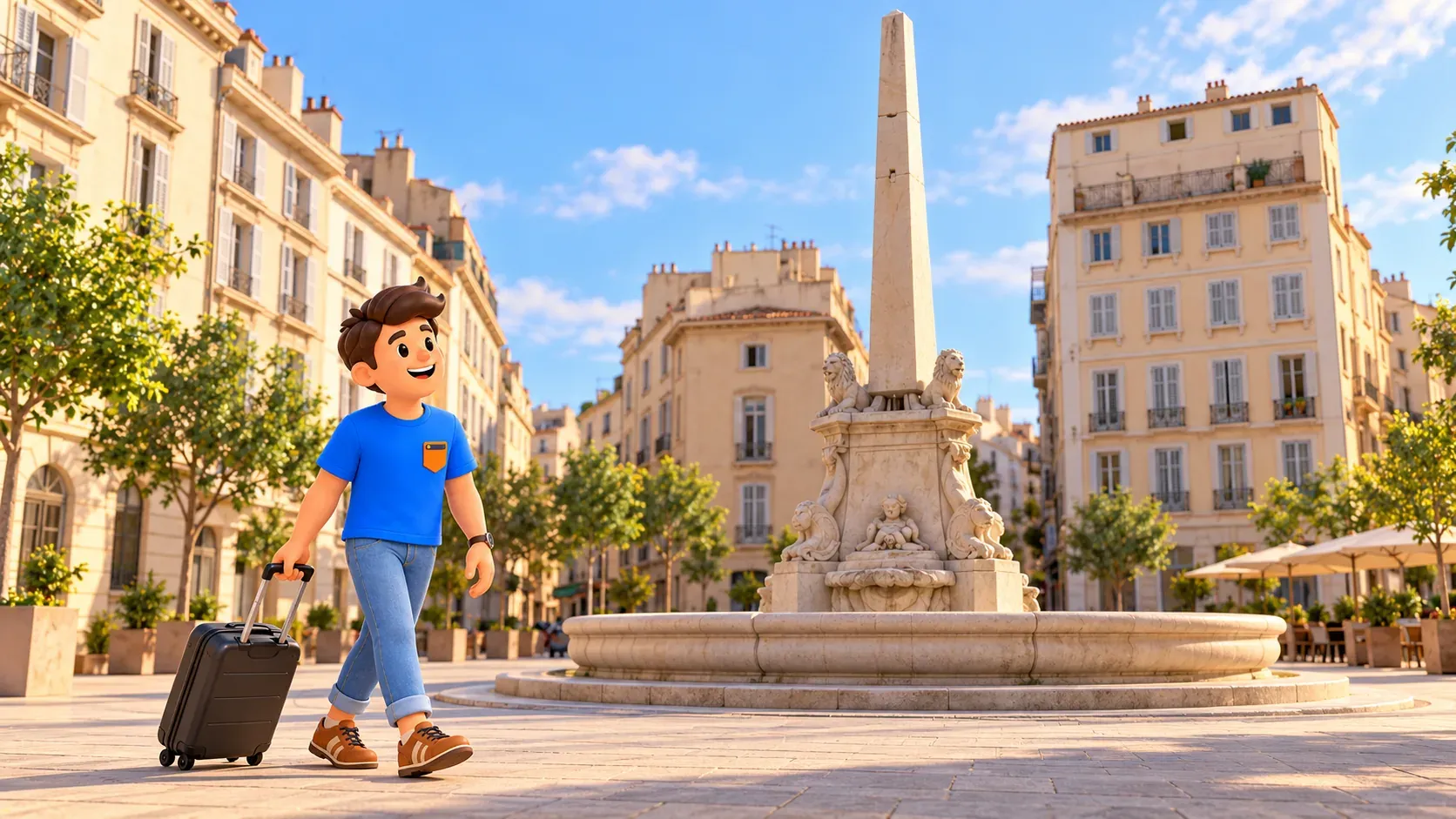
At the bottom, continue from place des Marseillaises down boulevard d’Athènes towards boulevard Dugommier. This is the central street sequence described by the tourist office for walking to the harbour. Keep the overall direction rather than adding detours as soon as you see a side street. The first useful achievement is recognising one clear line from station to centre. You will have other opportunities to explore neighbourhoods once the arrival logistics are settled.
Near the junction around place des Capucines, pause for the Fontaine Fossati. This eighteenth-century fountain provides a smaller-scale contrast to the grand station staircase. Look at it as a sculptural object within a working urban junction, not as an attraction needing a long visit. Its presence gives the journey a recognisable intermediate point and a reason to lift your eyes from directions. The basic route can continue whether water is flowing or not.
Choose a place where you can see the fountain without standing in traffic or blocking the pavement with luggage. Around ten minutes is enough to look and gather everyone before continuing. If the square is busy, make the stop shorter. You do not need a perfectly unobstructed photograph to understand the landmark. The walk should help you arrive pleasantly, rather than introduce the feeling that every named point requires a separate performance.
La Canebière: turn towards the port and notice the contrast
Continue along boulevard Dugommier until you reach La Canebière, then turn right towards the Old Port. Keep this directional change in mind: carrying straight on into the next district is a different walk. Once on the Canebière, let the broad street organise the remaining journey. Take ordinary care at crossings and tram tracks, and stop to check directions at the side. The route is urban, not a traffic-free corridor from station door to harbour.
Around 73–75 La Canebière, the Building Canebière introduces another period of Marseille architecture. Designed by Fernand Pouillon in the twentieth century, it is a useful contrast to the older monumental structures you have already seen. For this itinerary, an exterior look is sufficient. Notice the building’s scale and repeated facade elements instead of searching for a visitor entrance. This is an occupied urban building; appearing on a route does not make its private spaces open.
Put a real pause into the first hours
Take the planned short break along the part of the route you have reached, rather than walking backwards for a supposedly essential café. After a train journey, a drink and a chance to sit can be more valuable than another monument. Choose an open place that suits your budget and allows you to keep your bags beside you. Time to order and pay belongs to the break, not just the minutes with a cup in your hand.
This is also the moment to check your accommodation plan. Confirm where you need to go next and whether you have arranged luggage drop-off separately from room access. Do not assume that arriving before check-in means the accommodation will necessarily take bags. A message or prior confirmation is more useful than an optimistic guess. If the remaining practical journey would be awkward from the harbour, shorten the walk now while you are still comfortable.

Palais de la Bourse: trade written into the facade
As you approach the lower Canebière, the Palais de la Bourse at number 9 provides a final architectural anchor before the harbour. Pause where the facade can be appreciated without obstructing passers-by. The contrast with the Building Canebière makes the street’s different periods visible within one short walk. At this point, you are also close enough to the finish that there is no need to hurry a first exterior impression just to reach the water immediately.
Inaugurated in 1860 and associated with Marseille’s chamber of commerce, the building helps explain the city through trade as well as scenery. That brief connection is more useful here than a catalogue of decorative figures. Look at the overall formality of the facade, then think about the port towards which you are heading. The walk links the station, central commercial streets and harbour as parts of the same city, rather than unrelated photo stops.
The basic itinerary is an exterior visit. Public events, special openings, exhibitions and institutional access have separate conditions, so do not turn the presence of an entrance into a guaranteed sightseeing visit. If a confirmed event genuinely interests you, give it its own time and reduce the rest of the programme. Otherwise, about ten minutes outside is a reasonable pause before continuing. No booking is needed simply to keep walking along the public street.
Arrive at the Old Port and let the pace change
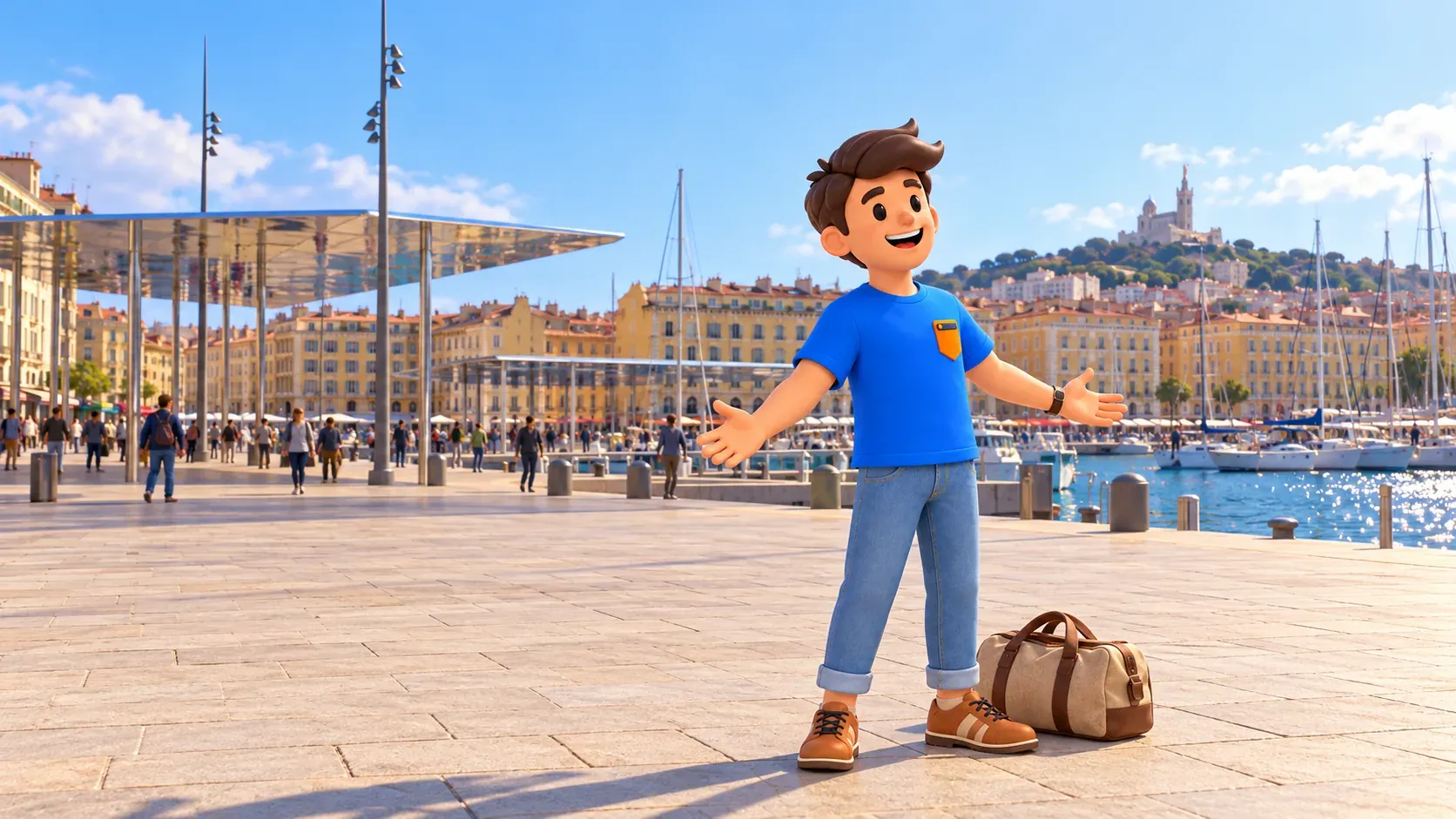
Continue to the eastern end of the Old Port, around the quai de la Fraternité and its Ombrière. The broad mirrored canopy is a useful finish and meeting point. You have moved from a high station approach through the central city to open water. Stop and look across the basin before deciding which quay to follow next. That first view is the outcome of the route, not just the place where another longer itinerary must immediately begin.
Under or near the canopy, notice how reflections, moving people and the harbour alter the scene. Keep luggage stable and remain attentive to circulation; do not leave bags behind while stepping away for a photograph. You can spend fifteen to twenty minutes simply looking, identifying the opposite waterfront and finding your bearings. There is no requirement to walk the entire basin. The Old Port is your arrival destination, while beaches and ferry journeys are separate plans.
Before extending the walk, check energy and the next practical commitment. A meal nearby may be the right continuation; so may going directly to accommodation. Avoid adding Le Panier, a museum and the basilica simply because they are familiar names on the map. You have already made a worthwhile transition from train passenger to visitor. Keep room for the things that interest you most after you are settled and walking with less to carry.
RoadMe makes the rest of your stay easier to organise by creating a personal route around what you want to experience. Let the app plan the balance between neighbourhoods, culture and the sea once your arrival is settled.
Choose a shorter arrival or build a later day around it
If you only have a brief window, use the station view and a direct journey to the harbour, leaving the fountain, facade stops and café for another time. A quick transfer is a different goal from the leisurely ninety-minute-to-two-hour walk described here. Do not force the full version around an appointment or train connection. If you need to return to Saint-Charles, allow separately for the uphill return, station entry and the margin required for your departure.
With substantial luggage, late arrival or a need to avoid stairs, choose an appropriate current transfer instead and save the walk for daylight after settling in. Check the station’s accessibility information and any transport route you intend to use, including the exits at both ends. This article does not certify a particular step-free line or equipment status. You can still enjoy the staircase from an appropriate viewpoint on another occasion without making it a compulsory luggage route.
For the following day, our first-visit Marseille plan helps choose the broader shape of the trip. This arrival route has a narrower job: connect station, central streets and harbour, with enough pauses to notice the transition. Keep the rest of the day responsive to your actual arrival time and interests.


