
Noailles, Cours Julien and La Plaine: half a day beyond Marseille’s grand waterfront

For a different Marseille morning, leave the harbour panorama behind and give your attention to shopping streets, painted walls and neighbourhood squares. Begin at the Marché des Capucins in Noailles, climb towards Cours Julien, make a short detour to Notre-Dame-du-Mont and finish around Place Jean-Jaurès, known as La Plaine. Allow roughly three and a half to four and a half hours, including lunch and time to browse.
This is a walk through places where people live and work. Its interest comes from the connection between a market, a creative quarter and a large public square, rather than a succession of ticketed attractions. The suggested allowances are editorial estimates, not measured walking times. Some streets rise and the direct stairway approach will not suit every visitor.
A half-day route with a clear direction
Keep the direction from Noailles towards the higher streets east of the port. Spend roughly the first hour around the market and nearby shops, leave a generous connection to the plateau, then divide the remaining time between Cours Julien, the church square, lunch and La Plaine. Do not add another hour of shopping to the plan without giving it more time.
Arriving around 09:30 is one possible choice, followed by a finish after lunch. The hour is a planning suggestion, not a claim that every trader will be ready or every shop open. If seeing the La Plaine market also matters, reach it before lunch rather than expecting its morning trading to continue into the afternoon.
Count your journey to Noailles and the trip after the final square separately. This route does not need to return to the port. Agree on the finish before setting out, particularly with companions who prefer different amounts of browsing.
Let RoadMe develop a personal Marseille itinerary around your interests and available time. The app makes it much easier to combine markets, creative streets and a relaxed lunch into a programme that fits your trip.
Start with the Capucins market, on the right day
The official 2026 visitor listing gives Capucins market hours as Monday to Saturday, 08:00–19:00, with Sunday closed. Recheck the date, especially around holidays or exceptional changes. That published span describes the market schedule; it is not a promise of identical activity, the full range of stalls or the same availability throughout the day.
Give yourself room to look without blocking shopping. Begin with a slow pass through the public space, then return to one stall if you want to buy something. Ask before handling produce and let the seller guide the transaction. A reusable bag is convenient if you make a purchase, but the walk does not require buying a collection of ingredients that you then carry for several hours.
Choose what catches your own interest: seasonal fruit, vegetables, the arrangement of a stall or the relationship between shops and street. Photograph people only with their agreement, and make space for customers and deliveries. On Sunday, retain a shorter Noailles street walk and begin the upper-quarter section earlier, accepting that this is a different visit.

Noailles beyond the stalls: keep the street loop small
Allow a little time for the streets immediately around the market before moving uphill. The value here lies in looking at ordinary commerce on its own terms: a display, a doorway or the different scale of adjacent shops. Pick a small loop you can understand, rather than chasing a long list of supposedly essential addresses. Individual businesses have their own opening patterns, distinct from the market’s.
For a first visit, one or two shop interiors are enough if something genuinely appeals. Check whether the place welcomes browsing and leave the entrance clear. Give the objects, foods and languages around you the patient attention appropriate to a working neighbourhood. A brief conversation or a considered purchase can be more rewarding than trying to collect evidence of every difference you notice.
Before continuing, put away purchases securely and decide whether you need water or a short break. You are about to change level rather than follow a flat waterfront. Keep the route focused on the next section. If a particular shop becomes the main attraction, use the time it deserves and shorten the later browsing instead of rushing both experiences into the same allowance.
Climb towards Cours Julien and recognise the change of level
The link from Noailles towards Cours Julien can use Rue d’Aubagne and the stairway approach crossing Cours Lieutaud. It is a useful connection, not a claim that the upper quarter lies on the same level as the market. Use public approaches that are open on the day, leave room for others on the stairs and avoid stopping across the narrowest part for photographs.
If steps do not suit you, plan an appropriate alternative street approach or current transport connection beforehand. It may take longer than the direct stairway. The church’s own access information cannot establish accessibility for the entire walk. For this route, the important decision is whether the connection works for your party, not whether you can reproduce a particular staircase picture seen online.
Pause after the climb and let your attention change from market movement to the arrangement of the upper streets. You do not need to inspect every painted surface immediately.
Cours Julien: art in a place with a trading past
Cours Julien and La Plaine were important fruit-and-vegetable trading areas before the wholesale activity moved away. That history makes an interesting connection with the morning at Capucins: commerce has helped shape these neighbourhood spaces as well as their present cultural life. You do not need a detailed chronology to appreciate the change from market logistics to a quarter associated with shops, terraces and artistic activity.
Street art is part of the attraction, but the works can change. Use the walk to notice colour, scale, technique and the relationship between a painted wall and its surroundings. Do not rely on a fixed checklist of murals or expect a particular artist’s work to remain in the same condition. If authorship matters to you, use a current credited local source or a suitable specialist visit.
Stay selective. A few works seen attentively can be more memorable than a camera roll of every shutter. Give doorways, homes and people going about their day the same consideration you would elsewhere. The neighbourhood also contains businesses worth entering if they match your interests, but the route does not assume a shop, gallery or performance will operate simply because it appears in an older guide.
A short detour to Notre-Dame-du-Mont
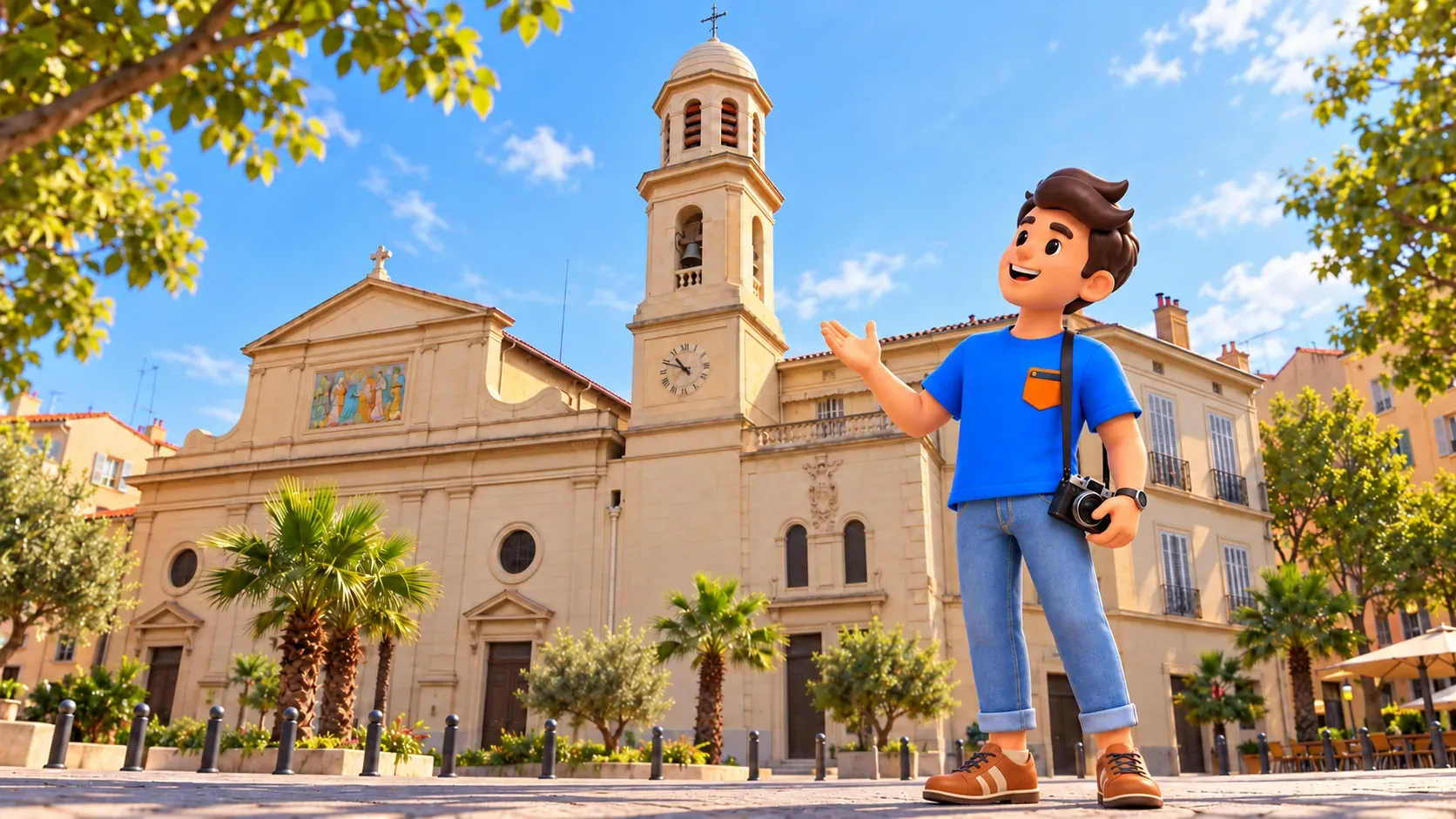
From the Cours Julien area, make the small southerly detour to the church and Place Notre-Dame-du-Mont before continuing towards La Plaine. The church is a neighbourhood landmark, not the hilltop basilica of Notre-Dame de la Garde. Its nineteenth-century neoclassical appearance adds a different visual rhythm after painted walls and small commercial frontages. Begin with the exterior and the space around it.
An interior visit is optional, subject to actual access and worship. Do not build the whole route around a midday opening, and distinguish published reception hours from an assurance of unrestricted visiting. A short quiet look can fit if the door is open appropriately. If not, the facade and square still serve the walk; waiting for a future session would change the shape of this half-day.
Keep this detour together, then resume the progression towards the northeastern part of the upper quarter and Place Jean-Jaurès. There is no need to descend into Noailles again between stops. Use the change of setting to decide what you want from the remainder: more small streets, a longer lunch or a slower finish on the square.
Protect lunch without turning it into another itinerary
Give lunch a real block, roughly forty-five minutes to an hour according to the service and your appetite. Choose somewhere in the area you have reached, rather than crossing the city for an unverified recommendation. Read the menu, ask about anything important to you and check whether the available service fits your remaining time. A neighbourhood walk works well when eating supports its rhythm.
If the La Plaine market is a priority, visit the square before sitting down to lunch. Its regular food-market mornings are Tuesday, Thursday and Saturday in the current municipal listing. Other trading formats have their own calendars. A market day is not a reason to expect every part of the square to be busy for the whole afternoon, so decide what you actually want to see.
For a simpler pause, choose a drink or a light meal and keep more time for the streets. Avoid making the meal the first thing to disappear when browsing takes longer. It is usually more pleasant to reduce an optional shopping loop than to arrive hungry at the final square.
RoadMe can work out the wider trip around what you most enjoy, from neighbourhood walks to museums and sea views. Try the app for a personal plan that makes organising your Marseille stay more convenient and effective.
La Plaine: finish on Place Jean-Jaurès
Continue through the upper streets to Place Jean-Jaurès, the large square commonly called La Plaine. Give the final part around thirty to forty-five minutes according to what is happening and your energy. Its interest is not dependent on a market: the open space, surrounding streets and ordinary use by the neighbourhood offer a different scale after the narrower sections. Choose a public place to stop without obstructing movement.
On a trading morning, allow space for customers and the work of packing up. On a quieter day, do not treat the absence of stalls as a missing attraction. Look at how the square relates to the streets you have just used, sit if a suitable place is available and let the walk settle. Photographs from past construction phases or former layouts should not be taken as a precise plan of today’s square.
End at the agreed point along the square’s edge and count the onward journey separately. If you are staying longer in Marseille, our first-visit planning guide helps place this neighbourhood half-day beside harbour and museum time. There is no need to return immediately to the waterfront to validate the outing.

Shorten the plan and keep the everyday-city focus
With about two hours, choose a brief Noailles visit and one upper-quarter focus: either Cours Julien with Notre-Dame-du-Mont, or La Plaine with selected connecting streets. Remove the long lunch and most shop browsing. Keeping every stop but giving each only a few minutes loses the point of this route. With very limited time, a single neighbourhood is a better choice than a fast crossing of three.
For a Sunday or a late start, adjust the emphasis rather than promising the same market experience. Keep open streets, current businesses that interest you and a comfortable pause; check specific openings if they determine the day. In heat or rain, shorten the exposed connections and the stairway section as needed. Do not assume a cafe or church will automatically provide shelter whenever you arrive.
Finish with the details that mattered to you: the shape of a trading street, a colour combination, a small shop or an unhurried lunch. There is no requirement to label one area more real than another. This half-day simply broadens the view of Marseille beyond its grand waterfront, while giving the people who use these streets every day the space to continue doing so.


