
L’Estaque in half a day: Marseille’s harbour and painters
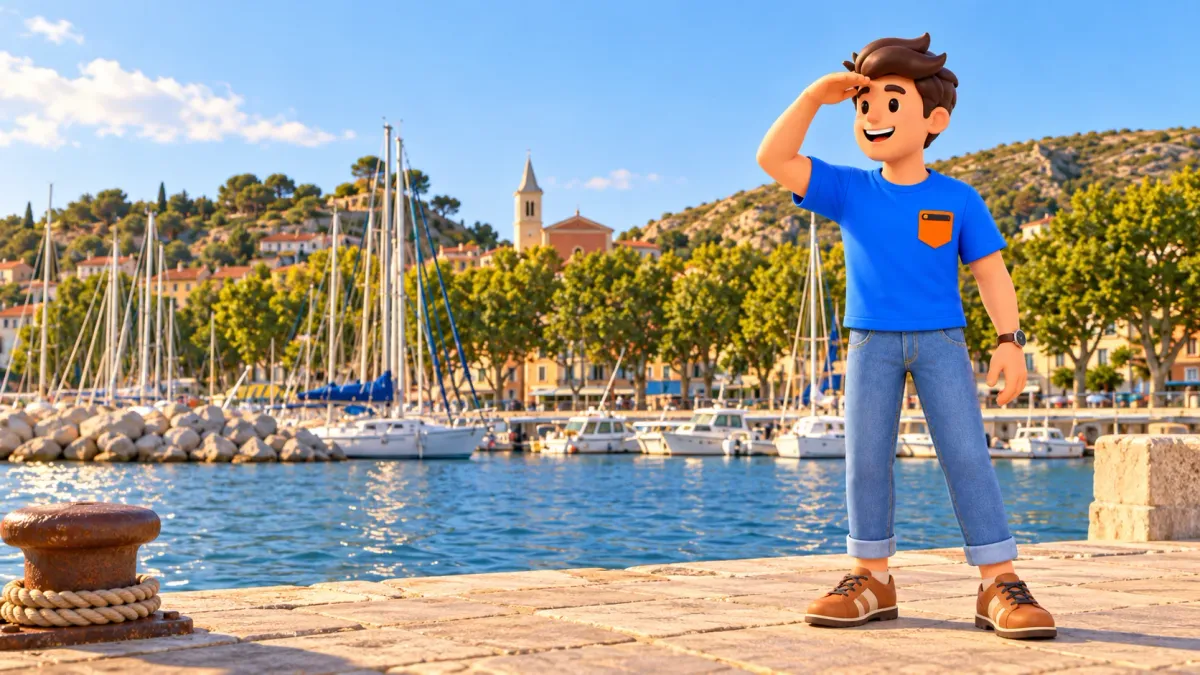
L’Estaque rewards a different sort of Marseille outing: time around a small harbour, a climb into village streets and a chance to understand why artists kept looking at this corner of the city. Its character comes from the meeting of water, homes and work. Let those relationships give the walk a shape, with a proper pause before returning.
Allow around three to three and a half hours in the core neighbourhood, plus travel from your accommodation and back. The proposed order is harbour, upper streets and church square, a brief exterior heritage stop, then a return towards the waterfront. Corbières is a separate extension. All time allocations are editorial estimates, not measured walking times.
Give the harbour loop a half-day of its own
Use the harbour as your starting and finishing reference. That keeps this outing understandable even if your arrival point differs. If you come by train, include the station-to-waterfront connection in your plan; arriving in the district does not mean you are already beside the boats. For bus travel, choose the actual stop and onward walking connection for your date. Check the return before beginning, especially when another timed visit follows.
A workable core budget is thirty to forty minutes around the harbour, forty-five to sixty for the upper streets and church area, a short exterior stop at the old net-dyeing workshop and thirty to forty for a seated break. Leave the remaining margin for local transitions and looking again. The sequence can bend around an open café or a church service. It is a pleasant half-day without adding an extra beach journey.
The sea shuttle from the Vieux-Port is seasonal and weather-dependent. The published 2026 season ended on 27 September; do not read its summer timetable as an all-year connection. For a later trip, check the operator’s actual season and traffic information. Choose a land alternative when needed. A boat arrival can be part of the pleasure, but the neighbourhood visit should remain workable with the transport that really runs.
Let RoadMe work out a personal Marseille itinerary around your interests, time and pace. The app makes it much more convenient to fit a harbour-and-art half-day into a complete trip plan.
Start with the harbour and the working landscape
Spend your first minutes looking across the harbour rather than immediately searching for a famous artist’s exact position. Notice the masts, the line of roofs and the higher buildings behind the trees. The water gives a broad horizontal reference; small shifts in position change how the built forms overlap. You can enjoy that arrangement without knowing the title of a single painting. Find a public place where stopping leaves room for other people.
L’Estaque’s history includes fishing and tile manufacture, with industrial work shaping the district alongside its coastal setting. That helps explain its difference from a leisure resort. Think of the harbour as part of a neighbourhood with ordinary tasks and habits. Boats, houses and workshops belong to the same story rather than serving only as foreground and background for a photograph.
Take one wide photograph if you like, then look for a smaller relationship: a roof against greenery, a mast crossing a pale wall or a patch of blue between buildings. Try a second frame without moving very far. This is a useful way to give the walk an artistic thread while keeping the pace easy. Stay on public waterfront space; access to a working jetty or a vessel is not implied by a good view.
Climb towards Saint-Pierre-ès-Liens and change perspective
From the waterfront area, make your way through public streets towards Saint-Pierre-ès-Liens and the church square. Expect a change of level rather than a wholly flat harbour circuit. Choose a comfortable route on the day and allow time for the return downhill. If steps or slopes would make the outing tiring, keep a shorter waterfront version and enjoy its views without making the upper stop a test of endurance.
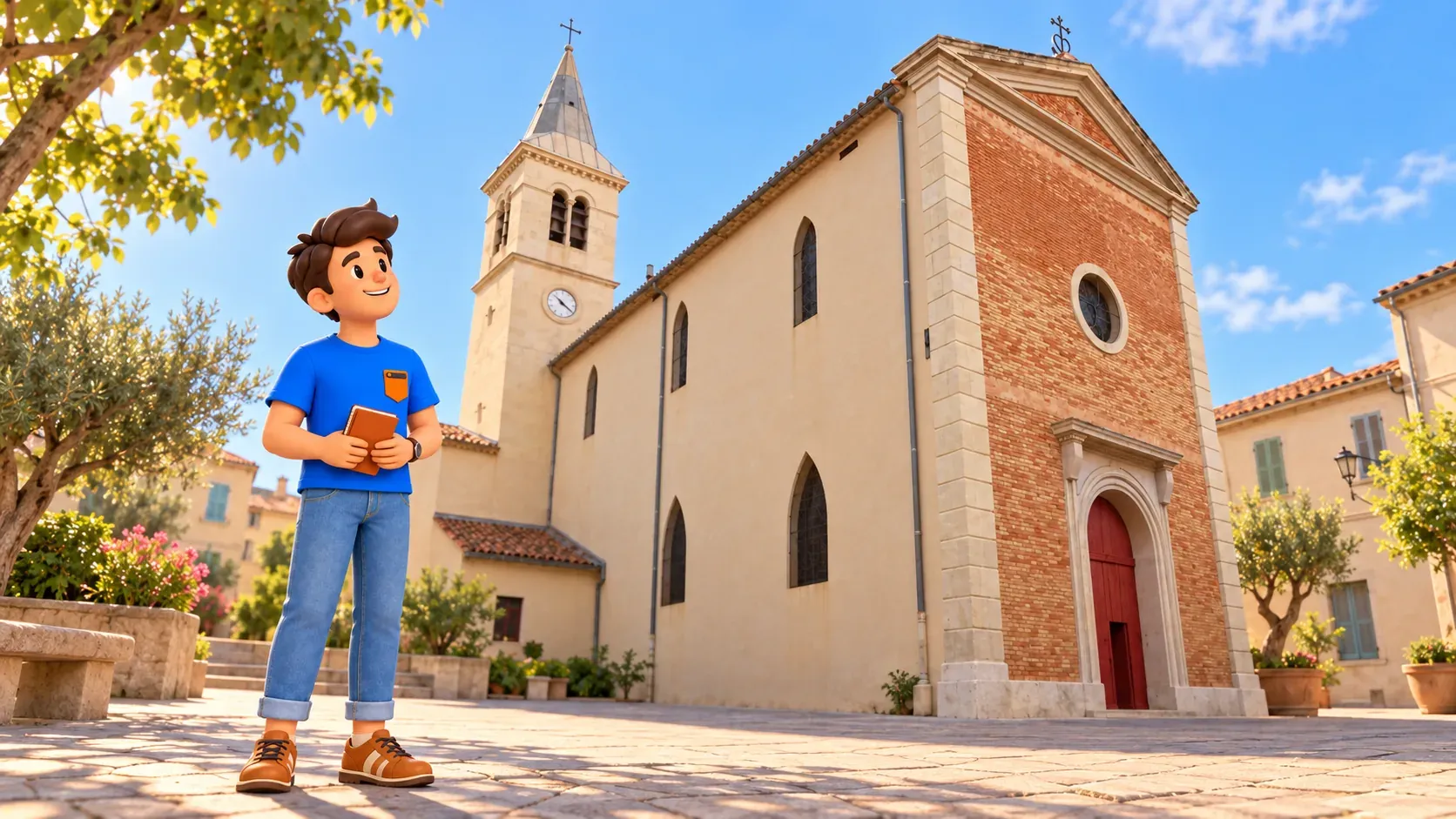
The church was built in 1851, and its bell tower followed in 1863. The brick front, pale stone framing and quieter rendered sides give you a few clear features to notice. This is a neighbourhood church with a modest scale, making it an appealing change from Marseille’s monumental sightseeing. Look at how the building belongs among the surrounding homes before concentrating on individual architectural details or trying to read every historical layer.
Treat entry as a possibility subject to actual opening and worship. A published Mass time is not a general sightseeing timetable. If the doors are open and a visit is appropriate, enter quietly; otherwise the exterior and square still make a worthwhile stop. Pause wherever the public space and current conditions allow, then compare your impression with the view from below. You have changed your relationship to the harbour without travelling to another district.
Look with the painters, without searching for an identical canvas
Paul Cézanne and Georges Braque are central names in L’Estaque’s artistic history. A useful example is Braque’s Road near L’Estaque, painted in 1908: the museum discussion connects its compact, geometric landscape with Cézanne’s influence. Houses can become blocks of colour; a slope can organise a view; depth can feel compressed when several forms gather close together.
Try a simple exercise at a permitted stopping place. Choose three large shapes and three colours, then notice which one leads your eye. Put the phone away for a minute and look again. The point is to make a personal observation, not to produce an art-history answer. Companions can compare what they noticed without agreeing on a single best frame.
The tourist office also describes a painters’ walk of about two hours starting at the port. If following that full route is your main interest, give it the time it needs and reduce other stops. Our harbour-and-church plan is a selected neighbourhood outing, not a reproduction of every panel on that trail. Old paintings also transform their subjects: an exact match from a private property or an inaccessible point is not something this walk promises.
Find a smaller fishing story at the former dyeing workshop
At 110 boulevard Roger-Chieusse, the former fishing-net dyeing workshop offers a different historical detail. Known as Le Chaudron, it recalls work needed to maintain fishing equipment. The building was adapted for that use in 1910, and its name refers to the dyeing vats. Keep this as a brief exterior stop on your local walk. The value lies in recognising a working activity behind a seemingly ordinary frontage.
The heritage record distinguishes the dyeing workshop from the professional headquarters of the Marseille fishing body. That helps avoid turning a useful local story into a grander administrative claim. You do not need to memorise the institutional history to enjoy the stop. Ask instead what tasks a fishing neighbourhood depended on beyond taking boats out to sea, and how small buildings could support those everyday skills.
No regular interior visit is assumed here. Look from a permitted public position, respect any current use and continue if the frontage cannot be comfortably observed. The description is not an invitation to knock for access or expect a museum display. Together with the church and harbour, this small pause gives the outing several scales: a shared waterfront, a community landmark and a practical trace of labour.
Return to the waterfront for a proper pause
Let the break bring you back towards the harbour and your eventual departure. Choose an open place that suits the group’s appetite and budget. A quick local snack and a seated rest can work better than a long lunch when the whole visit is limited to half a day. If a restaurant meal is the main pleasure, reserve more time for it and shorten the wandering rather than rushing the table.
Panisses and chichis frégis are well-known local choices in L’Estaque. Panisses are made with chickpea flour; chichis frégis offer a sweet fried-dough option. Pick what appeals, check the actual menu and ingredients where needed, and enjoy a small tasting without turning it into a compulsory food checklist. Opening, queues and availability depend on the individual business, so the route does not rely on one named stall.
Use the seated time to decide whether the half-day already feels complete. You might compare a favourite detail, sort a few photographs or simply watch the harbour. With children, a relaxed pause can be more valuable than another historical stop. With a mixed-energy group, let everyone judge the next part honestly. Decide about Corbières before committing to the additional journey west.
RoadMe can develop the whole personal trip around the experiences you enjoy, giving neighbourhood walks, food and rest the space you want. Use the app to organise your Marseille days more efficiently.
Keep Corbières as a separate coastal extension
Corbières lies west of the church-and-harbour core. The workbook coordinates place its garden and viaduct roughly two kilometres west of the church in straight-line terms; the real public walking route is longer. For planning, allow roughly forty to fifty minutes each way on foot, subject to the actual route and pace, plus forty-five to sixty minutes on site. That changes the length of the outing substantially and is additional to the core half-day.
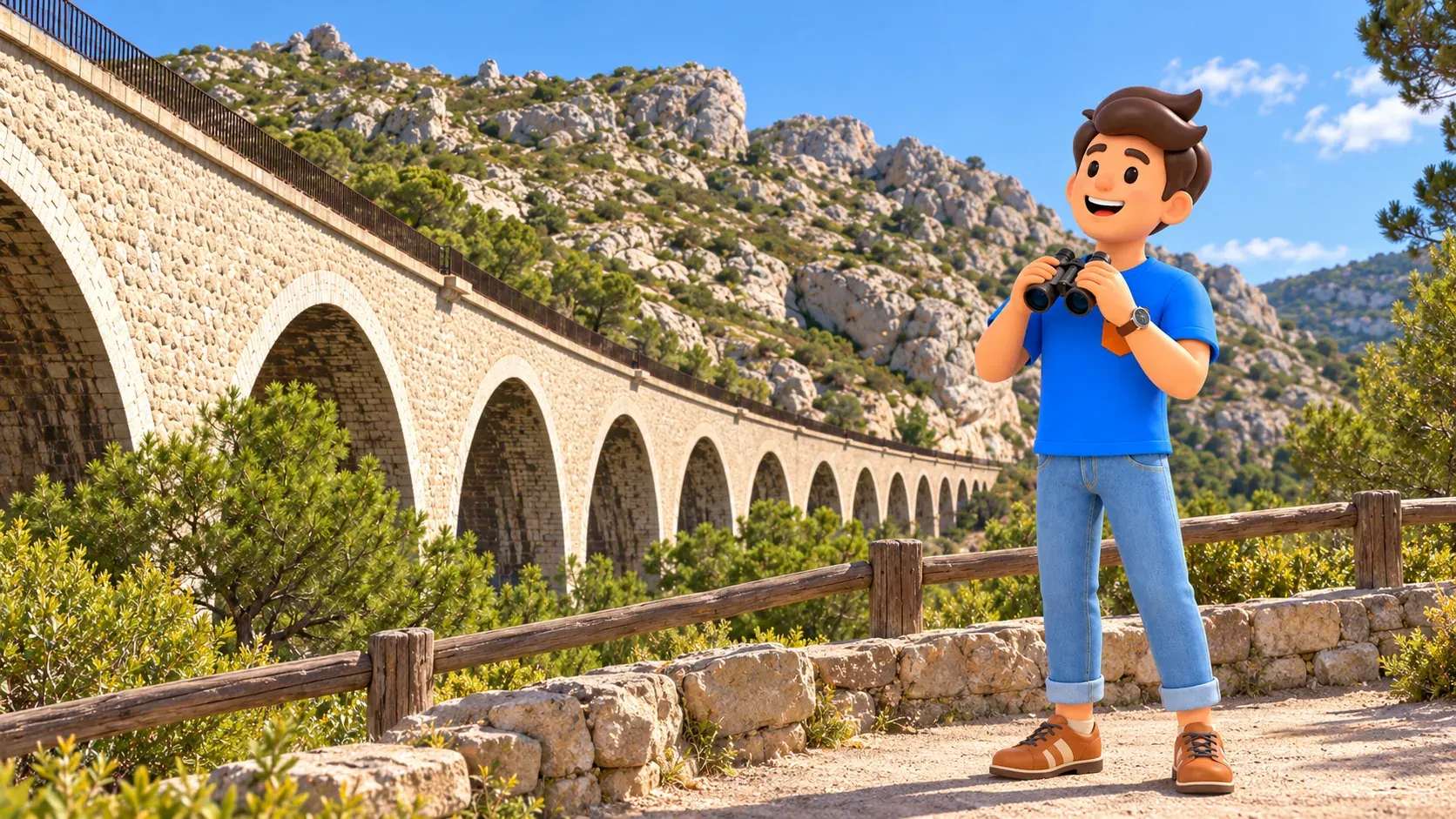
If you choose it, plan the outward and return connections first. A confirmed bus connection may change the balance, but verify the relevant stop and service rather than assuming every harbour service continues to the beaches. On foot, use actual public pedestrian routes and crossings. The railway viaduct is a subject to view from permitted ground-level places, not a walking route on the tracks or a reason to approach restricted railway infrastructure.
The garden and coast offer another kind of pause, while the stone arches add an engineering subject to the day. Sea access does not guarantee swimming conditions or year-round staffed facilities. You can enjoy a short coastal look without entering the water. If transport, weather or energy do not fit, end around L’Estaque harbour and save Corbières for a visit with its own time. That leaves the original plan fully useful.
Finish with a clear return and a personal impression
Before leaving the pause, confirm the connection you actually intend to take. Count the walk to your stop or station, likely waiting and the onward journey separately. When the seasonal boat is running, check its real departure and current traffic conditions; when it is not, use the land plan you chose at the start. A calm return protects the pleasure of an otherwise unhurried visit.
Our Corniche walk offers another Marseille coastal outing, with a different relationship between the city and the sea. Choose between them according to your interests and available travel time rather than trying to attach both to one short afternoon. L’Estaque is especially rewarding when harbour life, ordinary architecture and the painters’ way of seeing appeal to you together. Its distance from the centre deserves a deliberate place in the trip.
Leave with a small collection of impressions: a colour combination, a changed view from the church area, a fishing detail or a shared snack. You have enough material for a memorable half-day without following every branch of the painters’ trail or reaching every coastal extension. The best version is the one that gives your chosen subjects enough attention and still lets the group return comfortably, with energy for the next part of Marseille.


