
Marseille in the heat: a morning walk, one museum and an optional seaside pause

On a hot Marseille day, change the rhythm before adding more places. Give the Old Port a short morning walk, choose one genuinely available indoor museum and leave a real interval for food and rest. A later seaside pause at Prado can be an option, with a confirmed journey and suitable conditions. It does not have to complete the day.
This is a planning framework for hot weather, not a forecast for the publication date or a promise of comfortable temperatures. During a heatwave, follow current official advice, which may mean abandoning outdoor sightseeing and staying in a cool place. The time blocks below are editorial estimates, not measured routes. You can finish after the central part without turning a good day into a long walk south.
Change the day’s rhythm before choosing the stops
Start with the actual conditions for your date and the needs of the people travelling. An early hour or a coastal location does not make an outing automatically suitable. Check heat alerts and local access, then decide how much of the day should remain outside at all. The useful change is often to reduce the exposed walking and give one indoor experience a clear place, with no obligation to fill every gap. A shorter programme can still have a strong main interest: harbour architecture, Marseille’s story or a Mediterranean exhibition.
Choose the museum and its real entrance before fixing the morning walk. The aim is not to arrive at a closed door just as you want to get indoors. Ordinary opening calendars and exceptional notices both matter. Keep the later seaside idea separate until you know whether it adds enjoyment without an awkward journey. Our guide to choosing one Marseille museum helps compare subjects and visit formats. Here, the task is to arrange a comfortable sequence around one actual visit rather than turn several attractive alternatives into a compulsory museum circuit.
Let RoadMe work out a complete personal Marseille itinerary around your interests, days and pace. The app makes it much more convenient and effective to give visits, shorter walks and real rest the right place across the whole trip.
Keep the Old Port walk short and genuinely early
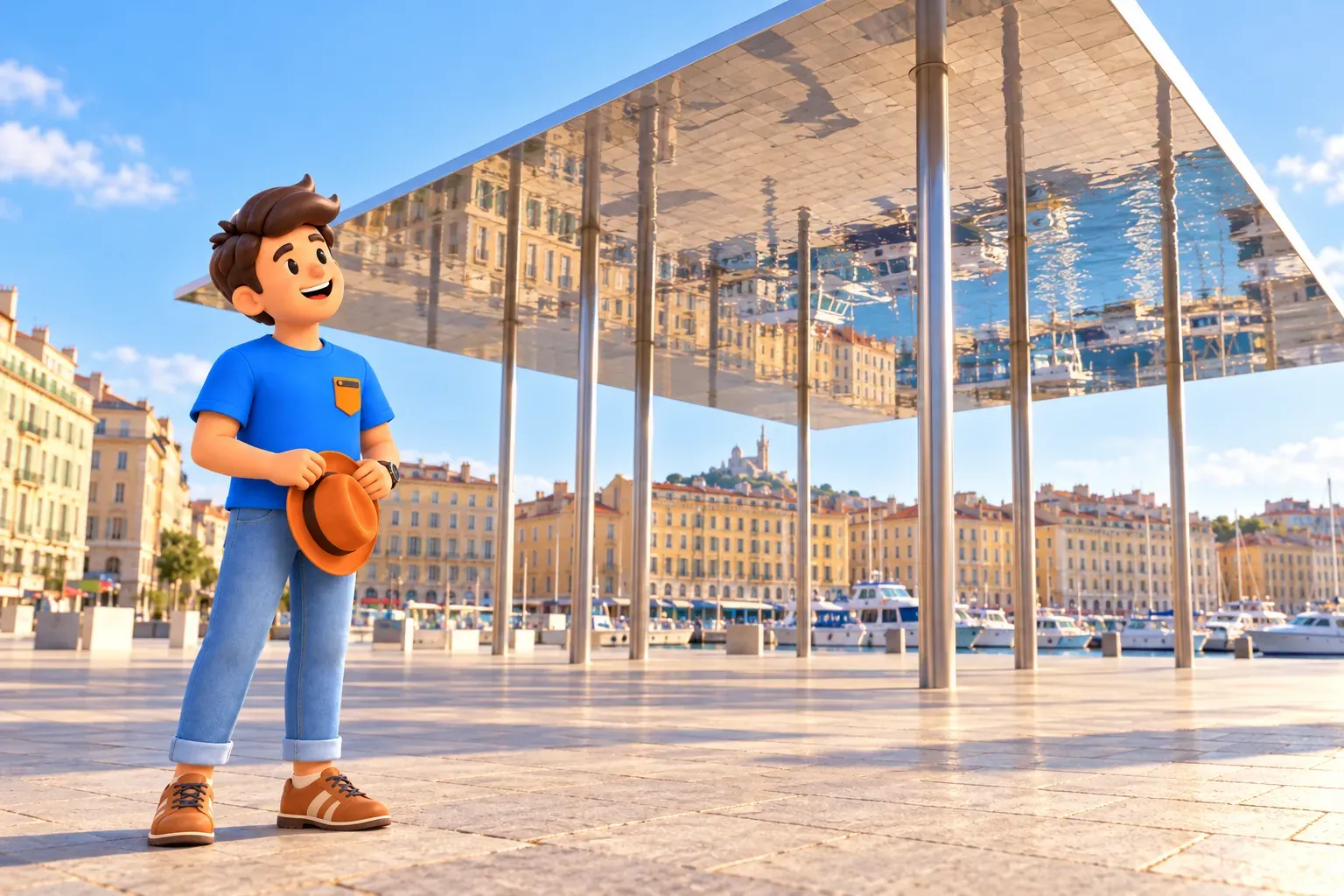
The inner end of the Old Port provides a compact first encounter: water, moored boats, the surrounding facades and the nearby Ombrière. Stay with one small part rather than setting out to complete both quays. The mirrored canopy gives the walk a brief architectural focus, reflecting ordinary movement and paving overhead. It belongs to the port regeneration completed in 2013 by Foster + Partners, with landscape work by Michel Desvigne. A little looking can be enough. There is no need to expand the stop into an entire waterfront circuit simply because you started early.
Allow roughly forty-five minutes to an hour for selected harbour views and pauses only if the actual morning conditions suit the group. This is an editorial allowance, not a target to reach in unsuitable heat. The Ombrière is open on all sides, so do not treat it as an enclosed cooled room or a guaranteed place to spend the hot part of the day. Our two-hour Old Port walk offers a larger outing for different conditions; this version deliberately keeps the outside part modest. Stop earlier or omit it if that is the right decision for the date.
Choose one indoor focus: the History Museum or the J4
For Marseille’s own development, the History Museum offers an indoor focus related to the Antique Port. A question about how harbour life shaped the city can carry a selected visit. At the check on 24 October 2026, however, the museum announces closure until further notice, and the Rue Henri Barbusse lift is out of service. Retain this option only after confirmed reopening and a suitable entrance. Future events do not establish access. The archaeological remains outside are separate from the covered museum and do not turn a closed institution into an equivalent indoor alternative.
For Mediterranean societies and cultural connections, consider an actually available exhibition inside Mucem’s J4. The dark concrete lattice building opened in 2013, designed by Rudy Ricciotti with Roland Carta. It is distinct from the neighbouring white cantilevered Villa Méditerranée. Select the indoor exhibition, not a long tour of outside ramps and roofs. Admission conditions differ from the free outdoor spaces, and the normal Tuesday closure and calendar exceptions need checking. Fort Saint-Jean has separate access; its specific page reports exceptional closure at the dated check. Do not assume the bridge through the fort is your available approach to the J4.

Give the indoor visit, meal and rest enough space
An editorial hour and a half to two hours for a chosen part of the museum is a reasonable starting block, with actual travel and arrival added. More attention can mean more time, but there is no need to see every room. Choose one theme and let yourself stop with it. A museum visit should be interesting in its own right, not just a place to wait for another long walk. Confirm the current visitor conditions and the actual indoor experience; the word museum alone does not promise a particular temperature in every space.
Keep food and rest near the chosen visit or at an appropriate cool place you can actually reach. Do not use the interval to cross several exposed districts for a supposedly essential restaurant. A real pause needs room to sit and enough time not to feel like another transfer. During strong heat, official guidance prioritises staying cool and avoiding strenuous activity; let that override a sightseeing schedule. If the indoor plan is not available, choose a genuinely suitable alternative rather than extending the waterfront walk while you search. The shorter version can end here, with the museum and harbour already giving the day a clear shape.
Treat Prado as a later option with its own journey
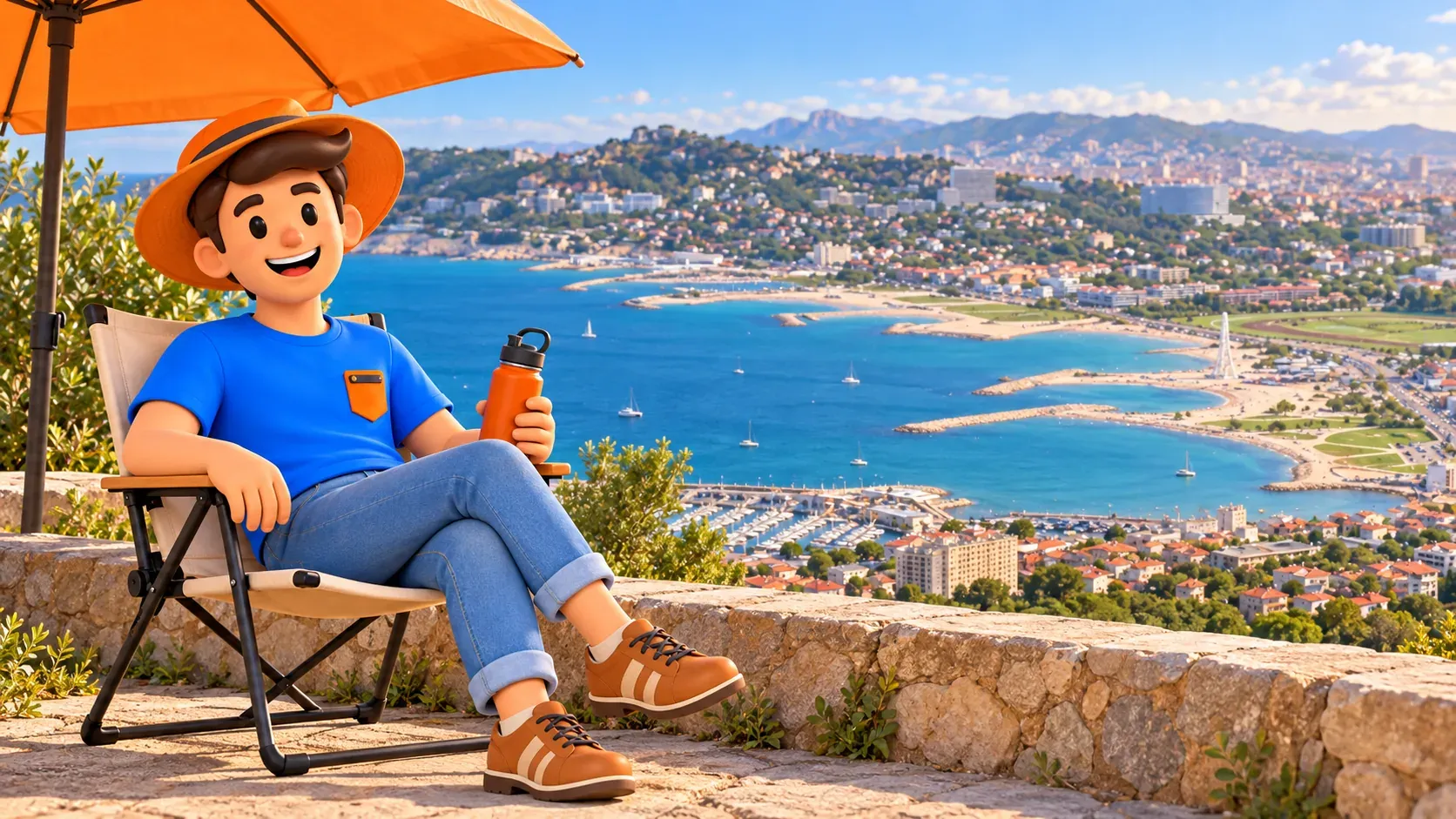
The Parc balnéaire du Prado brings lawns, promenades and a succession of seaside bays into a different part of Marseille. Its landscape makes more sense as a coastal park and beach area than as one single uniform stretch of sand. Choose it for a modest view and change of setting later, if the actual conditions have become suitable. It is south of the central museum area and requires a real journey. Do not turn the day into a walk along the whole Corniche to prove the itinerary can be completed entirely on foot.
A later editorial pause of thirty to sixty minutes can be enough for a small chosen part, with transport, food and return separately allowed. Later does not automatically mean cooler, and an open lawn or beach does not guarantee usable shade. Check park access, weather restrictions and the actual place you intend to stop. Swimming is a separate decision requiring current local conditions and instructions; this plan does not promise bathing or continuous supervision. You can simply enjoy a sea view when suitable. If the journey adds strain or the heat remains unsuitable, keep Prado for another day and finish comfortably in the centre.
Plan the actual approach and return, not just the line on a map
Check door-to-door travel before setting off, including waiting, crossings and the final outdoor approach. A metro station named for the Prado area is not the water’s edge. A route with fewer changes can be preferable to a marginally shorter connection that leaves a demanding walk. Our Marseille without a car guide explains how to keep nearby outings together. Here, avoid adding distant stops during the part of the day you meant to protect. Consider the actual available service and the needs of the group, with an easy way to shorten the plan before committing to the south.
There is also a dated transport exception: RTM announces suspension across its Marseille network from 05:00 on 24 October 2026 to 05:00 on 25 October. Confirm actual resumption rather than treating the announced end as proof of a particular departure. Normal connections discussed for an ordinary day apply only when operating. Carry water, drink regularly and use suitable sun protection such as a hat when outside, following current official advice. Keep belongings practical and check the museum’s bag rules; do not rely on every fountain or service being available at every point. Preparation supports a reduced plan rather than making an unsuitable outing acceptable.
RoadMe creates a personal plan for the entire journey, combining the discoveries and pauses that suit you. Use the app to organise days around your interests, while checking current heat, access and transport conditions with the relevant official services.
Use the short day or the fuller conditional version
The short version keeps a modest morning harbour look, one confirmed indoor museum, food and a proper rest. Its value comes from attention to one place and a sensible change of pace, not from a minimum number of hours outside. Put the booked or opening-dependent part into the day first, then decide what genuinely fits around it. If an alert or the conditions call for staying cool instead, drop the outdoor section. Do not try to recover every omitted view later by stacking several exposed walks into the evening. Tomorrow can receive a different main interest without either day feeling unfinished.
The fuller version adds Prado only after reassessing conditions, energy, outward travel and the return. Keep the seaside pause small enough that it remains a pleasant addition. A hat, fan or parasol pictured in an illustration is not evidence of public equipment or shade at the exact site, so plan from the actual place rather than the scene. You can also decide not to go after a successful museum visit. Let the day’s main experience remain enough. Marseille’s harbour, collections and sea can belong to the same trip without all needing to be completed in one hot day or joined by one continuous walk.


