
Madrid Planetarium and Tierno Galván Park: a relaxed half-day in the south
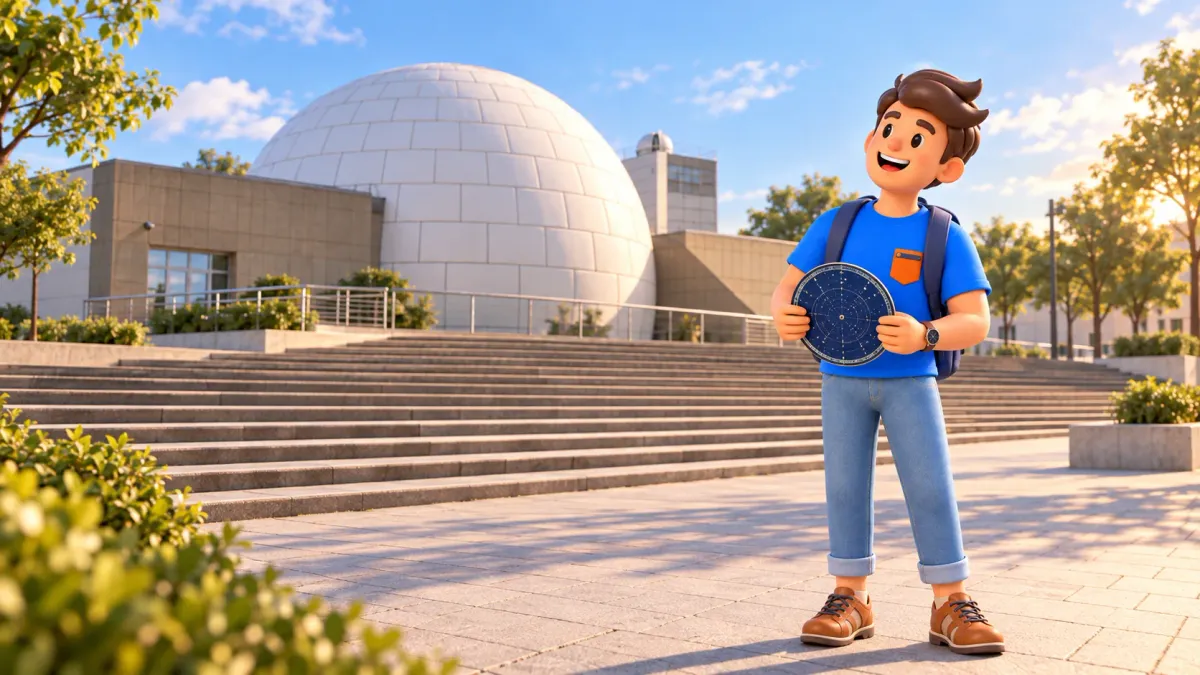
Madrid Planetarium and Enrique Tierno Galván Park combine well into an afternoon outing: walk outdoors first, explore an exhibition, then attend one dome show. Allow approximately three and a half hours on site, with travel additional. This suits visitors who want a change from central squares and art museums. The subject becomes the city landscape, science and unhurried observation. You do not need to be an astronomy enthusiast or spend a whole day moving between specialist attractions.
Begin planning with a particular show rather than the idea of simply dropping into the Planetarium. The centre has a midday closure, school-day mornings are reserved for school visits, and public programmes change. Exhibitions and the projection room also have different admission arrangements: exhibitions are free during opening hours; the dome needs a ticket. Neither automatically includes a view through a real telescope. Our itinerary combines the park, exhibitions and one selected projection, with no assumption of a separate observing event.
Choose the show and check the date first
The Planetarium is at Avenida del Planetario, 16, within Tierno Galván Park in Legazpi, Arganzuela district. At our check on 16 October 2026, centre opening was Tuesday–Sunday, 10am–1:45pm and 5pm–7:45pm. Monday is the weekly closure; additional listed closures are 1 and 6 January, 1 May, and 24, 25 and 31 December. These are building hours, not the timetable of every film. Find an appropriate session on your date before fitting the other activities around it.
It is easier to prepare this outing with RoadMe, which develops a personal trip plan around your interests, dates and pace. Choose science, parks and relaxed walks to organise Madrid days with a suitable balance of activities and rest, without continually assembling the whole programme yourself.
Our sequence needs an available show around 6pm. Sessions at that time appear on different days in the current programme, but this is not a permanent promise for every future date. For example, the owner announced no afternoon projections on 22 and 29 October and 5 November 2026 because of a conference series. Check the calendar before buying and distinguish a lecture from your chosen film. A published session does not establish that seats are still available.
During term, weekday morning shows are reserved for school visits. Weekend mornings offer children’s programmes whose content and age guidance need a separate check. Afternoons often suit adults or mixed-age groups better. Confirm the language of your selected show, particularly if you do not understand Spanish: a translated webpage does not mean translated commentary. Some exhibitions provide Spanish and/or English material through QR codes. That does not establish an English-language dome session or translated content in every part of the building.
A plan from roughly 3:30pm to 7pm
- 60 minutes: park walk from the Planetarium and back. A short authorised section with stops, rather than the entire park.
- 30 minutes: rest before the centre opens at 5pm. A bench or another short break chosen in advance.
- 30 minutes: exhibitions from 5pm. One or two subjects that interest you, without attempting every room.
- 15 minutes of reserve and 15 minutes for admission. Be at the appropriate entrance around 5:45pm.
- Up to 45 minutes: the selected show around 6pm. Duration depends on the programme.
- 15 minutes: exit and finish. The walk to the metro and onward journey are additional.
This totals 210 minutes. It is an editorial estimate, not a measured walking schedule. Meeting outside the Planetarium during its midday closure is possible, but entering the building waits until opening. For the park section, choose an open public path and turn back after approximately twenty-five minutes, leaving time for the return and stops. This is more dependable than promising every pond or a complete park circuit between two fixed events. Follow current signs and barriers rather than an imagined shortcut.
If the film lasts less than forty-five minutes, keep the difference for an easy exit or a conversation afterwards. If your chosen session begins later, shift the plan and check both centre closing and light levels along the park paths. Every spare interval does not require another attraction. A useful half-day comes from one clear anchor and some margin. In hot weather or rain, reduce the outdoor section and choose an appropriate place to wait, without assuming the centre remains open during its break.
The park: see southern Madrid from another level
Tierno Galván is a city park with long paths, open ground, ponds, crossings and viewing areas. It stands in Legazpi beside substantial transport and former railway land. The setting offers a different impression from formal central Retiro: relationships between greenery, slopes and surrounding buildings become interesting. For the first hour, one direction and several stops are enough. You do not need to turn every natural feature, sports facility and named part of the grounds into an individual compulsory destination.
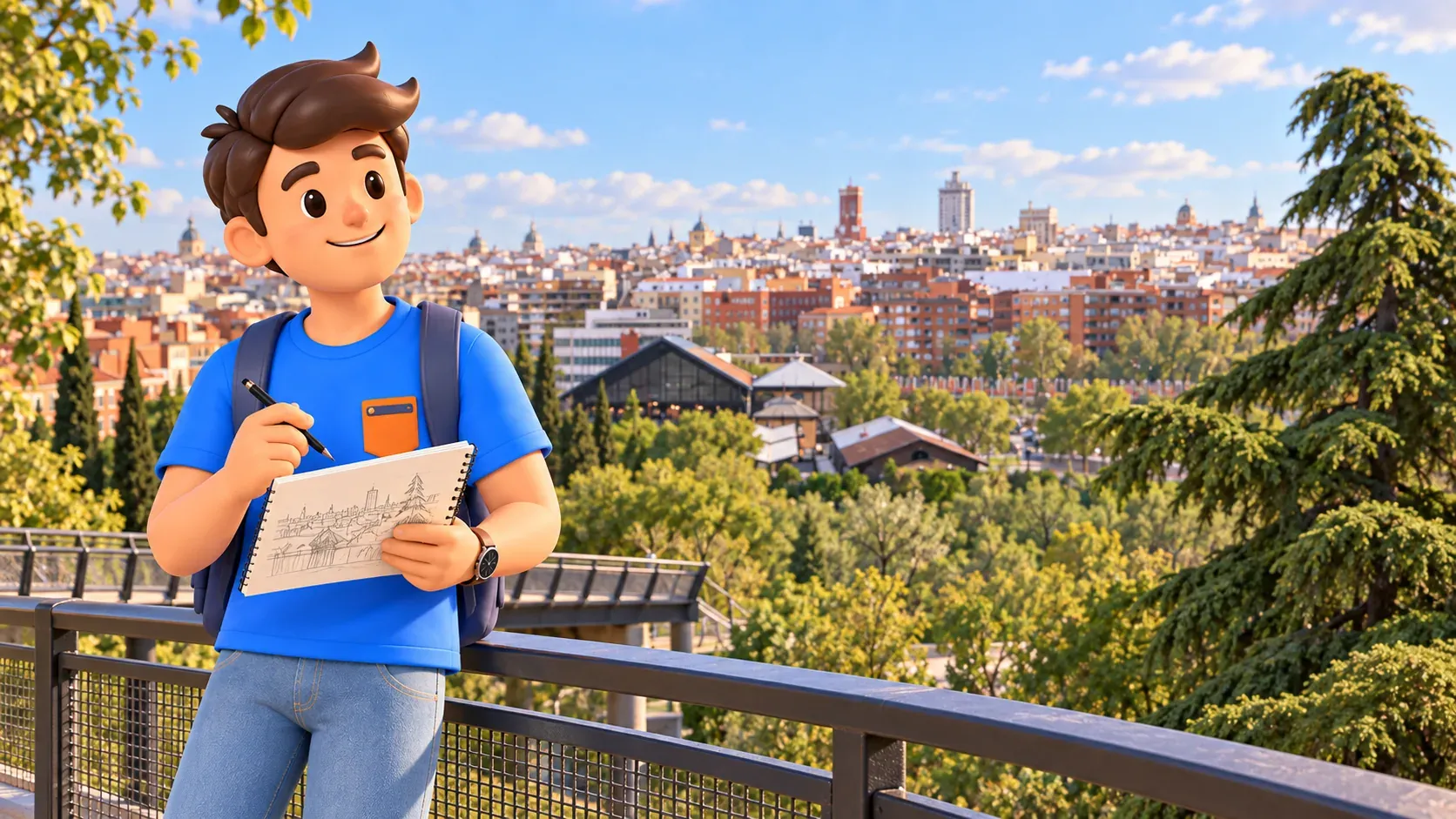
First use the Planetarium’s white dome as a reference, then follow an authorised public path. From a higher area, compare nearby tree canopies with the urban horizon. Clear conditions and haze give different impressions; no single recognisable panorama is guaranteed everywhere. The photograph in our city collection shows historic Delicias’s roof and dense buildings beyond. It helps explain the park’s relationship with railway history, but it does not prescribe one mandatory viewpoint or a measured route for the whole walk.
The park emerged from changes to southern land associated with industry, municipal services and railways. Its layout reflects an effort to create new public space for a large city. That context explains the combination of walking routes, a science centre and an outdoor auditorium. The name remembers Enrique Tierno Galván, a former mayor of Madrid, whose monument forms part of the ensemble. This connection is enough for our outing. A detailed account of the urban project would deserve a separate Arganzuela itinerary.
If an authorised approach towards the ponds is open and fits your time, choose one. Visiting them all is unnecessary. Bridges and changes of level add variety, but individual paths depend on surfaces, gradients and current restrictions. The city describes the park as partially accessible for people with reduced mobility. Check your particular approach if you have specific requirements. The accessibility of the Planetarium building does not mean that every route across the surrounding park is equally convenient or suitable for your group.
The Planetarium: a building for travelling through images
Madrid Planetarium opened on 29 September 1986. In 2016–2017, it underwent substantial renewal of the building, equipment and scientific content. Its white dome and low neighbouring volumes make it an easily recognised exterior reference for returning from the walk. Compare the dome from a distance with its appearance near the steps. The shape does not explain everything the institution does, but it immediately distinguishes it from a conventional gallery organised as a sequence of rectangular rooms and framed exhibits.
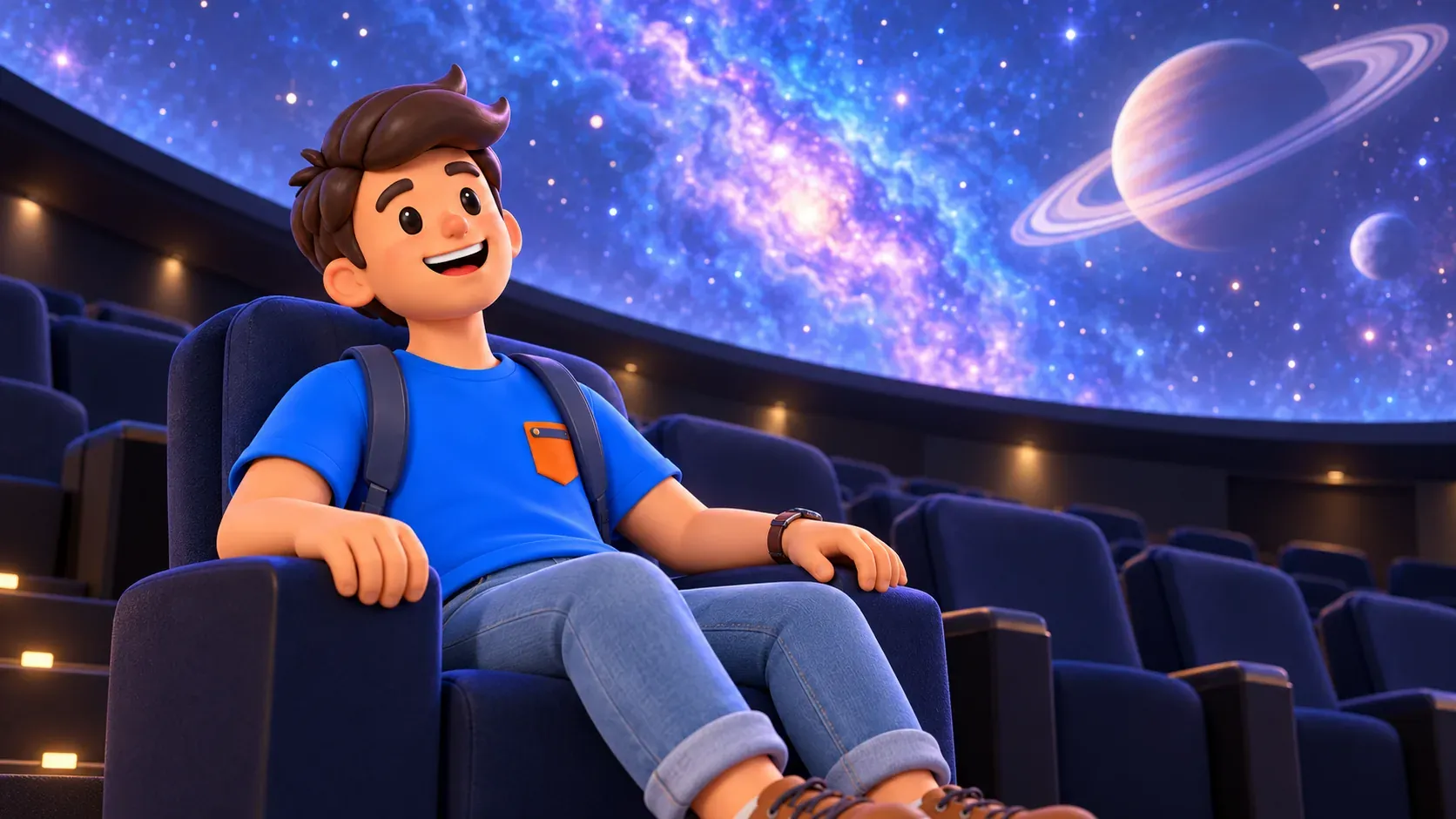
The dome carries specially prepared imagery. It offers an unusual visual environment for exploring a subject, rather than an actual night sky seen through an open roof. Telescope observations, lectures and workshops are arranged separately through the programme. Their presence in the centre’s general description does not establish daily availability. If a telescope is your main objective, choose a published observing event and its conditions. The walk would then revolve around a different activity, perhaps at a different time of day.
Avoid relying on older equipment descriptions as exact accounts of the current projectors. For visitors, theme, duration and recommended age are more useful. At our check, the programme included children’s stories, astronomy films and a live introduction to the sky. Their formats and lengths differ. Some last around half an hour, while a special live session may take approximately forty-five minutes. Our allocation allows for that variation rather than presenting every show as an identical thirty-minute experience with interchangeable subject matter.
Exhibitions: choose a question before the show
Exhibitions are free during centre opening; a ticket is needed for the projection room. This gives you a reason to arrive before the session and explore one subject. Depending on the current display, you might choose space imagery, lunar exploration or the history of planetariums. Do not promise yourself every section in half an hour. Formulate a question to take into the dome instead: what does an image represent, and how does the interpretation help you understand what you are seeing?
An astronomical photograph and an artistic interpretation can share a building while serving different purposes. Read the explanation before assuming that a colourful image represents a view available to the unaided eye. This approach helps adults and children alike: select one detail, then compare it with the accompanying account. Half an hour provides a small but meaningful introduction to the show. QR materials can help when available in a language you understand, without assuming that every display offers the same options.

Leave enough time to enter the dome
Reach the appropriate boarding point early. The owner’s rule is clear: once a projection starts, visitors cannot enter the room. Ticket-office closing time is not a safe target arrival for your particular show. Resolve your ticket and entrance first, then use any remaining minutes for an exhibition. Do not keep reading one last panel when it is time to gather for admission. A little margin protects the rhythm of the outing and the main event around which you planned the afternoon.
For families, the guidance for the actual film matters. A bright cosmic theme does not make every programme suitable for the youngest child. Check age recommendations, length, the character of the images and seating requirements. Adults also benefit from understanding the format: a live sky presentation and a story-led film offer different experiences. Choose more than a convenient hour. It is better to adjust the walk for the right subject than spend its central activity on something that never matched your group’s expectations.
To combine this science outing with museums, architecture and other parks, try a personal plan in RoadMe. The app makes it more convenient to organise the trip around your interests and pace, giving each day its own character and enough time to rest.
Finish the outing and leave other ideas for another day
After the show, finish without needing another park circuit in darkness. Discuss one memorable question, then follow your chosen public exit. Arganzuela-Planetario and Méndez Álvaro on metro line 6 are useful transport references, but add the walk from your particular station exit. If ramps, lifts or a wheelchair space in the room matter, establish arrangements in advance. Accessibility provisions in the centre are helpful, while the complete journey from public transport still needs to suit your requirements.
Do not add the former IMAX cinema as an operating neighbouring attraction. It closed in 2014; reports of a future theatre concern plans rather than the ready-made programme of this walk. Auditorium events and seasonal festivals also have their own dates. If railway history interests you, our Atocha to Delicias walk suits a separate morning. Today offers another combination: an urban horizon, a green pause, a science display and a dome that becomes a screen.


