
Atocha to Delicias: station architecture and Madrid’s Railway Museum
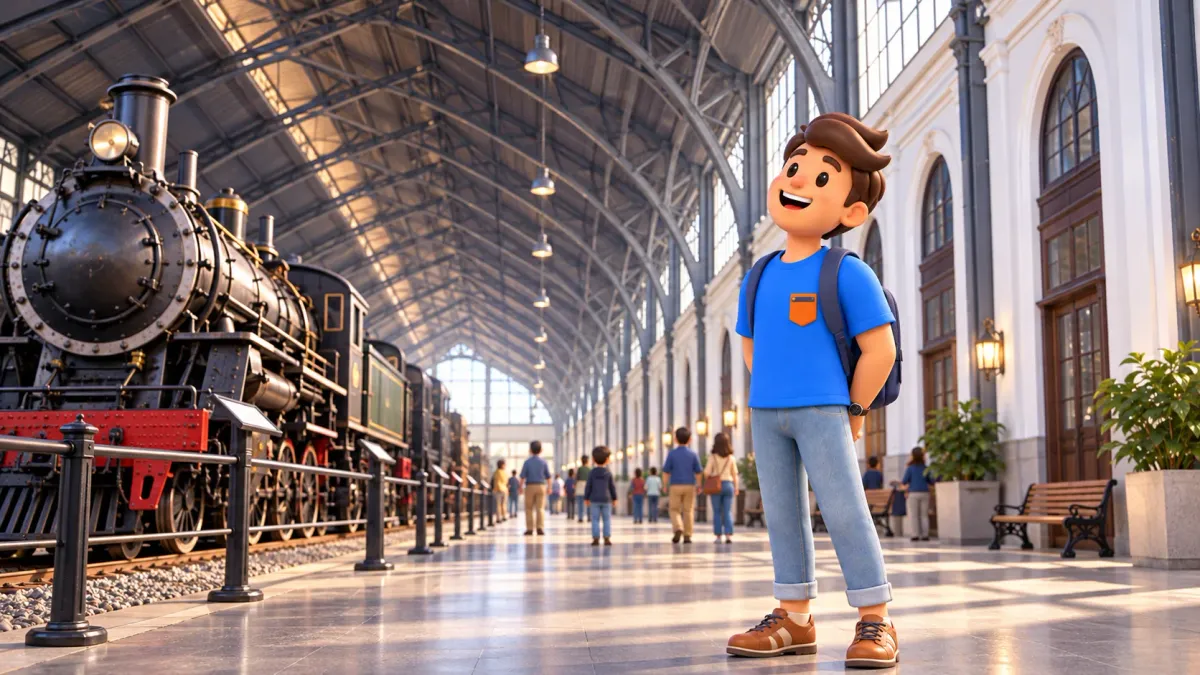
Atocha and the former Delicias station make a connected morning walk of approximately three hours. Begin with exterior views of historic Atocha, then follow Paseo de las Delicias to Madrid’s Railway Museum. The interest is in comparing a transport hub still handling journeys with a station preserving railway history. An ordinary city street connects the two. You do not need to take a train to follow this route, and specialist knowledge of locomotives is unnecessary.
One important restriction shapes the plan: Atocha’s tropical garden is temporarily closed for works, so we leave it outside the itinerary. At the museum, choose an ordinary visiting day because markets change how the building is used. Our three hours include exterior observation, walking, the museum and a short break. They do not include a long restaurant meal or an additional performance. Timings are editorial estimates without a timed field walk; station works may alter public approaches.
Choose a museum day before starting at Atocha
At our check on 16 October 2026, the Railway Museum specifically warned that ordinary museum activity was suspended on 16, 17 and 18 October for Brocante. Those dates do not suit the permanent-collection visit described below. Mercado de Motores also takes place on the second weekend of the month, except July and August, interrupting ordinary museum activity. A market inside a historic station can be appealing, but its programme is different from a normal collection visit.
It is more convenient to prepare this outing in RoadMe, which creates a personal trip plan around your interests, dates and pace. Choose architecture, transport history and relaxed city walks to organise your Madrid days without continually putting the whole programme together by hand.
Ordinary opening from October to May is Monday–Friday, 9:30am–3pm; Saturdays and public holidays, 10am–7pm; Sundays, 10am–3pm. From June to September the museum opens daily, 10am–3pm. The owner lists 25 December, 1 January and 6 January as closure dates. Always check events and temporary notices as well. A general opening timetable does not override a separate announcement suspending ordinary exhibitions. Choose a suitable morning before deciding how the rest of the day will fit.
Start around 10am near historic Atocha on the Glorieta del Emperador Carlos V side. Estación del Arte on metro line 1 is a useful reference for this part of the square. If arriving by train, first reach a public city approach: the three-hour outing does not begin on a platform while you manage luggage and controls. Travel light where possible. Arrange storage for a large suitcase separately rather than relying on an unchecked locker facility being available on arrival.
Three hours with one clear walking connection
- 30 minutes: historic Atocha outside. Orientate yourself and choose an available view of the façade and roof.
- 30 minutes: Paseo de las Delicias. Street crossings and the approach to the museum at number 61.
- 90 minutes: Railway Museum. Admission, the overall hall, selected trains and one further theme.
- 20 minutes: coffee or a short rest nearby. Without depending on service in a historic dining carriage.
- 10 minutes: reserve and finish near Delicias. Your onward metro journey is additional.
The total is 180 minutes, including the street connection and break. Use the public pavements along Paseo de las Delicias and authorised crossings. Do not look for shortcuts through railway premises, tracks or closed station entrances. Traffic lights, works and your exact starting position can lengthen the approach. If you begin at a distant exit of the Atocha complex, add the walk to the square. That is preferable to discovering that an unplanned detour has consumed much of your museum time.
This itinerary focuses on two railway buildings and a direct connection. The basilica, Royal Tapestry Factory, exhibition spaces and southern parks need other turns and additional time. Do not automatically include them because their names appear nearby on a map. The morning remains coherent when each part explains the next. If you want to continue after the museum, pause and choose a new subject. A finished walk can be satisfying without turning into an endless collection of adjacent attractions.
Atocha: see the station behind the passenger flow
Atocha’s story begins in 1851 with the opening of the Madrid–Aranjuez railway. Its earliest facilities were much more modest than the present complex. The recognisable historic hall belongs to the expansion opened in 1892. Alberto de Palacio was responsible for the architectural project, while engineer Henri de Saint-James calculated the roof. Their different roles reveal the combination behind a large station: architectural presence, engineering and transport requirements. You do not need to understand every structural element to appreciate the scale of the span.
From an authorised viewpoint, notice how the roof unifies a long volume and how the façade marks an entrance. Compare that historic form with today’s movement of passengers. Stations must impress, but also help many people find their way. Construction adds another layer of organisation. Use whatever public view is available on the day and avoid stopping with a camera in narrow circulation space. A perfectly symmetrical photograph is optional; the building’s purpose is visible in ordinary movement around it.
Rafael Moneo’s late twentieth-century transformation changed the relationship between the historic and newer parts of the station. A tropical garden opened in the old hall in 1992. Today, understand it as part of that transformation rather than a guaranteed stop. Municipal information reports the garden temporarily closed, while Adif describes refurbishment. A notice that one stage of work is nearing completion does not establish reopening. Do not expect old palm-filled photographs to show the public circulation arrangements available during your visit.
Since 2022, the operating station’s name has included writer Almudena Grandes. It adds another form of civic memory to a transport building. A short stop can connect three periods: Madrid’s early railway, the great nineteenth-century hall and the continuing adaptation of a busy hub. Platform arrangements, departures and specific transfers belong to a separate transport task. Our walk begins beside a station, but it does not replace instructions for catching a particular service or reaching its boarding controls.

Paseo de las Delicias: make the approach part of the story
The walk changes the scale of the morning. After a major interchange, you move through a normal street of shops, homes and daily activity. Rail history also concerns the urban connections and people surrounding stations. You do not need to label every older façade a railway building or imagine lost tracks under every pavement. Simply observe that large infrastructure belongs within a lived-in neighbourhood. That perspective makes the museum’s building more meaningful when you reach it, rather than treating it as an isolated collection.
Your destination is Museo del Ferrocarril de Madrid, Paseo de las Delicias, 61. Delicias is also the name of nearby operating transport stations. A metro or Cercanías entrance is not the museum entrance. Use the address and museum signs rather than following a familiar name on a map. Delicias metro on line 3 makes a useful finishing reference. Do not assume that all places sharing the name are connected by a direct underground passage or have interchangeable entrances.
Delicias: the building is already an exhibit
Delicias station opened on 30 March 1880. Its designer was French engineer Émile Cachelièvre; automatically attributing an iron railway structure to Gustave Eiffel is misleading. Unlike early Atocha’s provisional facilities, Delicias was built as a permanent monumental station. “First monumental station” does not mean “Madrid’s first railway”. Understanding that distinction helps reconcile the different dates of the two buildings. Each represents an important beginning, but they are beginnings of different kinds rather than competing claims to exactly the same event.
The museum opened here in 1984. Before examining locomotives, stop on an authorised platform area and look along the high hall. Repeated metal elements and upper light establish a strong sense of length. A large span without intermediate supports helped accommodate trains and passengers. Today, the same structure allows the collection to be seen in an environment related to its former work. The building does more than contain exhibits: it explains the physical scale that railway operations required.
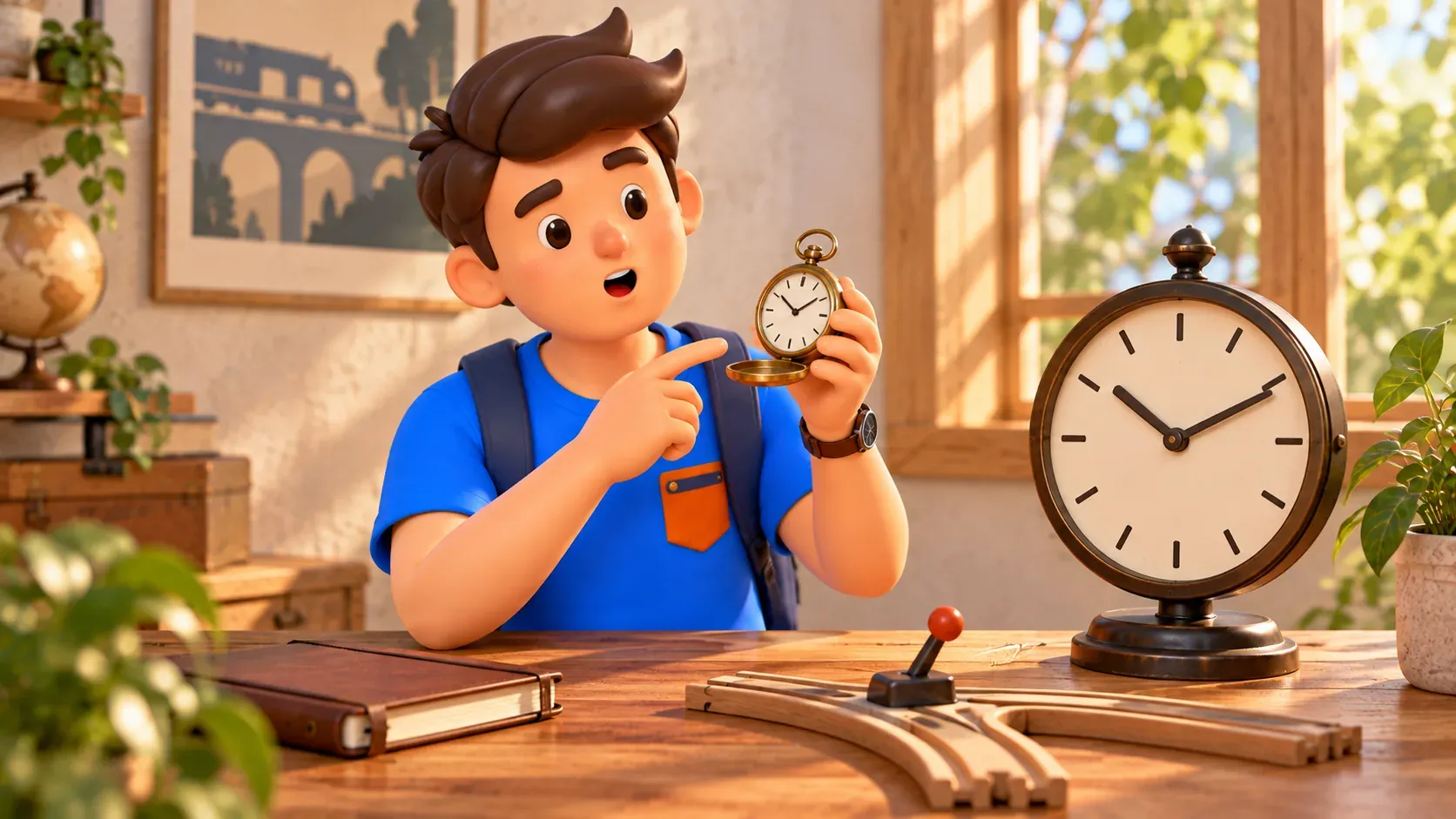
For ninety minutes, choose a few questions rather than an exhaustive list of machines. How did traction change? What made passenger travel comfortable? Why did the railway depend so strongly on accurate time? Steam, electric and diesel vehicles connect to other museum themes. Read model names selectively when they help answer your questions. Begin with shape, scale and visible details, then read the explanation. Technology becomes easier to understand when a label addresses something you have already noticed.
From locomotives to clocks and miniature railways
You might give the first forty to fifty minutes inside to the main hall and selected vehicles, then devote the remaining time to one additional theme. This divides the same ninety minutes; it is not extra time. Some visitors prefer clocks and traffic control, others infrastructure or models. A miniature railway makes the larger system particularly clear. A train needs track, management and coordination with other trains, rather than just an attractive locomotive. That is an accessible idea for adults and children alike.
Do not promise children entry into every carriage or a ride on any displayed train. Access inside vehicles depends on the current programme. Garden miniature trains, theatre performances and the Tren de la Fresa have their own sessions and conditions; the latter is a separate journey to Aranjuez. They do not automatically fit inside our museum allocation. If one specific activity is the main reason for coming, check it first and rebuild the morning around it.
Avoid arriving just before closing. The museum begins clearing rooms ten minutes before the end, while Territorio Ferroviario closes to visitors thirty minutes beforehand. A morning start helps avoid that trap. Individual spaces may still have restrictions on an ordinary day. Choose one main interest and a backup rather than requiring every room to match every online photograph. If a subject captures your attention, a future visit can explore it more deeply without making this morning feel incomplete.
To connect this walk with art, parks or other neighbourhoods, try a personal plan in RoadMe. The app makes it easier to organise the whole trip around your interests and pace, allowing enough time for this museum morning and a different mood on another day.

Finish without losing the morning’s rhythm
Plan coffee and a short rest nearby after the museum. Do not make the break depend on the historic dining-car café: municipal information warns that its café service is temporarily suspended. Choose an available place with a suitable wait. Add more time for a full lunch, then follow city signs to your onward transport. Atocha and Delicias provide a complete comparison between a railway building continuing to evolve and another preserving the memory of railway work.
For a different day of outdoor architecture and art, consider our Paseo del Prado walk. Today, a few remembered relationships are enough: a broad roof span, passenger movement, a heavy machine, an accurate clock and a small model of an entire system. The route remains interesting without specialist railway knowledge. It shows how transport history appears both in museum displays and in buildings through which people continue to move every day.


