
Madrid’s Literary Quarter in two hours: a walk through writers’ streets
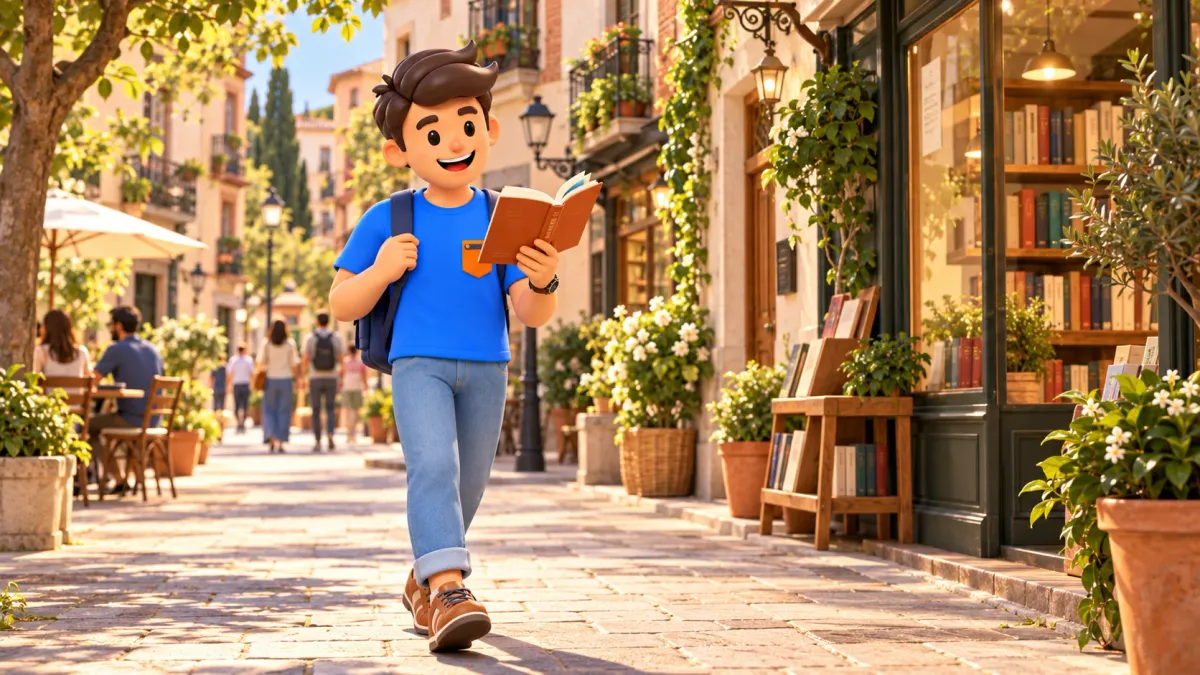
In Madrid's Literary Quarter, writers' names appear on streets, beside a theatre, on monuments and in words under your feet. You do not need to arrive having read every Golden Age author. Choose a short line from Plaza de Santa Ana to Huertas, Lope de Vega's house and the Trinitarias convent, then continue towards the eastern edge of the neighbourhood.
This walk takes roughly two hours with exterior stops. A house-museum visit or theatre performance needs separate time. Begin in Santa Ana and finish near Plaza de la Platería de Martínez, towards Paseo del Prado. Every duration is an editorial estimate rather than a measured connection. Reaching the square from your accommodation and travelling onwards are additional to the outing itself.
Explore without being a literature specialist
Choose one straightforward question: how did literature become part of ordinary city space? In Santa Ana, the answer involves theatre and monuments; in Huertas, fragments of writing in the pavement; at Lope de Vega's house, an author's daily life. That approach connects several stops without a long sequence of biographies or the expectation that every name must already be familiar.
A literary outing is easier and more efficient to develop in RoadMe, which creates a personal route around your interests, available time and pace. Try choosing what appeals most, whether history, theatre or smaller streets, so that the walk receives an emphasis that suits you.
The quarter's name reflects authors who lived here during Spain's literary Golden Age, including Cervantes, Lope de Vega and Quevedo. Today's district also has shops, cafés, cultural spaces and ordinary urban activity. Look for both writers' memory and a contemporary neighbourhood rather than an untouched seventeenth-century stage set. Historical associations do not make every current façade an unchanged witness to a famous author's life.
One connected two-hour sequence
- The first half-hour: Santa Ana. Take in the square, Teatro Español outside and one chosen monument.
- The next twenty minutes: approach Huertas and its first section. Notice a few inscriptions and the neighbourhood's character.
- Another twenty minutes: León and Cervantes streets. Continue towards the house-museum without collecting every adjacent detour.
- About fifteen minutes: Lope de Vega's house outside. Make a short stop at a place connected with the playwright's life.
- About fifteen minutes: Trinitarias outside, including the connection. Consider Cervantes's memory without an obligatory interior visit.
- The final twenty minutes: return towards eastern Huertas. Finish near Platería de Martínez without fitting another museum into the remaining minutes.
These blocks include short connections and orientation. They do not prescribe a compulsory walking speed. If a particular fragment catches your interest or you enter a bookshop, shorten a later stop or extend the overall time. Count from arrival in Santa Ana; the journey from your accommodation remains separate, as does any substantial meal chosen after the walk.
With only ninety minutes, keep Santa Ana, part of Huertas and the exterior of Lope de Vega's house. The finish then changes, and the convent and eastern exit are no longer compulsory. From Paseo del Prado, you can reverse the line towards Santa Ana. Change the stop order and consider where you will actually finish rather than travelling to the original start just to match a title.
Santa Ana: theatre within a city square
Look around Plaza de Santa Ana as a whole first. Terraces and surrounding façades make it a living public place. Then choose Teatro Español as the main reference. It continues the theatrical history of the site once occupied by the Corral del Príncipe. That connection is enough to understand why a walk among writers' names begins here rather than at a bookshelf.
Do not imagine that the current theatre building survives entirely from its earliest performances. A place's continuing history and the age of all its visible parts are different questions. For this introduction, the valuable idea is continuity of performance: literature exists not only on pages but in the meeting between actors and an audience within the city. A short exterior stop can communicate that clearly.
The square has monuments to Calderón de la Barca and Federico García Lorca. Choose one for a little attention rather than trying to summarise both writers in five minutes. Their presence also shows that the quarter's literary memory spans different periods. If you recognise a name, recall something you have read; if not, simply connect the writer with this particular place and its theatrical setting.
A performance at Teatro Español is a separate plan according to the actual programme. Viewing the exterior does not promise free entry to the auditorium. To return for a production, check language, start time, duration and admission independently. It may develop an interest discovered here, but it is not included in this first half-hour. Give the event its own place within your wider stay.
Huertas: reading the street under your feet
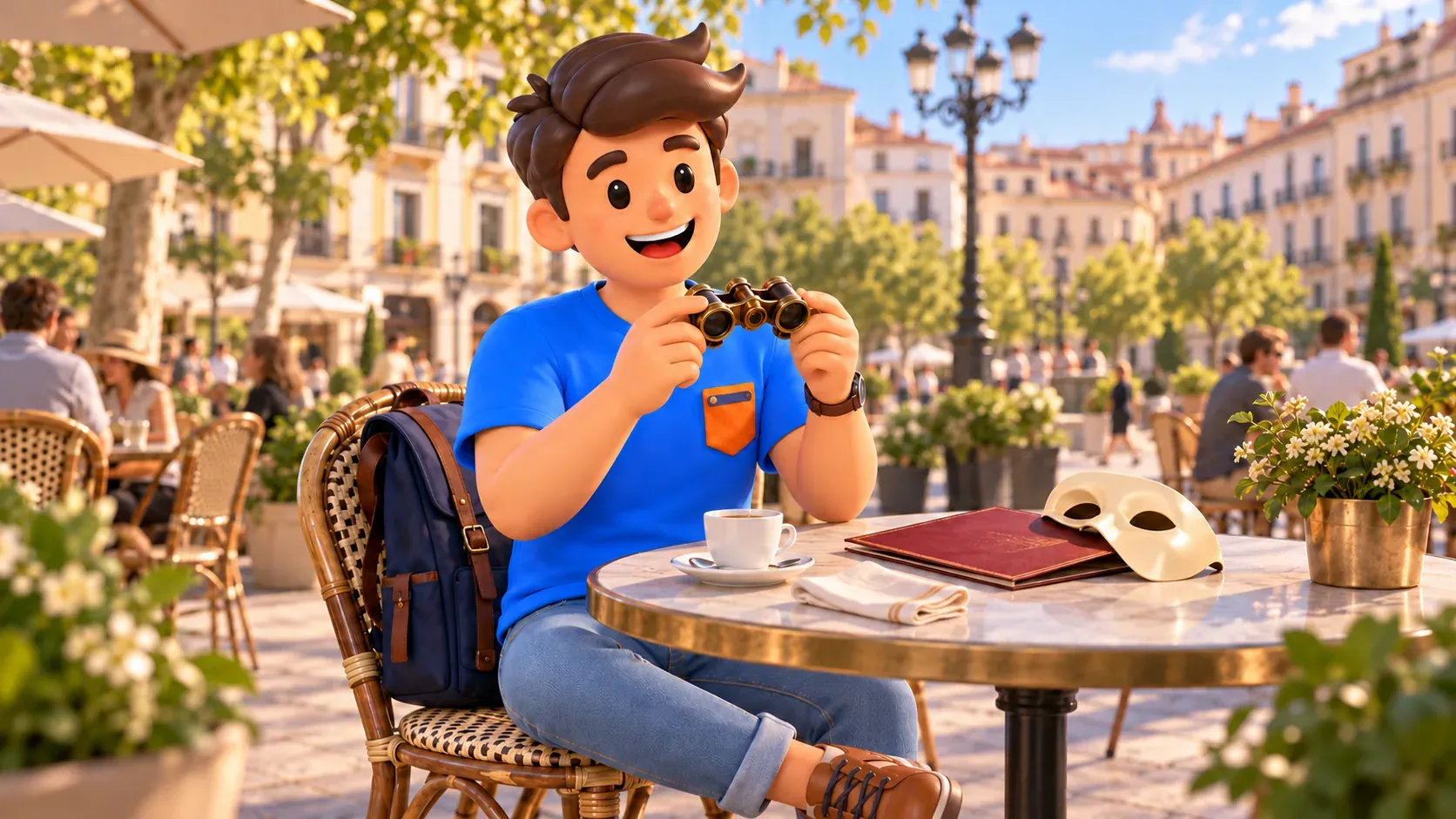
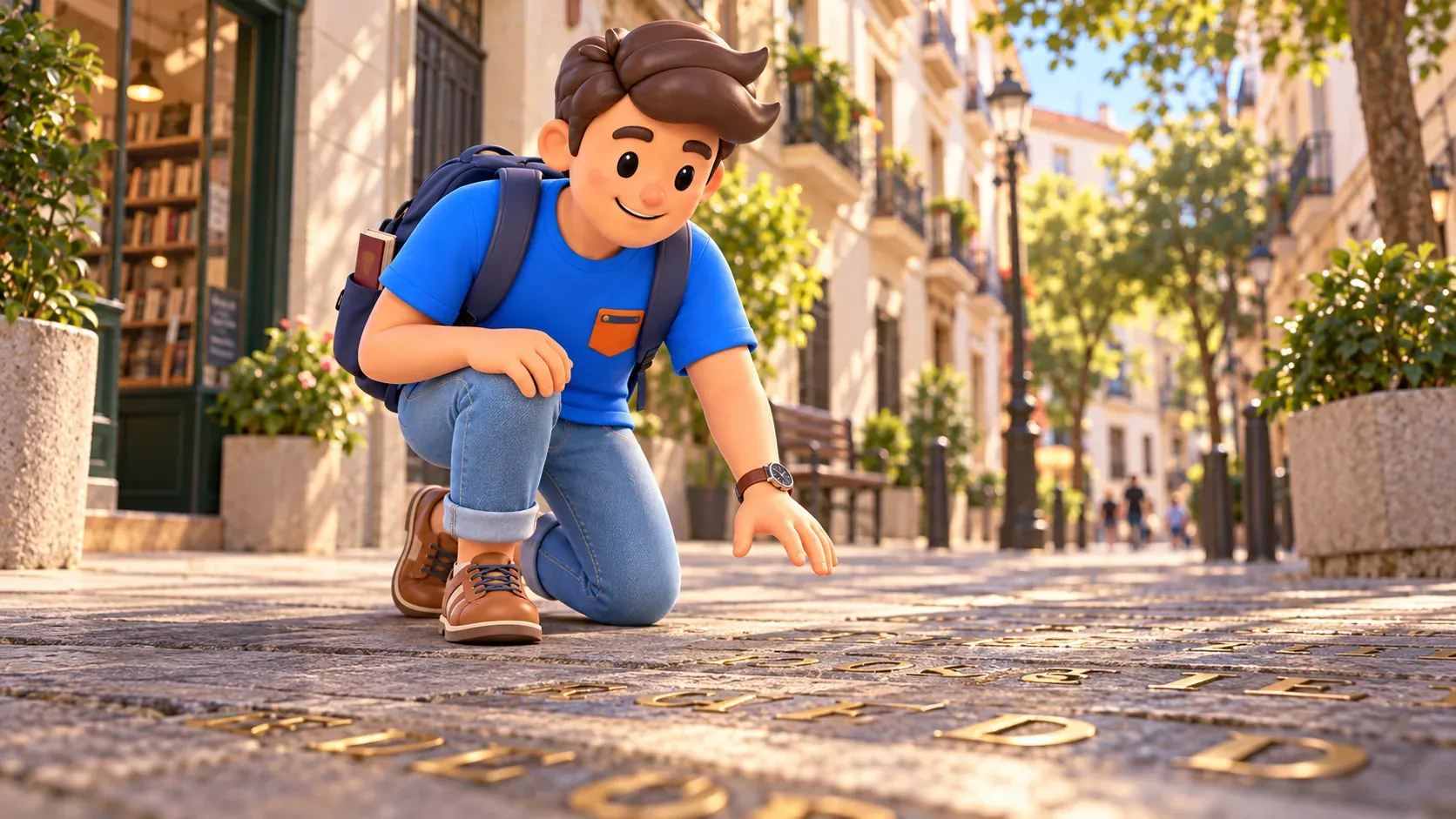
Head from Santa Ana towards Calle de las Huertas. The street links parts of the neighbourhood, while fragments of Spanish literary works in the paving turn ordinary walking into reading. Select one or two inscriptions that are convenient to examine instead of searching for every quotation. The aim is to notice this form of memory, not complete the street's entire written archive.
Without Spanish, the main idea is still accessible. Look at how the words are placed, the length of a fragment, its author's name and the relationship to everyday movement. You can save one short passage for later reading. There is no need to translate every encountered excerpt immediately, keeping companions waiting beside each new row of letters or allowing the whole route to disappear into one task.
Compare directions of attention: writing below, street names above, balconies and shopfronts around you. The literary theme becomes part of a particular environment rather than a separate historical note. Inscriptions do not, however, make every neighbouring building a former writer's home. Each such association needs its own evidence. Keep the distinction between commemoration in the street and a verified place of residence.
A bookshop or small gallery can offer a pleasant pause, but its opening does not follow from the neighbourhood's name. The main walk is independent of those interiors. If you enter, allocate some of your time deliberately. A long browse and the unchanged pace of every exterior stop should not both be assumed. Give one unexpected discovery room by adjusting something else.
Lope de Vega's house: a street name and a real home
Continue through the selected parts of León and Cervantes streets towards Lope de Vega's house-museum. Its clear address is Calle de Cervantes, 11. That is a useful example of a street name not matching the author whose museum occupies it. You do not need to turn the coincidence into a legend. Distinguish the names carefully and use the actual house address for this stop.
Lope de Vega spent his final twenty-five years in this house. The museum now recreates a domestic setting of his period. That offers a concise human perspective: behind literary fame was someone who needed a home, working space and daily life. An exterior stop can establish the connection between place and author without retelling every room of the exhibition or trying to replace a museum visit.
Interior visits are guided. Official information recommends that individual visitors reserve in advance. The house should therefore not be treated as a place you can always enter for a few minutes between outdoor stops. If the interior matters, select an available visit beforehand and organise the walk around it. That appointment changes the timing rather than fitting automatically within the short exterior allowance.
Distinguish a recreated period setting from a promise that every object belonged personally to the writer. This plan needs no such claim. The museum introduces an author's domestic world, while individual objects remain part of a separate visit. The outdoor route still has a meaningful subject without entering. Knowing that difference helps choose between a neighbourhood introduction and a longer museum-centred outing.
To make these interests fit into a comfortable trip, let RoadMe develop a personal day-by-day plan around your preferences and pace. The app helps combine short walks more efficiently with the museum and theatre visits you want to give more time.
Trinitarias: a brief stop in Cervantes's memory
Continue to the church and convent of the Discalced Trinitarians at Calle de Lope de Vega, 18. Again, read the actual place name rather than searching by a writer's name alone. The convent is connected with Cervantes's burial history. For this introduction, that association and an exterior view are sufficient. A separate church visit is not scheduled within the two hours.
The restrained façade offers a different impression from the lively theatre square. Pause briefly and compare ways of preserving literary memory: a stage, street, house and convent. Those are four distinct urban stories. The last need not become a detailed discussion of remains or an assurance of unrestricted access to an indoor memorial. Its role in the route is the connection between place and remembrance.
For an interior visit, establish the church's own conditions separately. Do not transfer the house-museum's arrangements here or treat an apparently open door as an invitation for an independent tour. The basic version includes a short outdoor stop, followed by Huertas and the eastern finish. Other Cervantes-related places elsewhere in Madrid belong to a different itinerary rather than an automatic nearby continuation.
Finish towards Platería de Martínez
Return towards the eastern direction of Huertas and reach Plaza de la Platería de Martínez. Smaller streets now lead towards the different scale of Paseo del Prado. Do not allocate a complete art museum to the last twenty minutes. The Prado or Thyssen requires its own time even when it is relatively close to the end of a neighbourhood walk and seems tempting on the map.
To connect the district with art and Retiro, use our two-day Madrid plan and rearrange the relevant part for your available hours. A literary outing need not end with another substantial visit. Lunch, coffee or returning to a favourite street can also make a satisfying continuation. Leave separate time for reaching the specific entrance if you do choose a museum afterwards.
Afterwards, choose one author for further reading. Your starting point can be a personal impression of a square, stage or domestic story rather than an examination in literary history. In two hours, the quarter has offered several ways to notice writing within the city. You can return to individual authors and places knowing which connection interested you most, without having attempted a complete directory of writers' addresses.


