
An Evening in Madinat Jumeirah: Souk, Canals and Digital Art

Madinat Jumeirah offers an evening built around changing kinds of light. A covered gallery turns a carved screen into a pattern of shade; the canal catches reflections outside; a digital-art room can surround you with moving images. Following those changes gives the visit a clear thread beyond shopping or collecting photographs of the same view.
This plan pairs a manageable souk walk with a deliberately chosen Theatre of Digital Art programme, then leaves time beside the water. Think of roughly two and a half to three hours, adjusted to the real performance or exhibition duration and your pace. The total is an editorial estimate, not a measured schedule. The actual booked programme takes priority over any suggested order.
Choose the ToDA programme before choosing the evening
RoadMe can build a personal route or complete Dubai trip around your interests, dates and pace. Prepare this evening in the app: fitting the souk, digital art and a waterside pause into the wider visit is much more convenient than coordinating several separate lists.
Start with the current programme at ToDA, the Theatre of Digital Art inside Souk Madinat Jumeirah. The venue name describes an approach, not one permanent experience with a fixed subject. Read what is actually offered on your date, its timing and visiting conditions, then choose because the content interests you rather than because the room looks impressive in a photograph.
Give that confirmed event its own time. A projected-art presentation, musical programme or other staged experience can have different expectations. Use the information for your chosen booking instead of assuming every visit has the same length. Keep a calm arrival margin and avoid placing a meal reservation directly against an estimated finishing time.
The souk can come before or after, depending on the booking. A short architectural introduction first makes the change into an immersive room more noticeable. A later souk section can offer a gentler return to walking after a concentrated programme. Either order works when the actual access and evening transport are included.
If none of the current programmes appeals, keep a shorter souk-and-water visit or choose another evening for digital art. The outdoor setting has its own subject. An interior should add something you want, rather than become a compulsory ticket simply because it shares the address. This makes the whole plan easier to adapt to different interests.
Understand the souk as a modern interpretation
Souk Madinat Jumeirah opened in 2004 as part of a larger resort ensemble. Its arches, wind towers, timber details and winding passages create a coherent version of a traditional market atmosphere. It is contemporary themed architecture rather than a surviving old neighbourhood. Recognising that difference makes the visit more interesting, because the design choices become visible.
The traditional references work together. Pale walls hold the light, screens filter it and carved wood gives a closer layer of detail. The wind-tower forms recall older approaches to cooling, while the passages suggest local lanes. You can notice these associations without treating each modern decorative element as evidence of a historic building.
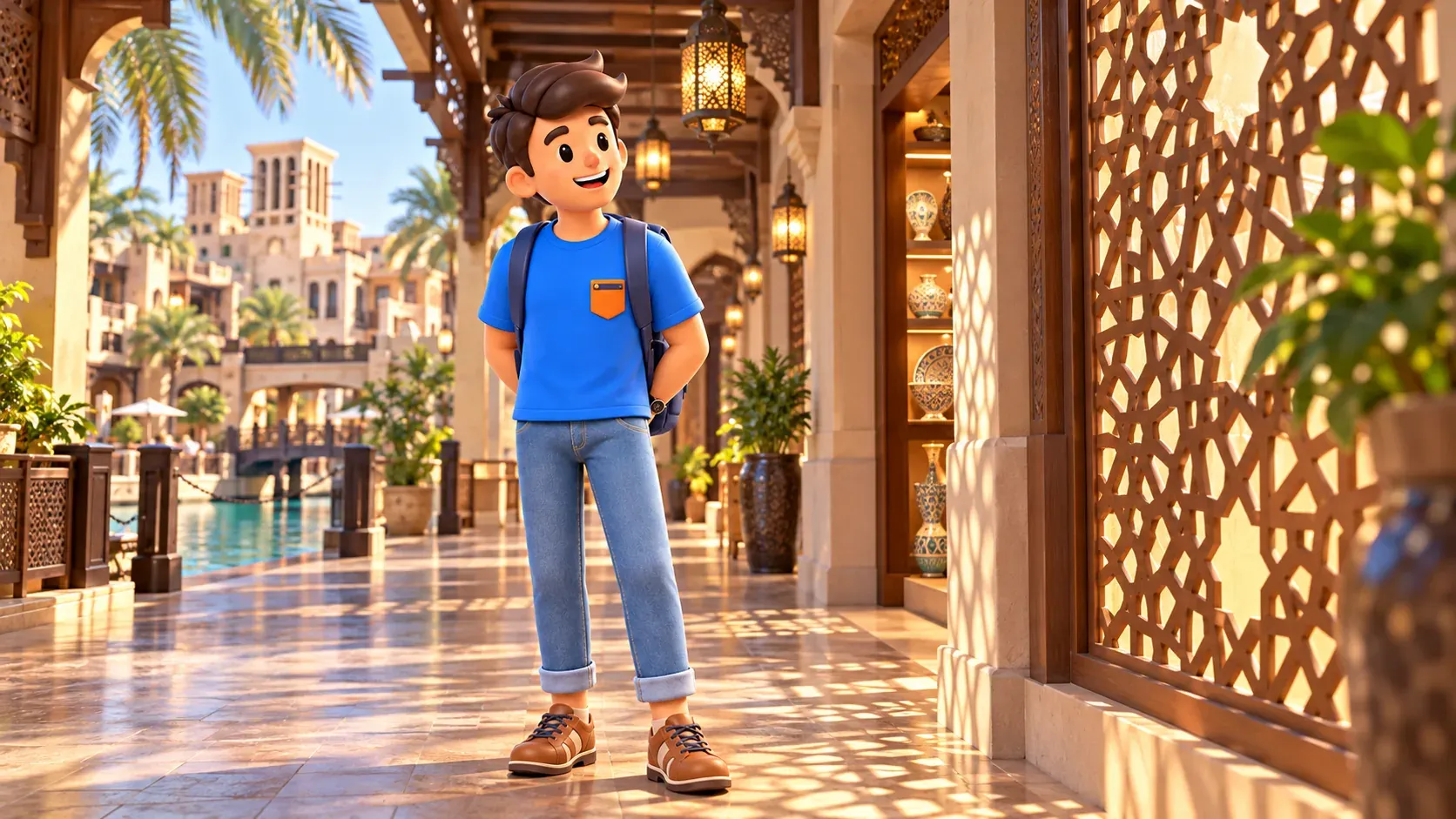
Look at a sequence rather than one façade. A covered passage can contain a close view, then an opening releases attention towards the water. The shift changes brightness, scale and direction. The architecture works through those repeated transitions, so a short attentive route can reveal more than a long walk focused only on shopfronts.
For a useful comparison with older urban fabric, our Al Fahidi walk gives wind towers and courtyard spaces a different context. Keep that as a separate visit. Madinat does not need to stand in for every period of Dubai's history; its value lies in how a modern ensemble builds a recognisable cultural image.
Walk the market without making purchases the task
Choose one architectural detail to follow: the shape of an arch, repeated timberwork or the relationship between a screen and the light behind it. The repetition links different passages into one setting. You do not have to investigate every shop to understand why the place feels coherent. A clear subject gives a small walk enough purpose.
If you enjoy browsing, let one shop or object hold your attention instead of continually starting a new search. A display can lead to a question about material or craft, but commercial surroundings do not require a purchase. Decide how much shopping belongs to your evening so the chosen event and the pause retain their space.
Use the public areas as they are available. The souk belongs to a broader resort environment, and a visible route towards water or a hotel does not automatically describe public access. Keep the walk within the available visitor spaces and save the actual entrance for your programme. The plan is an evening idea, not a promise that every apparent connection is open.
Leave a little time to find the venue calmly rather than treating the last covered passage as the end of the walk. Arriving without a rush helps you change attention from moving through architecture to staying with an event. That ordinary transition is part of enjoying the programme, not merely time lost before it begins.
At ToDA, notice how an image becomes a surrounding space
Theatre of Digital Art combines projected imagery, sound and staged presentation. Its surrounding projection approach can use the room as one changing environment rather than hold all attention on a single framed surface. The specific subject depends on the current programme, but the relationship between image, time and the viewer is a useful thread across different formats.
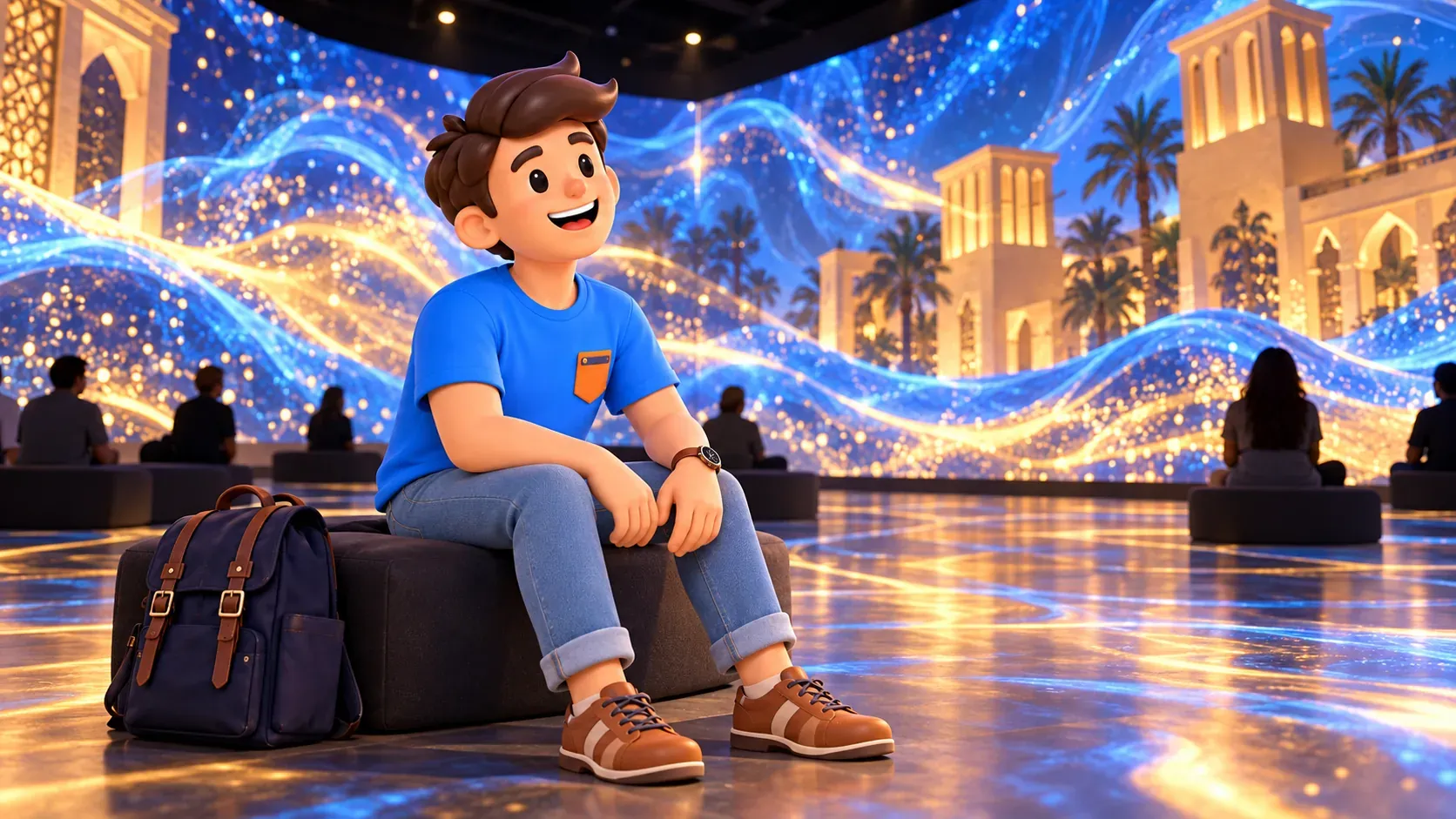
A projection changes the scale of an image. A detail can become large enough to occupy your whole field of view, while movement and sound determine how long you stay with it. Notice those decisions. The experience is not only the subject shown; it is also the way a room and a sequence organise your attention.
If a programme interprets existing art, distinguish that interpretation from standing in front of an original painting. Enlarging, animating and adding music create a new presentation. That can be engaging in its own way without needing to replace a museum encounter. If the programme is built from original digital material, watch how its own rhythm and visual language develop.
Choose a point of attention rather than trying to film every surrounding surface. You might follow a colour change, the relation between sound and image or the moment a still scene becomes moving. A single observation often makes the experience easier to remember than many short clips seen partly through a phone.
Read the current description if anyone in the group has particular needs around light, sound or an immersive format. Different programmes may suit different people. Make the choice around those actually travelling, and follow the venue's arrangements during the visit. An appealing room photograph alone cannot explain the sensory character or content of the event.
Return to the canals with a different kind of attention
After the programme, the waterside setting offers a change in pace. Moving projections give way to reflections that depend on ordinary water and lamps. Look at how a bright edge becomes broken on the surface, then compare it with the clear structure above. The subject is quieter, but it continues the evening's theme of images changing through light.
The canals are part of the deliberately created Madinat environment. Their role includes opening views and separating groups of architecture. They are not a surviving historic harbour. Recognising the designed setting lets you appreciate the composition honestly: the water participates in a contemporary ensemble built from references to older forms.
A boat ride, if offered and desired, is a separate decision with its own current conditions. This walking plan does not need one to make the water meaningful. Public views can already show the difference between a close arch, a wider canal scene and the buildings reflected beyond it. Choose the experience you actually want rather than adding every available mode.
Take a modest number of photographs with distinct purposes. One can show the carved or screened detail, another the wider water relationship and another the change towards evening light. Then leave some time without the camera. Several different images tell the story better than repeatedly trying to improve one familiar angle.
Give the pause a place in the evening
Choose an available place to sit, drink or eat that fits the day. A particular restaurant is not essential to the route. The pause connects the souk's material surfaces, the digital programme and the water outside. Ask what changed most between them: the scale of an image, its movement or your own pace.
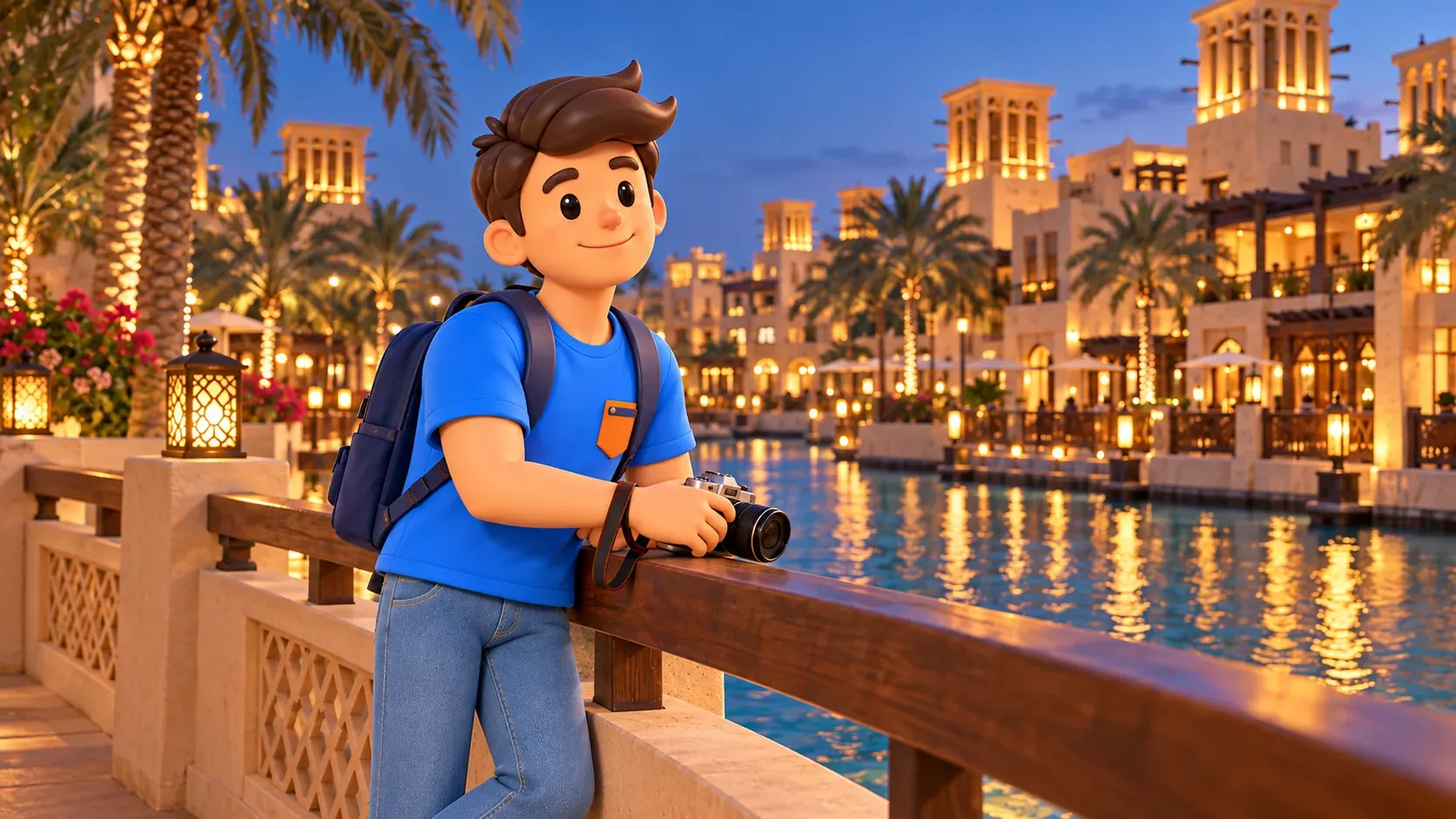
With a companion, compare which part held attention longest. One person may prefer the room, another the timber detail and another the reflections. The evening does not need one shared favourite. With children, a question about still and moving images can link the parts without requiring them to interpret every artistic reference.
If the programme was intense or the day already full, make the final waterside part short. If everyone wants a slower meal, give it proper time and adjust the departure. The pause should reflect the group rather than remain a fixed item that is hurried through simply to preserve an earlier estimate.
Leave enough time to reach the real onward transport or meeting point. The last attractive view is not the end of the journey. A comfortable ordinary departure helps the evening feel complete. There is no need to add another district just because the night has not yet ended or a further landmark appears nearby.
Where Madinat fits in the wider trip
This evening suits visitors who want architecture, a chosen cultural programme and a slower waterside finish in one setting. It can follow a quieter daytime plan, or stand as the main outing when you want less travel between places. Choose it for the combination rather than expecting the souk to provide a complete history or every kind of art in Dubai.
RoadMe can place Madinat in a personalised multi-day trip, balancing your cultural interests, preferred pace and time for rest. Use the app to organise the whole visit more efficiently, so a focused evening and larger daytime plans fit together without rebuilding tomorrow's programme every night.
For a different kind of art visit, the DIFC gallery walk focuses on works, rooms and business-district architecture. For older urban spaces, return to Al Fahidi on another day. These separate choices let Madinat keep its own subject: a modern setting where material, projected and reflected light shape an evening.


