
Al Fahidi in Two Hours: Wind Towers, Coffee and Small Galleries
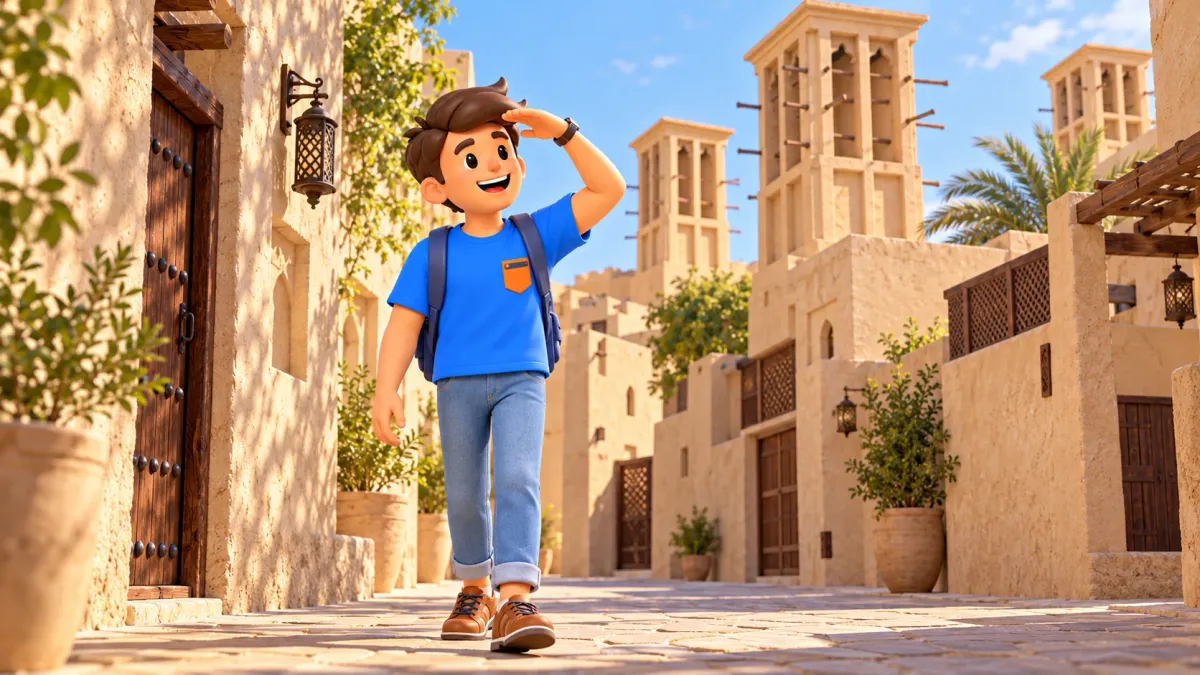
Al Fahidi rewards a slower kind of attention than Dubai's skyline. Look up and a wind tower appears above a plain wall. Turn into a courtyard and the scale changes again: rooms, doorways and shaded edges replace the long views of the modern city. Two hours are enough for a first encounter if you resist turning the neighbourhood into a museum marathon.
This short walk combines three threads: how the houses responded to climate, what coffee objects say about hospitality, and how galleries give old buildings new cultural lives. The Coffee Museum and XVA Gallery provide possible indoor stops, with The Majlis Gallery as an alternative. Check their current visiting arrangements before setting out; the lanes remain the connective part of the experience.
What can fit into two hours?
RoadMe can create a personal route for the time you have, based on your interests and preferred pace. Try planning the walk in the app: it is much easier to fit a short Al Fahidi visit into your whole Dubai trip than to coordinate separate lists of places.
Keep this version within the compact Al Fahidi heritage area in Bur Dubai. It is not a full Old Dubai itinerary and does not include crossing the Creek, shopping in Deira or walking the entire waterfront. Those additions change both the distance and the character of the outing.
A useful two-hour envelope is fifteen minutes to arrive and orient yourself, thirty for lanes and wind towers, twenty-five for coffee history, twenty-five for one gallery, fifteen for a final pause and ten kept unassigned. These are editorial estimates, not measured timings or guaranteed admission lengths. An engrossing conversation can easily change them.
Start near the outer edge around The Majlis Gallery, then explore the nearby lanes, make your selected coffee stop and finish around a gallery courtyard such as XVA. Use the actual available entrances and public paths on the day. The outline gives the visit a shape without pretending that every door is always open.
First, read the houses rather than chasing every landmark
Begin with the contrast between the outside passage and the interior courtyard. A plain wall is not necessarily a sign of an uninteresting building. Traditional domestic life often turned inward, and the court created a different relationship between privacy, shared space and light. Notice where an entrance allows a direct view and where a turn interrupts it.
Door frames, shutters and changes of shade tell smaller stories than towers, but they are easier to observe closely. Look at how an opening is protected, how thick a wall appears beside a doorway and where a person might sit out of direct sun. Treat these as questions to investigate rather than proof that every building worked in exactly the same way.
The heritage area has been restored and adapted, so the present scene should not be read as an untouched settlement. Some houses now contain cultural institutions, shops or hospitality spaces. That continuing use is part of the visit: Al Fahidi is both a preserved architectural setting and a place where contemporary activities happen.
Keep to public passages and clearly accessible spaces. An attractive doorway is not an invitation to enter a private or restricted room. Ask before photographing people closely, and do not obstruct narrow paths while composing a picture. The neighbourhood's small scale becomes more enjoyable when you leave room for other visitors and the people working here.
Wind towers: climate becomes architecture
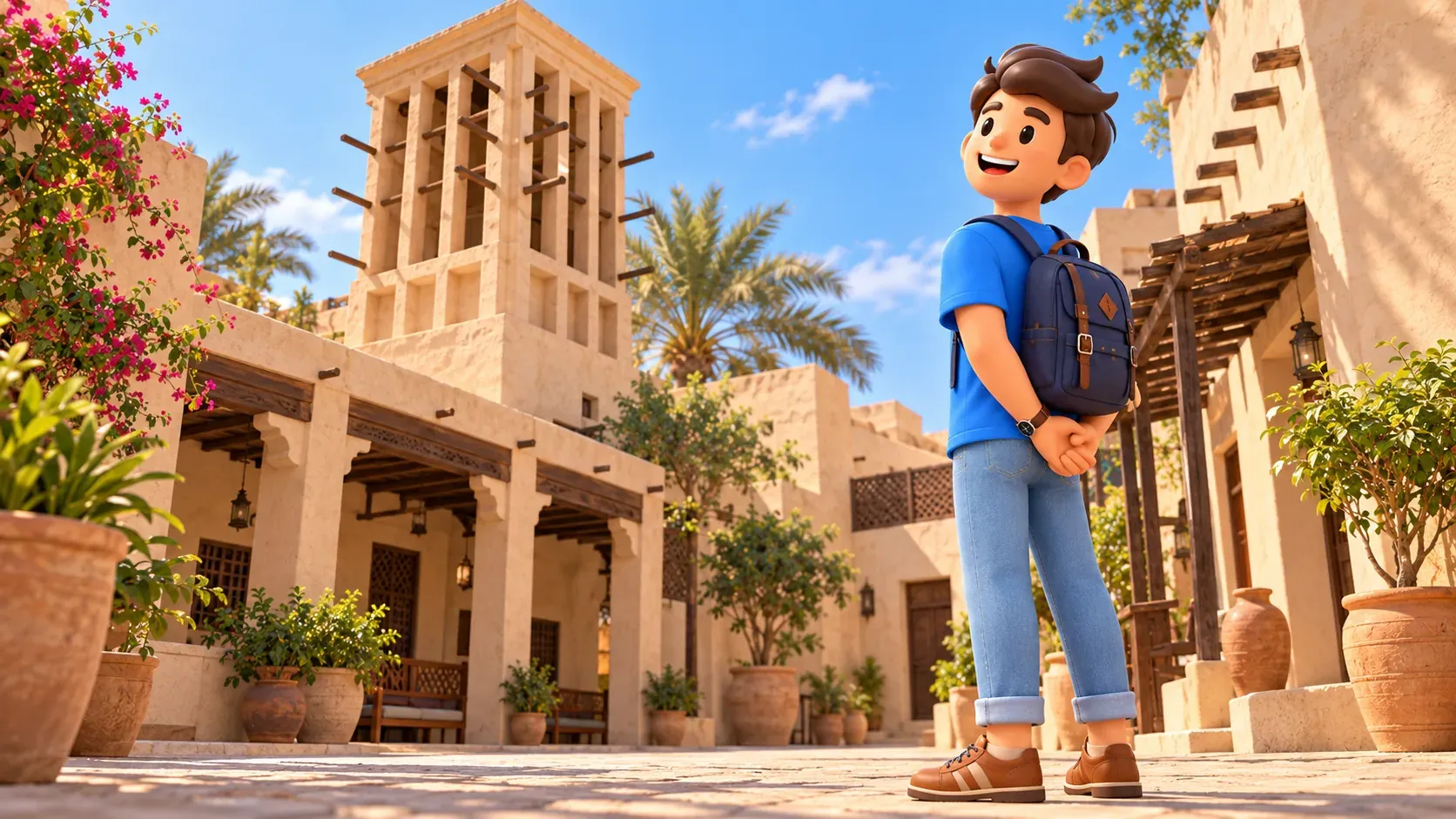
The rectangular towers rising above roofs are often called barjeel. Their openings and internal divisions relate to moving air through the house. Unlike a decorative skyline feature, a wind tower belongs to an environmental system involving rooms, courtyards, openings and the conditions outside.
Look for the connection between the tower's upper openings and the domestic space below. Its role is not explained by height alone: direction, partitions and the route of air matter. You do not need a technical diagram to see the basic idea that a house can be arranged to work with its surroundings.
Do not assume an old cooling technique makes a restored lane comfortable at every hour. The architectural story and your experience on a particular day are different things. Choose a pleasant period for walking, bring drinking water and shorten the outdoor section when necessary. Shade can change as the sun moves.
A useful photograph includes more than the tower itself. Try keeping part of the courtyard or lane in the frame so the relationship between high opening and lower living space remains visible. One image that explains a connection can be more satisfying than several isolated shots of nearly identical rooflines.
A coffee stop with a little cultural depth
The Coffee Museum gives an everyday drink a historical setting. Founded in 2014, it brings together objects connected with roasting, grinding and preparation. The most interesting question is not simply how old a pot is, but what action its shape made possible.
A roasting tool controls one stage, a grinder changes the grain, and a brewing vessel shapes another part of the process. Looking at them in sequence reveals the work behind a cup. It also helps distinguish a useful domestic object from a decorative antique whose function has become unfamiliar.
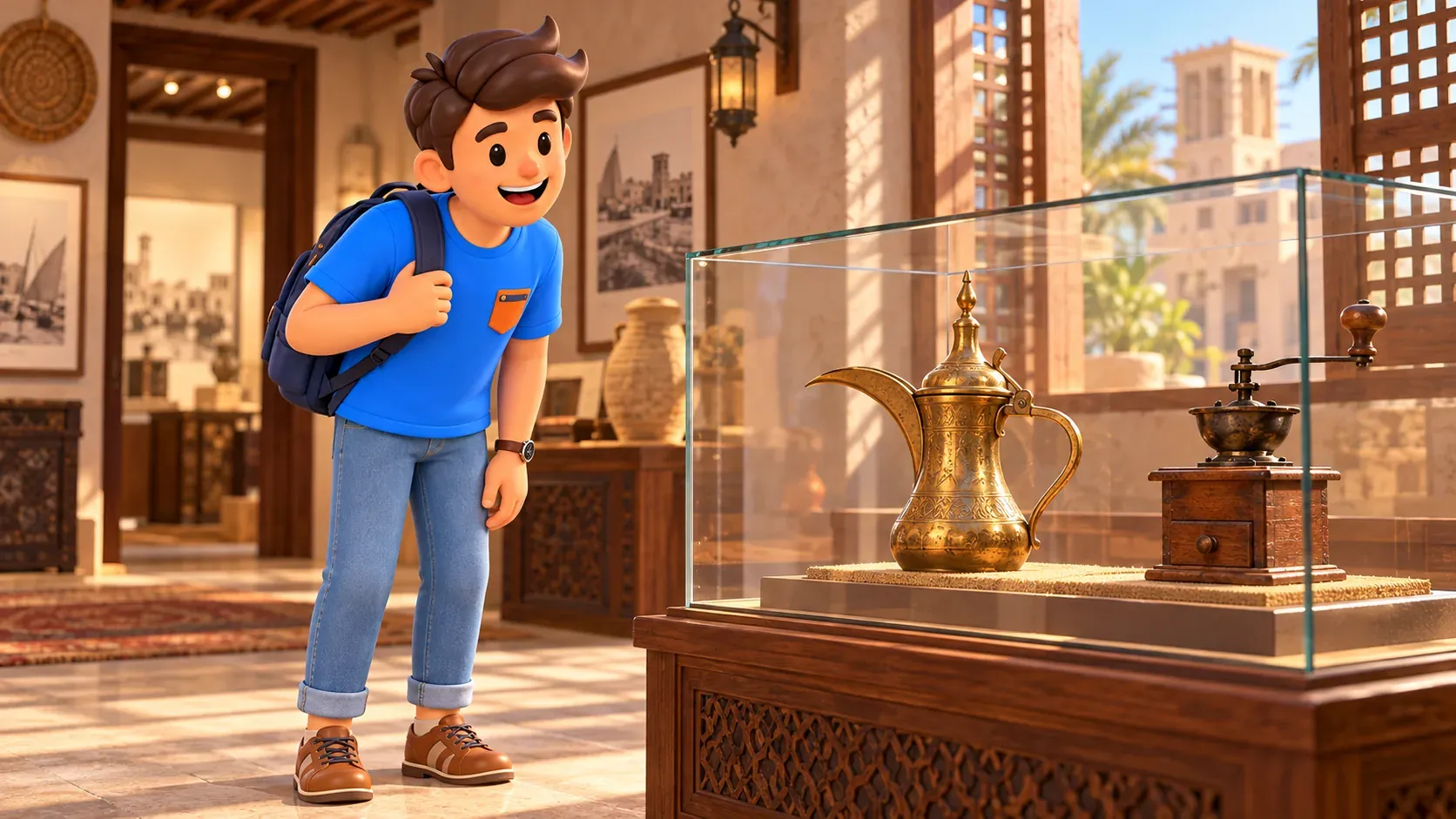
In Arabian coffee culture, serving a drink is connected with receiving guests, generosity and conversation. The cultural practice belongs to people and shared habits, not exclusively to this museum. A small display can give you a starting point for understanding that relationship without reducing hospitality to a list of gestures to copy.
Allow roughly twenty-five minutes for a selective look if the museum is receiving visitors and the programme fits. Do not assume entry includes a drink, tasting or demonstration. If you want coffee afterwards, choose and order it separately according to the venue's current offer, leaving enough time to sit rather than treating the cup as another item to photograph.
If the museum is unavailable, the walk still works. Keep the climate-and-courtyard section, take a straightforward café pause and give a little more time to the gallery. You have changed the depth of one thread, not lost the reason to visit the neighbourhood.
Choose one small gallery, not a circuit of every door
XVA Gallery offers a useful meeting of old-house scale and contemporary regional art. Established in 2003 by Mona Hauser, it developed as an independent setting for artists and conversation. Its rooms and courtyards produce a sequence of close encounters rather than the continuous sweep of a large exhibition hall.
Check what is currently on view and which areas visitors may enter. Spend time with one work that catches your attention. Ask how its material, image or subject changes when seen in a former domestic room. The contrast between contemporary art and traditional architecture is more interesting than treating the courtyard only as a photo background.

The Majlis Gallery is an alternative with another local history. Its story grew from Alison Collins's family home in the old neighbourhood and became a permanent gallery in 1989. The name majlis refers to a place of gathering, a reminder that cultural spaces can emerge from informal meetings before becoming institutions.
Choose whichever gallery has a programme and access that suit the day. You do not need to enter both simply because they are close. A meaningful twenty-five-minute visit to one can fit the two-hour plan better than hurriedly passing through several rooms without looking at anything properly.
What to leave for a longer visit
The Sheikh Mohammed Centre for Cultural Understanding offers a different kind of encounter, centred on dialogue and Emirati traditions. Founded in 1998, it occupies a restored wind-tower house. A scheduled cultural programme should be planned as an experience in its own right, with its actual booking conditions and duration.
Do not squeeze such a programme into the unassigned ten minutes of this walk. If it is your main interest, build the visit around it and reduce the museum and gallery sections. The value lies in taking part and listening, not merely standing near the building for a photograph.
The Coins Museum is another possible choice for a separate emphasis. Coins connect inscriptions, authority and trade, offering a different way to think about the wider region. Replace one indoor stop if that subject appeals to you; do not turn the two-hour outline into a checklist of every small museum.
Al Fahidi Fort belongs to the broader historical picture, but this route does not promise entry to Dubai Museum inside it. The fort and the heritage lanes are related parts of old Bur Dubai, not interchangeable names for one attraction. If an interior museum visit matters to you, confirm its actual operating status before assigning time.
End with a pause and a clear next step
Use the final minutes to sit where permitted, return to a detail you noticed or simply watch the pattern of people moving between shade and light. Keep a small buffer for finding the exit and arranging your next journey. A compact area can still be disorienting when several passages look similar.
Before leaving your accommodation, save your selected destinations, current visiting conditions and a sensible return point. Comfortable shoes, water and a light bag are more useful here than a complicated collection of reservations. Do not count on every house offering seating, refreshments or toilets to passers-by.
RoadMe can connect this short walk with a personal multi-day plan based on what you most want from Dubai. Use the app to place heritage, art and other interests into a coherent trip, with less time spent organising the next step while you are already out exploring.
If you want the wider contrast between old trading quarters and the modern skyline, our one-day Dubai itinerary offers a broader framework. If small galleries become the highlight, the three-day return-visit itinerary extends the art and architecture theme.
Two hours in Al Fahidi work because the scale stays small. A wind tower, an object used to prepare coffee and a contemporary work in an old room can explain three different parts of the city. You leave with connections between them, rather than a long list of doors you hurried past.


