
Little Tokyo in Two Hours: Culture, Art and Quiet Corners
Two hours in Little Tokyo can combine Japanese American culture, a short First Street walk and two very different works near Weller Court. This is a compact Downtown Los Angeles outing built around public art and neighbourhood context. You do not need to cross the city, commit to a restaurant queue or fit several museums into a single afternoon to find something worth remembering.
There is an important condition for October 2026. The Japanese American National Museum Pavilion is closed for renovation, with reopening announced for January 23, 2027. The Geffen Contemporary at MOCA also reports a temporary closure for deinstallation and installation. The walk below therefore works without entering either building. The James Irvine Japanese Garden is an optional addition only after access has been confirmed with JACCC.
A realistic two-hour shape
Start at Little Tokyo/Arts District station on the A and E Lines, beside the First Street and Central Avenue area. Introduce yourself to the museum cluster from outside, then follow First Street towards Koyasan Beikoku Betsuin. Continue towards Weller Court for the Friendship Knot and Ellison Onizuka memorial. The final optional section leads towards JACCC on South San Pedro Street, provided you have confirmed garden access or a particular event.
For the outdoor version, allow roughly twenty minutes around the museums, twenty for First Street and the temple stop, thirty for the two Weller Court works and twenty for a short break. Keep the remaining half-hour for crossings, finding your way and returning towards the station. These are editorial estimates, not measured walking times. Conditions and the details that catch your attention will affect the pace.
Try RoadMe to build a personal walking or trip plan around your interests, dates, pace and budget. It is a more convenient way to shape a day around culture, art or an unhurried neighbourhood visit than squeezing yourself into the same programme as everyone else.
If garden access is confirmed, give it part of the same window by shortening the street stops. Once a museum reopens, a substantial indoor visit should either become the main activity or receive additional time. A two-hour neighbourhood introduction and an attentive exhibition visit serve different purposes, even when the buildings happen to stand close together.

Arrive with the right expectations
Little Tokyo is a Japanese American neighbourhood in Los Angeles, rather than a miniature version of present-day Tokyo. Shops and food are visible parts of the experience, but cultural institutions, shared spaces and memorials also describe the local community. Keeping that connection in mind makes the walk more rewarding than treating the district as a decorative setting.
The station offers a straightforward starting point without another journey across Downtown. After leaving it, locate Central Avenue and use the permitted crossings towards the museum area. Short distances do not make the whole district pedestrian-only. Establish where you need to finish before becoming absorbed in the first stop, especially if the end of your two hours is fixed by an appointment.
Make a separate decision about food. A small purchase can fit into the break if a suitable place is open without a long wait. A seated meal and a queue belong outside this window. Otherwise, time intended for looking at art may disappear into an unplanned restaurant visit. No particular business or opening schedule is essential to this route.
The museum cluster: context, with access kept clear
The Japanese American National Museum stands on North Central Avenue opposite the station. Its name provides a useful starting point for understanding the district: Japanese American experience is central here. During renovation, an exterior stop helps with orientation but does not replace seeing the collection. An old guide's regular opening hours are not a reason to wait outside a closed pavilion.
Recheck the announced January 23, 2027 reopening before travelling. A future date describes the museum's plan, not permission to enter today. Public programmes and other institutional spaces should not automatically be treated as access to the main Pavilion either. A proper museum visit requires the current arrangements for the particular day you intend to come.
The Geffen Contemporary at MOCA is nearby on Central Avenue. It is a different venue from MOCA Grand Avenue on Bunker Hill. The operator currently reports a temporary closure at Geffen while exhibitions are changed, while WAREHOUSE has its own programme. A listing for one event does not establish that the ordinary galleries are open for an unscheduled visit.
Keep this stop brief and use it to recognise the different cultural roles of the institutions. If an exhibition is your main reason for coming, find a confirmed opening and admission arrangement first, then organise the streets around it. This outdoor introduction deliberately remains worthwhile when both museum interiors are unavailable.
First Street and Koyasan: an active community
Return towards First Street and continue to Koyasan Beikoku Betsuin, on East First Street west of Little Tokyo Plaza. This is a working religious institution. An open doorway does not automatically invite visitors to explore every space, and its role in the community matters more than completing a sightseeing checklist.
The temple publishes office hours, but those should not be converted into guaranteed tourist visiting hours. Ask in advance about visiting and the relevant rules if entering is important to you. Without confirmation, keep to a permitted exterior stop and avoid obstructing access. Services and private ceremonies take priority over our walking programme.
A useful way to read this section is to notice the change of scale from museum buildings to smaller entrances, signs and everyday gathering places. You do not have to photograph every doorway or step inside a business simply to count it as visited. Respect requests from staff and people you would like to photograph; a few carefully observed details can be enough.
Travelling with others? Agree on a meeting point and a time to continue. In a small neighbourhood it is still easy for one person to linger at a shop while another walks on. A simple arrangement protects the relaxed pace without requiring everyone to make the same purchases or share an identical interest in every interior.
Friendship Knot: look before reaching for the camera
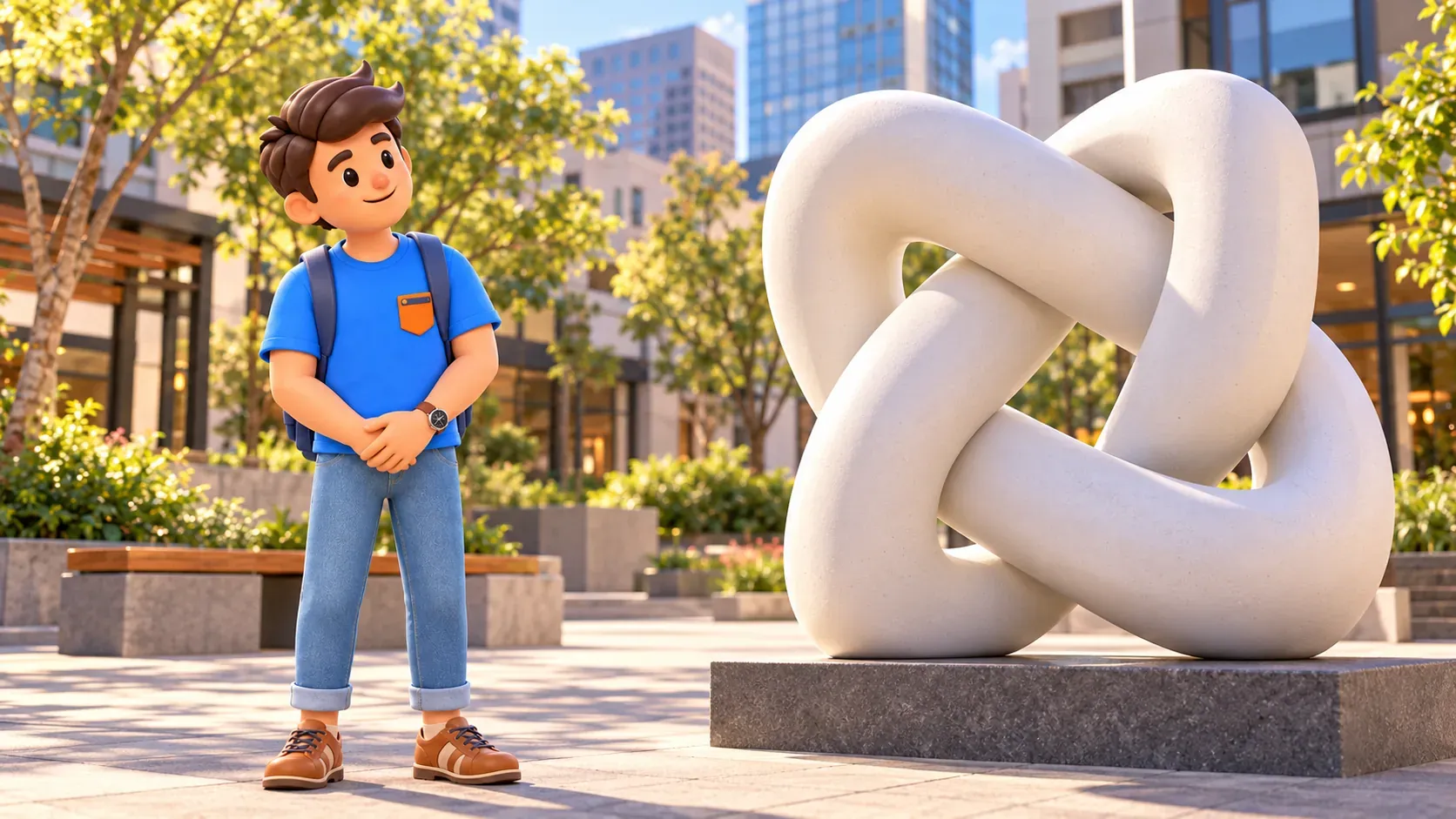
The Friendship Knot in Weller Court is by Shinkichi Tajiri. Two interwoven white tubular forms make the image of a knot immediately readable, before you know the history behind it. Discover Nikkei's account records its unveiling here in 1981. Its setting gives this short walk a distinct artistic focus without requiring a museum ticket.
First look without your screen. Notice where the forms cross, how the openings change and which angle makes the knot appear more complicated. Then choose a photograph without blocking a passage. This small exercise works even if an art-focused day was not originally on your agenda: no specialist vocabulary is needed to pay attention to shape.
The artist's history adds another dimension, but a two-hour introduction need not become a complete biography. Hold on to the connection between the work, Japanese American experience and the idea of understanding across communities. You can explore its wider background afterwards if this sculpture turns out to be the part of the walk you most want to remember.
Weller Court is used urban space, not a setting arranged exclusively for sightseeing. Follow open approaches and current restrictions rather than assuming every passage is available around the clock. If a section is inaccessible, do not look for a route through service doors. Move to the next stop or take your break earlier.
The Onizuka memorial: a different kind of attention
In the same part of the neighbourhood, the memorial to astronaut Ellison Onizuka includes a model space shuttle and commemorates the Challenger crew. After the abstract knot, this is a more direct encounter with a person's legacy, scientific ambition and the effect an example can have on future generations.
Avoid treating the model simply as an entertaining backdrop. Pause and read the information available on site. With children, you might discuss why a community remembers people involved in exploration and science. You do not need a technical account of the mission to understand the human meaning of the memorial or to give it a moment of quiet attention.
The two Weller Court stops make sense together, but they invite different responses. One asks you to follow a form; the other asks you to consider memory and achievement. The suggested thirty minutes do not have to be divided equally. Stay longer with whichever interests you, rather than counting photographs or trying to reproduce someone else's visit.
In RoadMe, you can prepare a complete personal trip plan in which your interests shape the choice and intensity of each day. Try giving art or community history more room while keeping a pace that suits you.

James Irvine Japanese Garden: confirm before making it the finish
The James Irvine Japanese Garden is within JACCC on South San Pedro Street. Its Japanese name, Seiryu-en, means Garden of the Clear Stream. Completed in 1980, it was designed and later redesigned by landscape architect Takeo Uesugi. The cultural centre explains the movement of its water as a story about successive generations of Japanese people in America.
It is an appealing thematic ending, but ordinary daily walk-in access has not been confirmed. JACCC's current visitor page gives office and individual-space hours, while its garden page describes the setting and offers rental enquiries. Office hours are not garden opening hours. Contact the centre about access for your date before making this a necessary part of your visit.
If an event includes garden entry, check that event's conditions, timing and any reservation requirement. A particular opening does not mean access on every other day. If there is no clear confirmation, finish with an available neighbourhood break and return towards the station. There is no benefit in waiting for a garden entrance you have not arranged.
When access is confirmed, shorten the earlier stops to make room for an unhurried visit. Do not try to add a complete meal and every other activity as well. The purpose of this ending is attention to water and space, rather than another task to complete before catching a train.
Before setting out
Choose your main interest, check the current JANM and MOCA notices, and contact the garden or temple separately if entering matters. Note your starting station and allow time for the return. For links to other neighbourhoods, the guide to Los Angeles without a car explains how to combine walking areas with rail journeys.
In heat or rain, shorten the outdoor sections according to comfort; this version does not promise an open museum as shelter. If you need particular access arrangements, check entrances and crossings in advance. A compact district does not guarantee every approach is suitable. Use the two hours for a few attentive encounters, leaving a future exhibition or confirmed garden visit as a good reason to return.


