
Los Angeles Without a Car: Linking Walks by Metro
Los Angeles without a car works best as a collection of local walks linked by rail or bus. Downtown, Hollywood, Santa Monica and central Pasadena offer useful starting points. Choose one main area for each day, identify its station and check the walk from the exit to your actual destination. That approach lets you enjoy the city without making repeated connections the main event.
This guide explains the useful corridors, where local walks can start and finish, and how to simplify the journey. It is not a promise that every LA attraction is walkable or a timetable with guaranteed minutes. Your accommodation address, travel date, service conditions and preferred pace all affect the result.
Choose the walk before planning the ride
Begin with the two experiences that matter most. Perhaps you want film landmarks and the ocean, with architecture as an optional interest. Compare actual journeys from possible accommodation to Hollywood and Santa Monica rather than trying to stay at the geometric centre of every attraction. A neighbourhood name in a hotel listing is less useful than its precise address and the route to a station entrance.
For each day, write down your arrival station, the main walk, a meal break and the point where you will rejoin transport. It is easy to plan the first journey carefully and overlook the fact that the walk ends somewhere else. On the coast, for example, walking towards Venice does not automatically leave you beside the rail station you used that morning.
For an easier way to turn your interests into a complete trip, try RoadMe: it creates a personal day-by-day plan around your dates, pace and budget. You can give the walks you care about a coherent place in the journey instead of assembling several general sightseeing lists by hand.
Give each area one main purpose and one optional extra. A substantial museum visit, a coastal walk and a hillside viewpoint make different demands on your energy. When the transport arrangement becomes more complicated than the outing itself, change the order of days or leave something out. An extra connection is not always the answer to an overfilled plan.
Three rail letters worth recognising
For the outings described here, remember B, E and A. The B Line connects Downtown's Union Station with Hollywood and continues to North Hollywood. The E Line runs through Downtown towards Santa Monica. The A Line serves Pasadena from the central urban area. These are different corridors, rather than a single circular sightseeing service connecting every stop in the order you want.
- Downtown to Hollywood: look for the B Line and check the direction displayed.
- Downtown to Santa Monica: use the E Line towards Downtown Santa Monica for the coastal outing.
- Downtown to Pasadena: check the A Line and Memorial Park station for a walk towards City Hall.
Metro's trip planner lets you compare an actual starting address with the destination address. Enter the entrance you need rather than a broad neighbourhood name. Include the walk to the stop, waiting, transfers and the final walk. Time between two stations is only one part of that calculation. Check schedules and service notices for the date, especially before returning in the evening.
At a station, use the line letter and direction rather than relying entirely on colours in an older guide. Understand your payment method before travelling, follow the instructions at validators or turnstiles and keep the same means of payment available throughout the journey. Metro requires a tap on exit at selected stations. Do not assume every local bus operator has identical payment and transfer arrangements.
Downtown: start at the station that serves your walk
Union Station provides a clear starting point for an outing in the historic part of the city. It is also a working transport hub, so respect passenger areas and operational restrictions. You can choose a walk in the neighbouring historic district from here; that does not put every Downtown museum immediately outside the station doors.
If Little Tokyo is the main purpose, consider Little Tokyo/Arts District station on the A or E Line and begin in the area you actually want. This avoids turning the approach from Union Station into a compulsory part of every Downtown outing. The neighbourhood's Japanese American cultural history deserves time on its own, with a walk and lunch rather than a photograph outside one museum.
Check the Japanese American National Museum separately. Its Pavilion is closed for renovation; at the time of checking, the official site publishes regular opening arrangements beginning January 23, 2027. Do not build a present-day programme around entering those museum spaces. Exploring a neighbourhood and visiting a particular institution are different activities with different access conditions.
Finish the walk where leaving is convenient instead of automatically returning to the first station. If you move into another Downtown cluster, assess the walking section again: the centre contains several distinct areas. Put lunch before another substantial journey where possible, so that waiting for transport does not also become a search for somewhere to eat.
Hollywood: the B Line and a selected boulevard walk
Hollywood/Highland on the B Line is a useful station for TCL Chinese Theatre. It lets you begin around the famous theatres and stars in the pavement. Choose a manageable stretch of Hollywood Boulevard, look at the façades that interest you and find a particular star's location beforehand if it matters to you. Otherwise, the search can quietly become a separate excursion.
From Downtown, check for the B Line towards North Hollywood. Returning on the same corridor, Union Station is the direction to recognise. A tour with Hollywood in its name does not necessarily depart near this station: verify the studio address and meeting point independently. A production visit needs its own place in the day, rather than being treated as a brief stop between rail journeys.
Continuing to Griffith Observatory requires another transport stage. Take the B Line to Vermont/Sunset and connect with DASH Observatory/Los Feliz. The observatory is not simply a nearby building reached along the boulevard. Allow for waiting, the walk between stops and the journey back down. Hiking uphill is a separate choice based on your energy, not an unavoidable part of this arrangement.
DASH runs daily, but the observatory building does not: under its normal schedule it is closed on Mondays. Decide whether the grounds or the exhibitions are the priority before picking the day. Save a return option beforehand. It would be misleading to promise the same transfer time after sunset in every season and under every service condition.
Santa Monica: the train journey ends before the walk
The E Line takes you to Downtown Santa Monica station. The final part of the outing is on foot, towards the ocean, pier and Tongva Park. The station and the waterfront are not the same place. Look at the open pedestrian route from the exit to your chosen destination, then decide whether a green space or the pier should come first.
Tongva Park is within walking distance of the pier and offers a quieter part of the programme. Paths, benches and distinctive modern structures give you a reason to pause. After a journey, sitting down and deciding how much further you want to walk can be more enjoyable than immediately committing to a long stretch of coast.
The pier bridge is being rebuilt, while the pier remains open; follow temporary signs on arrival. Individual amusements and cafés do not automatically share the hours of the deck itself. Arriving on an early train therefore does not guarantee that a particular ride is operating. Avoid linking the return journey to an activity whose schedule you have not checked.
Continuing towards Venice is a longer undertaking than walking around the station area. Mark where you want to finish and plan the return from there. If reaching the E Line requires getting back to Santa Monica, that extra section belongs in your day too. Staying near the pier and park is a complete outing in its own right, especially when you would rather protect lunch and rest.

Pasadena: a separate outing on the A Line
Treat Pasadena as a destination of its own rather than something to fit between Hollywood and the ocean. Memorial Park on the A Line is useful for a walk towards City Hall. The city's visitor organisation confirms their proximity, but plan the complete journey from your accommodation: the final walk is only the last part of the trip.
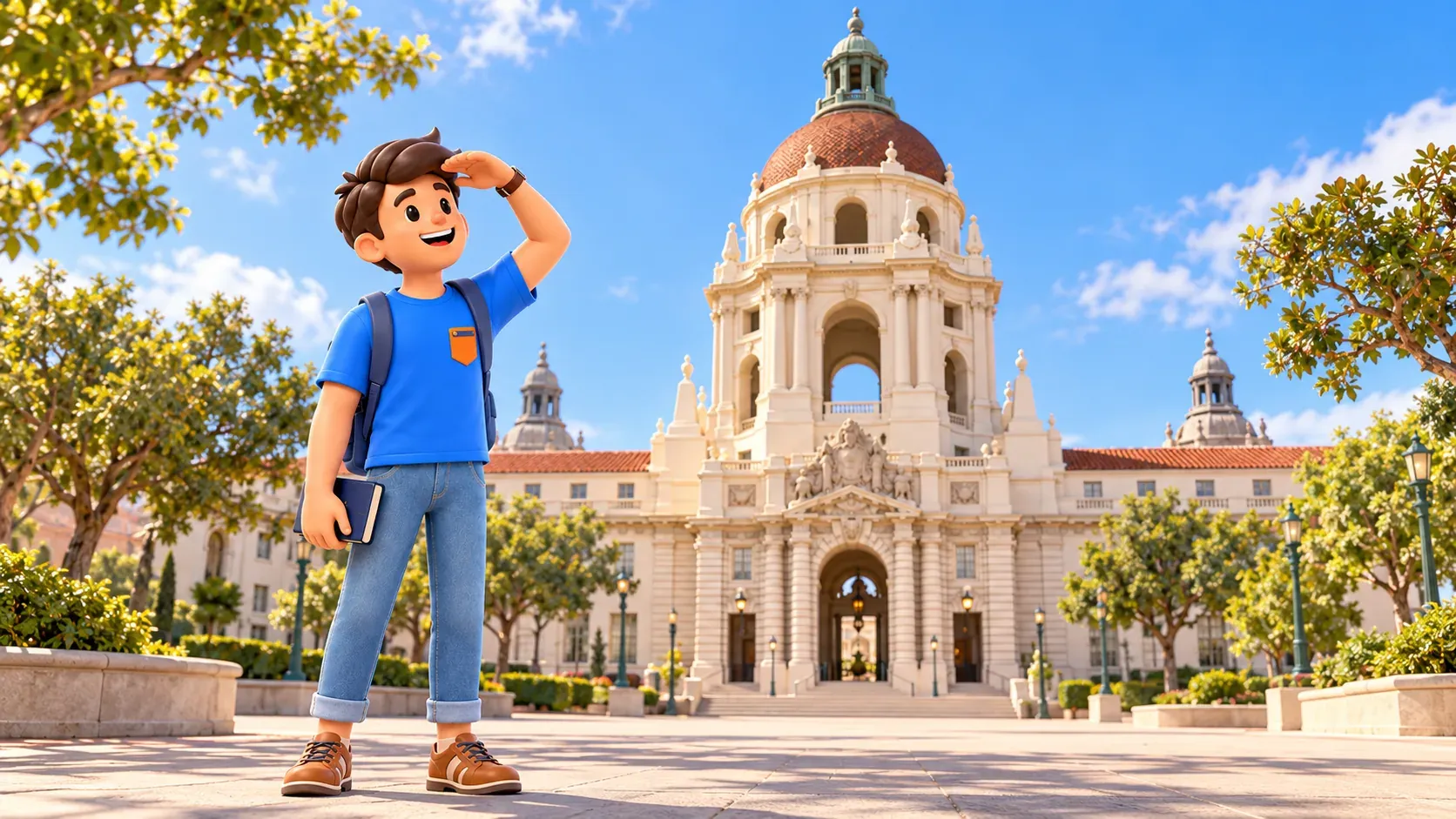
City Hall, at 100 North Garfield Avenue, was completed in 1927. Its arcades and dome give the outing an architectural focus without requiring a long checklist. Begin with the exterior, then allow time for nearby streets and lunch. Access to working offices is not an assumed part of that sightseeing programme.
Decide whether you will remain around the centre or add another attraction. Also being in Pasadena does not establish that two addresses combine into a short walk. A new destination might need another journey. For an initial outing, keeping the walk compact and returning comfortably can be a better choice than spending the afternoon on transport for an additional entrance.
To combine Pasadena, film and the coast across a trip, you can prepare a personal plan in RoadMe, which uses your interests and pace to organise the days. Try setting your priorities first so that each outing has a useful place in your own journey.
Connect outings without overcomplicating the return
A local walk, lunch and a return journey is often enough. Add one further transfer only when it serves something you care about. The B Line links Hollywood and Downtown, but that does not create an obligation to explore both completely in one day. Santa Monica and Pasadena are in different directions; a rail connection does not make them adjoining walking areas.
Before leaving, save the destination station, accommodation address and final connection. If you depend on lifts, check their operational status separately: an accessible line does not guarantee that every individual lift is functioning. Charge your phone and keep key names in a simple saved note. Leave room for waiting and transfers before a timed museum entry.
When a bus is delayed or walking becomes tiring, shorten an optional stop first. Where necessary, compare a separate taxi journey with continuing by public transport under current conditions. There is no universal cheapest choice for every address and time. A successful car-free plan keeps the walks and experiences at the centre of the day, with transport helping to connect them.


