
South of Sultanahmet: Little Hagia Sophia and Kadırga
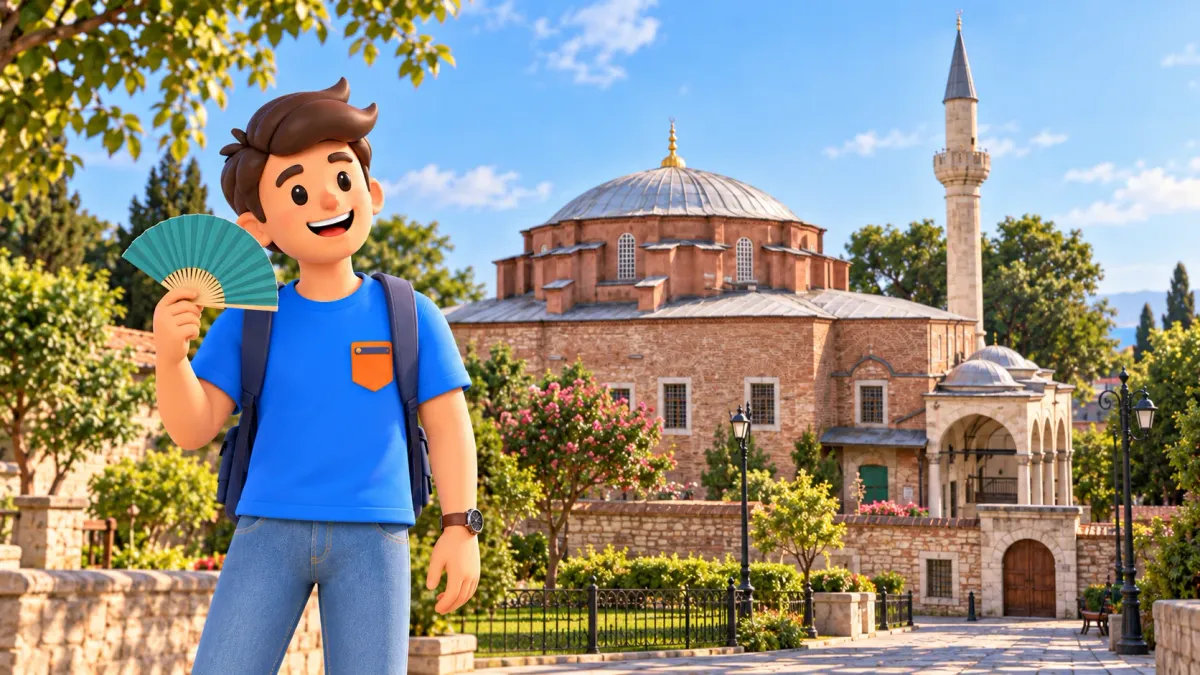
South of Sultanahmet, Istanbul changes scale. The large square gives way to slopes, smaller streets, courtyards and buildings that reward a slower look. Little Hagia Sophia and the Sokollu Mehmed Pasha Mosque in Kadırga provide a reason to turn away from the most familiar walking direction and spend a few hours in another part of the historic centre.
This route starts around Sultanahmet, descends towards Little Hagia Sophia, explores Kadırga's streets and returns uphill via the Sokollu area. Allow roughly two and a half to three hours, including a modest food pause. Travel from your hotel is additional. These are planning estimates rather than measured timings: gradients, pauses and possible interior visits affect how long the walk takes.
Who will enjoy this southern walk?
Choose it for a small neighbourhood, architecture from different periods and time between the main stops. The purpose is not to collect the largest possible number of sights. Two meaningful buildings and their surrounding streets provide enough for a separate outing. The pace can be relaxed, but the route is not level: returning towards Sultanahmet involves climbing again.
Creating a personal itinerary is much more convenient in RoadMe, which develops the whole walk or trip around your interests, available time and pace. Choose architecture, history or flexible pauses according to your preferences, so the neighbourhood becomes part of a journey that suits you.
Give Little Hagia Sophia approximately thirty to forty minutes, the streets thirty to forty-five, and a food pause about half an hour. Another half-hour suits the Sokollu stop, with the remaining margin for approaches and returning. Interiors are conditional in this plan. Both buildings function as mosques, so worship and local arrangements may change visitor access.
Two names need care. Little Hagia Sophia is an independent historic building, rather than a reduced copy or branch of the larger Hagia Sophia. The Sokollu destination is also specific: you need the mosque in Kadırga. Istanbul has other buildings with related names. Save the district alongside the attraction instead of relying only on a similar search result.
Down from Sultanahmet: notice the change of scale
Sultanahmet stop on the T1 tram makes a practical starting reference. From the central area, choose public streets towards Little Hagia Sophia. Look at the route's profile and intended approach before setting out. If someone finds slopes difficult, account for that at the start rather than after the group has already descended below the square.
The transition is interesting in itself. Broad open views give way to closer facades and turns. Look at doors, windows, pieces of masonry and the way a street adapts to the ground. You do not need the history of every house to observe this. It helps the neighbourhood become recognisable without turning each pause into another guided-tour stop.
Keep a comfortable pace and choose safe places for photographs. A street remains residential and working space even when it appears particularly photogenic. One expressive detail may be more interesting than waiting for every person to disappear. Ordinary pedestrians and errands remind you that the historic centre continues to live beyond the sightseeing timetable you are following that morning.
If you have already spent the morning on the square, begin with the new direction instead of repeating all its monument views. Leave room for a pause. If Sultanahmet is still unfamiliar, our two-hour Sultanahmet walk works better as a separate block, so two short plans do not unexpectedly become one long day.
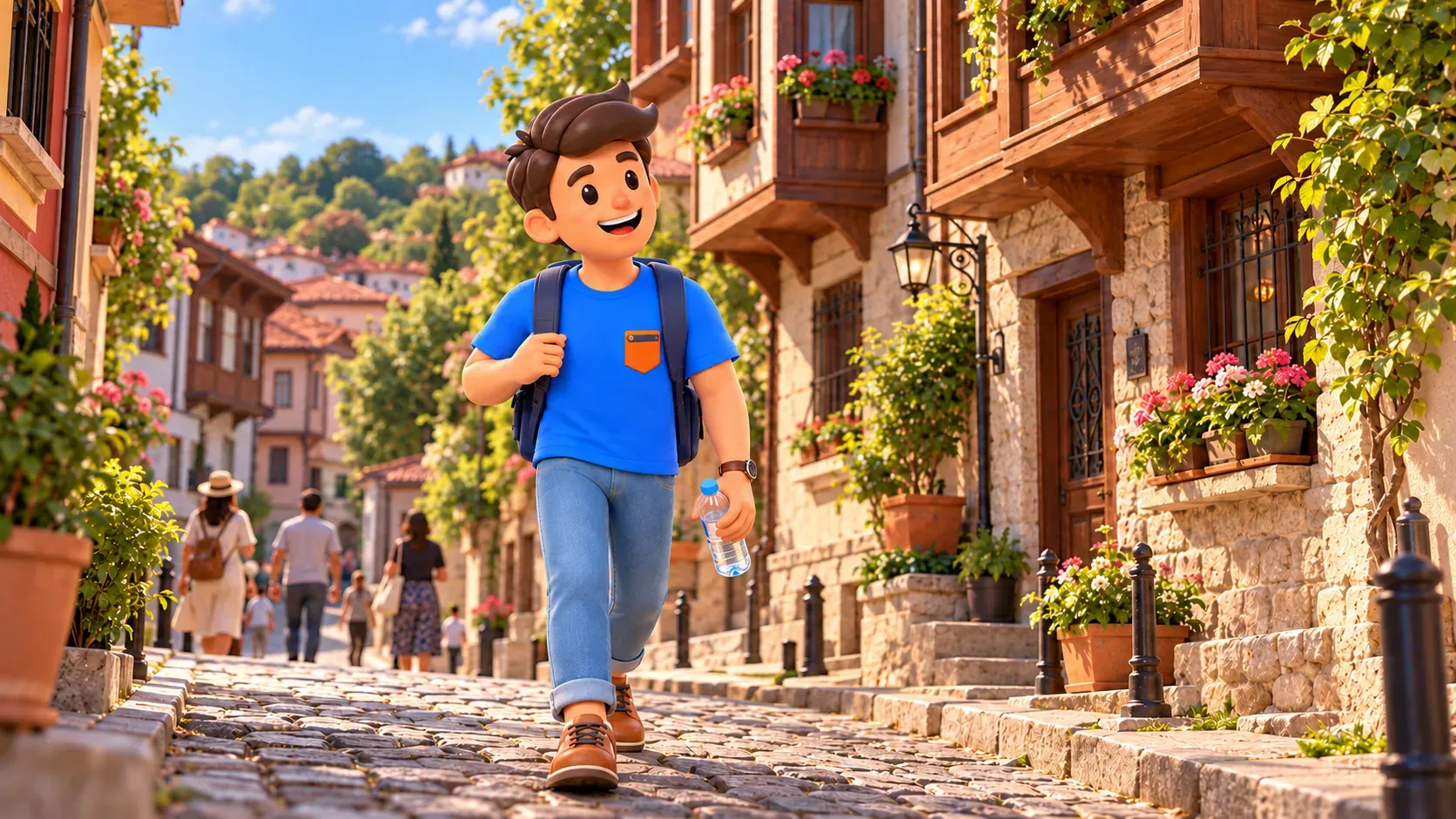
Little Hagia Sophia has a history of its own
Behind the present name stands the sixth-century Church of Saints Sergius and Bacchus, later converted into a mosque. This small piece of context changes the view: it is an independent part of Byzantine heritage. Keep that thought while noticing how the old building relates to the nearby streets and later alterations, rather than searching for a miniature version of another monument.
From outside, compare the compact domed form with the scale you saw near the main square. Here it is easier to look at individual parts than to pursue one overwhelmingly monumental photograph. Use public approaches that are available. Spaces beside a religious complex can have their own boundaries, even when a photograph makes the entire setting look open.
Allow approximately thirty to forty minutes for a first introduction, including a possible short interior pause. Enter only when visitor access is permitted and follow instructions. If worship or restrictions prevent entry, the exterior still gives the walk meaning. You are here to understand a place; that does not require going through every doorway in its surroundings.
Prepare suitable clothing for a possible visit. Follow local requirements about footwear and head covering, speak quietly and leave room for worshippers. The interior should not be tied to a compulsory number of photographs. When the atmosphere calls for a short, quiet presence, a few minutes of observation are more appropriate than a lengthy search for a particular camera angle.
Afterwards, pause outside and notice what stayed with you. A silhouette, a detail or a question is enough. Interest in a building like this often begins with surprise at its age and setting. A deeper historical visit can come separately, when you have more time than a two-to-three-hour neighbourhood walk and the journey back allow.
Give Kadırga's streets a little time
Continue with a short walk through Kadırga between the two main architectural stops. Choose a clear direction and one small loop that suits your energy. This section shows the surroundings in which historic buildings exist today. A shop window, passage between houses, changing facades or an ordinary cafe scene can suddenly make the neighbourhood feel easier to understand.
The route does not promise empty streets or depend on finding a supposedly secret Istanbul. Its character comes from scale and attention. Even an area familiar to other travellers can be personal when you stop hurrying between names. Choose a detail that interests you and allow a few minutes to examine it without immediately giving yourself the next task.
In a group, agree on what makes a worthwhile pause. One person may enjoy old walls, another small shops, while a third needs rest. Discussing this helps a short local route retain a shared rhythm. If anyone explores separately, arrange an exact meeting point. A district name is too broad to find one another quickly between turns and neighbouring lanes.
The descent in the first part does not describe the whole walk: you will need to climb later. Comfortable shoes and light bags help preserve the pleasure of the route. If step-free access is essential, check particular approaches and entrances. Two places being close in one district does not establish equal accessibility along every section, however short the map line appears.

A food pause before the next building
Leave around half an hour for a drink or a small meal. If hungry, extend that pause and shorten the street loop. Eating according to how you feel works better than always waiting until every architectural stop is finished. On a short walk, the meal can separate the impressions of two places rather than merely serve as a practical interruption.
Choose a cafe by its menu, atmosphere and displayed prices. This outing suits a simple format without an essential restaurant hunt. While waiting, check the direction to the Sokollu mosque specifically in Kadırga and your later return. After resting, you can continue towards a clear destination instead of starting another search through several similar attraction names on the phone.
In heat, allow more restful stops; in rain, consider the surface and gradients. A cafe offers a useful pause, but the whole programme does not have to be moved into random interiors. You can shorten the loop and see both buildings from outside. Different architectural periods and the neighbourhood's everyday life still give that version plenty of substance.
Sokollu in Kadırga: another architectural language
The Sokollu Mehmed Pasha Mosque in Kadırga belongs to sixteenth-century Ottoman architecture and is associated with Sinan. After Little Hagia Sophia, it adds another historical layer. Compare the approach and overall impression rather than simply deciding which building is larger. Two places in a short route can show different ways of organising religious space without a complicated architectural explanation.
If the courtyard or interior is open to visitors, stay within the permitted areas and follow instructions. The mosque is known for İznik tiles, giving a reason to look more closely at colour and pattern when access allows. The interior remains optional. If closed, appreciate the exterior and save the wish to return rather than turning this stop into an indefinite wait.
Approximately half an hour allows a first introduction without a prolonged visit. Notice one feature that you can compare with the previous building: its volumes, the transition from the street or the atmosphere before the entrance. That personal comparison can be more useful than trying to retain every name and date. A few clear impressions provide a good basis for another Istanbul walk.
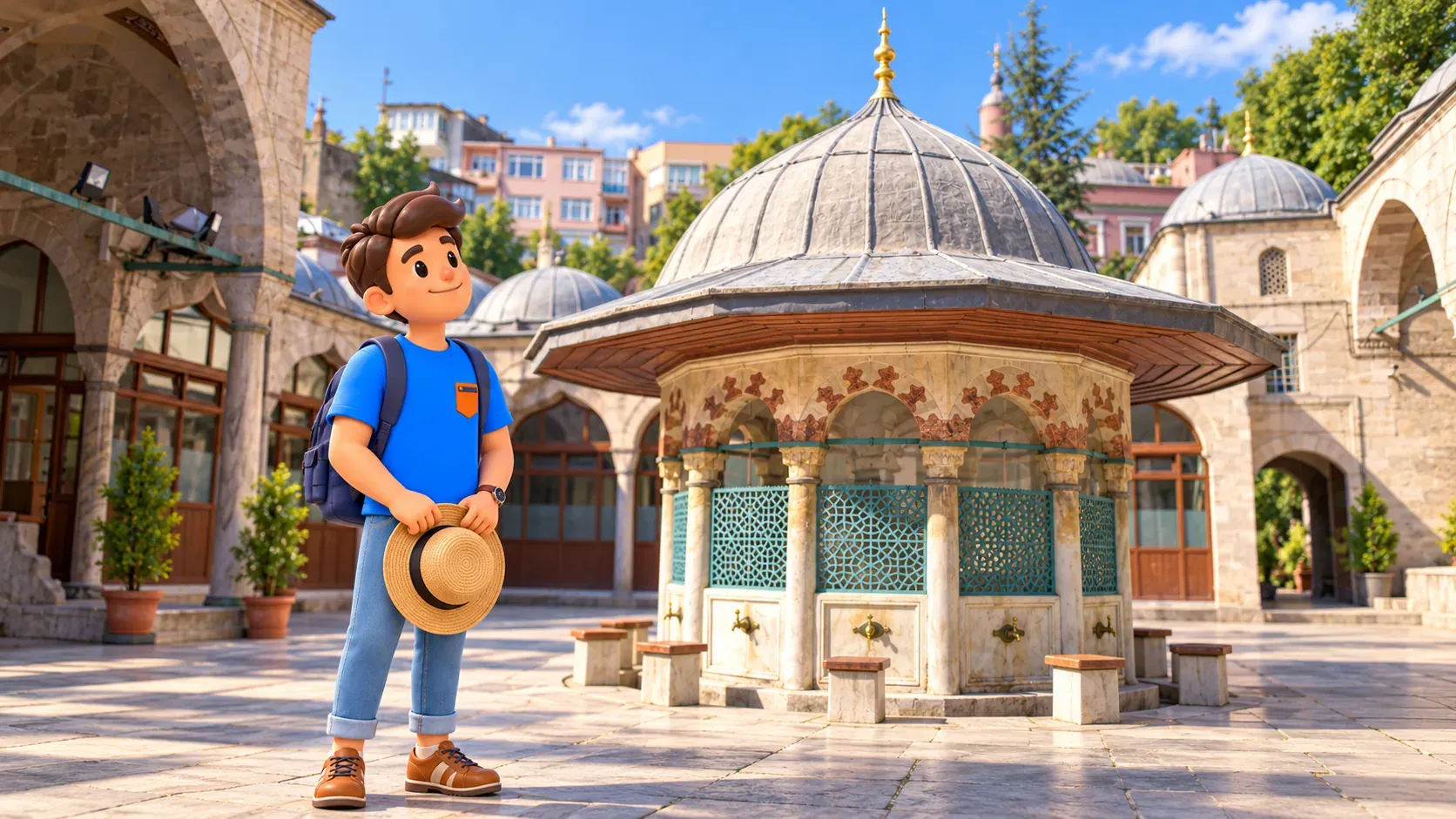
For photographs, choose somewhere that leaves the passage clear and respects other people's space. Historic details can be photographed separately; the widest view need not include every part of the complex. In a courtyard, the purpose of the place matters particularly. Quiet and comfortable movement for those using it have priority over an image imagined from somebody else's post.
Returning towards Sultanahmet
After Kadırga, leave time for the uphill return to your chosen reference. Sultanahmet tram stop can provide a clear finish, with onward transport selected according to your accommodation and current services. The journey to your hotel is additional to the walking estimate. If you have a meeting or fixed departure afterwards, add your own allowance for crossings and transfers.
Using the complete personal trip plan is more convenient in RoadMe, where interests, days and selected places become one itinerary. Download Istanbul beforehand with an internet connection to use maps and navigation offline afterwards.
If tired, finish sightseeing after Little Hagia Sophia and save Sokollu for another outing. Choose the return according to the gradients and transport options available. If energy remains, keep the gentle pace until the finish. The route already has enough substance: a Byzantine building, Ottoman architecture and the streets between them create a coherent view of the historic centre's southern part.
For a longer stay, combine neighbourhood walks with larger themes. One day can focus on a palace, another on water, and another on small architectural stops. Kadırga fits particularly well into that personal balance. It offers more than two extra names: it can help you understand which scale of Istanbul you would enjoy exploring further during the rest of your trip.


