
Literary Chicago in Half a Day: Writers, Poetry and the Newberry

A literary half-day in Chicago works best with one substantial visit and two smaller encounters. Give the American Writers Museum the main part of the morning or afternoon, then connect it with the Poetry Foundation and the Newberry’s public exhibitions. Washington Square Park provides a final pause rather than another admission to organise.
The route is for a curious reader, not only someone who already knows a shelf of American authors. Its three indoor settings do different things: a museum interprets writing, a poetry library invites focused reading, and a research library presents selected material in exhibitions. Understanding those differences makes the day clearer than treating every building as the same kind of book collection.
Choose a day when the cultural stops overlap
Under the ordinary published schedules, Thursday, Friday and Saturday are the useful shared days for all three institutions. The American Writers Museum closes on Tuesday and Wednesday, while the Poetry Foundation opens Wednesday through Saturday. Newberry exhibition hours follow their own calendar. Check the actual date for holidays, special closures and programme changes.
RoadMe helps build a complete personal trip around your dates, interests and preferred pace. Try giving this half-day one main reading interest and placing Chicago’s other museums, neighbourhoods, meals and travel across the rest of your stay.
Allow about four hours: ninety minutes at the museum, twenty at the Poetry Foundation, twenty in a Newberry exhibition, fifty for walking, forty for a meal or seated pause, and twenty of flexibility. These are planning estimates. The museum itself describes an average visit of about ninety minutes, but your pace and current displays may change that.
A useful example begins at the museum near its 10am opening on a compatible day, then reaches the poetry stop after its 11am opening. This is an illustrative sequence, not a guaranteed appointment or a special event timetable. If you start later, work backwards from the actual closing times rather than carrying the same order into an impossible afternoon.
Know what each stop includes
The American Writers Museum is a ticketed museum at 180 North Michigan Avenue, on the second floor. The Poetry Foundation is at 61 West Superior Street near Dearborn. The Newberry is at 60 West Walton Street, and Washington Square Park lies across from it. Keep those full addresses available rather than relying on a broad neighbourhood label.
Newberry’s public exhibitions are free and distinct from its research reading rooms. A brief gallery visit does not include using rare collection material, studying upstairs or wandering through every part of the building. The Poetry Foundation’s public visit is likewise different from attending a scheduled reading or using staff offices.
Choose the American Writers Museum as the large interior in this version. If your priority is a long poetry reading session or a Newberry programme, change the centre of the half-day and shorten another stop. Do not expand all three into major visits while continuing to describe the outing as an easy four-hour walk.
Start at the American Writers Museum with one thread
Use the actual visitor entrance and second-floor arrival arrangements. Give yourself a few minutes to find the museum rather than confusing the street address with a ground-floor gallery. If accessibility is important, check the current visitor guidance for your specific needs before the day instead of assuming that every service is available without notice.
Inside, select a thread that interests you: the sound of a voice, the way a sentence works, a writer’s relation to Chicago or the process of making a story. You do not have to read every panel in order. A personal question helps turn an interactive museum from a sequence of buttons into a coherent visit.
The museum’s Chicago Gallery gives the local theme a clear place in the experience. Look for how the exhibition relates writers to the city, but do not assume that one display represents every community or every period of Chicago literature. Notice an example, read its interpretation and keep a question for the walk afterwards.
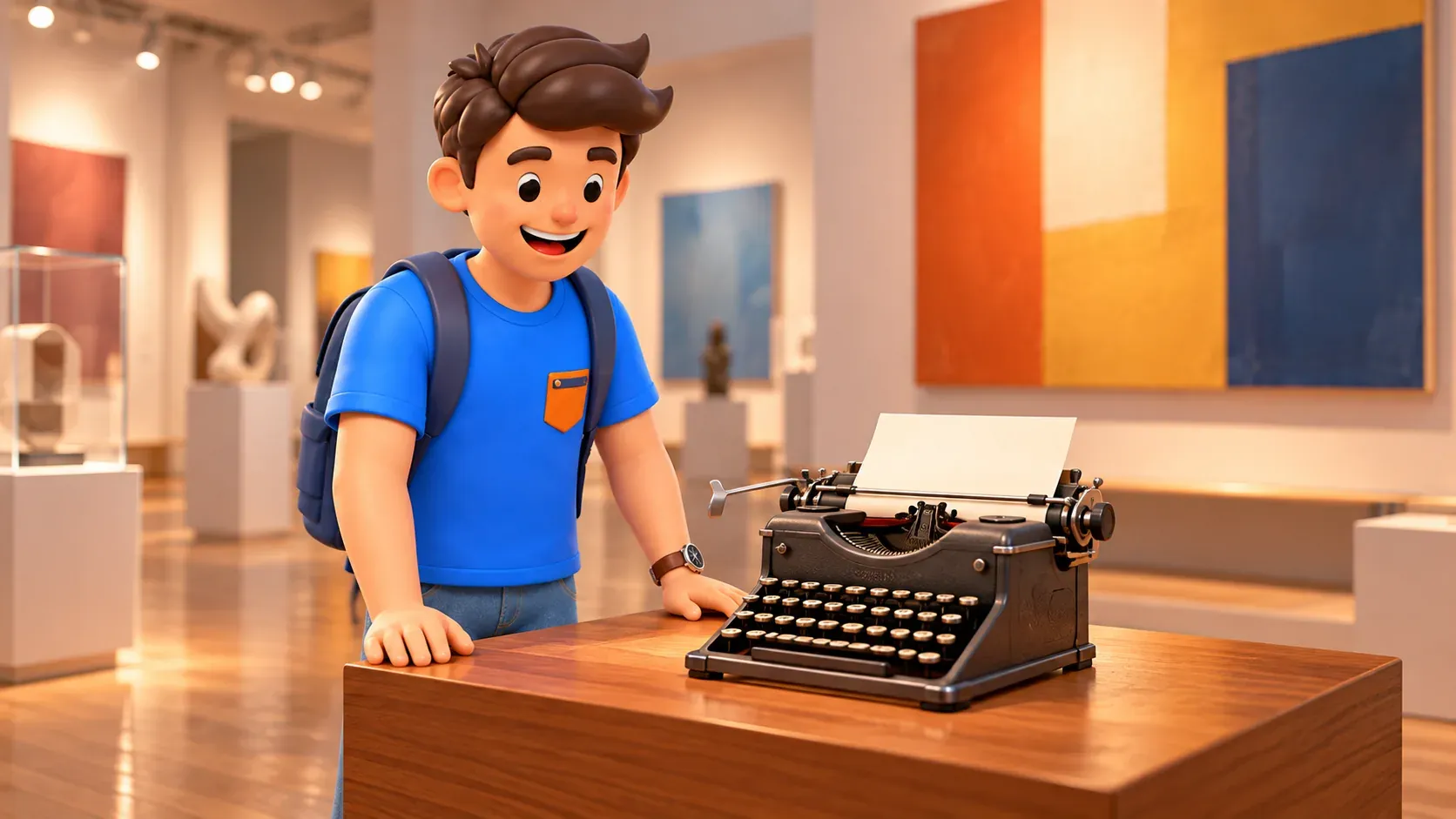
Where an interactive element invites participation, follow the instructions and take turns. Writing at a vintage typewriter can be an encounter with rhythm and revision rather than simply a photograph. Use a short original sentence of your own; you do not need to copy a long poem or famous passage to make the exercise meaningful.
Let the museum set up a small reading exercise
Before leaving, retain one idea rather than a complete list of authors. Perhaps you noticed how a short phrase changes when spoken, or how a writer’s city becomes more than a backdrop. Put the idea in your own notebook without reproducing extensive exhibition text. A brief personal observation is enough to connect the next stop.
Current temporary exhibitions can change the emphasis. Check what is actually on view if a particular subject matters, and distinguish an upcoming event from a display available during your visit. An old photograph or an earlier review should not become a promise about what occupies the gallery today.
Review the actual ticket category and eligibility for any offer before paying. A local library pass or resident arrangement is not automatically available to every traveller. This itinerary does not depend on a discount or free day. Keeping exact admission decisions tied to your date is more useful than building a whole walk around an assumed concession.
Cross the river and change the pace
From North Michigan Avenue, continue north and use the public pedestrian side of the Michigan Avenue bridge to cross the river. Work towards Illinois Street, then west towards Dearborn and north to Superior. Check current crossings and street conditions. The connection is part of the half-day, not a transfer that disappears because the stops look close on a map.
Use the walk to leave the museum’s density behind. Notice how reading a place differs from reading a text: a doorway, a crossing or a change in traffic requires attention without needing a literary quotation. Do not try to attach an unverified author anecdote to every street simply to make the transition feel more thematic.
At the Poetry Foundation, give one poem time
The public entrance begins through the courtyard at Dearborn and Superior; the Foundation’s visitor guidance identifies ramp access on Dearborn. Follow the actual route and current instructions. Its regular visiting hours are Wednesday through Saturday, 11am to 5pm. A public reading has a separate programme and should be checked as an event, not assumed from an open library.
For this short stop, choose something you can read slowly rather than scanning a whole shelf. Let a librarian’s guidance or the material actually available shape the selection. The aim is not to finish an anthology in twenty minutes. One attentive reading can give the visit a clear purpose even when the author is unfamiliar.
Read once for the overall impression and once for a small feature such as a pause, sound or line break. You do not have to agree with the poem or understand every reference. Give yourself permission to leave with a question, and write a response in your own words rather than copying an extended copyrighted passage.
Keep the library suitable for other readers. Follow rules on food, devices and photography, and ask before including people in an image. If a particular programme requires more time, make it your main activity on another suitable day or rearrange the whole half-day. It should not be squeezed into a short browsing window.

Continue north to the Newberry
From the Poetry Foundation area, use public streets along Dearborn towards Walton, then the connection to the Newberry at 60 West Walton. Check the actual pedestrian route rather than cutting through residential entrances. The last small move to Washington Square Park is across the street; there is no need to add a separate distant literary landmark.
The Newberry is an independent research library, not a Chicago Public Library lending branch. That distinction explains why its collection is handled differently from an ordinary shelf of books to take home. It also helps you choose the right visitor experience: exhibitions and public programmes are a useful introduction without becoming a research appointment.
Check the exhibition calendar for what is genuinely open. Gallery hours and reading-room hours differ, so one should not be used to infer the other. A guided building tour may provide another kind of access, but it has its own schedule and duration. A casual gallery stop does not include that activity automatically.
Use a Newberry exhibition as a focused encounter
Admission to the public exhibitions is free, without advance registration for an ordinary individual visit under the published arrangements. Special group visits and programmes can have separate instructions. Choose a small part of the exhibition that connects to your interest instead of assuming that every object must be covered before the park pause.
Look at the relation between an object and its interpretation. A document, printed item or image may need context before its significance becomes clear. Read the actual label rather than inventing a story from appearance alone. The display is a selection from a larger collection, not an unrestricted invitation to handle the originals.
Research using the collection follows a separate reader-registration process, with identification and collection-related purpose. It is not an instant extra included in this walk, nor a general upstairs study room for anyone wanting a quiet seat. If research is your real goal, plan it independently and allow the time it deserves.
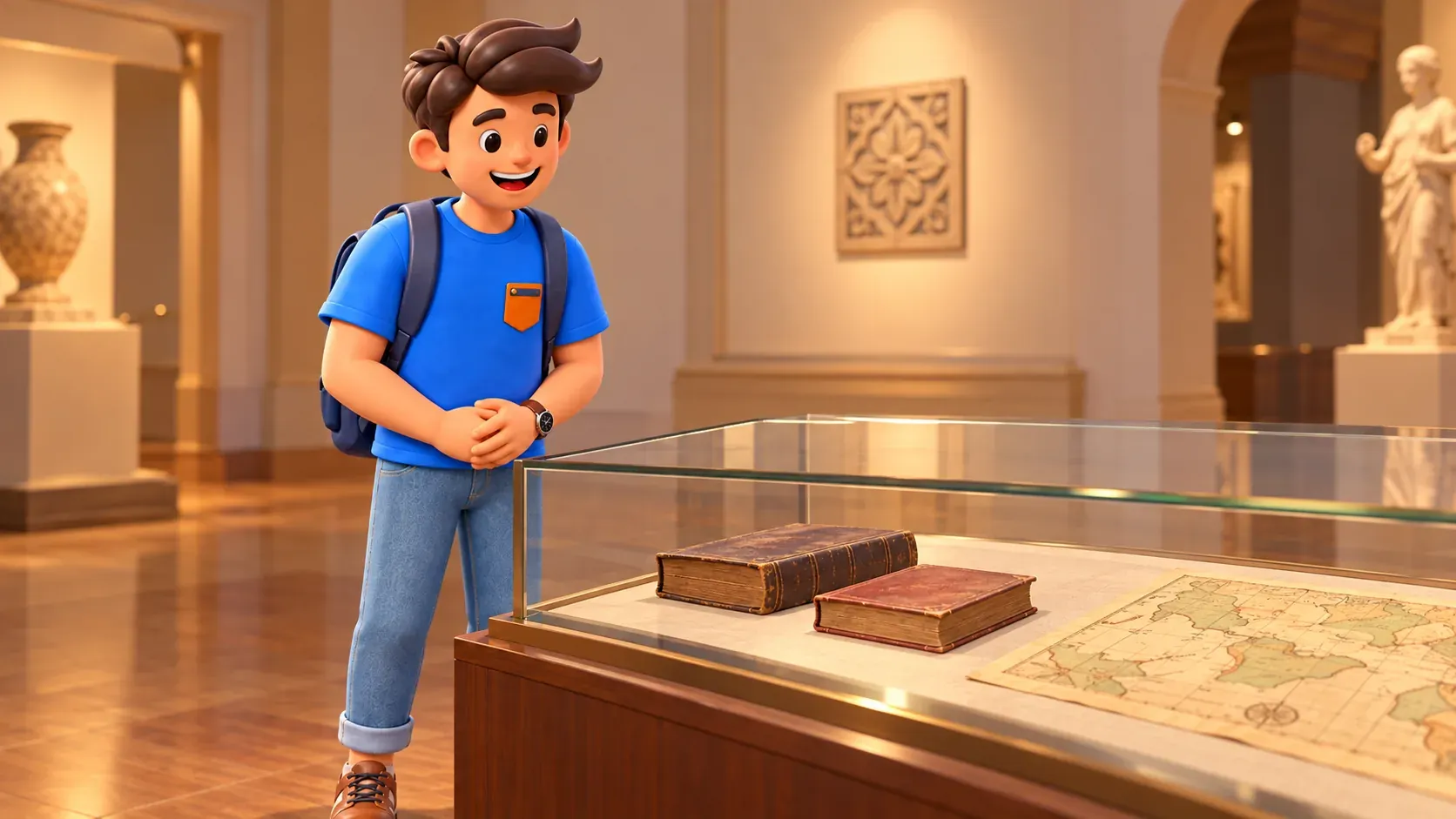
Follow photography and gallery directions, leaving cases and objects undisturbed. An artistic illustration of old books is not a checklist of the current exhibition. Let the actual selection guide your attention, and be content with one clear example that changes how you think about a written source.
Finish in Washington Square Park
Washington Square Park, at 901 North Clark Street, sits across from the library and offers a natural place to slow down. Its historical association with public speaking and the nickname Bughouse Square provide context, but they do not promise a poetry recital or debate when you arrive. It remains an ordinary community park.
Choose an available public seat and bring together the three modes of the day: writing interpreted in a museum, a poem read closely and an object understood through a library exhibition. You do not need a ranked list of favourite authors. A small observation from each setting can make a more useful record of the afternoon.
If you still want food, choose an actually open place that suits your needs and current time. Do not count on eating in reading spaces. The park pause can remain short when weather is poor, with onward travel planned for your actual accommodation or next appointment rather than an invented universal finish.
RoadMe can arrange the rest of Chicago around the subjects and pace that worked here. Try saving a longer library programme or another museum for a different day, with meals, rest and transport included throughout the complete trip.
For an outdoor change of subject on another day, save the Aqua, St. Regis and Lake Point Tower walk. The literary half-day succeeds when one substantial visit and two short encounters leave you curious enough to read further, with the route remaining comfortable and its access arrangements clear.


