
Les Heures gardens and Horta Labyrinth: what to plan now
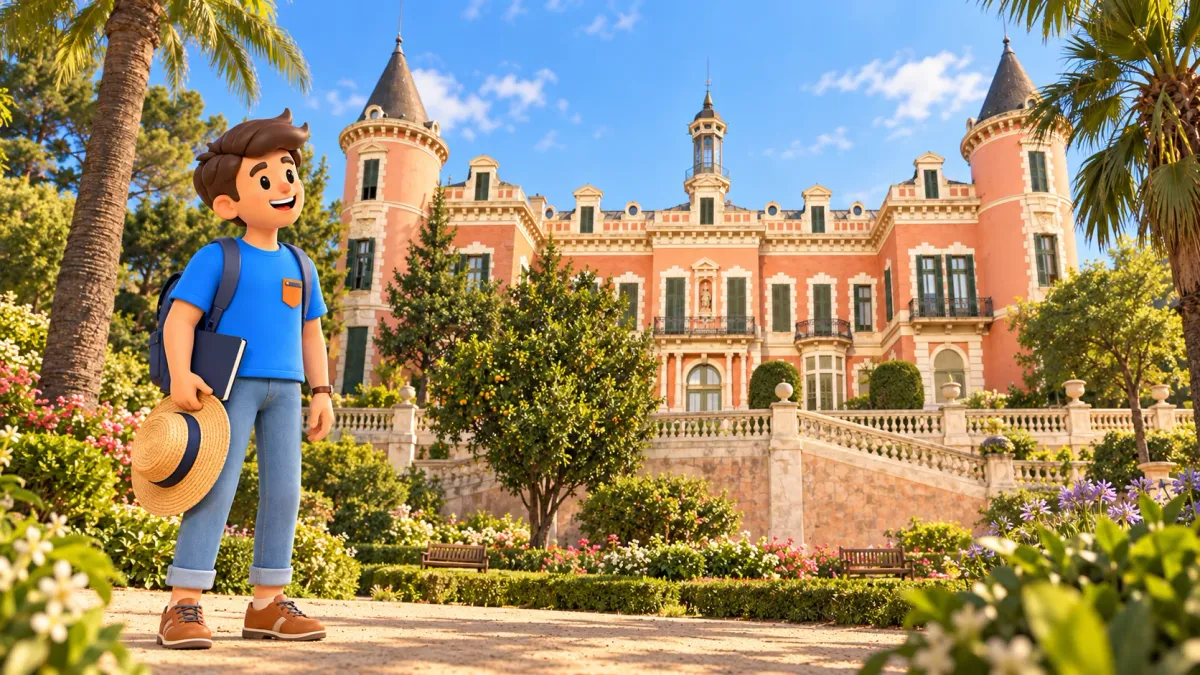
If you want to combine Horta’s Labyrinth Park with the gardens of Palau de les Heures, plan around the closures first. On 17 October 2026, the city directory lists the Labyrinth Park as closed under preventive restrictions. The hedge maze also has its own restoration programme, with an indicative horizon of early 2027. For now, choose a separate Les Heures garden walk and leave the combined outing until access is confirmed.
Allow roughly sixty to ninety minutes for Les Heures. Approach through permitted public access at the Mundet campus, Passeig de la Vall d’Hebron, 171, explore the available garden terraces, look at the palace from outside and return by the same permitted approach. Travel from your accommodation and the onward journey are additional.
Keep the idea of a green morning, with a realistic plan
The original pairing makes sense: two historic gardens close together, trees and architecture away from the usual centre. But proximity on a map does not make a closed park a usable stop. Choose Les Heures as a small outing in its own right. Leave the remaining time for rest or another deliberate plan rather than a walk to locked gates.
Sixty to ninety minutes is a planning estimate for looking around the gardens, making short pauses and returning to the public approach. It is not a measured survey or a promise to cover every corner. Stay longer if you want to sketch or take photographs; if a general view is enough, there is no need to stretch the visit artificially into half a day.
To fit smaller outings into your holiday, try RoadMe: it develops a personal trip plan around your interests, dates, pace and budget. Keeping the plan in one app makes it more convenient to alternate substantial visits with quieter garden mornings.
Decide what you actually want from the outing: garden design, an unusual palace façade or the experience of walking inside a maze. Les Heures can answer the first two interests. The third must wait. That distinction is more useful than a broad promise of green Horta, which can conceal very different expectations.
The park closure and the maze restoration are separate
Two restrictions affect the Labyrinth Park. Its municipal listing carries a closure notice linked to African swine fever prevention. Separately, the planted maze is undergoing improvements to paths, irrigation and sculpture, alongside replacement of the cypresses and a period for them to establish. Completion of one process does not automatically end the other.
Early 2027 is an indicative restoration and establishment horizon, not a guaranteed public reopening date. Do not book a visit for the first day of January or assume every part of the park will reopen together. Before a future outing, confirm both general park access and access to the hedge corridors themselves.
Directories may still display ordinary hours, admission details and descriptions of gardens that were previously accessible. Those entries do not cancel a current closure notice. Likewise, photographs of people between tall green walls explain the place’s appearance, rather than proving you can repeat their visit today.
A special event or a separately organised palace tour also does not amount to unrestricted entry to the whole garden. If a particular programme interests you, check its own date, booking arrangements and access conditions. Such visits are outside the independent walk proposed here.
Les Heures gardens: hours and the public approach
Palau de les Heures has a different garden calendar. Ordinary hours are daily, 10:00–18:00, from 15 September to 14 June, and 10:00–20:00 from 15 June to 14 September. An autumn visit should therefore not rely on a summer evening schedule continuing throughout October. Starting around 10:30 gives you daylight and avoids building the outing around closing time.
The approach address is Recinte Mundet, Passeig de la Vall d’Hebron, 171. Follow permitted public routes and signs towards Palau de les Heures. This is a working university campus: an open route does not invite you into teaching buildings, staff areas or every side entrance you happen to find.
Check on arrival that garden access is open and that your chosen path has no temporary restriction. Move through the available terraces while keeping a clear return route. Finish at the same public campus approach. A woodland detour, entry through the closed Labyrinth Park or a search for unfamiliar gates is unnecessary.
The owner has separate permission requirements for organised activities and visits by groups of more than ten people. Do not confuse a personal stroll with an organised programme. If you are arranging a group outing, check those conditions in advance rather than expecting to resolve them at the palace.
Three terraces: see the design before naming the plants
The Les Heures garden is arranged on three terraces, with the palace in the upper part. Lower levels let you see the building through trees and garden planting. Begin with the overall composition: how the façade appears beyond greenery, how horizontal terrace lines hold the slope and how the perspective changes as you climb.
French and Italian Renaissance garden influences meet here. For a visitor, that means looking for the main axis, regular planting, balustrades and connections between levels. Understanding those relationships gives the garden more interest than simply identifying the next tree on a list.
Use only open, permitted paths. You do not need to complete every staircase or every level to make the visit count. After one ascent, look back: a changed viewpoint can offer more than another circuit of the same area. If a path is restricted, work with the perspective available instead.
Palms, magnolias and other substantial trees contribute to the garden’s character. Compare the narrow shadow of a palm trunk with a broader canopy nearby. Flowering is seasonal, and water features do not always operate. Avoid making the success of the outing depend on colourful blooms or running jets.

A French château silhouette with a local history
Palau de les Heures was built in the late nineteenth century for the industrialist Josep Gallart Forgas. Architect August Font i Carreras drew on the French château tradition, while Adrià Piera designed the gardens. Distinguishing the architect from the garden designer helps explain how the ensemble combines different kinds of work.
Round towers with conical roofs and pale window surrounds against the warm façade create its recognisable silhouette. Look at the relationship between building, balustrade and upper terrace, then compare it with the view from lower down. You do not have to approach every doorway to understand a residence overlooking its gardens.
The name Heures refers to ivy, represented in an allegorical work by Josep Campeny on the façade. It is a small detail linking the place’s name to its decoration. That does not mean every palace wall should be covered in ivy: a name and an artistic motif are not a description of all present-day planting.
For an independent outing, plan for gardens and exterior views. Ordinary visits inside the palace are not offered; the building is assigned to the University of Barcelona. Occasional open days or special programmes have their own arrangements. A shelter, offices and rooms do not become part of your walk merely because historical accounts mention them.

Why the Labyrinth deserves a separate return
Even with a visit postponed, it is worth understanding the garden’s appeal. Its history connects Joan Antoni Desvalls and Italian architect Domenico Bagutti in the late eighteenth century. The Neoclassical design brought together nature, art and stories from ancient mythology; a Romantic garden later added another character to the ensemble.
The cypress maze belongs to that artistic idea, rather than being a modern amusement inserted among shrubs. Its paths and searching relate to the garden’s mythological themes of love. Tall living walls change how space feels: an elevated view explains a pattern, while someone inside experiences turns and restricted sightlines.
The garden opened as a municipal public park in 1971, and subsequent restorations helped conserve the historic ensemble. The current work with cypresses is a reminder that this heritage includes living material. A newly planted tree does not instantly form a stable green wall. Establishment takes time and is part of caring for the place.
A historical view or an image of the maze in a book can help you imagine its design. It is not a navigation diagram or a depiction of a permitted visit on the current date. Once the park reopens, reassess the available sections and conditions rather than carrying over an old itinerary unchanged.

Choose your pace instead of adding more stops
At Les Heures, choose a modest theme: garden perspectives, the palace silhouette or time looking at trees. Photographers might prefer a few positions at different heights. Someone sketching may want one sustained view. A visitor seeking a break needs an available seat and time without an immediate deadline more than another address.
If gardens and unhurried architecture suit you, use RoadMe for the remaining days: it creates a personal trip route around those interests and your pace. That makes it easier to organise and use a coherent plan during the holiday instead of joining separate articles and notes by hand.
Account for the climbs between terraces when choosing footwear and the visit’s length. With a pushchair or limited mobility, check the specific approaches, gradients and open paths separately. The presence of ramps in a garden composition does not establish that the whole route is step-free. In heat, choose a cooler time; after rain, assess the surfaces carefully.
If Les Heures also has a restriction when you plan to go, choose another outing altogether. You could consider a separate half-day among Montjuïc’s gardens, checking access for your date. That is another part of Barcelona and an independent walk, rather than a neighbouring substitute just around the corner.
When to pair the two gardens again
Before a future combined outing, check three things: whether the general Labyrinth Park closure has ended, whether the cypress maze itself is open and whether both gardens’ hours fit your day. Then allocate time afresh for visits, the connection and breaks. Nearby coordinates do not confirm a direct passage between gates.
Until that is confirmed, end the current walk by returning from Les Heures to the permitted public campus approach. It is a complete small outing with its own architecture and garden history. Keeping that clear experience is more rewarding than spending the remaining hours looking for a way into inaccessible grounds.


