
Lazzaretto Nuovo: how to arrange a guided island visit
Visit Lazzaretto Nuovo through a booked guided tour. Landing independently for a quick circuit is not the ordinary visiting format. The complete programme lasts about two hours and combines quarantine history, the museum in the Tezon Grande, archaeology and a nature trail. Both boat journeys, waiting and reaching your departure landing in Venice are additional.
Arrange the language and obtain confirmation before choosing transport. This is not an island where an arbitrary boat ticket can come first and the visit be sorted out at the gate. Its appeal lies in a connected account of people, trade and the lagoon; a clear plan gives you room to listen.
Who will enjoy this kind of island outing?
Choose Lazzaretto Nuovo to understand Venice through its relationship with the sea and its surroundings. One subject is how the republic managed arriving ships, people and goods. The other is the landscape of the lagoon’s saltmarshes. These belong to the same place and work better together than as unrelated stops.
Try RoadMe for a fully worked-out personal trip plan based on your dates, interests and pace. Planning in the app makes it much easier to distribute arranged excursions, city walks and rest across your stay, giving important experiences enough time.
This suits an interest in trade history, archaeology and observing landscapes. If you prefer changing direction every ten minutes, choose another island day. Here, the guide controls the visit’s sequence and the return follows the arrangements of your particular tour. Agree on that format with companions before reserving.
With children, explain the activity beforehand: walking, listening, old buildings and natural surroundings. It is not a promise of joining an excavation, handling finds or spotting a particular bird. One question, such as why a trading city needed a separate island warehouse, can encourage attention better than a long list of dates.
Nuovo, Vecchio and San Lazzaro are different places
The destination is Lazzaretto Nuovo in the northern lagoon, near Sant’Erasmo. Lazzaretto Vecchio is beside the Lido and has separate access arrangements. San Lazzaro degli Armeni is another island with a monastery. Similar names do not imply a shared landing, one ticket or an immediate connection between their entrances.
Save the full Italian name in your booking and transport search. Nuovo needs its own landing, not Sant’Erasmo Capannone across the water. Visible proximity does not create an ordinary pedestrian connection. If a tour advertisement mentions several islands, establish which site is actually included and where boarding begins.
The phrase “lagoon museum” is not enough to identify the address either. Different projects have their own buildings, histories and opening dates. Match the island name, organiser and confirmed meeting time. That simple check prevents an appealing description of another venue from directing you to the wrong boat.
Understand the booking and language conditions
Checked on 17 October 2026, organiser Lazzaretti Veneziani’s general Italian page lists a Saturday visit at 4pm for individual visitors, with online reservation. Ask which language applies to that particular session. A website translated into your language does not establish that the guided visit takes place in it.
The English programme has separate published conditions: Saturdays at 11am, from 4 April to 24 October 2026, with August restricted to exclusive tours. Email requests are required no later than the preceding Thursday. The scheduled tour depends on a minimum number of reservations; the organiser confirms when the group has formed.
An email sent is not a booking confirmed. Before leaving, you need an agreed date, language, meeting point and arrival procedure. The published end of the season does not prove that places remain on the final Saturday. After 24 October, or for 2027, seek a new calendar or an individually agreed arrangement.
The general public season is described as April–October, with March, July, August and November also mentioned for visits arranged on request. That is not daily unrestricted access throughout those months. An exclusive visit on another day requires agreement too, and its conditions differ from joining a scheduled group.
In your enquiry, include the number of people, children’s ages, possible dates, preferred language and relevant mobility requirements. You will obtain conditions for a specific visit instead of a general seasonal answer. Avoid booking an unsuitable session merely because its time looks convenient beside another activity.
Keep the guided visit separate from travel time
The organiser estimates about 120 minutes for the complete visit, including its walking. There is no need to invent shorter individual stops: the guide determines the sequence. This example protects time before and afterwards, but never replaces the instructions for your confirmed group.
| Block | Location | Planning allowance |
|---|---|---|
| Orientation and a boarding buffer | Venice, at the correct departure landing | 30 minutes |
| Complete guided visit, including local walking | Lazzaretto Nuovo, from meeting to return at its landing | About 120 minutes |
| Coffee after returning | A suitable café in Venice | 30 minutes |
Those three blocks total 180 minutes without either boat journey or its waiting time. Travel from and back to your accommodation, connections and a full meal are also additional. A thirty-minute boarding buffer cannot guarantee every delay is covered. The actual connections determine the total, so this is not a universal three-hour excursion from any hotel.

Arrange the vaporetto and the return
The organiser identifies ACTV line 13, departing from Fondamente Nove in Venice or Treporti. Find a journey calling at the correct island on your date and match it with the group meeting. Check the precise boarding area locally: the name of a long waterfront does not identify the right pontoon by itself.
Lazzaretto Nuovo is a request stop. Confirm the current procedure with the operator and your host, including boarding for the return. Do not rely on an old landing diagram or instructions from a random review. Tour arrangements and transport timetables are related, but neither is a permanent document applying unchanged every year.
Choose the return before leaving Venice and check its direction. An excursion reservation should not be assumed to include public transport. Have a suitable transport product for both journeys under its actual conditions. A return after a two-hour visit should not automatically be treated as covered by a ticket activated before the first sailing.
Avoid a rigid museum slot or performance immediately after returning. There is still a city journey between landing and the next doorway. If you miss the agreed boat, contact the organiser about an acceptable alternative rather than landing in the hope of catching the group through restricted grounds.
A little history gives the visit a purpose
In 1468, Venice’s Senate established a lazaret here with a preventive role. “Nuovo” distinguished it from Vecchio, where evident cases of plague were received. This brief distinction explains why arriving ships and cargo matter so much to Nuovo’s story, rather than only hospital rooms.
The island existed earlier: medieval records identify it as Vigna Murada, and it later belonged to the Benedictines of San Giorgio Maggiore. In the nineteenth century, Napoleonic and Austrian authorities adapted it for military purposes. Today’s setting therefore contains several historical layers; not every wall belongs to one quarantine century.
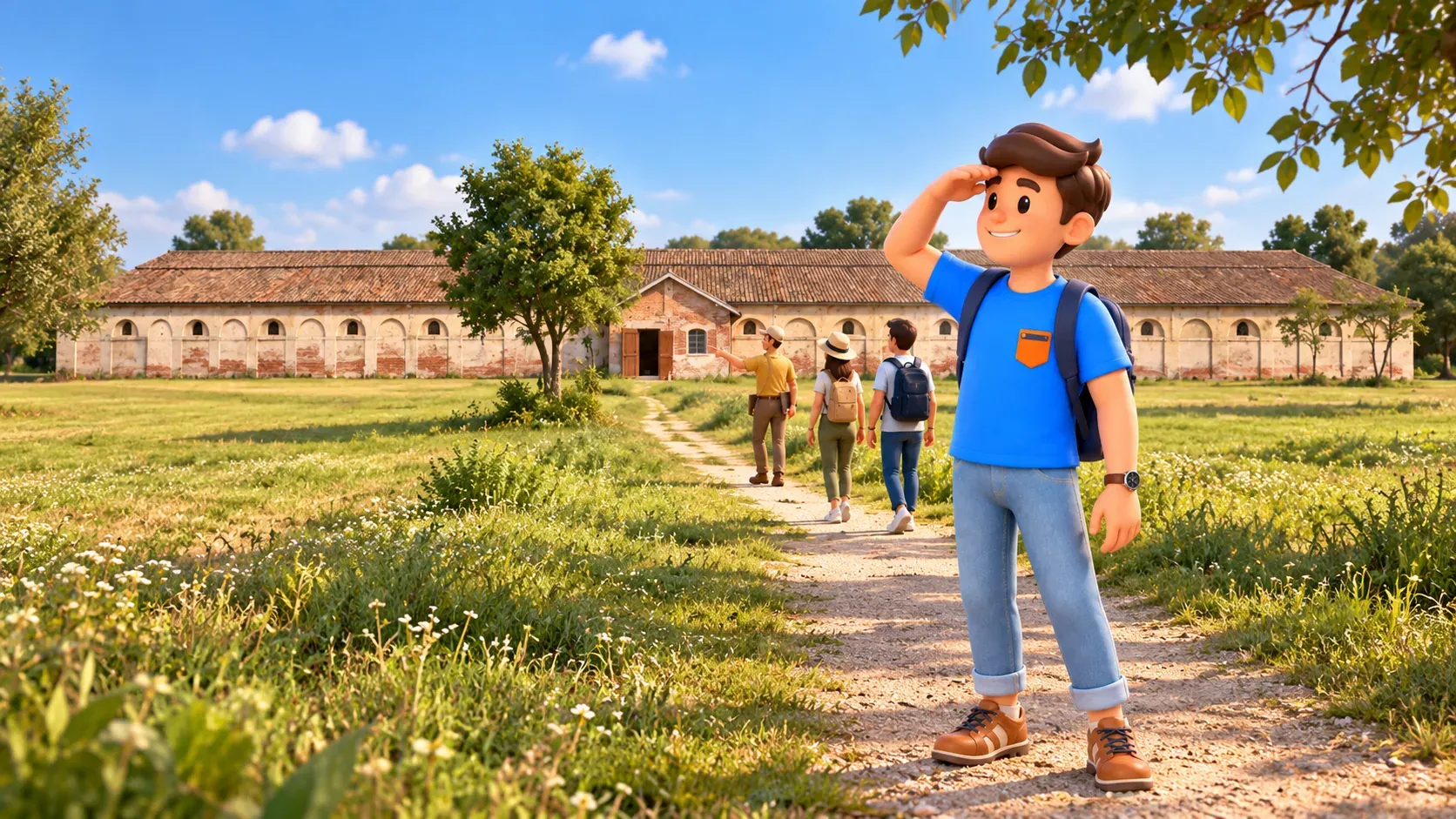
The Tezon Grande is a large sixteenth-century warehouse associated with storing and treating goods. Surviving inscriptions and drawings bring work and maritime connections into view. Observe them from the permitted distance and listen to the guide. They are historical surfaces, not invitations to touch or leave a souvenir mark.
The archaeological element helps explain how material traces contribute to knowledge of the place. It does not promise active digging every day you visit. A research camp and an ordinary tour are separate programmes. Leave finds and equipment untouched and stay with the group rather than seeking a better photographic position alone.
The saltmarsh trail is another reason to come
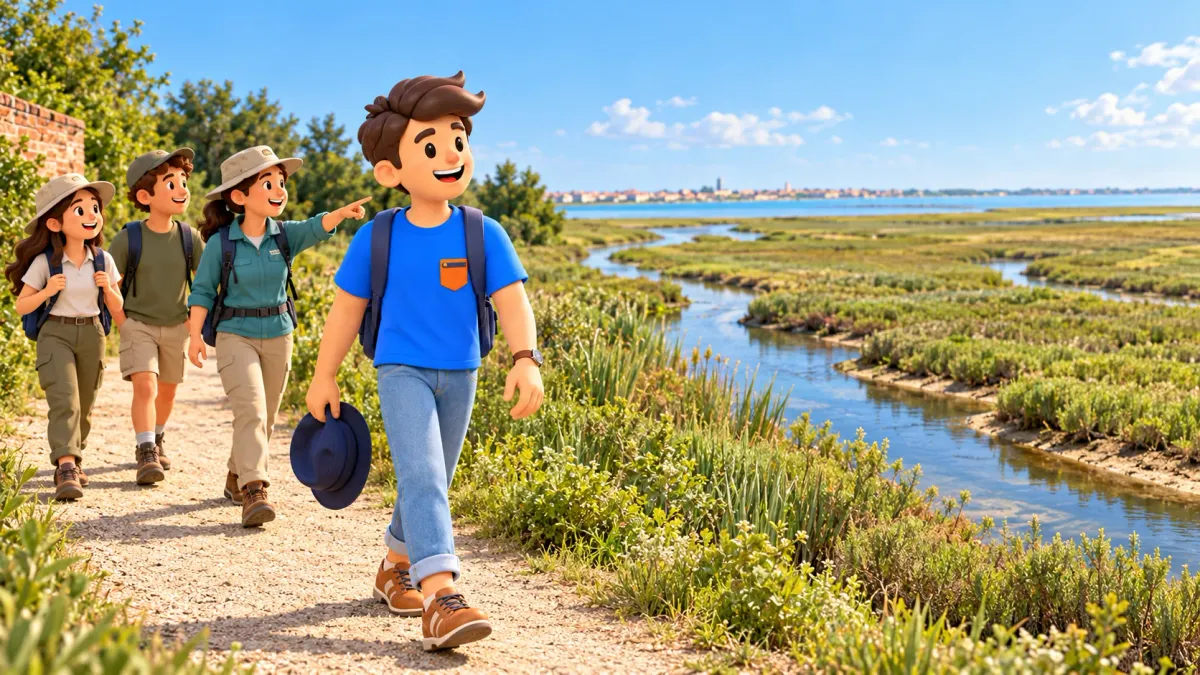
The Path of the Barene is an approximately one-kilometre section outside the historic walls, introducing the lagoon’s saltmarsh environment. It follows an old patrol route and includes interpretation developed with Venice’s Natural History Museum. That kilometre refers to the nature section, not all the walking in the complete two-hour visit.
Notice the boundary between water and low vegetation, winding small channels and the change of scale after the warehouse. A rare bird sighting is unnecessary for a worthwhile walk. The landscape responds to water and season rather than reproducing the same postcard at every visit.
Stay on the indicated route. Saltmarsh is neither a picnic space nor a shortcut to the water; photographs do not require stepping into vegetation. Kayaking and specialist bird observation appear in separate programmes. They are not automatic components of the ordinary tour and require their own description and confirmation.
Photograph during the group’s stops without delaying everyone else. Listening first and then choosing one view is a useful sequence. Wait within the permitted area when a companion takes a picture. Open surroundings do not mean unrestricted territory for independent exploration.
When discussing mobility, describe practical needs: standing for long periods, uneven surfaces, steps and boarding a boat independently. Asking whether the island is easy may not produce a useful answer. Establish rest opportunities and assistance within your particular programme instead of relying on its small size.
Prepare for the day and finish comfortably
The ordinary visit requires a contribution supporting the nonprofit project. The organiser specifies debit or credit card payment on the island, without cash payment. Confirm a method that works for you rather than assuming any card is accepted. Its rules also prohibit dogs, including small ones; address that before booking.
With RoadMe, preparing the whole trip around your preferred balance of history, nature and rest is much easier. Try giving this excursion its own place in a personal itinerary, with a comfortable pace and time protected for Venice.
Bring water, suitable shoes and clothing for wind and the weather. Check specific surfaces, crossings and boarding arrangements beforehand if necessary; a step-free route is not established here. Plan food or coffee before departure or after returning, without relying on an island café or extra independent time after the tour.

If the visit is not confirmed, choose another outing from our Murano, Burano and Torcello comparison. For a different day with longer walks through agricultural landscapes, use our Sant’Erasmo plan, calculating its transport and duration separately. Lazzaretto Nuovo works best as one coherent guided visit, rather than an improvised landing between islands.


