
Two Days in Las Vegas: The Strip and Downtown
Two days in Las Vegas work well as two distinct outings: the Strip first, Downtown second. Spend the first day among elaborate resort settings, skyline views and fountains. Use the second for a historic building, restored signs and Fremont Street. This gives the trip variety while avoiding repeated transfers between places that belong to different sightseeing areas.
The itinerary assumes two full days. If you arrive after check-in or leave early on the second afternoon, reduce it to the main blocks. There is one substantial museum visit and one optional ticketed experience on the Strip. The remaining time belongs to walking, meals, rests and small discoveries that are difficult to schedule precisely before arriving.
Give each area its own day
The most useful planning decision is geographical. The Strip and Downtown should not be treated as adjacent stops on one short walk. Give each area its own day and decide how you will get there from your accommodation. Within each outing, you can then move in a sensible sequence instead of repeatedly returning to the same starting point.
For a more convenient way to plan the trip, try RoadMe: the app works out a personal day-by-day itinerary around your interests, pace and available time. It connects separate sightseeing ideas into a trip shaped for you, without making you arrange every stop manually.
| Day | Main purpose | Core stops |
|---|---|---|
| One | Discover the famous Strip | The Venetian, LINQ area and Bellagio |
| Two | Explore Downtown | The Mob Museum, Fremont East, Container Park and Fremont Street |
This is a framework rather than a compulsory collection. The museum can be the main event of the second day, while the first has room for one chosen extra. Make timed commitments first: a show, a reserved dinner or a particular admission slot. Then give the rest of the day enough room to work around them.
Day one: start with The Venetian
Spend the late morning at The Venetian and Grand Canal Shoppes. Italian architectural references, bridges, water and shopfronts beneath a painted sky create a complete setting inside a resort. Allow roughly one and a half to two hours, including approaches and unplanned pauses. This is an allowance for a relaxed visit rather than a measured duration.
Look at the exterior composition before continuing inside. Beyond the canal, notice how lighting, façades and the ceiling maintain the scene. The interest is not limited to shopping. It is also a chance to see how Las Vegas builds an environment that changes the experience of an ordinary walk through a large commercial space.
A gondola ride suits visitors who specifically want that experience. Check the indoor or outdoor product, ticket conditions and availability for your date. If a skyline view matters more, keep the time and spending for another stop. One considered choice supports the day better than buying several activities simply because they are close to one another.
Find the right exit towards the boulevard before leaving. Internal routes and the position of doors can change the distance considerably. A day on the Strip is not just a walk between hotel names: you move between actual entrances, crossings, stairways and public spaces. Keeping that distinction in mind makes planning much more realistic.
Lunch around the LINQ and one optional experience
Continue towards the LINQ area and make lunch a proper pause. Sitting down has a purpose in this itinerary: it preserves attention for the evening. Choose food that suits your budget and preferences. Every meal does not have to be another famous address or a complicated booking to make the trip worthwhile.
The High Roller is one option for the first day's main ticketed experience. A view from above can help you understand how the resort areas fit together, as well as providing a photograph. Allow for reaching it, admission, waiting and the visit. It should have its own time block rather than being treated as a tiny stop between lunch and another building.
Alternatively, continue towards Paris Las Vegas and choose its Eiffel Tower viewing deck instead. An exterior visit also works: look at the tower and surrounding themed frontage from a suitable pedestrian location. You do not need to go up every available viewpoint to understand the city. Select the one that fits your interests and the way you want the afternoon to feel.
If it is hot or you are tired from travelling, shorten the outdoor section. Keep The Venetian, a real lunch break and Bellagio in the evening. With more energy, use the spaces between them to look at architecture and changing resort settings. Both versions give the day a clear shape.
Finish the first day at Bellagio
At Bellagio, begin with the lobby's Fiori di Como glass installation, then continue towards the Conservatory and Botanical Gardens when accessible. This changes the scale of your attention. After broad façades and long views, the interest shifts towards colour, plants and individual forms within an interior setting.
The garden changes its installations seasonally and can close during changeovers. Treat it as part of the visit with a simple alternative: the lobby and a longer pause. A photograph from a previous season helps explain the character of the place, but does not establish which installation will be there on your date.
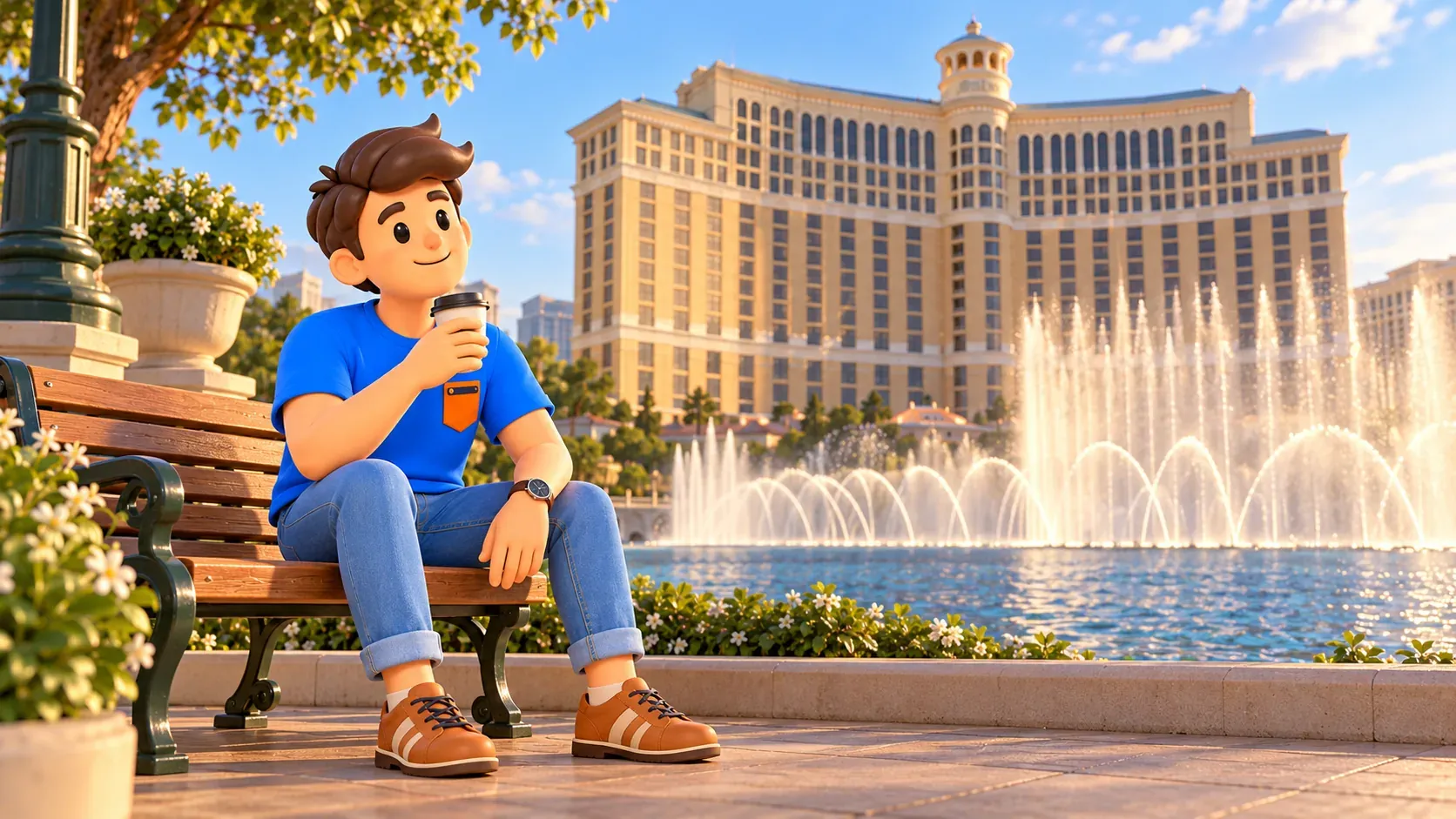
Head outside to the lake for the fountains. Water, music and light combine into a short performance that makes a satisfying end to the day. Watch the whole composition for a while before deciding whether you want another display. Viewing is free, though the schedule can change and weather can cause cancellations.
The sequence is covered in more detail in our one-day Las Vegas itinerary. For this two-day trip, the important point is to keep the first evening free of unnecessary transfers. Decide how you will return to your accommodation and avoid attaching a distant, tightly timed dinner to an otherwise relaxed finish.
Day two: begin with Downtown's history
Start the second day with a separate journey to Downtown. Give this area its own rhythm instead of adding another long Strip walk beforehand. The Mob Museum can provide the main visit, followed by lunch and an easier outdoor route. This arrangement lets you use your attention on a subject before returning to lighter sightseeing.
The museum building is part of the story. Completed in 1933, the former federal courthouse and United States Post Office preserves a historic setting as well as housing exhibitions. Its courtroom was used for a Kefauver Committee hearing on organised crime. The place therefore connects the history of criminal organisations and law enforcement with a genuine civic building.

Allow roughly two to three hours, depending on how closely you want to engage with the material. That is a planning estimate, not a promised visit length. Some visitors prefer documents and detailed accounts; others concentrate on a few themes. Leave breathing space afterwards rather than placing another fixed reservation immediately behind the museum.
Check what your chosen ticket includes. The general exhibition and additional activities can have different conditions, and individual spaces may be used temporarily for events. For a family visit, consider the subject matter first. Organised crime history will not suit every child and should not be treated as a universal family attraction.
After lunch: Fremont East and Container Park
Continue towards the eastern part of Downtown. The setting changes from a single substantial historic building to smaller spaces, urban details and individual artworks. You do not need to cover the whole centre. Choose a coherent walk that leaves time and energy for Fremont Street later, rather than turning the afternoon into a search for every interesting pin.
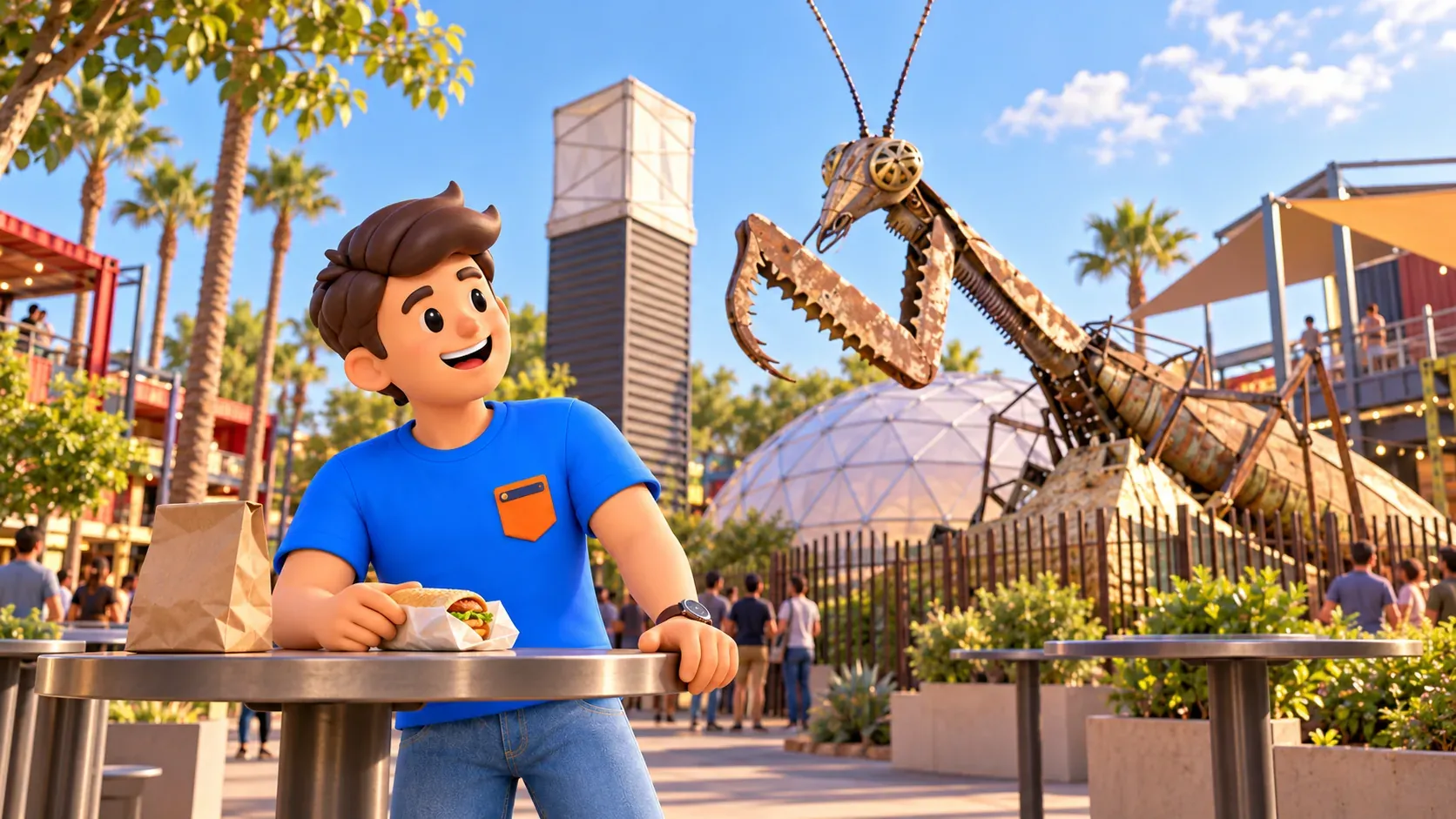
At Downtown Container Park, the use of shipping containers is part of how the public space is organised. The large Mantis sculpture near the entrance gives the place a memorable landmark. Take a short pause to look at its structure and the relationship between the artwork and its surroundings. The change from the Strip's monumental settings is part of the appeal.
A particular performance or sculpture effect should be treated as an extra only when confirmed for your date. The architecture, a short walk and a rest can be enough. An events programme may add to the visit, but the whole afternoon should not depend on a moment that has not been checked.
Container Park has age rules. Its visitor page, checked on October 25, 2026, states that after 10 pm access is for adults aged 21 and over. With children, keep this stop to the daytime or early evening and check the current conditions before setting out. Nearby public walking areas do not imply that every separate venue follows the same admission rules.
When people on the same trip have different interests, RoadMe offers a more convenient way to work out a personal plan around the themes and pace you choose. The app helps turn two days into an itinerary that suits your group while keeping room for rest and time together.
An evening on Fremont Street
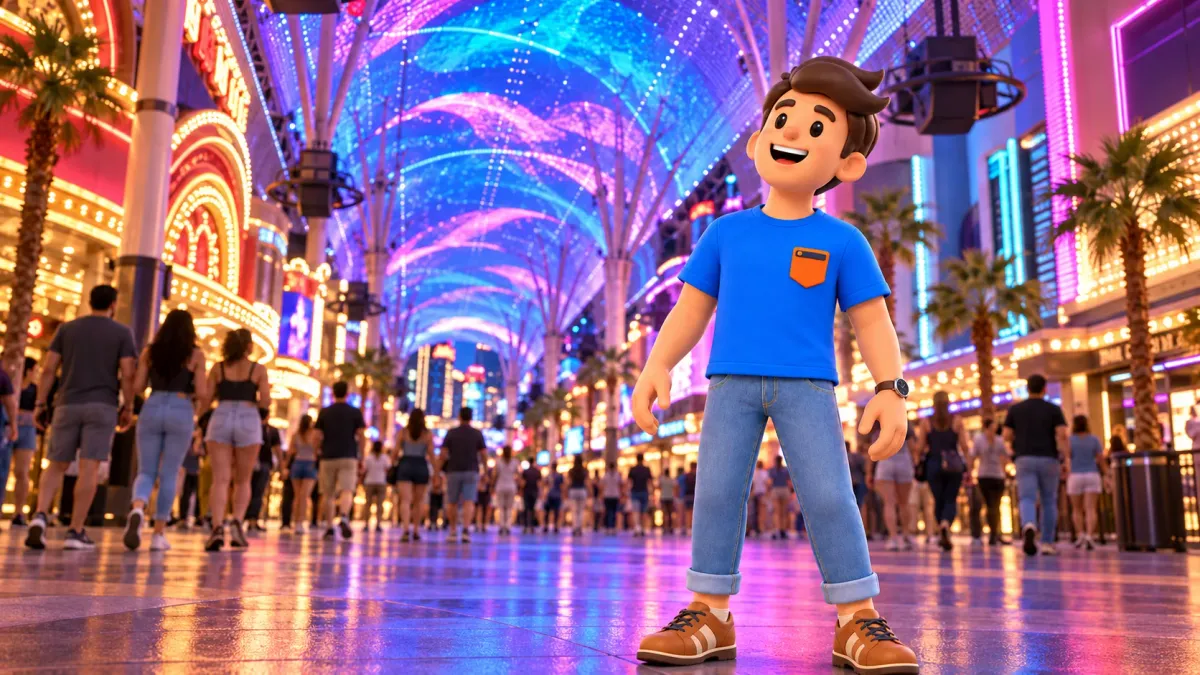
Walk towards the pedestrian section of Fremont Street in the evening. Look up at the Viva Vision canopy and sideways at signs and façades. Vegas Vic is one of the recognisable reference points. A short stretch brings together several ways of attracting attention: historic graphic design, illuminated surfaces and the contemporary spectacle above the street.
Check the current light-show schedule before going. Ordinary Viva Vision viewing is one of Downtown's free experiences, while special events can alter normal access and movement. An old video does not establish what will happen on your visit. Give the evening a flexible start and enough space to stop when something holds your attention.
If an additional attraction appeals, investigate SlotZilla separately and check the operator's tickets and restrictions. The walk itself does not depend on it. For a first visit, strolling the street, watching a performance and choosing somewhere for dinner can be plenty. Sound, crowds and bright light can also be tiring, so keep the option of leaving earlier.
Keep the two days manageable
Fix only the commitments that genuinely need a time: the museum, your chosen extra and any evening tickets already bought. Add lunch, rest and transport next. Keep the remaining stops flexible. A useful plan shows what can be shortened, not just what else could be added.
Distinguish the cost of the trip from the price of one admission. Free walking still leaves meals and transfers to pay for, while optional attractions have their own conditions. Check the exact product and date rather than an old price range in a general guide. You can keep the core days modest and spend selectively on something with personal value.
Agree on the main experience each person wants to remember. Architecture, a museum subject, a view and an unhurried meal can all fit, provided every suggestion does not become a compulsory commitment. A couple of shared priorities give the group a clearer day than a long list assembled without deciding what matters most.
If the museum does not suit your interests or time, give more attention to the streets and make day two shorter. If weather affects the walk, reduce outdoor sections around one substantial visit. Two days are enough to experience contrasting sides of Las Vegas while leaving a reason to return. Preserve that contrast rather than trying to collect every attraction.


