
One Day in Las Vegas: A Relaxed Central Strip Itinerary
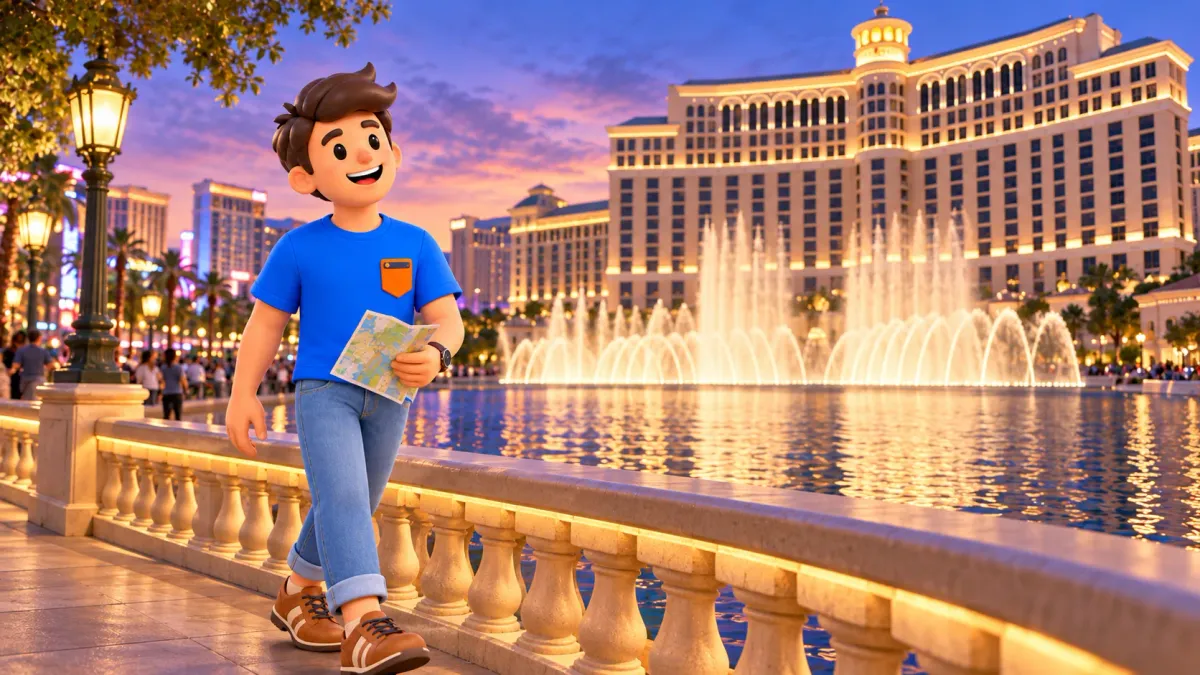
For one full day in Las Vegas, keep your sightseeing on the central Strip. Start at The Venetian, continue through the LINQ area, look at the Paris Las Vegas landmarks and finish at Bellagio. This gives you contrasting interiors, familiar skyline images and an evening fountain performance, with space for lunch and a proper rest. Downtown deserves a separate outing rather than a hurried transfer in the middle of this day.
The plan suits a first visit and works around walking and looking, with one ticketed experience if you want it. It is a suggested framework, not a minute-by-minute promise. Resort entrances, pedestrian crossings and the time spent finding your way through large buildings all matter. A short-looking gap on the map can take longer than expected on the ground.
Give the day a clear shape
Begin in the late morning at The Venetian and generally work south. Give the Grand Canal Shoppes your first substantial block of time, pause around the LINQ for lunch, then continue towards Paris Las Vegas. Reach Bellagio later in the day so its interior spaces lead naturally into the evening outside. The route has a clear finish rather than an open-ended list of places to collect.
For a more convenient way to organise the day, try RoadMe: the app works out a personal itinerary around your interests, pace and available time. It turns separate sightseeing ideas into a plan shaped for your trip, saving you the work of arranging every stop yourself.
Before setting off, choose what kind of extra experience matters most. Would you rather see the city from above, take a gondola ride or spend longer looking at architecture? One main ticketed addition is easier to fit into this day than several timed reservations. If you already have an evening show booked, work backwards from its admission time and shorten the sightseeing accordingly.
- Late morning: The Venetian and Grand Canal Shoppes, roughly one and a half to two hours.
- Middle of the day: the LINQ area, lunch and a rest, another one and a half to two hours.
- Afternoon: continue towards Paris Las Vegas for an exterior look.
- Evening: Bellagio's lobby, the Conservatory when accessible, and the fountains.
These are planning allowances with room for stops, not measured journey times. You do not need to fill every gap. Some of the Strip's character becomes apparent when you have time to look between attractions: the scale of a frontage, a sudden change of lighting or the way a familiar landmark is framed by an unfamiliar setting.
Late morning at The Venetian
The Venetian introduces one of Las Vegas's defining ideas before you step inside. Italian architectural references, water and carefully arranged views create an entire setting around a resort. Start by looking at the composition as a whole. Then choose a few details rather than trying to identify every reference or photograph every corner. The intention of the place is easier to appreciate when you slow down.
Continue to the Grand Canal Shoppes on level two. The canal runs through a shopping environment with bridges, façades and a painted sky overhead. It is a deliberately constructed scene rather than a historic neighbourhood. Notice how the ceiling and lighting affect your sense of the hour outside, and how the water gives the walk a different rhythm from an ordinary shopping corridor.
You can enjoy this setting without making shopping the purpose of your visit. Watch a boat pass a bridge, notice reflections and pick out one architectural detail that stays with you. Put the camera away for part of the walk. The experience becomes more memorable when you have looked directly at the surroundings as well as recorded them.
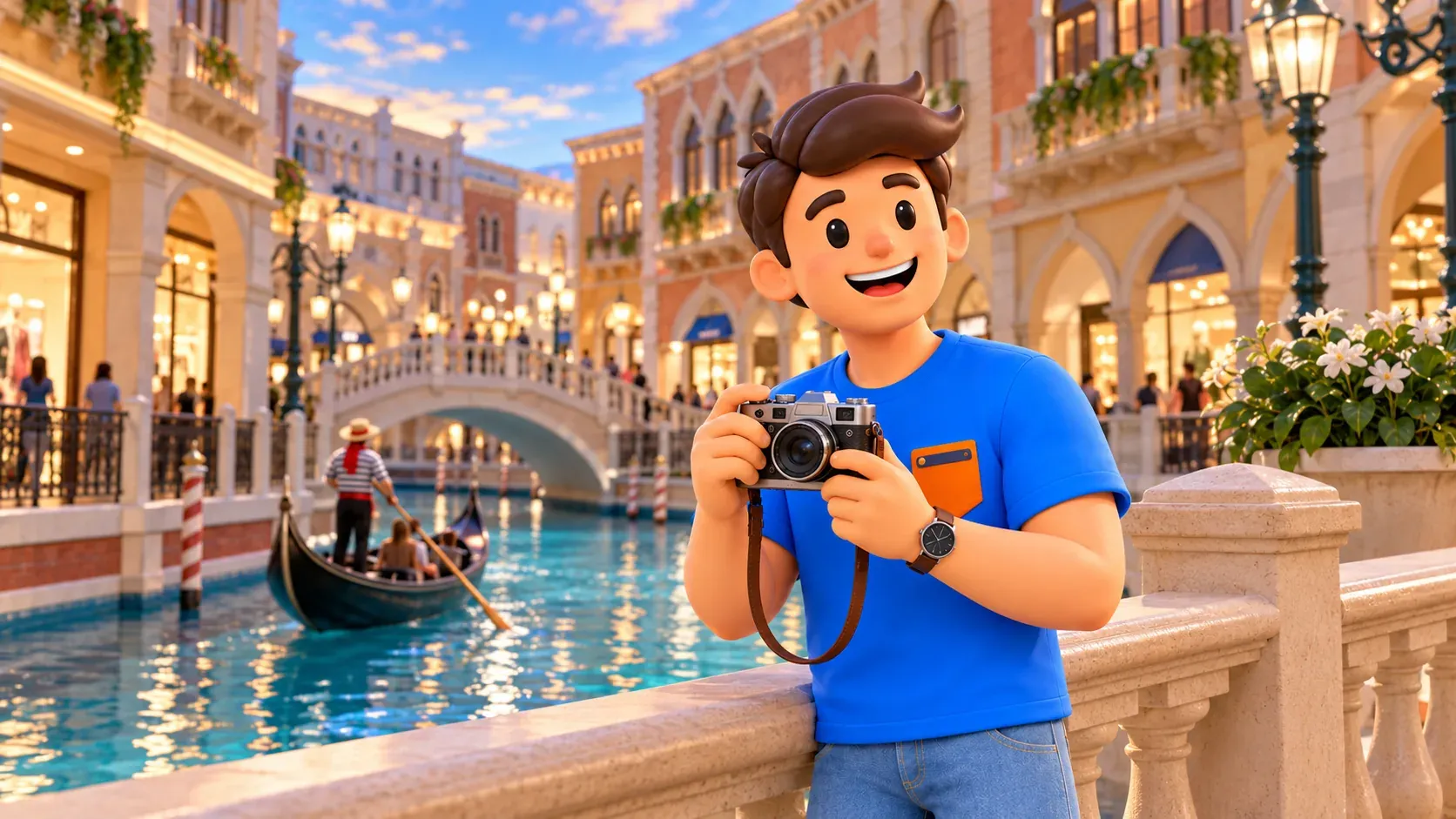
A gondola ride is optional. If it is your chosen addition, allow for the whole visit rather than just the time in the boat. Check which indoor or outdoor experience is being sold for your date, what the ticket includes and how admission works. An indoor canal does not by itself guarantee an available departure or a particular outdoor operation.
Before leaving the Shoppes, check the route back to the boulevard. Following the crowd through a large complex can send you towards an exit that does not help the next part of your walk. This is also a sensible point to refill or buy water, assess the conditions outside and decide how much walking you want before lunch.
The LINQ area and a real lunch break
Continue towards the LINQ area, allowing time for designated crossings and the approach to each entrance. Neighbouring resorts may appear almost attached when viewed along the road, but their accessible doors can be some distance apart. Check which side of the boulevard you need next. Treat pedestrian signs and the available route as more useful than a straight line drawn between two map pins.
The LINQ Promenade provides a change of scale and a useful place to pause. Instead of looking at one long resort frontage, you move through a succession of smaller spaces. Make lunch part of the plan rather than something to squeeze into a queue. Sitting down and eating without watching the clock can be what makes the evening enjoyable instead of tiring.
If a skyline view is your priority, consider the High Roller here. Allow for reaching it, checking or buying a ticket, waiting and completing the experience. In this itinerary, that is your main ticketed addition, replacing another large optional stop later. Nearby locations do not automatically make several attractions easy to combine.
The quieter alternative is to use the time for a longer rest and save the viewpoint for another visit. Travelling with children makes that flexibility particularly useful, but adults benefit too. Judge the next part of the day by the energy and interest you have now, rather than by the number of stops that seemed appealing while planning at home.
Afternoon around Paris Las Vegas
Paris Las Vegas is the next major visual landmark. The Eiffel Tower and Arc de Triomphe references communicate their idea immediately, even if you know little about the resort. Look at how familiar forms behave beside a broad boulevard, hotel towers and advertising. This contrast is part of the city's architectural experience, rather than a reason to compare every detail with the originals.
An exterior visit is enough for a first introduction. Find a place where the tower reads as a whole, then look more closely at the neighbouring frontage. Keep photographs compatible with the movement of other pedestrians. There is no need to stop in a narrow passage or attempt an undesignated crossing for a slightly different angle.
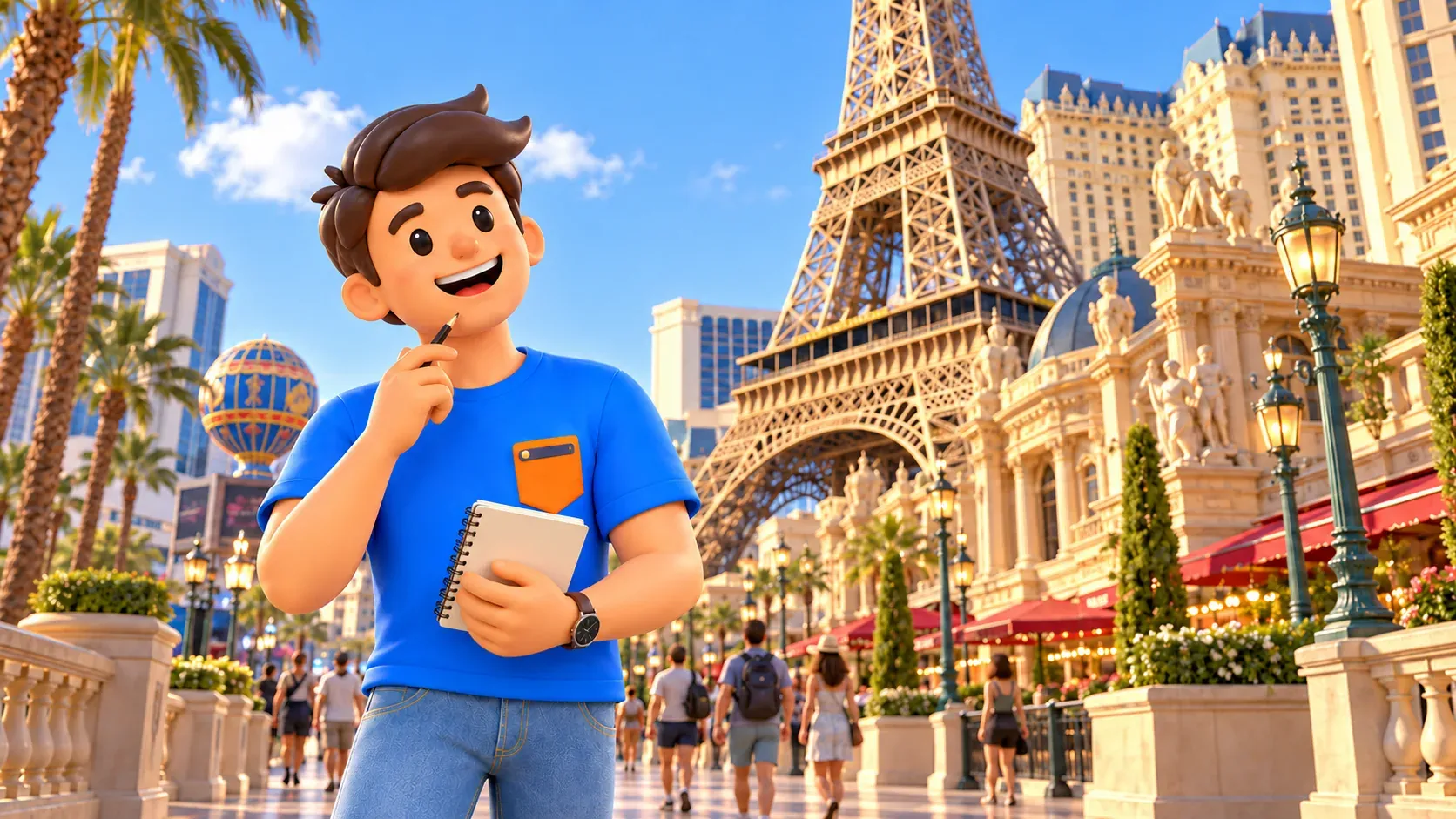
If you chose the Eiffel Tower viewing deck as your main extra, set aside a separate visit block and check its current opening arrangements. It takes the place of the High Roller or gondola ride in this plan. Standing near the landmark does not mean immediate admission is available, and an exterior look is a complete alternative rather than a failed visit.
Afterwards, use an available designated crossing towards Bellagio. Allow for approaches, waiting and any pedestrian arrangements in force. Major events can change how you move through this area. The landmark across the road is an orientation aid, but current navigation and signs determine the actual way to reach it.
Bellagio's interior spaces before the evening outside
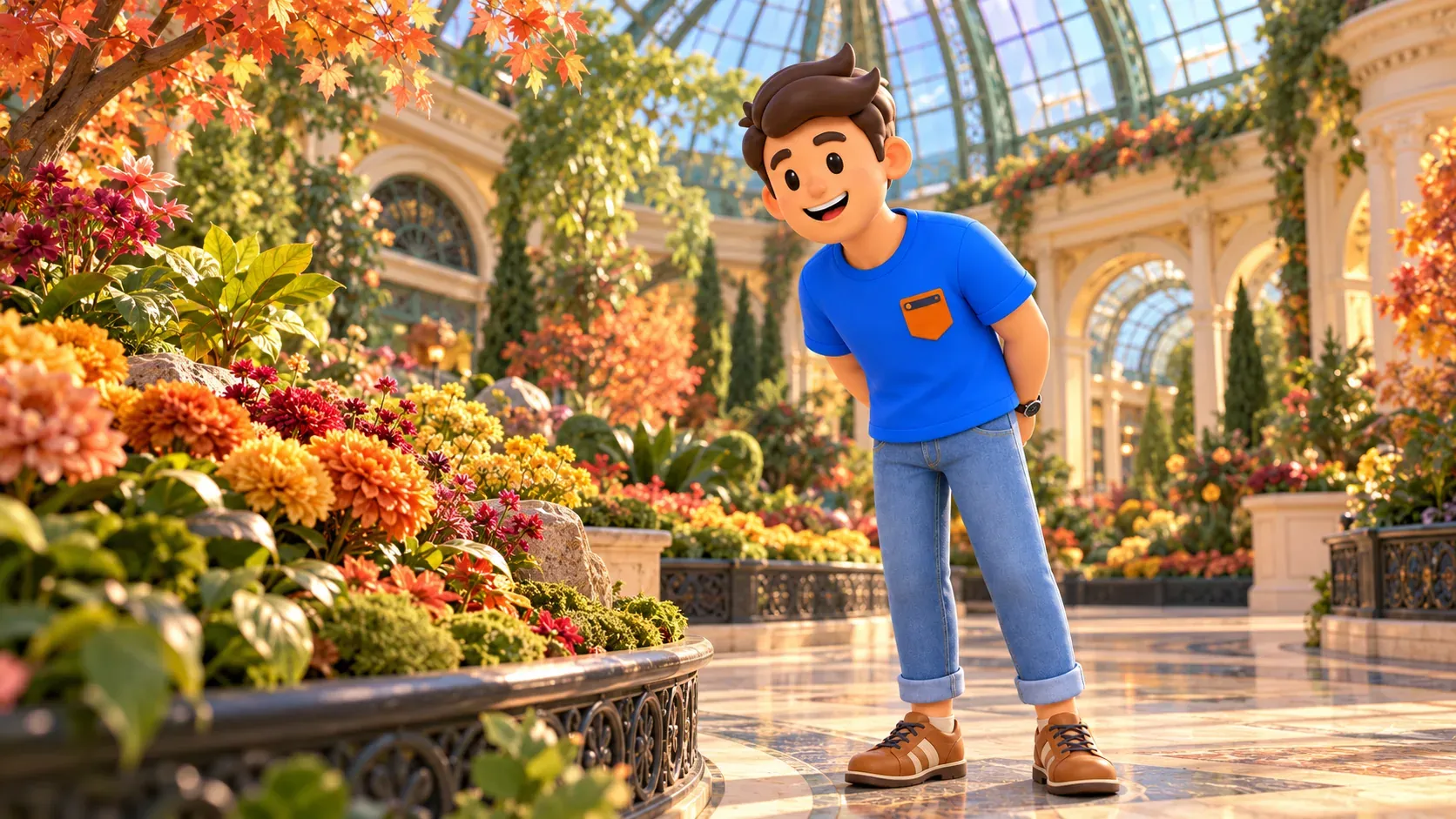
At Bellagio, change the pace again. Pause in the lobby beneath Fiori di Como, then continue towards the Conservatory and Botanical Gardens. After the large outdoor scenes of the boulevard, this part of the visit offers a closer way of looking: glass, colour, individual forms and the relationship between materials and light.
The Conservatory uses changing seasonal installations. Look beyond the largest decorative centrepieces to the planting combinations, sightlines and relationship between living material and theatrical design. You do not have to examine everything. Choose a few details and walk around the area that is open to visitors without treating it as another checklist.
The garden closes between installations. For example, its published 2026 calendar lists a changeover closure from November 8 to 13. If your date falls during a changeover, keep the lobby visit and allow a longer break before the fountains. The day still works. Photographs from another season should not become a promise about the display you will encounter.
If your ideal trip calls for more art, viewpoints or relaxed walks, RoadMe is a more convenient place to build the whole personal plan: the app works out an itinerary around your interests. You can use the day more purposefully by deciding what deserves your time before setting out.
Finish with the Bellagio fountains
After the interiors, head towards the lake in front of Bellagio. The space between the pavement and the hotel allows the performance to read as a complete scene, with changing water patterns, light and musical rhythm. Watch at least part of the display without looking through your phone so you can follow the movement across the whole composition.
The fountains are free to watch. In the schedule checked on October 25, 2026, weekday displays run every half hour from 3 pm to 7.30 pm, then every 15 minutes from 8 pm to midnight. On weekends and holidays, the daytime programme begins at noon. The timetable can change, and outdoor displays may be cancelled because of weather.
Those intervals help you choose when to arrive; they do not guarantee a particular performance. If you come between shows, leave room for waiting. You do not need to stay for several consecutive displays. One attentive viewing can make a more satisfying end to the day than trying to see every possible variation.
Plan dinner after the fountains or with a generous gap beforehand. A fixed restaurant booking does not combine well with waiting for a preferred viewing position, watching a performance and then finding your way quickly through a large resort. Decide which commitment takes priority so the end of the day feels settled rather than rushed.
Prepare the essentials and keep a shorter version
The core walk does not require a ticket at every stop. Your spending depends mainly on meals, transport and whichever optional experience you choose. Check actual prices for the date and product you intend to book. A viewing deck, gondola ride or special event has different conditions from simply looking at a building outside. Avoid building a budget around an old price copied into a general guide.
Before leaving, check the garden calendar, admission arrangements for your chosen extra, the weather and your return journey. Keep enough phone battery for evening navigation. Know where the sightseeing ends and how you will reach your accommodation afterwards, rather than adding another long search for transport once you are tired.
If the day becomes too hot or tiring, reduce the outdoor stops and drop the extra viewpoint. If you start late, keep The Venetian, a proper break and Bellagio. If the fountain display is cancelled, finish with the interior visit and dinner. A successful first day is one you can enjoy as a connected experience, with enough attention left for the final stop.


