
Lamma in a day: Sok Kwu Wan, Tin Hau and fishing heritage
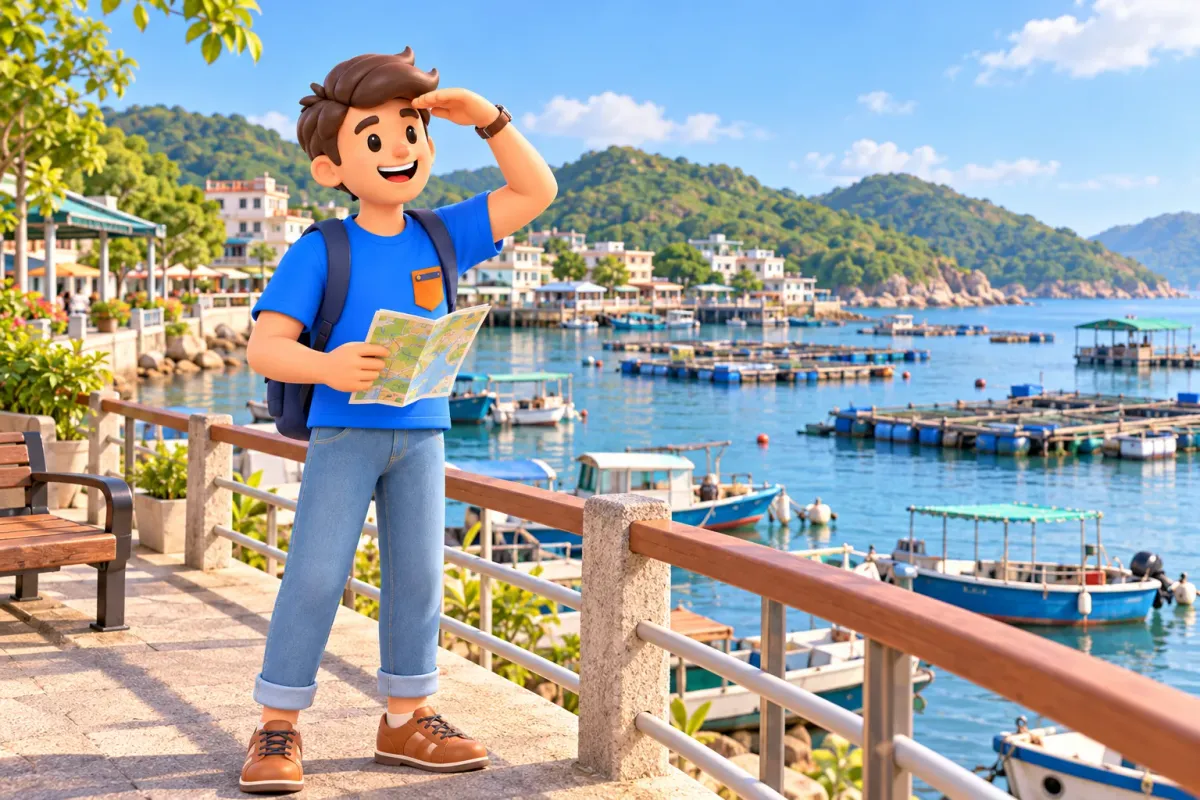
Lamma is often presented as an island for walking between two villages. You can build a different day around Sok Kwu Wan: arrive beside the fish-farming bay, visit Tin Hau Temple and explore fishing culture at the floating Lamma Fisherfolk's Village. The sea then becomes the subject of the outing rather than simply the attractive background to a long walk.
The relaxed core allows roughly three to four hours around the bay, with food and visits when available. This is a planning estimate excluding city travel, ferries and waiting. Continuing towards Yung Shue Wan creates a separate, longer version of the day. Choose it deliberately, understanding the additional effort and the different departure point for your return.
Sok Kwu Wan without a compulsory cross-island walk
The short version is arrival in Sok Kwu Wan, time looking over the bay, Tin Hau Temple, the Fisherfolk's Village if a suitable visit is available, then food and a return using the same ferry connection. You can swap temple and platform around the latter's programme and local transfer. They reveal one maritime way of life through two perspectives: belief and work.
RoadMe makes it much easier to work out a complete personal trip around your interests, available time and comfortable pace. If the bay's history interests you more than a long crossing on foot, use the app to shape your holiday around what matters to you.
This format suits a gentler day after intensive city sightseeing. Distance covered need not be the main achievement. You can understand something of the fish farms, connect a small temple with local life and eat beside the water. A compact route does not, however, establish that every boarding point and waterfront section suits every mobility requirement. Ask about individual access conditions where relevant.
Choose the longer version when walking itself is part of the aim. After the main stops, you can continue towards Yung Shue Wan and leave from there, changing both the effort and the transport plan. Do not add the crossing at the end of lunch simply to please the most active companion. The decision should account for the whole group.
For families, separate the wishes before travelling: how much time on the water feels comfortable, whether a particular village activity matters and whether you want an extended walk. One meaningful visit can be more memorable than a long route between pretty bays. Finishing with energy left is a real advantage of the compact version.
The village ferry and the raft transfer are separate journeys
HKKF runs the Central–Sok Kwu Wan ferry from Pier 4. Make sure you select Sok Kwu Wan rather than Yung Shue Wan: both are on Lamma, but they serve different parts of the island. Arriving at the right village avoids beginning this short visit with a long walk to its main stops.
Check current departures for your date and a suitable return. The operator states that its published times are pier gate closing times, so do not aim to reach the gate at the exact minute shown. Allow for reaching the terminal and boarding. If you have an important evening appointment, finish the island visit earlier rather than depending on the tightest possible connection.
On arrival, arrange the Fisherfolk's Village visit at its reception near the pier. The shore address is the place where visits are organised; the cultural site itself occupies floating rafts in the bay. A separate local boat transfer takes visitors out. Do not look for a conventional museum entrance at the end of the pedestrian street or assume you can walk there along the shore.
Clarify the available ticket, programme and return from the platform. The main ferry between Central and Lamma is not included merely because a village ticket mentions a local shuttle. Transport, activities and food can belong to different offers. Understand your chosen option before deciding how much time remains for the temple and the walk.
Likewise, do not substitute a restaurant boat for a public ferry without checking its conditions. A specialist service can have its own customer requirements, timetable and departure point. For a simple independent outing, a clear ordinary ferry plan is useful. The bay becomes easier to enjoy once you know how you will leave it.
Tin Hau Temple: the place is older than its present walls
Sok Kwu Wan's Tin Hau Temple is dedicated to the protector of seafarers. Its surroundings make the connection tangible: bay, boats and fish farms lie close to the village. Think of the stop as part of a community whose life faced the water, rather than an isolated religious attraction. That relationship is understandable without a detailed inventory of every object inside.
The building carries an important qualification. It was damaged by fire in 2004 and restored through donations. Do not assume that every material visible today survives from its early history. The age of a sacred place, its historical objects and its current building fabric are different questions. Here, that distinction makes continuity more interesting than a single founding date.
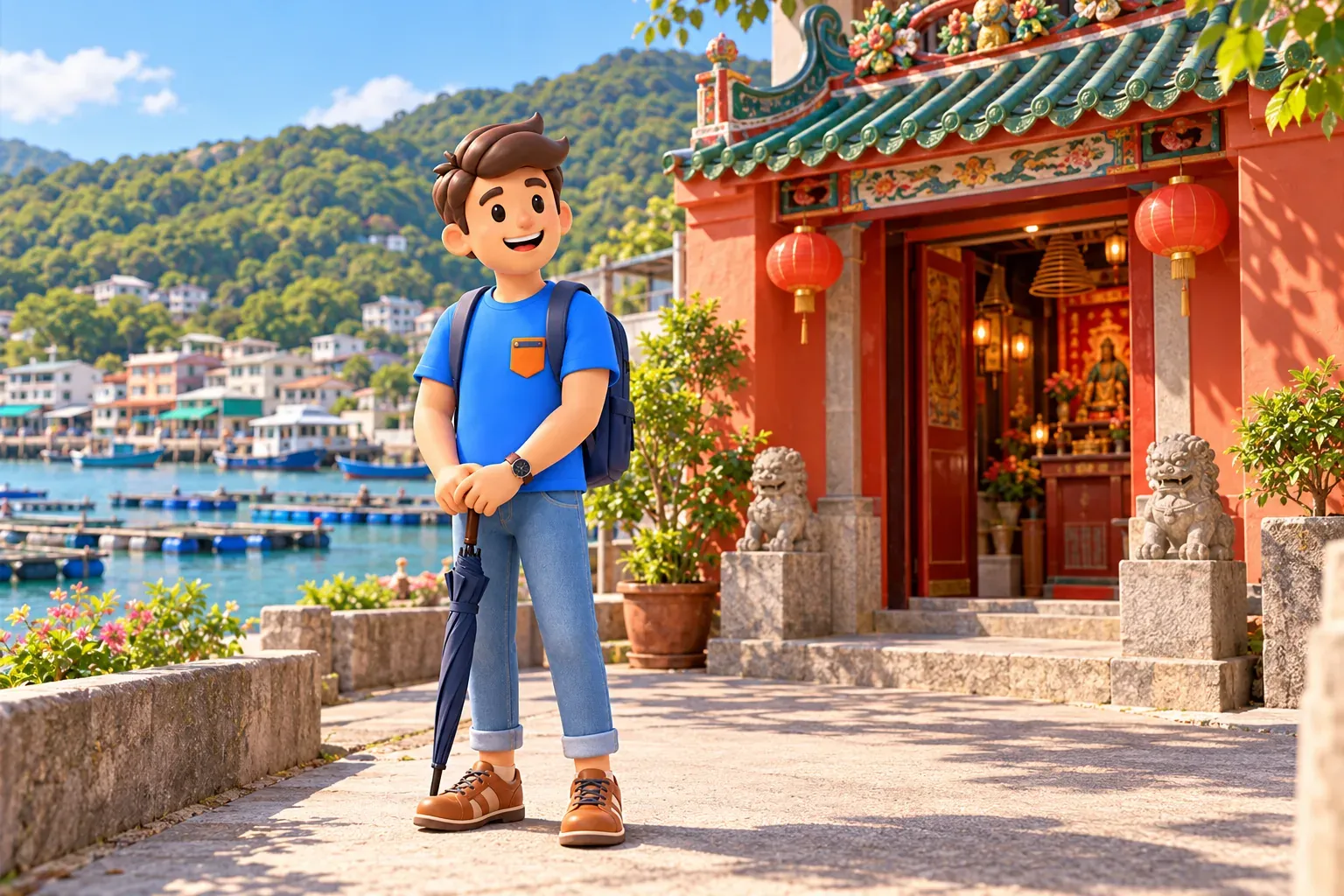
Begin outside and notice the relationship with the street. How does the atmosphere change at the entrance, and how close is worship to ordinary movement through the village? Those observations make a useful short stop even if the interior is unavailable. Access to the exterior at different times is not a promise of an interior open through the night.
Inside, follow current rules and give worshippers space. A photograph should not interrupt someone who has come for religious reasons. There is no need to imitate a ritual or find an obligatory action for good travel luck. Understanding why the place matters to a maritime community is enough for this visit.
Afterwards, look at the bay again. The boats and platforms may now seem less like geometry on water and more like parts of a shared way of life. That small change of perspective is why alternating landscape observation with a historical stop works well. A complete survey of Hong Kong's religions is not needed.
The Fisherfolk's Village: water becomes part of the exhibition
Lamma Fisherfolk's Village differs from an ordinary museum room. The floating setting, fishing objects and neighbouring operations connect the story with the physical organisation of the bay. Maritime history is not separated from water by an urban building. The transfer to the platform is therefore part of the visit's character, not simply an incidental transport detail.
The operator lists Wednesday closure except on public holidays. Check current access, the programme and the conditions of the ticket you want before travelling. Do not carry an old guidebook's timetable across to every date or promise every visitor the same activities. Admission, fishing, workshops and other experiences can have different terms and availability.
A useful question is what problems fishing equipment and raft arrangements solved. What had to be stored, secured, moved or protected from water? Even a familiar rope becomes interesting when it is understood as a response to a practical need. The visit need not become a test of maritime vocabulary to explain the connection between tools and a working environment.
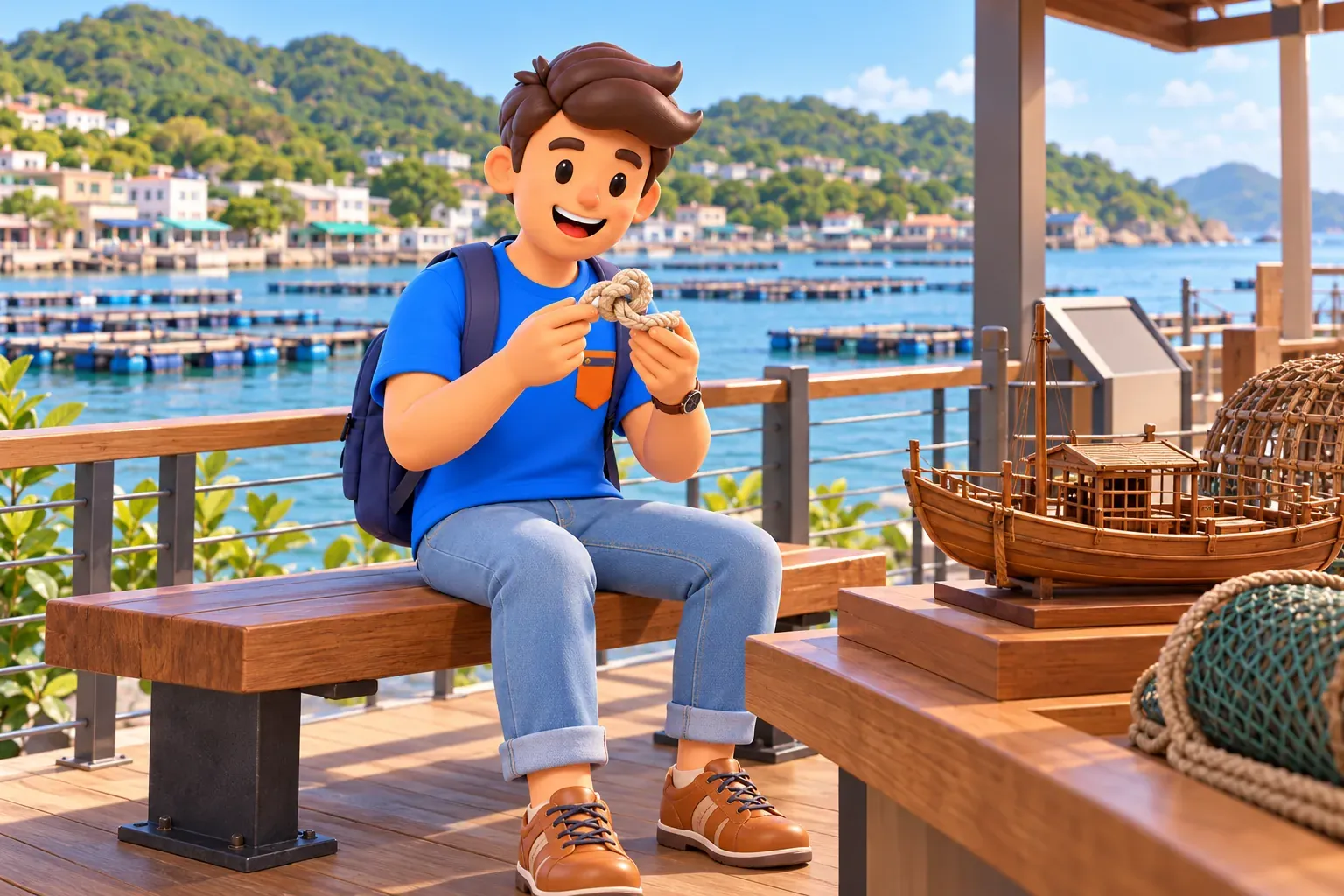
If you want an activity, ask about that specific one: whether it runs on your date, what it includes, how long it takes and whether payment is separate. Participation in one experience does not automatically unlock all others. For this itinerary, the cultural encounter is sufficient; no particular entertainment is a requirement for a successful day.
Follow staff instructions on the platform. For children, older visitors and people with reduced mobility, clarify boarding, transfers and passageways in advance. Calm-looking water does not prove universal accessibility. If the crossing or floating setting is uncomfortable, the shore and temple can remain the basis of a shorter outing. Adjusting the plan is better than forcing an unsuitable visit.
Do not use working gear or displayed objects as portrait props without permission. The difference between a demonstration item and a historical exhibit may not be obvious. Watching how something is explained is more useful than rearranging it for a photograph. Respect for the working environment keeps the cultural encounter meaningful.
Leave a little time between programme elements to look at the raft grids and water. This is another Hong Kong, where the financial-city image exists alongside maritime livelihoods visible within a small bay. There is no need to romanticise work or pretend the island is frozen in the past. The interest lies in old themes and present life existing together.
Lunch and walking: choose the length that suits you
Allow for food after the cultural stops. Sok Kwu Wan is known for waterside dining, but seafood is not obligatory. Read the menu, clarify how chosen dishes are priced and ask about ingredients if you have dietary restrictions. Do not build expectations around a universally cheap lunch: the bill depends on the order, not simply the attractiveness of the table's view.
A complete personal plan in RoadMe is more convenient than scattered tips when you want to combine maritime history, favourite activities and manageable effort. Use the app to work out the trip around your group's interests while keeping room for an unhurried meal and rest.
For the short version, a little more time along an accessible part of the bay and a return to your pier are enough after lunch. That is not an incomplete ending: the two main stops have already given the day substance. Pause, compare favourite details and decide whether more movement is actually what you want.
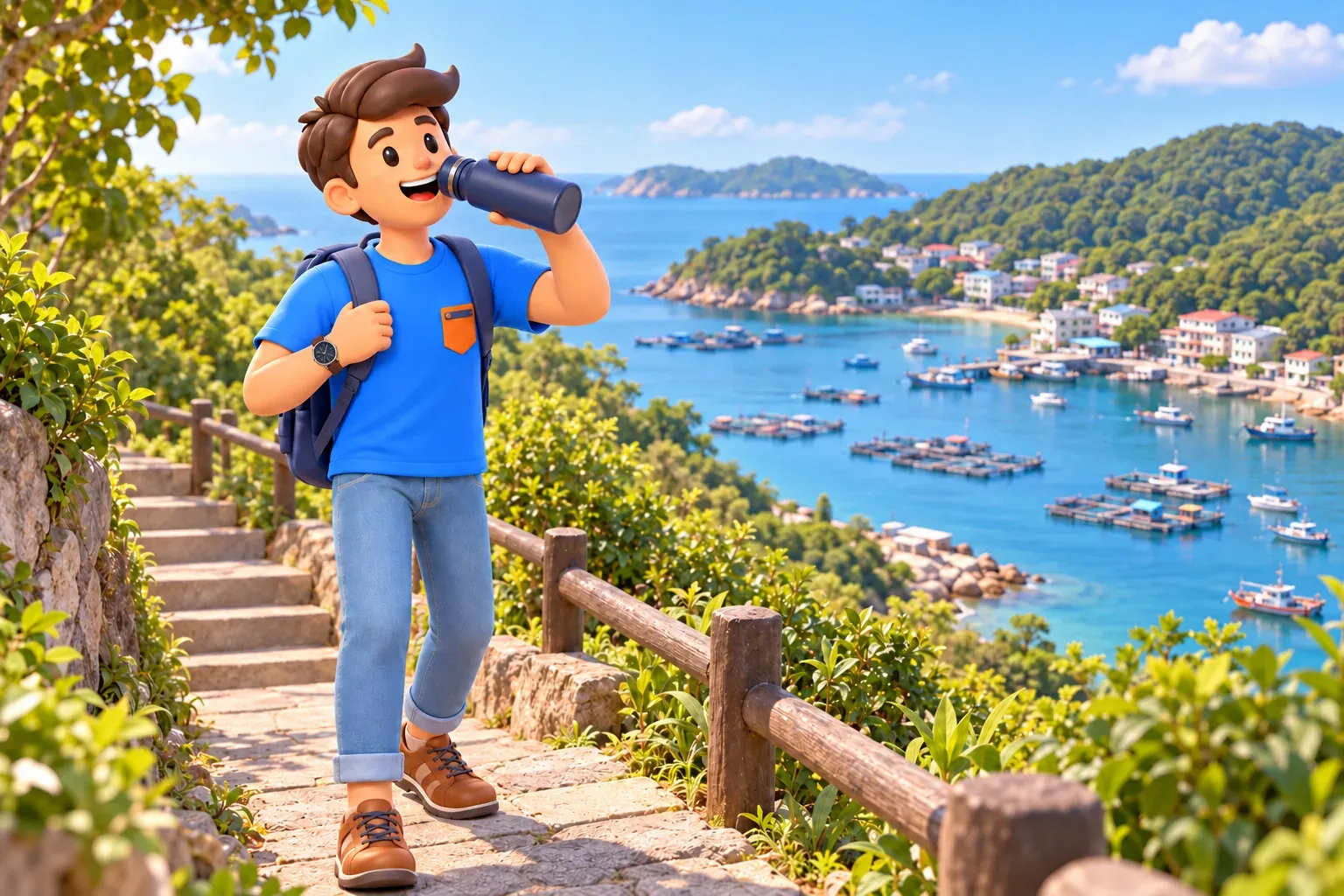
If you chose the route towards Yung Shue Wan, treat it as a separate walking stage with ascents and descents, not an uninterrupted level promenade. Bring water, appropriate shoes and enough daylight, and choose suitable weather. Pace varies with heat, stops and fitness. A universal cross-island walking time cannot simply be added to a short bay visit as though it fitted everybody.
Before starting, check your return specifically from Yung Shue Wan and the available path. Decide where the programme ends; beaches and other branches remain optional choices. Swimming, if planned at all, needs its own conditions and time. Several names appearing on one island do not make every detour a sensible part of the same day.
Finish without a race for the ferry
The short version returns from Sok Kwu Wan; the longer one uses the terminal you selected in the other village. Keep the actual destination and sailing available. Lamma is too general a name for solving your transport at the end of the day. Arrive with a margin, remembering that the listed departure refers to gate closure.
Before travelling, agree on three decisions: which Fisherfolk's Village visit suits you, whether you stay around the bay and where you leave from. Then you can concentrate on the place. For an even more compact island episode, compare our Peng Chau walk with a temple and former factory. On Lamma, the connecting theme is water and the lives organised around it.


