
Lambeth in Three Hours: Palace, Garden Museum and Thames

For a three-hour Lambeth outing, begin outside Lambeth Palace, visit a selected part of the Garden Museum, pause among the museum’s planting and finish with a Thames-side walk towards Westminster Bridge. The experience combines a Tudor gateway, the history of gardening and a familiar London skyline seen from the southern bank, within one compact area.
The palace is an exterior stop in this plan. Regular guided palace tours are currently suspended, and the Garden Museum’s tower is closed for maintenance at the time of checking. The main indoor experience is therefore the museum’s paid collection. Travel to the start, the journey after the finish and a full restaurant meal need their own time beyond the three hours.
Give the outing a clear beginning and finish
Start on the public pavement by Morton’s Tower, the palace gatehouse beside the Garden Museum. After the museum and its garden, use public crossings towards the eastern end of Lambeth Bridge. Continue north on the southern riverside promenade, passing the St Thomas’ area, and finish at the southern end of Westminster Bridge. You remain on the same bank throughout.
Try RoadMe to develop a personal programme for your whole London trip around your interests, dates, budget and pace. In the app, it is much more convenient to work through a focused Lambeth outing, other visits, journeys and proper breaks as parts of one complete plan.
Allow twenty minutes for the palace exterior and nearby connection, sixty for selected museum galleries, twenty-five for the museum garden, twenty for a simple pause and thirty-five for the riverside connection and views. Keep another twenty minutes as reserve for admission and crossings. These are editorial planning estimates, with a three-hour total, rather than a measured walking track.
A late-morning start can leave the afternoon free, provided the museum’s actual calendar works for your date. Do the museum early enough to enjoy the selected hour and garden without watching closing time. If a longer exhibition visit matters more than the river, decide that before entering and make the outdoor finish shorter. The purpose is one rewarding outing with a manageable workload.
Read the palace through its red-brick gateway
Morton’s Tower is the formal entrance to Lambeth Palace. Cardinal John Morton built the red-brick Tudor gatehouse in 1490. Its large gateway, smaller pedestrian doorway and pale stone around windows make a useful first subject for looking. Stand on available public pavement, clear of entrances, and compare the heavy entrance with the more delicate window tracery above it.
Lambeth Palace remains the London home and working setting of the Archbishop of Canterbury. That continuing use helps explain why an impressive historic entrance does not function like an ordinary museum doorway. The current palace information says there is no regular guided-tour programme. Selected open days and special events have separate arrangements, and past advertised dates are not evidence of a future opening.
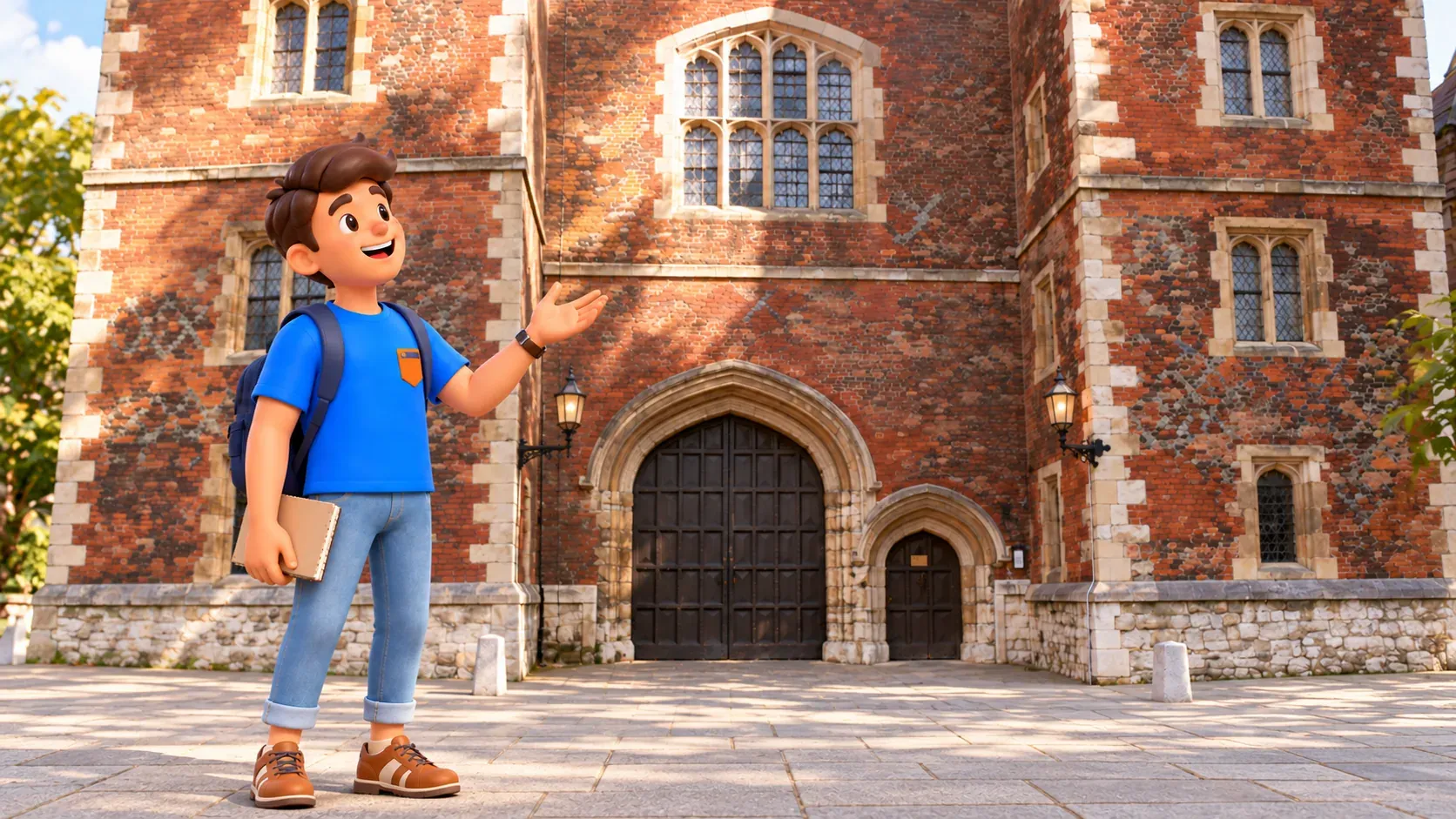
The exterior stop needs only a small amount of history. Notice how brick and stone share the façade, how the two doorways differ and how the entrance gives a formal character to the street. You can enjoy those details without seeing the state rooms. A separate palace event, if available on another date, deserves its own booking and time allowance.
Enter a former church to discover garden history
The neighbouring Garden Museum occupies the former church of St Mary-at-Lambeth. Rosemary and John Nicholson founded the museum in 1977 to rescue the abandoned church. The building therefore tells two stories together: the survival of a historic place and the decision to give gardening a home for its objects, art and ideas. Its stone tower remains a landmark from outside.
Use the selected hour to follow a subject that interests you. Garden design, tools or the nursery trade can each make a satisfying introduction to the collection. A practical object invites a different kind of attention from a landscape picture: look at its shape and read the explanation of its use. You do not need to identify every designer to leave with something specific to discuss.

The collection tells the story of British gardening from the sixteenth century onwards. It is an opportunity to think about gardens as designed and maintained places, involving decisions, skills and repeated work. Choose a few displays and allow time for them. A museum devoted to a relatively focused subject can still reward a longer visit than a quick circuit of its rooms.
The main collection and exhibitions require paid admission. The Nave is a separate free space, so being able to enter that central area does not mean that every gallery is free. Ask staff which areas your chosen visit covers. The museum currently says its medieval tower is closed for maintenance; this outing includes no climb or promised view from the roof.
Make the museum garden part of the story
After looking indoors, spend time with the planting. Dan Pearson designed the courtyard as a botanical cabinet of curiosities, responding to the plant-collecting travels of the Tradescants. The phrase becomes easier to understand when you compare foliage rather than searching for one spectacular flower. Leaves can vary in shape, scale, texture and the way they hold the light.
Let the change from displays to living planting slow the visit down. Choose one broad leaf and one finer cluster to look at from the path. You can compare their outlines in your own notebook later without touching, collecting or stepping into beds. The useful discovery is how a small composition can hold attention, even when the overall garden is much smaller than a royal park.
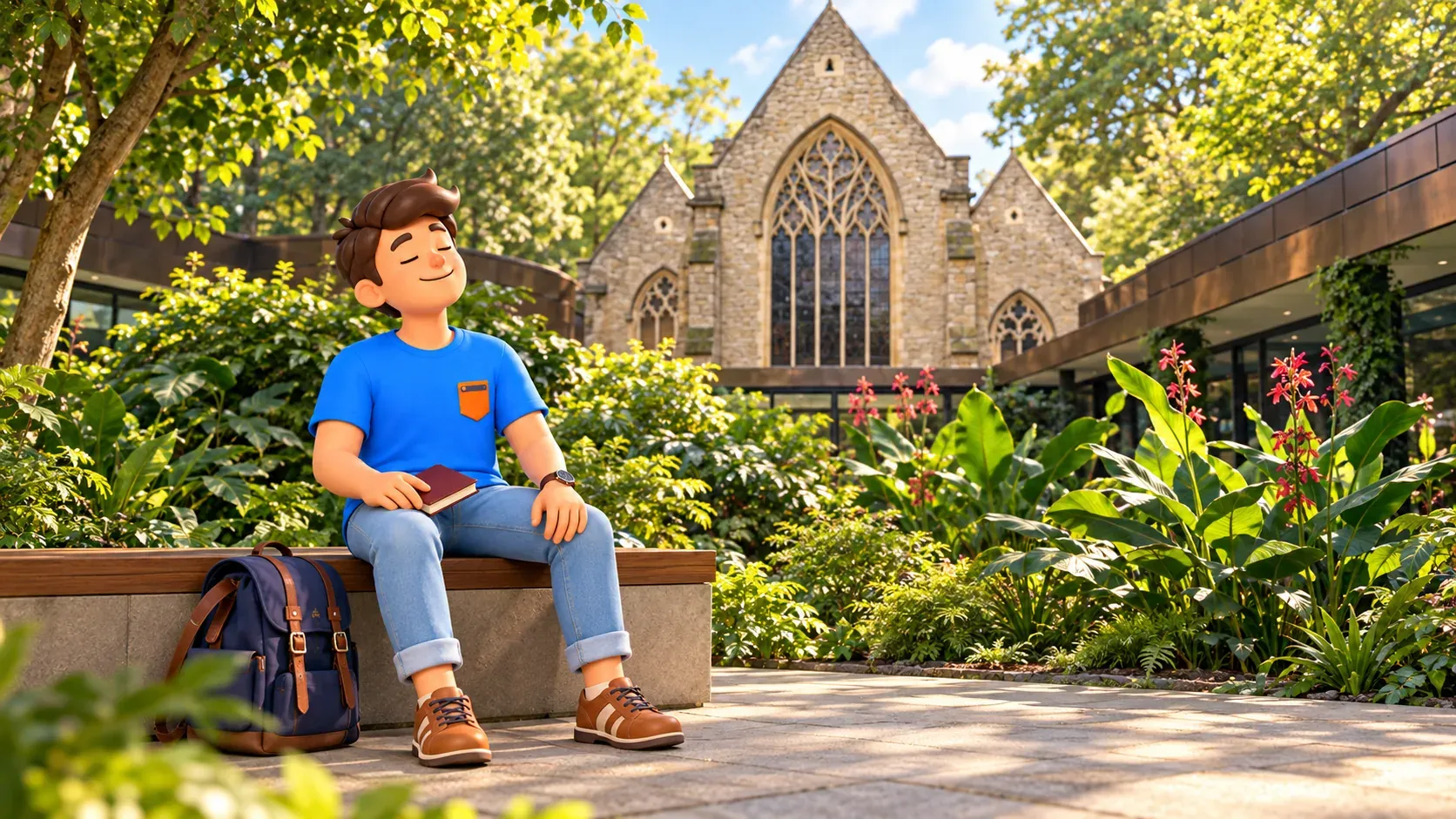
The museum says its gardens are freely accessible during museum opening hours. They are different from the gardens inside Lambeth Palace, whose public access is restricted to occasional special events. A photograph of the palace garden does not give you a route into it. Keep this outing around the museum’s available garden areas and check access at the entrance on your date.
Planting changes with the season and care of the garden. Come for arrangement and detail rather than a guaranteed display of the same flowers as a photograph. If an area is temporarily unavailable, preserve the pause elsewhere in an open part of the museum setting. There is no need to replace every inaccessible corner with another attraction across London.
Take a modest pause before the river
The twenty-minute pause is a small break, such as a simple drink when a suitable place is available. It does not assume a reserved table, instant service or a full meal at the Garden Café. Café arrangements can differ from museum hours. If you want a substantial lunch here, make it a deliberate addition and allow ordering, eating and possible waiting time.
Before leaving, check what you need for the outdoor section. A short visit inside does not make the riverfront sheltered. Comfortable shoes and suitable weather protection matter when you will be standing to look across the water. If the weather has become unpleasant, shorten the final walk. The museum and garden can already provide the main experience of the outing.
Reach the Thames and walk towards Westminster Bridge
Use the available public crossings to reach the riverside near the eastern end of Lambeth Bridge. The bridge is a visual marker for the beginning of this section; you do not cross it. Follow the public southern-bank promenade north towards Westminster Bridge, keeping to current signs where works or temporary barriers alter the connection. Hospital buildings are not shortcuts through the route.
The Palace of Westminster across the Thames provides a different scale from the gatehouse and courtyard. Look at the long river frontage as well as the towers. Moving a short distance along the bank changes how the building sits against the water. Allow a view to develop before taking another photograph, rather than turning every few steps into a new compulsory stop.
Along the St Thomas’ riverside area, keep to public paths and treat any memorial space with consideration. Stop where you leave room for other people to pass. A bench is useful when one is available, but the route does not depend on an empty seat. Finish at the southern end of Westminster Bridge; the onward journey or crossing to Westminster comes afterwards.
Choose the date before committing to the route
The museum’s main visiting page currently lists Tuesday to Friday from ten to four, and weekends from ten to five, with Mondays closed. Last admission is half an hour before closing, and events can bring early closures. Check the actual date before travelling. An old listing showing daily opening should not determine a day built around the paid museum visit.
Large bags and suitcases are not accepted, and storage for small belongings is not guaranteed. If you need level entry, the museum describes access through the Garden Café and a lift to the collection upstairs; confirm that the lift is working before visiting. Check transport access separately. Gravel, crossings and changing public routes mean that this article is not a guarantee of a completely step-free journey.
With RoadMe, it is easier to turn this compact route into a fully developed personal London trip with the right balance of museums, outdoor time and rest. Let the app work through the whole programme for your interests and dates, so the Lambeth visit fits naturally around everything else you want to enjoy.
For a longer day, our two-hour South Bank walk offers a separate continuation around the London Eye, Royal Festival Hall and National Theatre, with its own starting connection and time. For another date, the guide to smaller London museums can help you choose a different subject. Keep both as choices beyond this three-hour Lambeth outing, and finish while the day still feels comfortable.


