Small London Museums: Soane, Petrie or Leighton House?
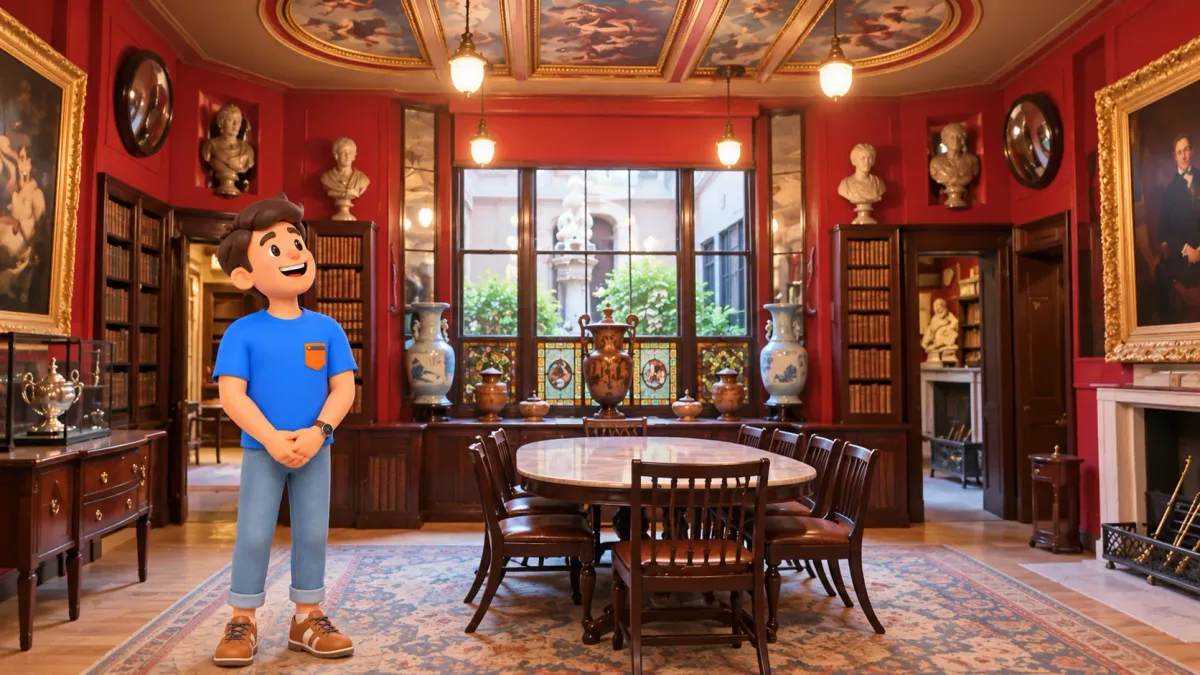
Choose Sir John Soane’s Museum for the world of an architect and collector, the Petrie Museum for Egyptian and Sudanese archaeology, or Leighton House for an artist’s home and studio. These smaller London museums can give a cultural outing a clear subject without turning it into another day spent crossing a vast collection. Pick one that matches your curiosity, then leave room around it.
Smaller does not automatically mean empty, free or easy to enter at any hour. Each has a different calendar and practical arrangements. Around ninety minutes inside is a useful starting estimate for a selected visit, with waiting, travel and food additional. The aim is a rewarding encounter with one place, rather than collecting three addresses in a single afternoon.
Choose a subject before choosing the museum
- Sir John Soane’s Museum: for rooms shaped by collecting, architectural fragments and the imagination of someone who designed and lived in the house.
- Petrie Museum: for objects that reveal past lives in the Nile Valley, within a university collection devoted to Egyptian and Sudanese archaeology.
- Leighton House: for the relationship between an artist’s working life, decorative taste and the home he created in west London.
Try RoadMe to develop a personal plan for the whole London trip around your interests, dates, budget and pace. Planning in the app makes it more convenient to balance a focused museum visit with neighbourhood walks, meals and time to rest.
Think about what you would like to discuss afterwards. Was it the use of light in a room, the purpose of an everyday object, or the way an artist arranged his surroundings? A specific interest makes choosing easier. If your group wants three different things, choose one shared priority today and give the other interests another day instead of promising three rushed visits.
Soane’s Museum: a collection that shapes the house
Sir John Soane’s Museum at 13 Lincoln’s Inn Fields is a particularly personal encounter with architecture. The house preserves the world of the architect who lived and worked here, kept as it was at his death in 1837. Antiquities, sculptures, furniture, paintings and architectural models create an unusually dense environment. The rooms themselves are part of what you have come to see.
Look at the relationship between a fragment and its setting. An object can catch light from above, appear through an opening or sit among a surprising number of neighbours. You do not need to identify every piece to appreciate that arrangement. Let one room hold your attention before moving on, while keeping the route clear for other visitors.
The density comes with visitor responsibilities. Do not touch objects, doors or surfaces, and ask staff if you need a seat instead of using historic furniture. Sketching is not currently permitted inside. Picture Room panels have scheduled openings; they are not something visitors open for themselves. Check the arrangements on arrival if that experience particularly interests you.
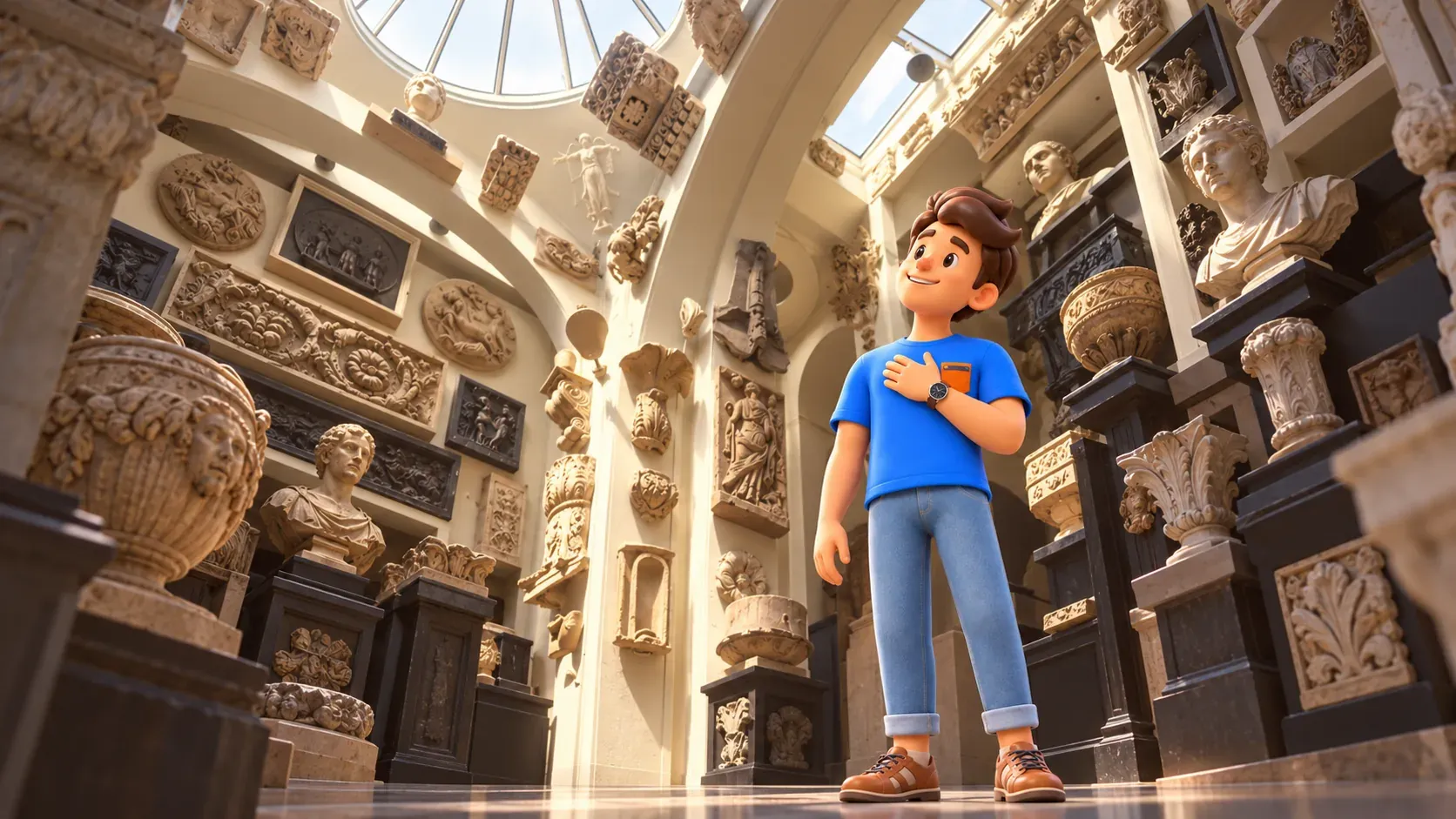
Ordinary entry is free and does not require advance booking, but limited capacity can mean a wait. The normal public entrance is the original front door of number thirteen. Special tours and access to additional areas have their own arrangements and depend on availability. A short list of famous rooms should not become a promise that every space will be open during your visit.
Petrie Museum: a smaller space with deep histories
The Petrie Museum of Egyptian and Sudanese Archaeology is at University College London, on Malet Place. Choose it when ancient objects interest you more than an imposing museum building. Its subject is the lives of people in the Nile Valley, not simply a procession of rulers and monumental sculptures. Small things can ask surprisingly large questions about work, materials and daily life.
The museum began as a teaching resource at UCL in 1892. That origin is useful to remember when approaching a concentrated archaeological collection. Look for what an object can reveal rather than expecting every case to be a theatrical reconstruction. A worn surface, a shape or a material may offer a way into the subject before a long historical explanation.
Choose one category that catches your attention and compare a few examples. What might their form tell you about use? Which parts are evidence and which remain an interpretation? Read the available explanation rather than inventing an answer from appearance alone. The wider collection includes textiles, pottery and other objects, but check current displays before making one particular artefact the condition of a successful visit.
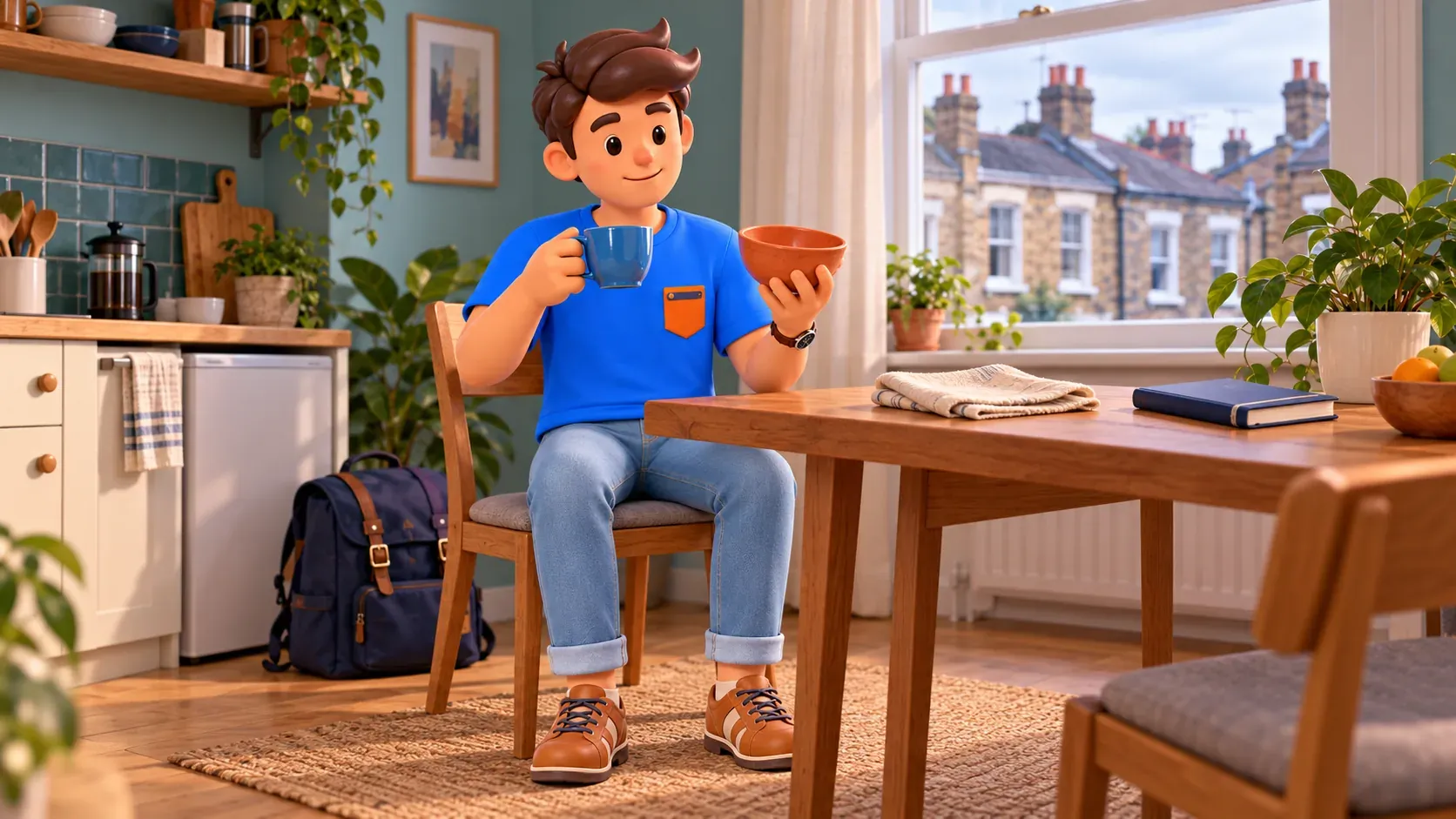
Later, in your own accommodation, you could compare the shapes of a modern cup and bowl without bringing any activity into the museum. This is a personal way of thinking about how objects serve everyday needs, not an archaeological handling session or a promised workshop. Museum pieces remain where they belong, and your ordinary belongings are enough for the comparison.
General entry is free without advance booking. Research visits have separate booking arrangements, and groups of eight or more must organise their visit ahead. Do not use research opening times as ordinary sightseeing hours. A university museum can welcome public visitors while still maintaining different schedules for teaching, research and general admission.
Leighton House: the artist’s home as a work of imagination
Leighton House at 12 Holland Park Road belongs to west London. It was the home and studio of Victorian artist Frederic Leighton, developed with architect George Aitchison from the 1860s. Living, working, entertaining and collecting all shaped the building. Choose it when the setting of artistic life interests you as much as individual pictures on the walls.
The Arab Hall, created between 1877 and 1881, is a natural focus. Its collected tiles and carefully designed setting belong to a room assembled for this London home. It is not an entire palace room transported intact from elsewhere. The fountain and chandelier were made in London, while William De Morgan’s work included repairing and replacing tiles. That mixture gives the decoration a richer story than its colours alone.
Continue to consider the studio as well as the celebrated hall. A room for making pictures has a different purpose from a space for receiving guests. Notice how a house can support both. The modest scale of the outing does not require you to inspect every decorative surface; one clear contrast between working and entertaining can be enough to give the visit its shape.
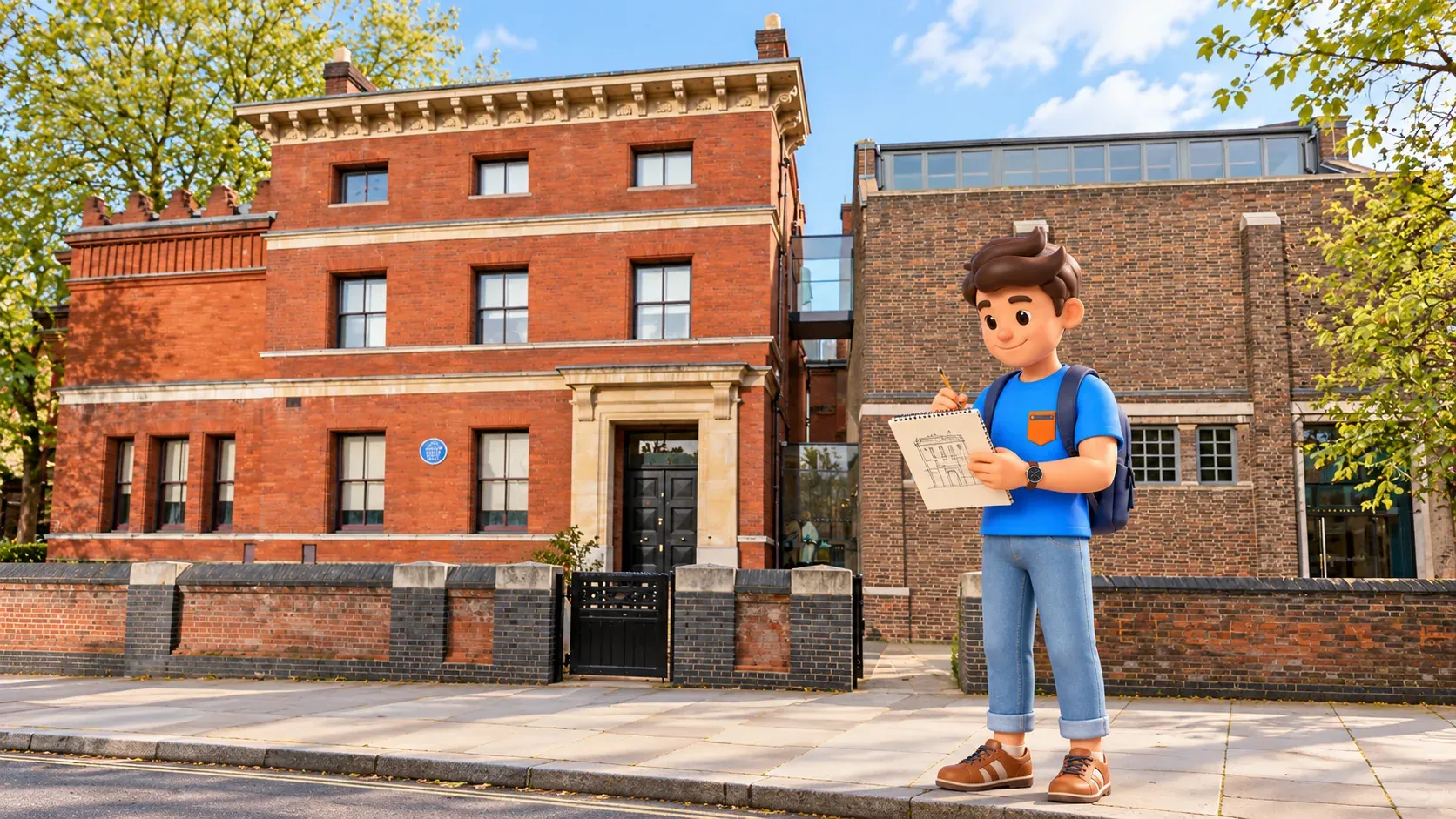
The historic interiors require paid admission, with temporary exhibitions included in a standard ticket. Some areas, including the café, garden and selected new-wing displays, are free to visit under their own conditions. That does not make the Arab Hall and studio free. Book online in advance or use the welcome desk on the day; same-day online tickets are not currently available.
Plan a selected visit and a proper pause
Ninety minutes inside is an editorial planning suggestion, not an official stay limit or enough time to exhaust any collection. Choose a main interest, spend most of your attention there, and leave a final portion for a second look. If your curiosity grows, extend the visit where opening hours allow. Waiting to enter does not usefully count as time spent enjoying the museum.
Add travel and an arrival margin separately. For a simple meal, allow another forty-five minutes or more, including possible waiting. The Petrie Museum has no on-site café, so eat elsewhere. Leighton House has a café, but an available table and immediate service are not guaranteed. A smaller museum does not automatically provide all the facilities of a large visitor attraction.
Pack lightly. Soane’s has very limited storage and asks visitors not to bring luggage; small items are carried in the clear bag provided. The Petrie Museum has no cloakroom, and Leighton House has no dedicated cloakroom either. None is a convenient assumption for a day carrying suitcases between trains. Make separate luggage arrangements before choosing that kind of museum stop.
Choose the date and check the access
Soane’s normally opens Wednesday to Sunday from ten to five, with last admission usually at half past four and sometimes earlier at capacity. It has bank-holiday arrangements, so read the date-specific information. The Petrie Museum normally opens Tuesday to Saturday from one to five, with last entry at 16:45. Its public visit belongs to the afternoon, not an unverified morning slot.
Leighton House normally opens ten to 17:30 on Monday and Wednesday to Sunday, with Tuesday closed and last entry at 16:30. The garden closes at five and is available in suitable weather. At the October 2026 check, the house also announced closure on 14 and 15 November for a private event. Holiday closures and special notices matter as much as the weekly pattern.
Check access needs before deciding that a small house means an easy visit. Soane’s asks visitors who require its staff-operated lifts to call at least twenty-four hours ahead. For lift access at Petrie, use the museum buzzer by the entrance: staff escort visitors through the adjacent Science Library and assist between gallery spaces. Leighton House has lifts and step-free access between floors. Your journey from the station remains a separate question.
Keep the rest of the day in the same spirit
Choose one museum, a manageable nearby walk and a pause rather than automatically adding another interior. If Leighton House makes you want a longer outing, our Holland Park, Leighton and Sambourne half-day is a different plan with two houses and its own five-hour allowance. It is not a short extension already included in these ninety minutes.
With RoadMe, it is easier to turn a preference for architecture, archaeology or artists’ lives into a personal programme for the whole journey. Try the app to plan London around your interests and comfortable pace, giving smaller visits a considered place in each day.
A small museum can leave a large memory when the subject is right for you. Finish with one detail you want to keep: a room, an object or a relationship between spaces. That is a more useful measure of the visit than the number of museums reached before closing.