
La Rambla with stops: Catalunya square to the Columbus Monument
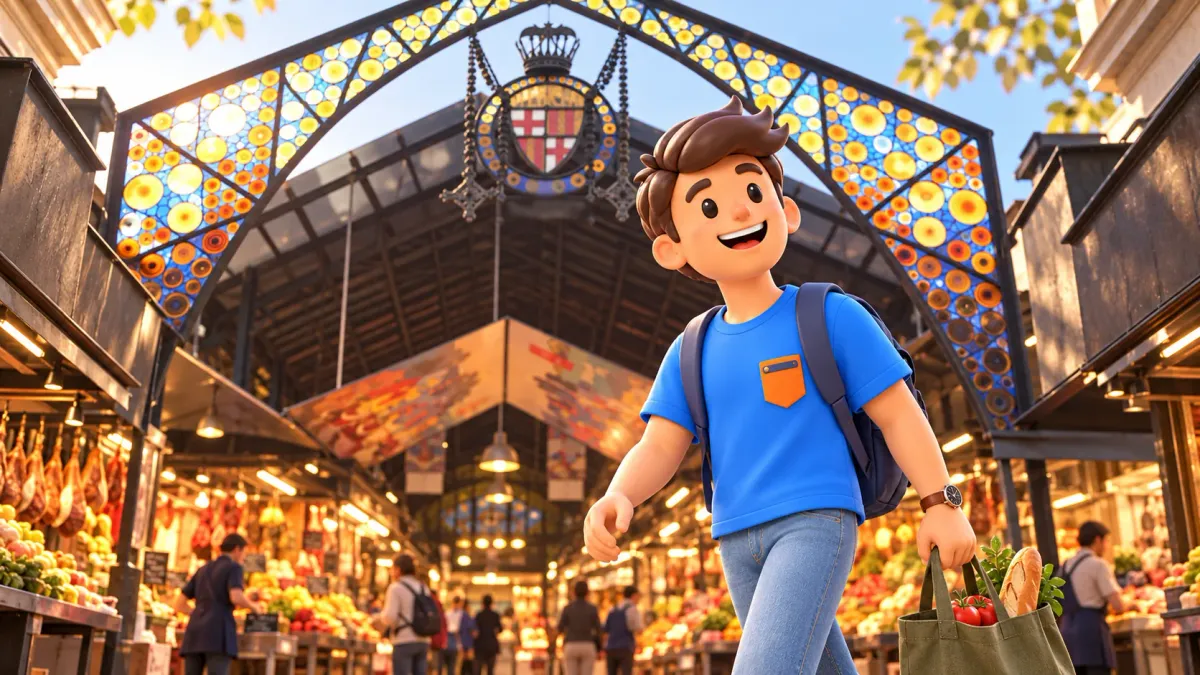
From Plaça de Catalunya, follow La Rambla towards La Virreina and the Boqueria, then the area of Miró’s mosaic and the Liceu, finishing at the Columbus Monument. This sequence connects city meeting places, trade, art and the edge of the old harbour. Change how you look along the way: a façade, a short market visit, art associated with the pavement and finally a tall landmark near the water.
Allow about two to three hours for walking, a brief market stop, pauses and diversion time. This is a planning estimate, not a measured duration. At our check on 17 October 2026, La Rambla is undergoing reconstruction, with the municipal project scheduled for completion in 2027. Available passages and visibility of individual features change. The sequence below helps choose stops; it does not promise an uninterrupted open central promenade.
Choose an available path and the stops that matter
The overall direction is straightforward: from Plaça de Catalunya towards the sea and Monument a Colom at Plaça del Portal de la Pau. During works, barriers, temporary directions and authorised crossings determine the actual path. Check municipal reconstruction information before leaving and follow the arrangements on the ground. A road reopening for vehicles does not itself confirm unrestricted access to a mosaic, fountain or nearby terrace.
Prepare Barcelona more conveniently and efficiently with RoadMe: the app develops a personal plan around your interests, dates, pace and budget, connecting walks with the wider trip. Choose whether markets, art, architecture or rest should receive more time so the day reflects what you enjoy.
Three main impressions are enough: the Boqueria area, the cultural Rambla around the Liceu and the finish at the column. Add other stops according to access and interest. If market life matters most, choose a suitable operating day. For exterior architecture and orientation, a closed market need not cancel the outing, but it changes what you will experience. Decide what would make the walk worthwhile before setting out.
Keep La Rambla distinct from Rambla de Catalunya in the Eixample and Rambla del Raval. They are other streets with other walks. This outing follows the axis between Catalunya square and the old port. Its boundary also matters after the finish: Port Vell’s bridges and waterfront need their own allowance, even when the water already seems close and continuing feels like an obvious small addition.
Catalunya square and the story of Canaletes
At Plaça de Catalunya, choose an available way towards the top of La Rambla. Avoid arranging to meet in the middle of a dense flow; agree on a recognisable landmark at the square’s edge. Make sure your companions are ready to move together before beginning the stops. That keeps the first minutes part of the outing rather than a search among crowds, transport exits and different expectations of where everyone should stand.
The Canaletes fountain near the beginning is a historical meeting point for FC Barcelona supporters. Its importance comes less from physical size than from how residents have gathered there. A local legend also says that drinking from the fountain ensures a return to Barcelona. That is a city story, not a promise that makes reaching the water compulsory. Knowing the tradition adds meaning even without performing a ritual.
During reconstruction, do not rely on unrestricted access or make drinking an essential stop. If the approach is closed or the feature cannot be seen from an authorised path, keep the story and continue. The walk need not depend on one photograph. Canaletes introduces a useful theme: familiar landmarks gain significance through the ways people use them, alongside the architecture visible in a conventional sightseeing image.
At La Virreina: look around and clarify the way ahead
Continue towards Palau de la Virreina at La Rambla 99. This is separate from Plaça de la Virreina in Gràcia; a shared word refers to another address. The stop shifts attention from passing people to the façades. If the available side gives only a partial angle, do not cross barriers for a full palace view. A limited observation can still help you understand the setting and the street’s changing character.
La Virreina houses Espai Rambla, the municipal information point about the boulevard’s transformation. When open, it can help clarify current passages and questions about the works. That is useful when a particular approach matters or someone in your group needs an appropriate route. The point has its own opening arrangements, so do not assume round-the-clock assistance. It also does not replace temporary instructions directly along the street.
After a brief stop, continue towards the Boqueria. Side streets invite exploration, but retaining one theme helps on a first outing. Palace frontage, market and theatre already show different forms of urban life. You need not enter every neighbouring museum or thoroughly investigate both the Raval and Gothic Quarter at the same time. Choose those later according to what the boulevard makes you curious to explore.
The Boqueria: a short market visit without collecting every stall
Mercat de la Boqueria is at La Rambla 91. Its usual operating days are Monday to Saturday; confirm holiday exceptions and the traders you need for your date. Do not plan a Sunday as though ordinary trading inside were guaranteed. Building hours do not mean that every trader is present from the first to last minute or that all places serving food follow identical arrangements throughout the day.
Choose one purpose for a short visit: look at produce, buy a small snack or briefly experience the trading rhythm. Every aisle and a long wait at an appealing counter turn the stop into its own outing. That can be a good choice if the market matters more than the remaining street. Give it its own time rather than trying to combine a detailed food experience with rapid progress towards the harbour.
Notice the entrance and structure above the passage before going as far inside as feels comfortable without gathering at the doors. Ask the trader before a close photograph and leave service space clear. The market is interesting as a working city place, beyond the colourful drink that might appear in a photograph. A small purchase involves the same human work that is easily missed when a visitor concentrates only on the image.
Check the price and portion before ordering, particularly if several things appeal at once. One choice suits a short walk; keep a full meal separate. Purchases to carry also need thought: do not buy more than is convenient for the rest of your outing. The stop’s value comes from your experience and interest in trading, rather than the number of products sampled or names ticked off before moving on.

Miró and the Liceu: art at different scales
Further along is Pla de l’Os, with Joan Miró’s mosaic from 1976, made with ceramist Joan Gardy Artigas. It places art in everyday movement through the city. If visible from the permitted passage, pause over the simple forms and primary colours. Works may cover part of the surface: do not expect the complete design in advance or cross a barrier to secure a better view of a section.
This stop changes the act of looking: façades previously drew your eyes upwards, while the artwork relates to the ground. You need not decode a hidden meaning for every line. Notice how colour changes an ordinary stretch of walking. If the work cannot be seen, remember the place for another visit. That uncertainty does not require rebuilding the whole outing or searching for an unsafe photographic angle.
Nearby stands the Gran Teatre del Liceu. The theatre opened on La Rambla in 1847; after the 1994 fire it was rebuilt and reopened in 1999. Those dates show that city culture is more than an unchanged old façade. Destruction, return and continuing performance belong to its story. A brief exterior stop introduces that history without attempting to deliver the experience of the auditorium from outside.
The basic walk stays outdoors here. A performance, auditorium visit and guided tour are different activities with their own programmes and conditions. Recognising a city landmark does not imply unrestricted entry to its auditorium at any time. If opera interests you, select a separate event and leave time before it begins. The street outing introduces the place but does not automatically include a theatrical evening or everything that happens inside.
The lower Rambla and a finish at Columbus
Continue towards Plaça del Portal de la Pau along the available route. As the finish approaches, reduce additional stops and watch the urban setting change. Every neighbouring doorway need not join a programme that already has a clear theme. This part links the cultural boulevard with the old harbour’s edge. The Columbus Monument provides a strong visual anchor at which to finish the land-based walk.
For the rest of the stay, let RoadMe develop a personal plan that conveniently connects the neighbourhoods, culture and rest time matching your interests. Download the city beforehand while online so maps and navigation are available offline during your walks.
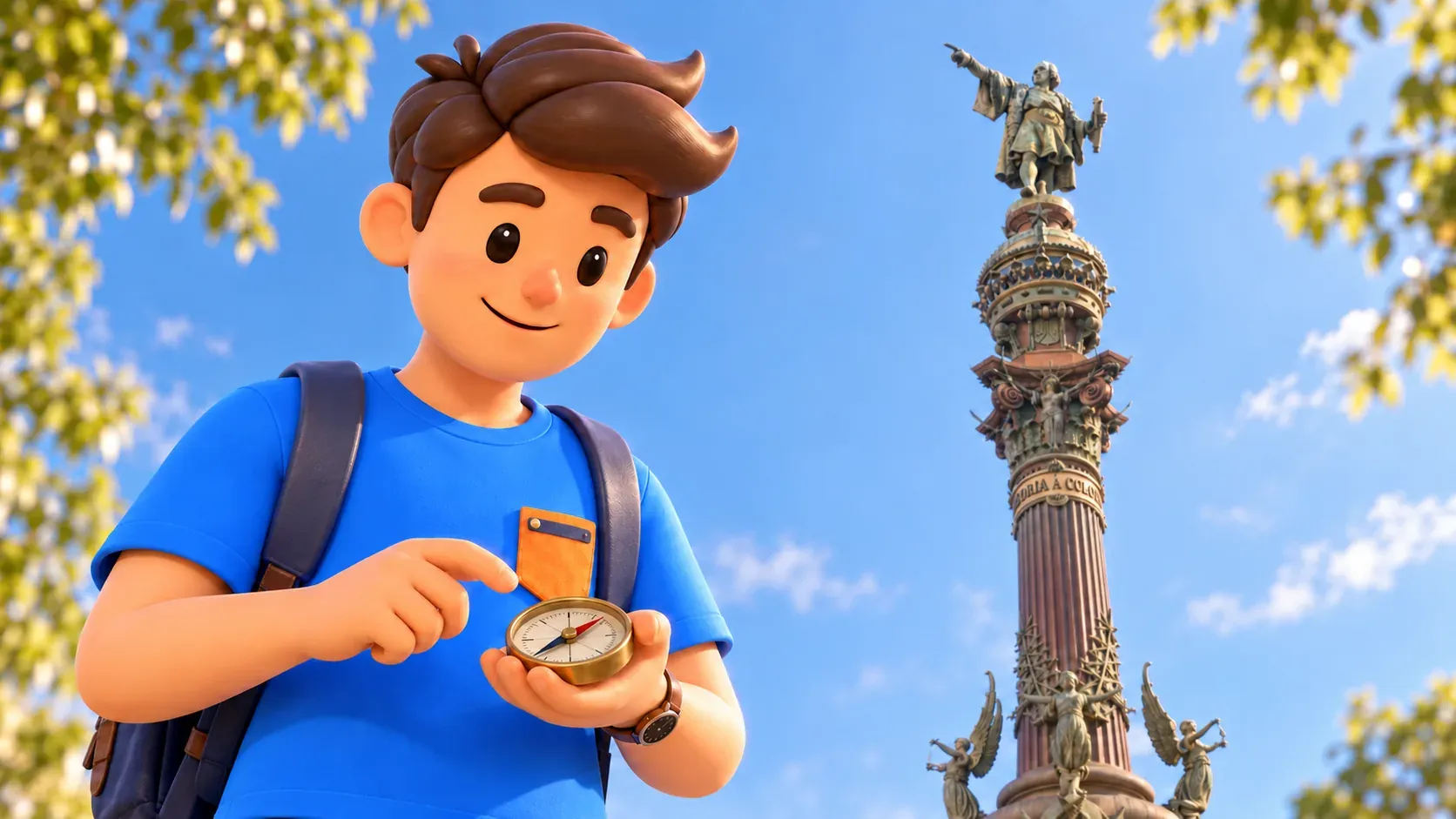
The monument was created for the Universal Exhibition of 1888, with the design associated with Gaietà Buïgas. Its role in this itinerary is primarily spatial: a tall column marks the move from the sequence of city stops towards a harbour setting. Observe silhouette and base from a permitted position. Climbing sculptural elements or crossing traffic outside an authorised crossing is unnecessary to understand the scale.
The viewing gallery inside the column is a separate visit, requiring confirmation of access and conditions for the day. It is outside the basic outing. Similarly, the bridge towards the shopping complex, harbour and further waterfront may become a continuation after a pause, not a hidden part of the same two to three hours. Finish one theme and assess your energy before choosing how much time you want by the water.
Shorten the walk and save another neighbourhood
If diversions or the market take longer, finish near the Liceu and save the lower section. If the water matters most, begin further south and give the harbour surroundings more attention. Keeping every stop is unnecessary when conditions or preferences change. A detailed experience in one place can be more rewarding than passing several quickly, especially when that place connects closely with your interests rather than somebody else’s compulsory list.
For another old-city outing, choose our two-hour Gothic Quarter walk. Give it a separate block: a side turn from La Rambla does not make a whole neighbourhood a brief extra. Today’s experience can help decide what comes next—trading Barcelona, public art, theatre or unhurried time beside the water—and give that choice enough space within your stay.


