
Barcelona’s Gothic Quarter in two hours: squares, façades and turns
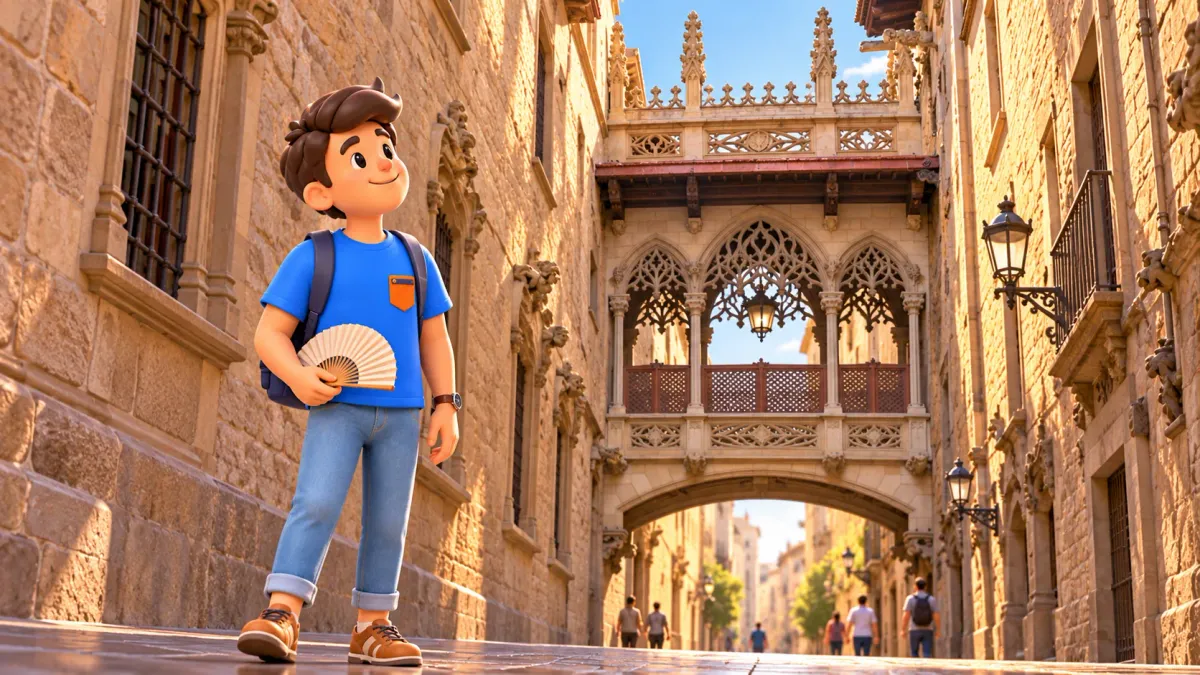
Barcelona’s Gothic Quarter becomes easier to understand through its squares. Narrow streets change direction between them; an open space restores your bearings. In about two hours, you can see the cathedral, a former royal ensemble and the setting of civic institutions, pass beneath the Bishop’s Bridge and finish near Santa Maria del Pi. A few short historical distinctions make the walk more meaningful than a collection of photographs.
The basic route uses exterior views. Two hours include connections, stops and a small pause, rather than a substantial museum, tower climb or long lunch. This is a planning estimate, not a measured track. To combine the old centre with other districts, use our first-day Barcelona itinerary and give the quarter its own clearly defined block.
Use squares as anchors for a compact walk
Start outside Barcelona Cathedral. Continue to Plaça del Rei and Plaça de Sant Jaume, then via Carrer del Bisbe towards smaller spaces and Plaça del Pi. Sant Felip Neri is a short stop along the way when access is available. This sequence offers different experiences within a small area, with a clear beginning and finish rather than an obligation to explore every lane.
For a more convenient and efficient way to fit this walk into your trip, try RoadMe: the app develops a personal itinerary using your interests, dates, pace and budget. Choose how much history, architecture and relaxed stopping time you want, and let the wider Barcelona programme grow around you.
Decide whether the priority is a first look at the neighbourhood or a particular interior. For an introduction, retain the outdoor stops. For a museum or church visit, give it its own time and reduce the walking section. Short distances do not make an interior instantaneous. Recognising that difference keeps two hours realistic even when an appealing entrance appears unexpectedly along your route.
Walk without needing to hurry at every turn. Occasionally pause to notice how a lane opens into a square. If one section is busy or restricted, remember the next main anchor. The order of places matters more than one compulsory path between them. Public streets let you adapt the route while private courtyards remain outside it. Leave room for the everyday life around your walk.
The cathedral: a first view with a historical correction
Begin outside the Catedral de la Santa Creu i Santa Eulàlia. This is the old centre’s cathedral, distinct from the Sagrada Família. Choose a place where the main façade is visible while leaving a clear passage. Allow around fifteen to twenty minutes for orientation and the exterior. The square or steps may be lively; a silent setting is not a condition for enjoying the route.
The Gothic building began in 1298, while the familiar main façade appeared much later. That small fact changes how you read the neighbourhood: the old city developed through several periods. There is no need to hunt for one completely authentic moment. Notice how later work complements medieval structures and creates the present-day appearance of the streets you are exploring.
After the overall view, choose one detail: the portal, vertical rhythm or light across the stone. That personal observation is enough for an introductory stop. The interior, cloister and other visitor spaces form a separate visit with their own conditions. If they become your main interest, assign time to them in place of part of the later circuit. The exterior route remains complete without entering.
Save the next place’s original name: Plaça del Rei. It is easily confused with Plaça Reial, another old-city square. This route needs the former, beside the historical museum complex. The similar labels refer to different locations. A quick check avoids an unnecessary detour during the first minutes, particularly when you are still learning how the neighbourhood fits together.
Plaça del Rei: change the scale
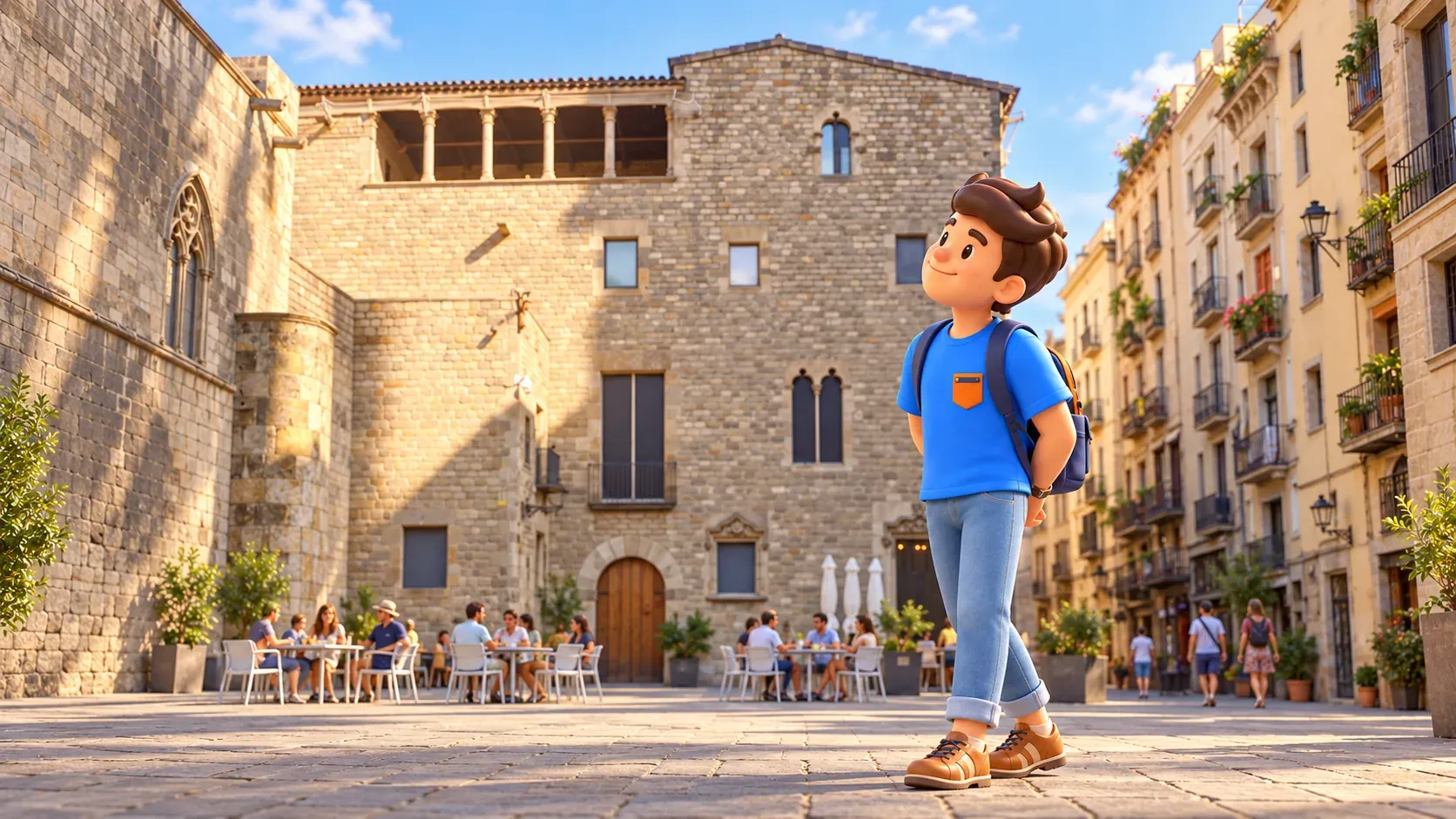
At Plaça del Rei, the setting becomes more intimate. The former royal ensemble shows another side of the quarter after the space outside the cathedral. Look at the relationship between buildings, steps and the square itself rather than only one decorative feature. Around fifteen minutes for the connection and stop is a useful allowance, extended if the architecture particularly interests you.
MUHBA’s Plaça del Rei site is nearby. Looking at the ensemble outside and exploring historical displays are different activities. The museum is outside this two-hour version. Save it for a separate block if the early city’s history attracts you, and confirm current visiting conditions. Proximity to an entrance does not require an immediate change to the walk or another decision about admission.
Try a simple observation: compare how it felt outside the cathedral with how it feels here. Differences in size, light and direction of view already tell you something about the city. History need not arrive only as dates. The arrangement of a space can make a place more memorable than a long list of names, especially when Barcelona is still unfamiliar.
Sant Jaume: the historic centre still works
The next anchor is Plaça de Sant Jaume, where Barcelona’s city hall and the Catalan government palace stand. It links an architectural walk to current civic life. An exterior look establishes that role; entering the administrative buildings is outside the itinerary. Allow approximately fifteen minutes for the approach and short pause. Look across the square before selecting individual details on either side.
Compare its more open character with the royal ensemble you have just seen. Notice the façades and the movement between them. This is a useful place to regain direction before the narrower streets. If travelling together, check everyone is ready to continue. A brief shared decision is easier here than stopping the whole party inside a tight passage where others also need to walk.
The Gothic Quarter is a residential and working area. Events or temporary restrictions can affect a square. Use the public paths available rather than making the programme depend on a single entrance or unchanging viewpoint. The main aim remains an outdoor introduction followed by Carrer del Bisbe. That is enough for the chosen duration without implying access to official interiors.
The Bishop’s Bridge: Gothic appearance, unexpected date
On Carrer del Bisbe, look up at the Pont del Bisbe. Despite its Gothic appearance, Joan Rubió i Bellver built it in 1928. It is a clear example of the old quarter’s image being shaped after the medieval period. One date encourages a more attentive look at other apparently ancient details during later Barcelona walks. Appearance and construction history can tell different stories.
The bridge is viewed from the street in this programme. A passage between buildings does not become a public walking connection simply because it sits above your route. A few minutes suffice when there is space to pause. Take a photograph from somewhere that leaves others room. If crowded, look at the details and continue, keeping a quieter photography stop for another time.
You need not learn every legend to find the bridge interesting. Compare its carved decoration with the more restrained walls along the street. A useful question is not simply how old it is, but why its appearance feels old. That turns a short stop into the beginning of your own architectural observation without needing a ready-made explanation for every feature you can see.
Sant Felip Neri: a small square with difficult memories
When the approach is open, continue to Plaça de Sant Felip Neri. The church façade preserves damage from the bombing of January 1938. This is a place of memory, so the stop can be quiet and short. Look at the square and church wall and read the explanation available on site. There is no need to turn its history into a search for a dramatic war legend.
A school stands nearby, and local people use the space. If access is temporarily closed or signs restrict entry, continue towards Plaça del Pi instead of trying to pass a barrier. No particular school timetable is assumed by this plan. An open square does not guarantee silence. Everyday and school activities are as real here as the historical memory preserved in its surroundings.
Allow around fifteen to twenty minutes for this section and connection when the stop is available. If it is omitted, use the spare time for a longer pause at the end. The route retains its shape, and one small restricted space need not overturn the rest of the day. Pi remains the clear next anchor on the western side of the circuit.
Finish near Santa Maria del Pi
End around Plaça del Pi and neighbouring Sant Josep Oriol. The basilica’s large circular rose window makes its façade memorable. After narrower sections, the square lets you step back and see a building as a whole again. This is an exterior stop in the basic version. Cultural visiting and worship have their own arrangements and do not automatically become part of the walk.
Allow around twenty to thirty minutes for the last section and a small pause, depending on time remaining. A quick coffee can fit the overall two-hour allowance if a suitable place is available without waiting. A long lunch belongs to another part of the day. Finish comfortably rather than rushing a drink solely to complete the programme. The pause should help you enjoy what you have seen.
Near Pi, decide what stayed with you: the cathedral’s later façade, the intimate royal ensemble, active government at Sant Jaume or the unexpectedly recent bridge. Those are different ways into the same neighbourhood. You have seen enough to make the next old-city walk more meaningful. Complete museum histories can wait for the place that interests you enough to return.

For the rest of the stay, let RoadMe develop a personal trip plan around your interests, conveniently combining the history, architecture and rest time that matter to you. Download the city beforehand while online so maps and navigation are ready to use offline during your walks.
Keep two hours useful and choose what follows
To enter the cathedral or a museum, replace part of the exterior route or increase the time. If tired, finish after Sant Jaume or at another convenient stop. The approach from your accommodation and return are outside the two hours. Uneven surfaces and narrow passages affect pace too. For specific access requirements, check the full chosen route separately rather than assuming every connection will suit you.
After the finish, stay for lunch or select another neighbourhood walk later. El Born, the waterfront and distant attractions are not invisible additions to these two hours. Give the next section its own allowance. In the Gothic Quarter, understanding a few spaces and noticing how they relate is more rewarding than covering the entire old city while continually feeling late.


