
Bangkok a Second Time: Where to Go Beyond the Main Sights

A second visit to Bangkok can begin with a different question: what would you like to understand better? Once the palace and the famous temples no longer need to fill the schedule, you have room for a district, a small historical connection or an afternoon shaped by curiosity. Bangkok Noi and Khlong San are useful starting points. Both offer places from the city’s cultural landscape without requiring another circuit of the best-known sights.
The suggestions below are separate half-day outings. Choose one for a morning or afternoon and allow additional time for travel from your accommodation. They are not stages of a single walking route across the west bank. The estimates describe a comfortable planning scale, not measured journeys. A main visit, some nearby streets and a seated pause are enough to make a return trip feel different.
Choose the question before the neighbourhood
Choose Bangkok Noi if local history, older transport connections and the relationship between a temple and its surrounding streets interest you. Choose Khlong San if you want to look more closely at religious architecture within an everyday neighbourhood. In either case, select one principal interior or site before leaving. The surrounding walk then supports that interest rather than competing with it for every available minute.
RoadMe can build a personalised route or trip plan around the Bangkok that now interests you, using your available days and preferred pace. The app makes detailed planning much more convenient, so a second visit can follow your curiosity rather than another generic list.
Think back to your first trip. Perhaps you enjoyed the ferry journey more than the next admission, or wished you had stayed longer with one architectural detail. That memory is useful planning evidence. Give the new outing one clear purpose and leave the other half of the day open. You do not need to prove your experience by travelling farther or finding somewhere that no other visitor has heard of.
Bangkok Noi: a temple, local streets and the story of a place
One approach is to begin around Wat Rakhang, then move north through the local street network towards the Siriraj area. Keep a meal or drink break between the two parts if you need one. The river helps with orientation, but do not assume its edge provides an uninterrupted public promenade. Choose accessible streets and crossings, allowing the actual conditions to shape the connection.
Wat Rakhang has roots reaching back to the Ayutthaya period. That brief context changes its place in a return visit: it connects you with a city history that did not begin with your first view of the royal centre. You do not need a full chronology to appreciate the difference. Look at the relationship between built spaces, shade and everyday activity, and let the visit move at the pace of the place.
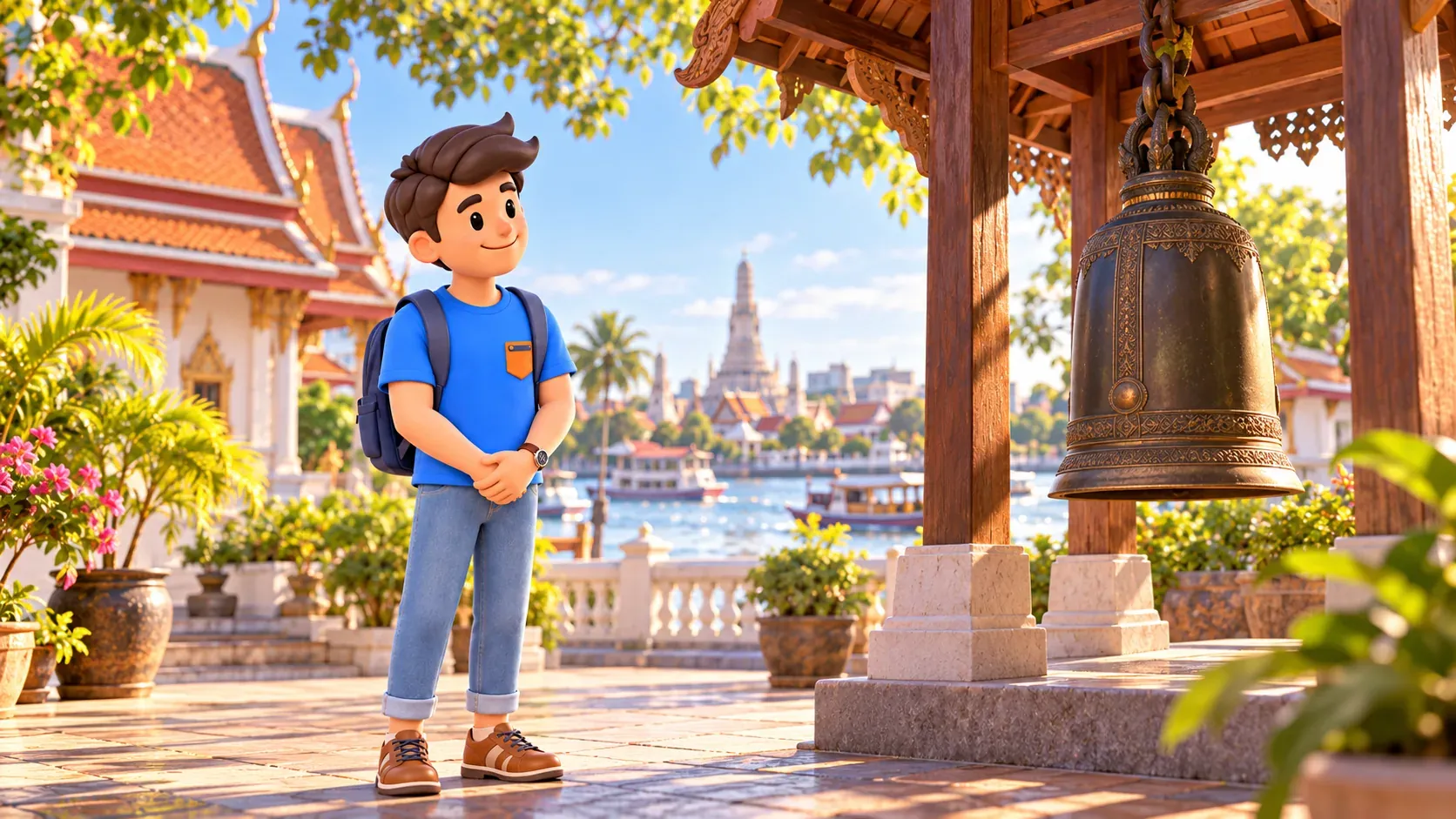
Check what is open when you arrive and follow the current rules for religious spaces. A courtyard or exterior detail can be rewarding without access to every building. Avoid turning worshippers into background figures for a photograph. For your own observation, choose a small subject—a roof edge, a doorway, a bell shelter—and look long enough to notice its materials and scale.
Siriraj Bimuksthan: history through an unexpected building
Siriraj Bimuksthan Museum offers a different kind of visit from another major temple. It uses former Thonburi railway buildings and presents local history alongside the story of medicine. The setting gives a useful link between movement, the neighbourhood and later uses of the land. You can begin with that connection instead of trying to absorb every display equally. A focused visit often leaves a clearer memory.
Use the museum’s full name when checking visitor information. Siriraj Bimuksthan and the Siriraj Medical Museum are different visiting interests within the wider museum context; the names should not be treated as interchangeable. Look at the description that matches what you actually want to see. Check the current day and access arrangements before making an interior the anchor of the outing, then leave time around entry rather than assuming an immediate start.
Finish with lunch or a quiet pause in the district. You might notice ordinary shopfronts differently after a historical visit, because the streets now have a little more context. There is no need to attach the Royal Barges Museum automatically. It is another possible focus for a separate outing if boats and ceremonial craft are the interest you want to pursue, with its own access and travel planning.

Khlong San: look closely instead of collecting temples
For a different half-day, start with the area around Wat Thong Noppakhun and the nearby Wat Thong Thammachat. Choose one as the main visit and treat the other as a possible continuation. Their value here is not that they replace the famous temples on a ranking. They give you a smaller geographical frame in which to notice architecture, neighbourhood routines and the way religious places remain part of daily life.
At Wat Thong Noppakhun, the rounded exterior window forms provide a useful detail to look for where accessible. You can give such an element a few minutes rather than moving straight towards another landmark. At Wat Thong Thammachat, decide whether the available areas and current access justify a longer stop. Do not assume an ordination hall is open simply because the surrounding compound is accessible. Follow signs and staff or community guidance.
Between visits, use the public street network and take the normal crossings seriously. The point of a district outing is continuity of attention, not the shortest theoretical line between two coordinates. A small food or drink stop can be the centre of the afternoon, especially if the first visit has already been substantial. Choose a place with a clear menu and prices that work for you, rather than crossing the district again for a single fashionable address.
Guan Yu Shrine as an alternative focus
The Guan Yu Shrine in Khlong San offers another religious tradition within the wider area. It lies farther north than the temple pair, so treat it as a deliberate extension or make it your main focus instead. It is not the next doorway of the same compound. Plan the connection separately and keep enough time to return, particularly if you have a fixed evening arrangement.
The shrine provides a reason to notice Chinese religious forms and the river setting without turning the afternoon into an encyclopaedic survey. Look from permitted areas, respect worship and ask before entering spaces whose status is unclear. You can leave with one observed detail rather than an exhaustive account of every figure. A return trip benefits from choosing what interests you deeply, not simply from increasing the number of religious sites visited.

Give the ordinary pause a proper place
Once you know the city’s headline images, a café pause can become part of the experience rather than time stolen from sightseeing. Sit somewhere you actually find comfortable. Notice the street outside, compare what caught your attention at the last stop and decide whether you want to continue. A pleasant half-day can end after one meaningful visit and lunch. That is a complete outing, not an unfinished version of a more ambitious day.

With RoadMe, you can develop a personal Bangkok plan around architecture, local history or a slower neighbourhood day. Using the app to work out the whole trip is easier than assembling separate suggestions and trying to make them fit while you are already out.
If you want more after the pause, choose the nearest continuation that serves your interest. If attention has faded, return to your accommodation or keep the evening simple. A second trip gives you permission to distinguish movement from discovery. More kilometres do not automatically create a better impression, and a familiar meal in a convenient place can fit the day better than another long transfer.
Returning to a known area can also be a new visit
You do not have to cross the river every time you want a different Bangkok. A return to Siam with a particular exhibition in mind, or to Talat Noi with time for its working streets, can be as valuable as a new district. Change the purpose rather than just the location. This time you might stay with one collection, look at domestic architecture or leave a camera in the bag for part of the walk.
Our three-day Bangkok plan explains how Siam culture can sit alongside the older areas, while the five-day itinerary with free time helps distribute a longer stay. Use those as frameworks, then keep only what matches this visit. There is no need to repeat every first-trip priority simply because it is familiar and easy to place in a schedule.
How to turn the options into your next two days
For two free days, give one half-day to Bangkok Noi and another to Khlong San, leaving the other halves for rest, a particular cultural interest or an unhurried meal. Do not stitch them into one compulsory west-bank marathon. Check the calendar for your principal interior and swap the outings if needed. Keep arrival, the main visit and the return clear; let the optional parts remain optional.
Before leaving, agree with your companions on the one thing each person wants from the outing. Shared priorities can anchor the day, while a later free period allows different interests. Plan according to the people actually travelling, not an imagined experienced visitor who never tires. The best evidence of a successful second visit is often a sharper sense of a place you enjoyed looking at, rather than a longer completed list.


