
Küçüksu and Anadolu Hisarı: a small palace and a waterside fortress
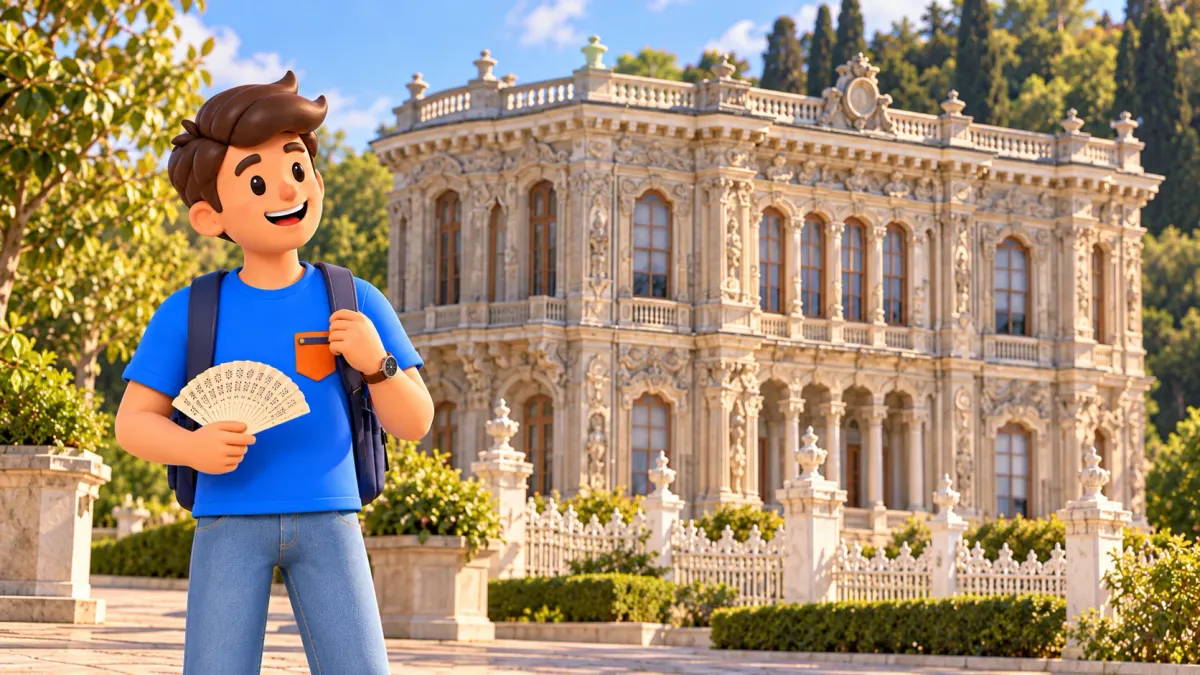
Küçüksu Pavilion and Anadolu Hisarı make a compact outing on the Asian side of the Bosphorus. One introduces the intimate world of imperial leisure; the other brings the fortified strait into focus. Between them, an ordinary urban walk gives your attention time to shift from decorated rooms to stone walls and water. Choose this combination when two substantial visits appeal more than a long list of places glimpsed in passing.
Allow approximately three to four hours after arriving at Küçüksu. The core plan includes a selected visit to the pavilion, a separate public route towards Anadolu Hisarı, the parts of the fortress museum actually open to visitors, and a proper break. Travel from your accommodation, the return journey and a long restaurant lunch are additional. The intervals below are editorial estimates, not measured walking times. Check both operators before setting out.
A half-day plan: pavilion, walk, fortress
Give yourself fifteen minutes to orient yourself at Küçüksu, sixty to seventy-five for the pavilion, twenty to thirty for the public route north, and forty-five to sixty for Anadolu Hisarı. Keep thirty to forty minutes for rest and another twenty as a buffer. Each place then receives its own attention. If queues or the actual visiting arrangement need longer, extend the outing rather than turning the second stop into a rushed tick.
RoadMe makes it much easier to build Küçüksu and Anadolu Hisarı into a personal plan for the whole trip, developing your route around your interests, available days and preferred pace. Choose more architecture, history or waterfront breaks so that your Istanbul journey suits the way you want to travel.
Start at the pavilion and finish in the fortress neighbourhood. Returning to the starting point is not automatically included in the three-to-four-hour estimate. Add that journey if you need a loop, and avoid making it depend on a last possible departure. The suggested order is a useful framework, not a substitute for actual opening arrangements. If one venue has a confirmed restriction, reconsider the plan instead of assuming that both interiors must happen regardless.
Both museums normally close on Mondays. Check holidays, special works and restrictions affecting individual areas for your date. If interiors are the reason for travelling here, choose a day with confirmed access. An exterior outing can still be worthwhile when something is closed, but it is a different experience and duration. A view through a fence is not a full pavilion visit, and an operating café does not prove museum rooms are open.
Küçüksu: a small building with a palace’s presence
Küçüksu is a nineteenth-century pavilion built under Sultan Abdülmecid for recreation and short outings. Its purpose helps set expectations: this is an intimate, formal building rather than a vast palace complex requiring an entire day. The richly treated exterior and rooms demonstrate how expressive a relatively small structure can be. Begin with the overall volume, then choose a few details so that you notice workmanship rather than simply the quantity of decoration.
Outside, look at the rhythm of the windows, the carved surface and the balance between vertical elements and the horizontal roofline. You do not need to name every architectural device. Compare the whole façade with one small section. The waterside image often seen in photographs differs from the permitted visitor angle on the day. Do not search for access to a closed edge simply to reproduce someone else’s composition.
Inside, give yourself one material theme. You might compare the marble of the fireplaces, the parquet patterns and the ceiling treatment, all noted in the official description. This makes a short visit meaningful without cataloguing every room. Follow the actual circulation or accompaniment arrangements if they determine the order. Do not assume you can return freely to any space until that is confirmed on site.
A pause before one detail can be more rewarding than uninterrupted photography. Check the current photography rules first, then decide whether you need an image or simply want to remember a combination of colour and shape. Avoid touching furniture, fireplace details or decorative surfaces. In a small room, occupying a passage affects everyone quickly. Move to a permitted open position and look back towards the detail instead of stopping the entire flow.
Do not automatically treat the separate recreation area, often described as mesire, as part of the pavilion ticket. The museum and that space can have different admission conditions and prices. Before buying, confirm which place you want and what your chosen ticket includes. The core purpose here is the pavilion, not a promise of access to every neighbouring ground. A long stay in the recreation area is a separate choice affecting both time and budget.

Between the two: an ordinary urban route
After leaving, head north towards Anadolu Hisarı on the public route actually available. The link uses neighbourhood streets and a permitted crossing of the Göksu watercourse. It does not promise a continuous path immediately beside the Bosphorus or a passage through museum gardens. Private grounds, fences and closed gates are outside the route. Choose the real pavement and crossings even when a line along the water looks shorter on a map.
The twenty to thirty minutes are useful for more than movement. Let the decorated rooms recede a little, drink some water and change the scale of your attention. After the formal façade, notice the everyday setting: a house colour, trees or traffic along the road. Resist searching for extra attractions to fill the gap. The day already has two strong centres, and the interval helps you experience them separately.
A shore and a river mouth do not guarantee a quiet pedestrian corridor throughout. Narrow sections, vehicles and road crossings may require attention. Step aside to photograph and avoid lingering at the edge of the carriageway. With children, agree that the next view comes after the safe crossing, not during it. If surfaces or works make progress awkward, allow extra time and preserve the break rather than trying to recover every minute by walking faster.
Both places are on the Asian bank. Crossing to Rumeli Hisarı is not included in this short programme. The fortress names help explain the geography of the strait, but that does not make them consecutive pedestrian stops. If you want both banks, allocate a separate connection and check actual transport. For this half-day, a pavilion and one fortress provide enough variety without adding another logistical task.
Anadolu Hisarı: a different relationship with the water
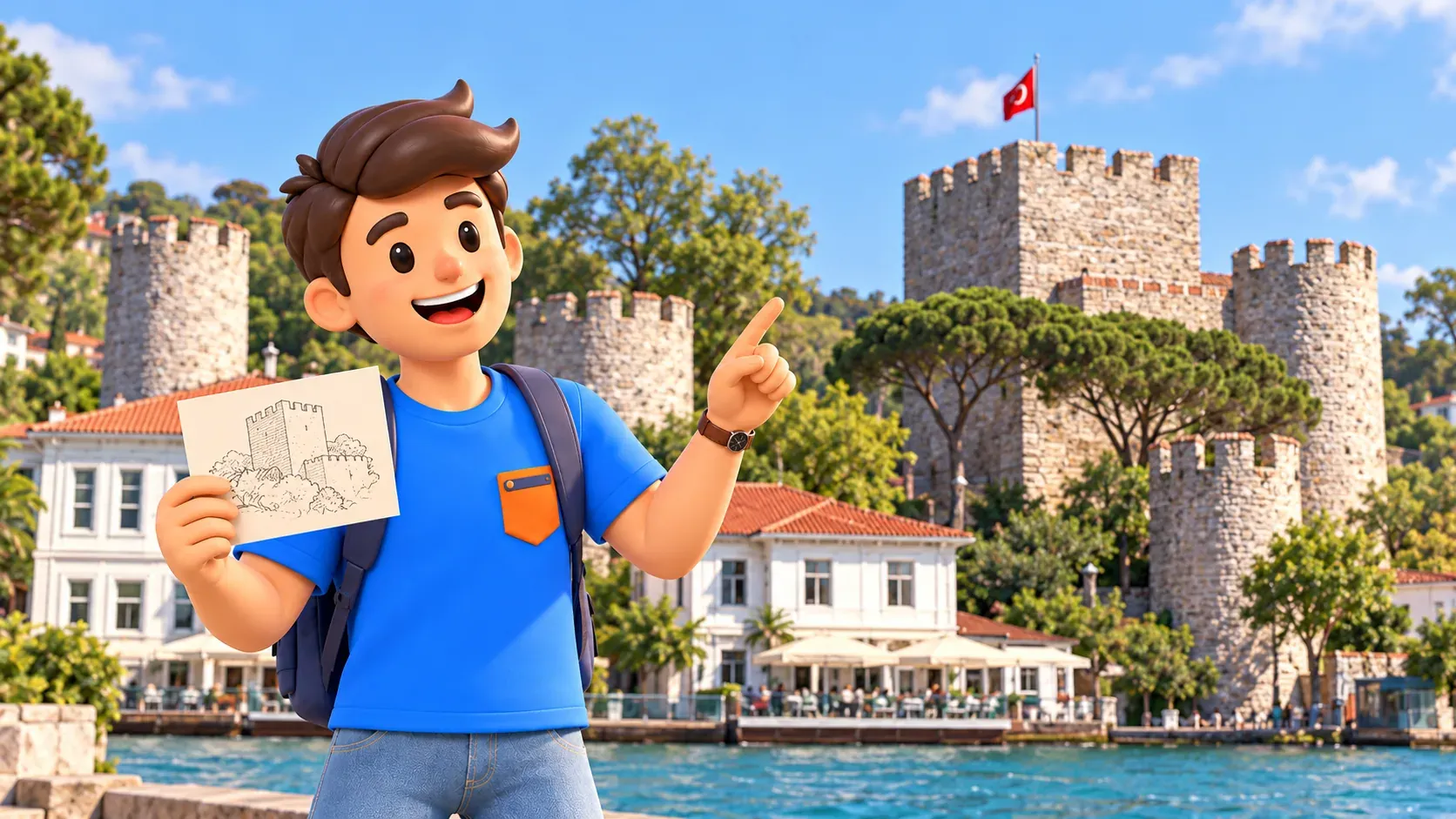
Anadolu Hisarı is associated with Bayezid I and was later reinforced by Mehmed II. Its position where the Göksu meets the Bosphorus gives the history a clear geographical setting. After the pavilion, the mood changes noticeably. Instead of delicate decorative rhythms, you encounter a defensive mass and its relationship with surrounding buildings. Understanding that contrast is enough for a short visit without following every rebuilding phase or military episode.
The municipal museum opened after restoration in 2023. Visit only the areas available along the current visitor route. Do not assume that every staircase, tower or upper level is included. Admission to the grounds and permission to climb a particular section are different questions. Ask about open areas rather than relying on an older description. If the available visit is shorter than expected, leave the spare time for an unhurried pause near the water.
Compare the two buildings through one question: how does each address the water? At the pavilion, presentation and decoration matter; at the fortress, position and weight become the focus. This provides a clear connection without a long lecture. Choose one detail from each and note the difference. For a shared outing, the conversation then grows from what you have seen rather than from a competition to remember names and dates.
Cafés and residential façades beside the fortress do not make every nearby stretch of waterfront public. Keep the usual distance from private entrances and avoid stepping onto terraces for a photograph. A boat photograph also does not prove that the same angle exists on land. An accessible combination of stone, trees and water is enough. If an angle is blocked, choose another detail instead of looking for a questionable shortcut.
Tickets, time and a manageable pace
Think of ticketing as two separate decisions. Küçüksu belongs to National Palaces, while Anadolu Hisarı is a municipal museum. A shared admission or passage from one to the other is not assumed here. Check the current tariff, visitor category, payment arrangements and open sections before purchasing. Possessing a museum card does not by itself establish coverage of all rooms or the separate recreation ground beside the pavilion.
Ticket-office closing and the end of visiting hours are different. Avoid arriving at the first venue so late that the second depends on a few remaining minutes. A daytime start with room to spare usually suits this half-day better. If the visiting arrangement requires waiting, preserve a worthwhile visit to at least one place and reassess the other. Comfort comes from a sensible workload rather than attempting to accelerate every part at once.
Check transport to the start and away from the finish independently. A nearby pier does not guarantee a useful sailing or return connection. Before choosing a ferry, confirm the specific direction and timetable for the day. For land transport, allow time to reach the stop and wait. If dinner or another museum follows, avoid placing the plans directly against each other: travelling along the Bosphorus can reshape the rest of the afternoon.
This combines two museums with an urban link, not a guaranteed step-free route. Historic buildings, entrances, surfaces and stairs may require adaptation. If steps are unsuitable, ask about access to the specific areas you want. Carry drinking water in warm weather and a light layer for a breezy shore; account for slippery surfaces in rain. The most comfortable version leaves you free to shorten the programme without treating that as a failure.

A waterside pause and the rest of your trip
Keep thirty to forty minutes for rest around Anadolu Hisarı. Choose an operating café along your way or an available place to stop. Check the menu and likely total before ordering, and avoid making the break depend on one table immediately beside the water. Put the camera away and choose one impression to keep from each building. A short conversation can finish the outing better than another hurried stop before transport.
Another Asian-side option is Beylerbeyi and Fethi Pasha Grove, pairing a palace with greenery. For the European shore, keep Rumeli Hisarı and Aşiyan for a separate outing, taking access restrictions into account. These are ideas for other parts of your trip. Do not add them automatically after Küçüksu: two visits already give the half-day substance, while journeys and new admission conditions need their own time and attention.
Keeping and using the whole personal route is more convenient and effective in RoadMe, where the places that interest you come together in a considered trip plan. Download Istanbul while connected to the internet beforehand to use maps and navigation offline later.
Küçüksu and Anadolu Hisarı stay memorable through changes of experience: a decorated pavilion, an everyday urban link, the mass of a fortress and a break by the water. Give each part enough time and the result is a complete small outing that fits comfortably within a longer exploration of Istanbul.


