
Beylerbeyi Palace and Fethi Pasha Grove: an Asian-side half-day
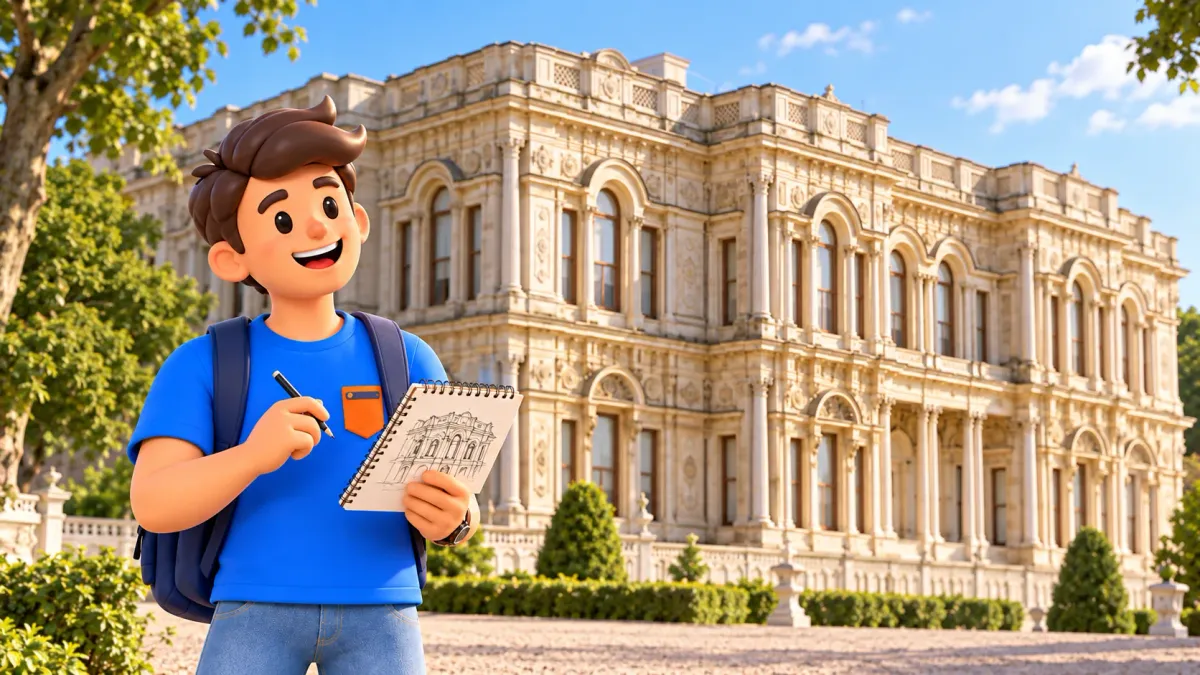
Beylerbeyi Palace and Fethi Pasha Grove make a half-day in which palace architecture gives way to a city journey and a green hillside. It suits anyone who wants one substantial interior visit with enough time afterwards for the impression to settle. The palace gives the day a historical centre; the grove changes the scale to trees, gradients and occasional Bosphorus views rather than another sequence of rooms.
Allow around four to five hours after reaching Beylerbeyi Palace. The basic version includes a visit under the access available, an urban transfer towards the grove, a modest green loop and a long pause. Travel from your accommodation and onwards after leaving the grove needs separate time. All intervals are editorial estimates, not measured walks. Long queues and a substantial lunch increase the total rather than fitting invisibly between the main sections.
The outline: one palace and one green section
Keep about fifteen minutes to orient yourself near the palace and seventy-five to ninety for an introductory museum visit. Allow forty-five to sixty for the city walk towards Fethi Pasha and another forty-five to sixty for an available grove loop. Give rest thirty to forty minutes, keeping twenty-five to thirty-five as a general buffer. This creates a coherent programme without trying to insert another major palace between its two main experiences.
RoadMe makes it much easier to turn this day into a personal plan for your whole trip, working out the route around your interests, available days and comfortable pace. Choose more palace history, greenery or relaxed breaks, and give Beylerbeyi a place in the Istanbul you actually want to experience.
The transfer is a section of its own, not a few minutes between neighbouring pins. If you do not want to walk after the palace, choose current local transport for the grove approach you need and rebuild the timing around actual conditions. Transport is not automatically faster once waiting and approaches are included. A group preferring fewer moves can reasonably keep the palace and a local break, saving the grove for another day.
Choose where you go after the greenery as well. This programme finishes at your selected convenient grove exit, not in central Üsküdar or at a ferry’s boarding point. Reaching the required stop takes separate time. A clear finish keeps the outing calm and prevents the final minutes among trees becoming a calculation about an onward connection you have not checked.
Beylerbeyi: a palace for summer and guests
The present palace was built in the nineteenth century for Sultan Abdülaziz and served as a summer residence and a state guest house. That historical anchor is enough to begin. Think about the relationship between a residence’s everyday life and its representative purpose. You do not need to memorise every visiting guest; it is more interesting to consider how architecture and objects created a palace setting beside the water.
First make sure you have reached the actual visitor entrance. The official address is Abdullah Ağa Caddesi 12, Beylerbeyi, Üsküdar. Reference material may use different nearby street or passage descriptions, so follow the museum’s signs and arrangements. Do not choose any visible waterside gate as an entrance or build a route through service ground because it appears more direct. The visit starts with the permitted approach available on your day.
Check the visiting day before travelling. Monday is the regular closure day; holiday arrangements need separate confirmation. Last ticket sales and admission can differ from an assumed overall closing time. Establish whether your chosen visit is possible before building the rest of the day around it. If access is unavailable, move the museum goal or deliberately choose a different outing rather than expecting to inspect rooms from outside.
Select tickets and accessible sections under current conditions. One admission option does not open every building in the grounds. Additional kiosks, including the waterside ones, are not automatically part of your visit: the official museum resource identifies access restrictions. Gardens should not be treated as a free city shortcut between streets either. Keep the entire visit within the visitor route actually open rather than assuming every attractive space belongs to the programme.
Inside: choose two themes for attention
Instead of examining every room equally, choose two themes. The first can be light and the relationship with water: how windows direct the eye and how moving changes the sense of a room. The second can be the representative quality of the setting, with large objects, open space and decorative detail. This gives the visit a way of looking without turning it into a contest to read every explanation.
A complete room catalogue is unnecessary before arrival. On site, choose an object that genuinely attracts you and connect it with the room around it. Look at the overall volume first, a detail next, and the available label afterwards. That order leaves room for personal observation. If visitor arrangements set the movement of a group, follow them and avoid pausing where you would block other people’s passage.
Check photography and interaction rules against current instructions. An object’s closeness does not mean it can be touched, and a handsome window does not require going beyond a barrier for a photograph. With a child, compare a large space and a small detail. Do not promise free running through rooms or entry to every kiosk. This is the museum part of the day, and the walking rhythm needs to fit its conditions.
Take a short pause after leaving before beginning the transfer. Check water, footwear and how everyone feels. If the museum lasted longer, reduce the grove loop instead of rushing the whole city section. A few additional minutes of real interest in the palace can be more worthwhile than one more compulsory park path. The day keeps its meaning without rigidly completing every originally imagined segment.
The city transfer: use actual public routes
Fethi Pasha Grove lies farther towards Kuzguncuk and Üsküdar. Use available city pavements and crossings, choosing a genuinely open approach to the entrance you need. This is not a promise of an uninterrupted public waterfront promenade. Beside the Bosphorus, water’s closeness on a map does not make every shoreline pedestrian space, and palace grounds are not transit corridors. A route away from the water is a normal part of this urban geography.
Forty-five to sixty minutes is an allowance for moving with small pauses, without a full lunch or extensive shopping. Cross busy roads at appropriate places even if the side you need looks close. If a pavement or passage is unsuitable for a companion, reconsider how you travel. Completing every metre on foot is not the purpose: the day combines a palace and greenery, rather than requiring a particular step count.
Avoid inserting several additional neighbourhood programmes on the way. Kuzguncuk can be a walk of its own, but a substantial circuit of its streets takes time beyond this plan. If you want to linger, consciously shorten the grove or postpone it. Nearby impressions are not free in terms of time. A small pause and an entire new route are different scales, even when only a few streets separate them on a map.

Fethi Pasha: a green slope, not a level park
The grove occupies hillside ground in the Kuzguncuk area. Treat it as a public green space in its own right, not an automatic invitation into a private waterside house connected with its history. This walk needs the park and its available paths. Do not confuse it with Fethiye Mosque on the European side either: similar-sounding names do not make places neighbours or put them on the same route.
At the entrance, assess the slope and a practical way back. A small loop with a manageable climb can be more enjoyable than trying to cover the whole area. With a pushchair or limited mobility, gradients, steps and actual surfaces matter more than distance alone. This text does not guarantee a step-free route. Change the loop early if a path is unsuitable, before tiredness begins to restrict the choices.
Choose a modest subject to observe: how trunks frame water, how light changes beneath trees or where the city appears through greenery. The grove does not have to provide a continuous panorama. A glimpse between branches may be more interesting than an uninterrupted viewing platform. Stay on permitted paths rather than searching for a clearer photograph beyond them, and avoid climbing trees or barriers. The green section has value without finding its most dramatic angle.
A Bosphorus glimpse and a proper pause
If a view opens along your available path, stop somewhere suitable and look without the camera first. After palace rooms and city streets, the water’s connection between the day’s parts may be more noticeable. Consider the foreground as well as the opposite shore: leaves, branches and the line of the path. That makes the landscape belong to the grove instead of becoming another interchangeable photograph of the strait.
Choose an actually available place to rest or an operating venue along your way. Greenery does not guarantee a free table, and an old photograph does not promise the same view today. Check conditions and the total order if sitting in a café. Thirty to forty minutes is time to stop transferring between places. If nowhere suitable is available, shorten the loop and move the longer break to the next appropriate part of your day.
In heat, resting may become the main purpose of the green section; after rain, choosing surfaces carefully matters more. There is no need to restore the original intensity at any cost. One palace visit and quiet time among trees already form a complete experience. If energy is low, choose a convenient exit instead of another climb. Finishing comfortably preserves the day better than completing a final obligatory point.

What to keep for another day
For another Asian-side outing, consider the two-hour Üsküdar route with a Maiden’s Tower view. It offers a different balance of city square, religious architecture and water. Do not automatically add it to Beylerbeyi and the grove. Travel and new stops need their own time; being on one side of Istanbul does not turn all its interesting places into a single small walking neighbourhood.
Using your complete personal itinerary is much more convenient in RoadMe, where the places that interest you become a considered route for the trip, easily kept to hand. Download Istanbul in advance while connected to the internet to use maps and navigation offline afterwards.
Before leaving the grove, choose the next stop and retain time for descending, the city approach and waiting for transport. Beylerbeyi and Fethi Pasha are memorable for changes of attention: palace space, movement through the city and trees above the strait. Give those parts enough time and the half-day can feel substantial and calm without attempting to exhaust an entire shore in one long outing.


