
Khlong San in Two Hours: Temples and a Small Memorial Park
Khlong San can give a west-bank afternoon a smaller scale: two neighbouring temples, ordinary streets and a compact memorial garden. Start at Wat Phichai Yat, continue to Wat Anongkharam and finish at the Princess Mother Memorial Park. The useful thread is a relationship between religious buildings, their neighbourhood and local memory. You do not have to add a famous riverfront attraction to make these two hours feel complete.
Allow around two hours from the first temple approach to the final park exit. Give Phichai Yat the main visit, keep Anongkharam shorter and let the garden slow the ending. These are planning estimates for selected observation, not full tours of every hall and exhibition. Arrival from your accommodation or a pier and the onward journey are separate. Use a current map for actual entrances and public streets; the outline does not assume a continuous waterfront path or shortcuts through private compounds.
One main temple, one shorter encounter and a garden
The walk suits someone who wants time in a neighbourhood after seeing Bangkok’s larger monuments. Two temples do not mean two equal interior programmes. Give the first enough attention to notice the setting, then let the second introduce another scale or detail. The park has a different purpose and deserves its own short visit. Keeping those roles distinct makes the outing easier to enjoy, especially when companions have different levels of interest in religious architecture.
RoadMe can develop this idea into a personal Bangkok itinerary around your interests, available time and pace. Planning the whole trip in the app is much more convenient when major sights, small neighbourhood visits and rest need to fit your own way of travelling.
| Estimated time from the start | Suggested focus |
|---|---|
| First 35 minutes | A selected main visit at Wat Phichai Yat |
| 35–50 minutes | Public approach towards Wat Anongkharam |
| 50–70 minutes | A shorter second temple encounter |
| 70–85 minutes | Neighbourhood walking towards the memorial park |
| 85–110 minutes | Selected garden visit and a moment to sit |
| Last 10 minutes | Finish calmly and choose the next journey |
Pick a daylight window and check current visitor arrangements for the places you particularly want to enter. A park gate being open does not establish exhibition access, just as a temple courtyard does not guarantee every hall. If the main visit takes longer, extend the outing or keep the second temple to a brief permitted look. You can also give Anongkharam the longer role if that is your interest. Change the balance openly rather than expecting two complete visits and the same quiet finish within the original allowance.
Wat Phichai Yat: start with the whole setting
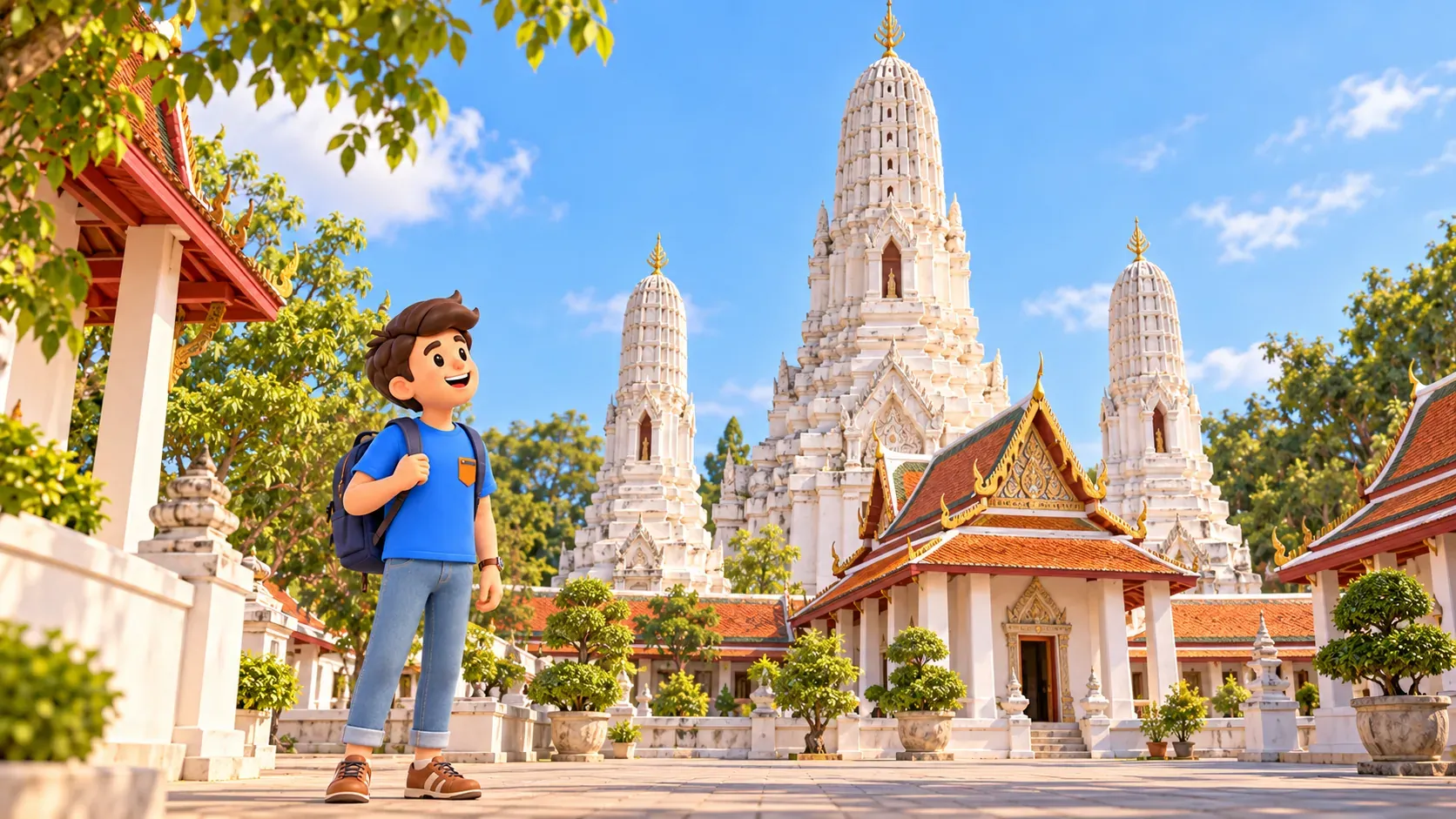
Wat Phichai Yat has a Bunnag family patronage connection and a nineteenth-century revival under Rama III. Its Thai-Chinese architectural character gives the walk a first subject. The white prangs are a useful visual starting point, but begin by seeing their relationship to the wider setting. A short visit gains more from that overall view than from immediately chasing the smallest decorative detail or trying to enter every visible structure.
From the permitted visitor area, notice the change between the towers’ vertical emphasis and the lower buildings around them. You can choose one comparison without needing a full architectural vocabulary. Keep the route clear for people using the temple and follow signs about access and shoes. This is an active religious place, not a collection arranged only for sightseeing. Its present use helps determine where to stand and when a particular interior visit is appropriate.
Give the main visit a small purpose
Choose one question: how does an entrance frame the towers, where does the building meet the courtyard, or what changes when you look from farther back? These are ways to organise attention, not exact photographic positions. A permitted interior can add another impression if it is available. If not, the exterior setting still carries the first stop. Do not make climbing to a specific level or obtaining an empty view a condition for enjoying the temple.
Before moving on, decide what you want to remember. A particular proportion or the contrast between white surfaces and rooflines is enough. You do not need to leave with an exhaustive history. A few facts give the building context, while the visit supplies your own observation. This also makes the next temple easier to distinguish: you have a clear first impression to compare rather than a large set of details that may merge with the following stop.
The neighbouring temple has a connection of its own
Wat Anongkharam and Phichai Yat are linked through related patrons: the former’s foundation is associated with the wife of Phichai Yat’s patron. That small relationship makes the next stop more than another nearby pin. You are looking at a pair within the neighbourhood’s religious history. The route does not require a complete family biography to appreciate the link. It simply gives the short walk a reason to bring these two names together.
Take the real public approach between them rather than assuming a straight passage through grounds. Use current crossings and entrances. Close markers can hide walls or the direction from which visitors actually enter. The transition allowance is for ordinary city walking and a moment to check direction. You can also notice a frontage, a doorway or the way the temple setting meets the street, without turning that small observation into another scheduled attraction.
Wat Anongkharam: let the second visit be different
Begin with the available outer setting, then select one detail to give the shorter stop a focus. If Phichai Yat drew your eyes upwards, look here at a doorway, a roofline or how the buildings relate to the courtyard. You are changing attention rather than trying to decide which temple is more important. Two neighbouring religious places can remain distinct when you allow them different roles within the same walk.
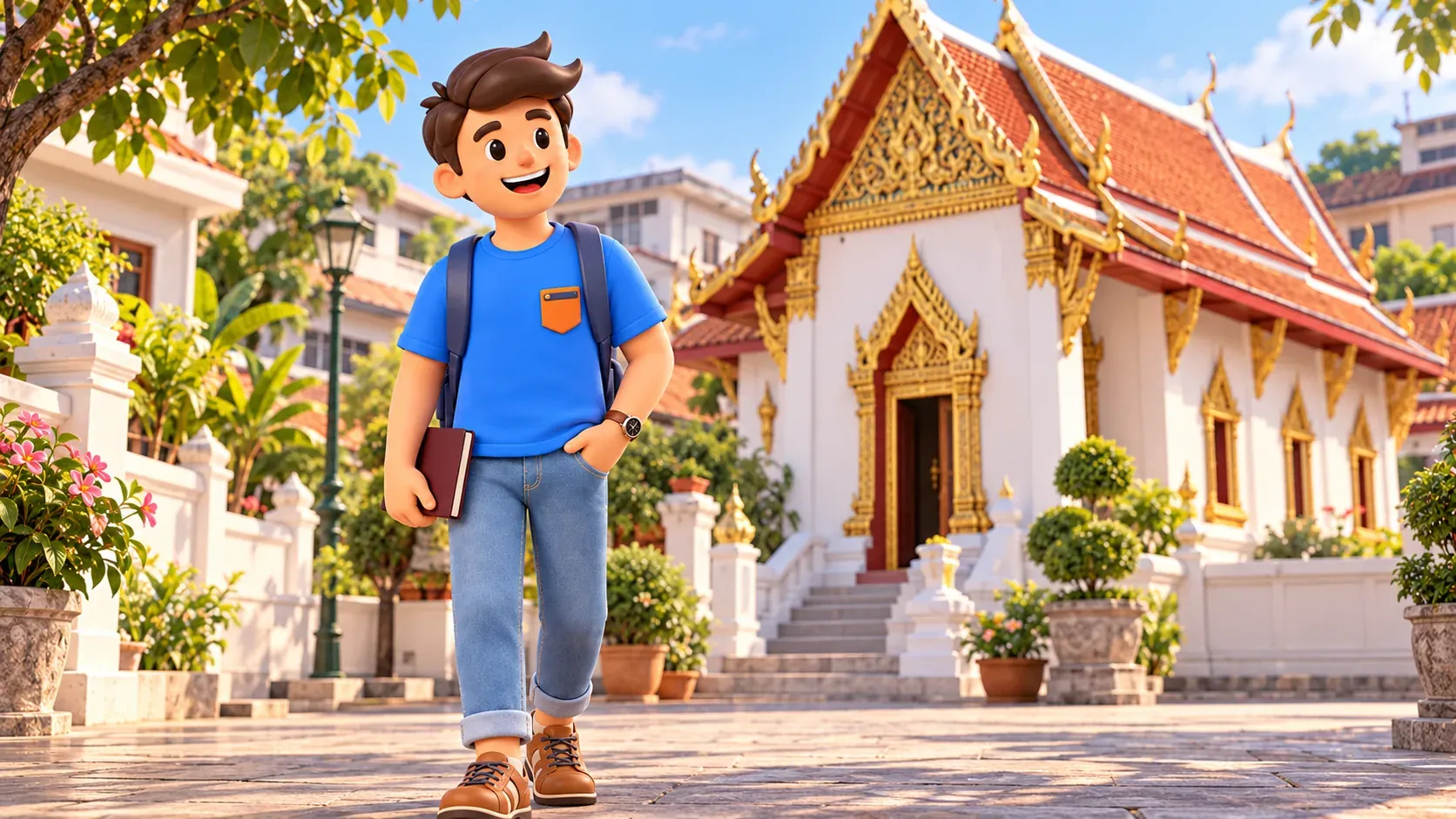
The twenty-minute block is for a selected encounter. It does not promise access to every hall, a local museum, library or any activity that may be mentioned in older descriptions. If a particular interior matters, check its own current arrangements before planning around it. Otherwise, keep the stop modest and let what is actually open guide the visit. A closed doorway is not a reason to search for a less obvious entrance through spaces meant for others.
A shared approach to both temples
Cover shoulders and knees, remove shoes where requested and follow the photography rules at the place you are standing. Leave people who come to pray their space. Close pictures of worship or private activity are not necessary for the route to have value. A roof, an entrance and a change of scale can already give a meaningful comparison. Keep voices and movement appropriate to the setting, including when the grounds feel less busy than a major landmark.
If you want a deeper second temple visit, give it more time and simplify the first. You may also end the religious part earlier if the main stop was enough. The outline is useful because it makes the size of the afternoon visible. It should not require you to keep adding religious spaces after your interest has shifted towards streets or a place to sit. The garden ending remains a different subject, with a purpose beyond being another stop on a list.
With RoadMe, create a personal trip that gives more space to the subjects you enjoy, from religious architecture to local history and gentle walks. The app makes organising the entire itinerary easier than connecting separate lists whenever the day’s interests or pace change.
The streets give the walk its neighbourhood scale
Continue towards the memorial park on public streets, checking the actual entrance on a current map. This is not a promised continuous riverside promenade. The small street section places the temples within a lived-in district. Notice ordinary building fronts and the relationship between a wall, an entrance and the space available for walking. Keep residential access free and ask before close photographs of people or their work. Curiosity can stay attentive without stepping into private areas.
You do not need to add a market, another shrine or a long river crossing here. A few streets are enough to change the scale before the park. If you need a drink, choose a convenient place on the actual line and allow time for it. A full meal requires more than the short transition in the table. Extend the outing or reduce a selected visit rather than pretending that ordering, waiting and eating happen outside the day’s time.
The Princess Mother Memorial Park: a small place for memory
The park honours Srinagarindra, the Princess Mother, and combines a community garden with local memory. Its model childhood house is a reconstruction, not a surviving original home. This distinction gives the final visit a useful frame: you are seeing a memorial setting, not stepping into an unchanged childhood address. You can appreciate the garden without turning the brief ending into a complete royal biography.
Start with the outdoor space available on the day. A planted path, preserved wall or a place to sit can be enough for the selected visit. If exhibitions interest you, check their separate access and give them additional time. The suggested garden stop does not guarantee that every display building is open. A small memorial park can work well precisely because you choose a modest subject and leave room to reflect after the two temple settings.

Sit before choosing the next journey
Use an appropriate seat if available and let the final minutes slow down. Compare one impression from each part: the first temple’s overall form, a detail at the second and the way memory is held within a garden. The places need not have equal visual impact. Their different purposes give the route its character. If you are travelling together, this is a natural time to share observations without standing in an entrance or looking at a map while crossing a road.
A longer exhibition visit or an extended café pause changes the outing, and that can be a good choice. The two-hour framework is there to make the decision visible. Do not compress the journey out into the last remaining moment. Choose a public exit and then the onward transport from where you really are, keeping any walk to a station or pier separate. The river’s closeness does not promise an immediate crossing or the same departure point from every neighbourhood street.

Keep the next west-bank route for its own time
For another neighbourhood theme, our Kudi Chin walk explores a different west-bank setting. The walk around Wat Arun gives the famous temple’s neighbours their own continuation. Treat them as separate outings unless you deliberately want a longer day. Phichai Yat, Anongkharam and the memorial garden already form a clear small route, with enough space for current religious life, ordinary streets and a calmer finish.


