
Near Kew Bridge: Water, Steam and Mechanical Music
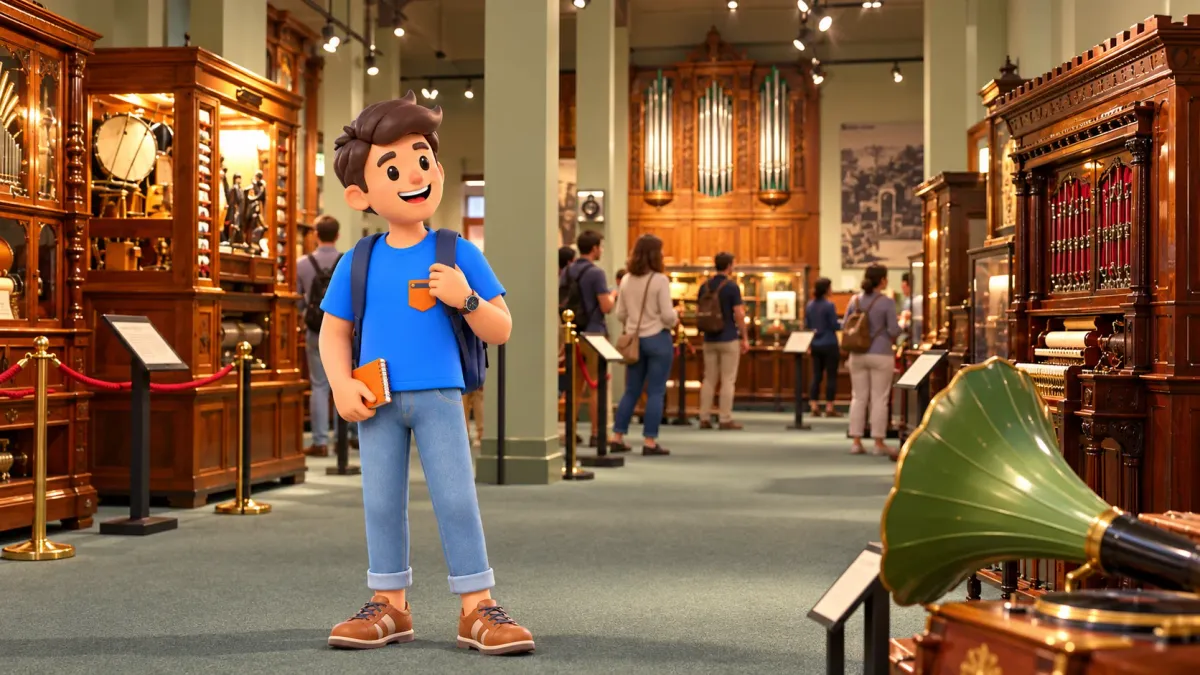
Near Kew Bridge, two museums offer an engaging day about machines that changed everyday life. The Musical Museum explores how instruments and inventions reproduce or generate music. The London Museum of Water & Steam tells the story of supplying a growing city with water. Their connection is the pleasure of understanding how something works, whether it fills a room with sound or helps move water through a city.
Allow four and a half hours locally for selected visits to both museums, a simple meal and a brief Thames view. Begin at the Musical Museum entrance at 10:15 for a confirmed available 10:30 tour, then finish around 14:45 outside Kew Bridge railway station at street level. Travel from your accommodation, the initial station approach, platforms, waiting and the onward journey are additional. The main plan stays on the north side of the river.
Start with the musical demonstration
Check both museums’ actual calendars before choosing the date. Their ordinary opening days overlap on Friday, Saturday and Sunday. The Musical Museum lists tours at 10:30, 12:30 and 14:30, but events can limit or cancel them. This outline depends on an available 10:30 tour. If that start is unavailable, revise the day or choose one museum; simply substituting a later tour changes the rest of the schedule.
Try RoadMe to develop a personal plan for your whole London trip around your interests, dates, budget and pace. In the app, it is much more convenient to give a day of unusual museums its place alongside central sights, neighbourhood walks, meals and recovery throughout your stay.
Budget fifteen minutes for arrival at the Musical Museum, seventy-five for its tour, thirty for a simple meal at the water museum site and ninety-five for a selected water museum visit. Add twenty minutes for the river view, twenty-five for all public-street connections between the museums, bridge and final station entrance, and ten as reserve. That totals 270 minutes. The tour and water museum allowances include movement within the chosen galleries.
These are editorial estimates, including a seventy-five-minute budget for a tour the Musical Museum describes as lasting just over an hour. They are not a measured walking track or a promise to see both complete collections. A workable example reaches the water museum site after the music tour for a simple meal, then gives its selected displays the early afternoon. Keep the river ending modest and adjust openly if a visit runs longer.
Music played by a machine, and music played through one
The Musical Museum was founded in 1963 by Frank Holland. Its subject is more specific than a complete history of the first musical instruments: it follows ingenious ways to capture, reproduce and create music. A volunteer demonstration can help connect an impressive wooden cabinet with the sound it produces. Choose one question to carry through the visit: where does the musical information come from, and what turns it into something you can hear?
Reproducing pianos can preserve aspects of a pianist’s performance, while other instruments generate music through an automatic mechanism. The collection includes a self-playing violin combined with a piano that uses electric motors and electromagnets. That detail is a useful reminder that these inventions are not all simple clockwork. Looking at the relationship between a moving mechanism and the resulting sound gives the visit a clear thread without requiring an engineering background.
Music boxes offer another scale of invention. A pinned cylinder can pluck a tuned steel comb; larger examples can add other sounds and instruments. Listen first, then look for the explanation of what you have heard. Staff demonstrations and designated interactive exhibits set the boundaries; a historical instrument’s inviting keyboard does not automatically give visitors permission to play it.
The Mighty Wurlitzer theatre organ adds a different relationship between performer and machine. It was designed to accompany silent films and can offer orchestral and percussion effects as well as organ sound. It is an instrument for a player, rather than evidence that everything here plays itself. Concerts, film screenings and special events have their own programmes. An ordinary visit should not be treated as a ticket to every performance advertised by the museum.
The story continues into electronic sound
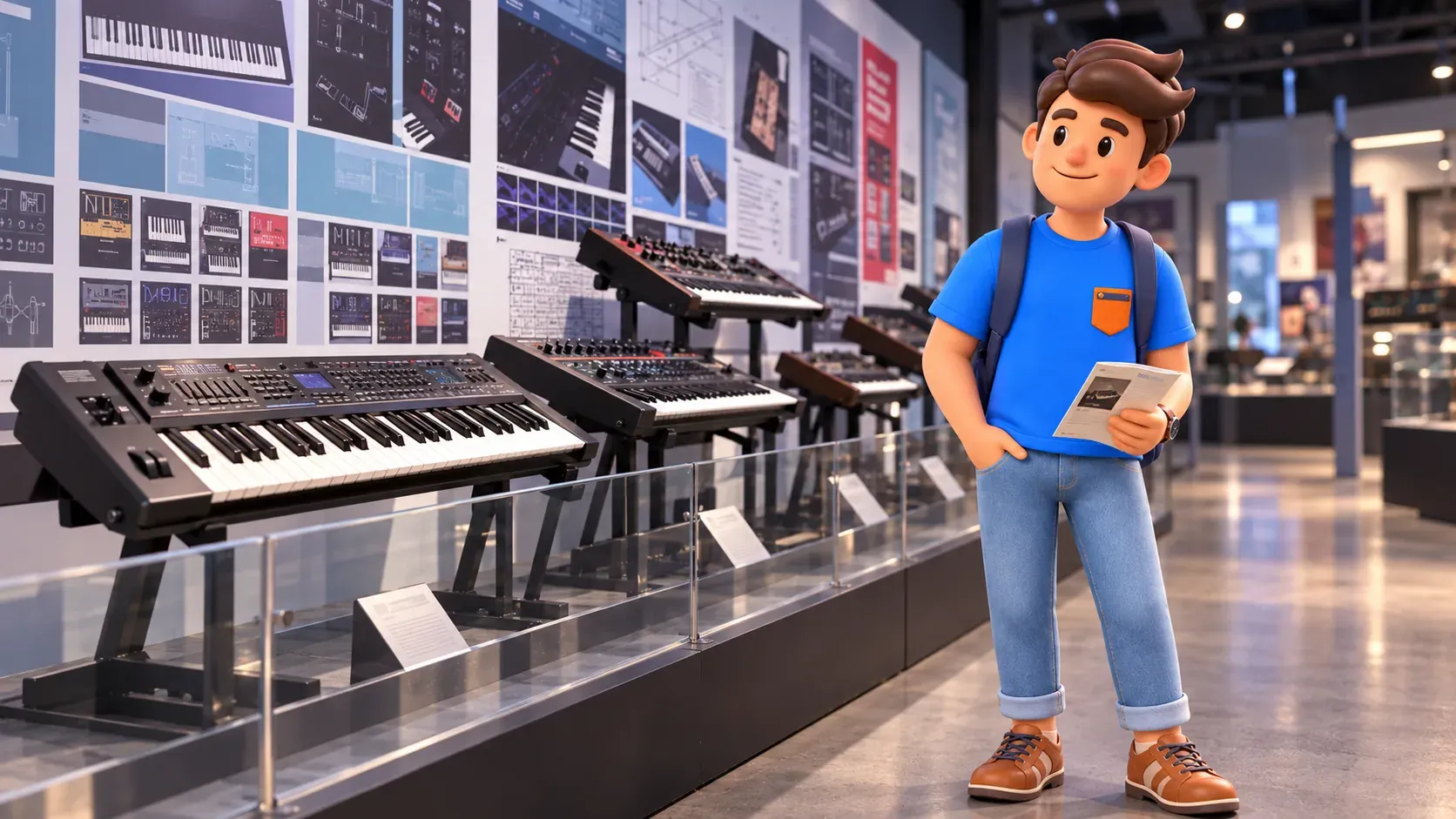
The Korg Gallery brings keyboards and synthesizers into the same wider story. Mechanical reproduction and electronic sound belong to different technologies, but both change what people can hear and make. You do not have to be a musician to notice the contrast between a wooden automatic instrument and an electronic keyboard. Follow the explanation and any instructions for interactive displays, keeping your hands away from objects whose visitor use has not been authorised.
A more detailed Korg-focused tour may be offered when a specialist guide is available. That is an optional alternative to check, rather than another full tour to add within the same seventy-five minutes. Ask which experience is being offered on your date. The main aim is to hear selected demonstrations with their explanation, leaving time afterwards for the second museum. A deeper interest in electronic instruments can instead justify a longer single-museum visit.
A practical pause between two collections
After the music tour, follow public pavements along the High Street and towards Green Dragon Lane for the London Museum of Water & Steam. Use the available pedestrian crossings and keep clear of the cycle route. The connection belongs inside the twenty-five-minute allowance for all links in the day.
The thirty-minute meal is planned at the water museum site, with admission arranged as required. Choose the café when it is open and serving something that fits, or bring a simple prepared meal for a permitted picnic area. The museum allows picnics in its garden and Splash Zone courtyard, with staff advice available in poor weather. A longer lunch or a queue needs extra time. Budget food separately from the two museum admissions.
Water for London: the work behind an everyday service
The water museum occupies the former Kew Bridge pumping station, built in 1838. It offers a concrete way to think about a service most travellers take for granted. Water at a tap depends on infrastructure, energy and people’s work. The museum connects the machinery with that larger city story. During a selected visit, choose a manageable group of open displays rather than trying to examine every engine, gallery and outdoor activity.
A large stationary steam engine has a different presence from a musical mechanism, but the same curiosity can guide you: what is moving, what work does it perform and how does that serve people elsewhere? Displays about water supply give the machinery a purpose beyond its impressive scale. You can enjoy the shapes, metalwork and explanation without memorising every technical measurement or pretending that one short visit provides a complete history of London’s infrastructure.
The site’s standpipe tower had a practical water-supply role: vertical pipes helped smooth the pressure produced by pumping engines before water entered the mains. It is an interesting example of an architectural landmark doing work that is not obvious from a glance. Treat it as part of the story, without assuming public access to climb it.
At present, the museum lists the engine house containing the 90-inch and 100-inch engines as closed for renovation. Keep that closure in the plan when choosing what to see. A photograph of a major engine does not establish access to its hall today. The ninety-five-minute allowance is for available selected displays, entry arrangements and movement through the chosen parts, with staff advice helping you find a suitable focus.
Afterwards, in your own space, a small hand-operated water-pump model can be a way to think about moving water. It is a personal activity with your own equipment, separate from the museum visit. It does not imply a workshop on site or permission to handle historic machinery. The useful connection is curiosity about a simple action and its result, rather than a claim to reproduce the museum’s engineering systems.

Steam Up is a particular date
For engines working under steam, consult the Steam Up calendar and the programme for the actual day. Ordinary opening is not a guarantee of running engines. Event admission also differs from standard admission, so check the ticket you need before arranging the combined outing. If a particular demonstration is the main reason for travelling, give its confirmed time priority and revise the music visit or choose a day devoted to the water museum.
The Waterworks Railway is another separate activity. The museum describes operation on selected dates by a small volunteer team, with weather also affecting it. Do not promise a train ride as part of every visit or assume that it fits inside the selected gallery allowance. Families can choose between extra activities and a longer pause. The best version is the one that preserves attention and energy, rather than trying to include every possible feature.
A short Thames view, then the station
After the water museum, use public streets and crossings towards the northern approach to Kew Bridge. Keep the river view to the available public pavement and allow twenty minutes for looking and pausing. This is an ending at the north side of the bridge, with no river crossing or boat journey included. Finish outside Kew Bridge railway station at street level, leaving platforms, waiting and the train journey outside the local four-and-a-half-hour plan.
The open water gives the eyes a different distance after two collections of detailed objects. It can be enough to notice the opposite bank and changing light. Keep photographs clear of traffic and pedestrian movement. In wind or rain, shorten the pause. The day already has a complete subject: sound, water and the inventions that help people shape both. A particular sunset or passing boat is a pleasant possibility rather than a required part of the plan.

Choose the visit your interests can support
Both museums require their own admission arrangements. The Musical Museum says general admission is purchased at reception on the day; an individual visitor should not confuse that with its advance arrangements for private groups. Check opening and tour availability first. Kew Bridge railway station and Kew Gardens Underground station are different places. Choose transport from your own starting point and keep the initial approach to the Musical Museum separate from the local itinerary.
For mobility needs, ask both museums about the particular route and tour. The water museum offers a step-free route through most areas, while beam floors and the mezzanine are not step-free, and its major engine-house closure affects the available visit. Outdoor areas include slopes, gravel and uneven surfaces. A comfortable visit to one collection is a sound alternative when the combined programme feels too demanding.
With RoadMe, these preferences can become a complete personal London programme that is easier to prepare and use throughout the stay. Let the app work through your interests and pace, giving unusual museums, gardens, other neighbourhoods, meals and recovery a convenient place in the whole trip.
For another day, our first-visit plan for Kew Gardens has its own admission, entrances and much longer garden programme. Our comparison of smaller London museums helps choose a different cultural focus. These are separate outings. Let the Kew Bridge day remain a selected encounter with two distinctive collections, with enough space around the machines to enjoy what they reveal.


