
A Day in Jackson Park: Griffin MSI, U-505 and Osaka Garden

A day around Jackson Park works best with one clear centre: the Griffin Museum of Science and Industry. Give the museum several hours, then use the park and Osaka Garden as a quieter continuation when the season, opening arrangements and your remaining energy allow it. This makes a coherent day without adding another major museum or a distant neighbourhood to the same schedule.
The important distinctions are practical. The U-505 exhibition and the optional tour inside the submarine are different experiences. Osaka Garden is a managed garden with its own calendar and visitor rules, rather than an unrestricted corner of the wider park. Decide what matters before buying tickets, and keep the outdoor ending flexible.
Build the day around the museum and one optional extra
Allow roughly six to seven hours in the area, apart from travel from downtown. A useful starting budget gives the museum three to four hours, a meal or proper rest around forty-five minutes, and the outdoor section another sixty to ninety minutes plus orientation. These are planning allowances, not measured durations or a requirement to keep walking until the time is filled.
RoadMe helps plan a complete personal trip around your dates, interests and preferred pace. Try giving science and technology a substantial day here, then balance the rest of Chicago with the architecture, neighbourhoods or quieter time that suit you.
If the submarine interior is your priority, book that specific timed experience and arrange the museum around it. If you prefer interactive science, leave more unstructured gallery time instead. One selected extra is enough to shape the day; stacking a submarine tour, another timed attraction and a film can turn a broad museum visit into a sequence of deadlines.
Check the two calendars before deciding the order
Start with the museum’s actual admission calendar and your selected experiences. Then check whether Osaka Garden is open on the same date and whether its closing time leaves a comfortable outdoor window. A generic park listing is not sufficient to establish garden access, particularly outside the main visiting season.
At present the garden has a seasonal calendar, including Monday closure and a winter shutdown. Check the current arrangements for your date rather than treating a photograph of an open gate as evidence. If the garden is unavailable, the day can still centre on the museum with a shorter walk on permitted park paths afterwards.
The museum-first order is convenient when garden hours leave enough room. If a short garden opening window matters more, consider changing the sequence before you buy a timed tour. Do not assume that leaving and re-entering the museum is automatically allowed. Ask about the applicable ticket arrangements if your intended plan depends on it.
Arrive at the museum entrance with a manageable plan
The museum’s address is 5700 South DuSable Lake Shore Drive. Use its current directions for the north visitor entrance; a parking-garage entrance and a pedestrian approach are different things. Keep your digital or printed tickets ready, and locate the relevant meeting place for any booked experience after you enter.
For the first few minutes, orient yourself rather than rushing towards the most distant gallery. Identify your one fixed appointment, the main subject you want to explore and a suitable point for a break. The museum is large enough that repeated journeys across it can consume time you would rather spend with exhibits.
If several people are visiting together, choose one shared priority and leave room for a second interest. You do not need identical enthusiasm for every gallery. A clear meeting plan and a realistic attention span are more useful than a long list that assumes everyone will remain equally interested throughout the day.
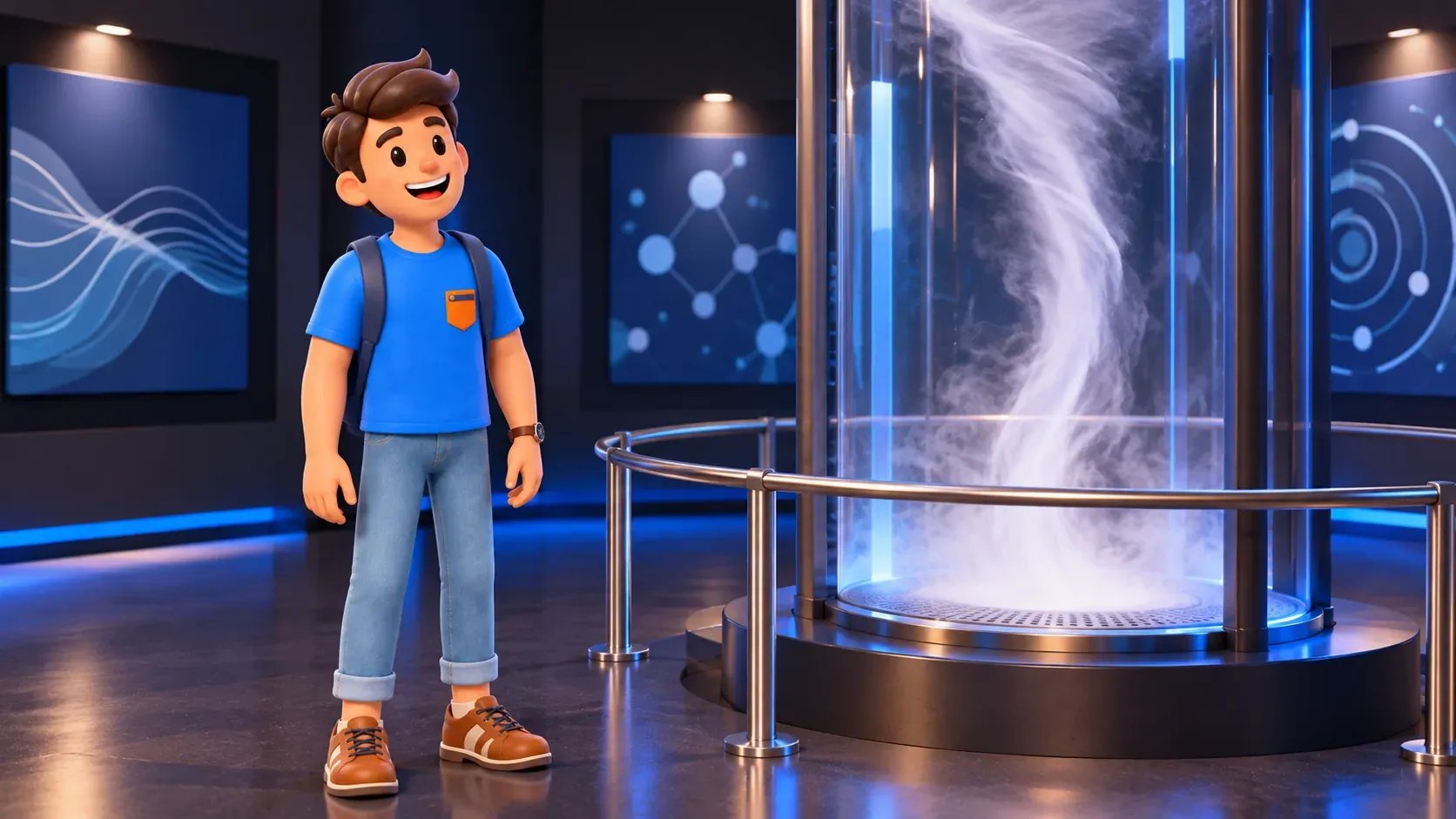
Use Science Storms to follow a question
Science Storms explores natural phenomena through large demonstrations and interactive exhibits. Rather than collecting a quick look at everything, choose a question that interests you: how motion changes, how waves behave or how light can be investigated. Let one part of the gallery explain a process before moving to a different example.
The most satisfying interactive visit leaves time for a second attempt. Observe what changes when a variable changes, then compare the result with what you expected. Follow the actual instructions and available activities on the day; an exhibit description does not promise that every demonstration will run at the exact moment you arrive.
With children, ask for a prediction before trying an activity and a short explanation afterwards. With adults, the same approach can be more engaging than simply reading a label and moving on. There is no need to turn the museum into a formal lesson: one remembered connection is a useful outcome.
Keep an eye on the time if you have a fixed submarine booking, but leave a sensible transition. Museum movement includes finding the correct level, passing other visitors and locating the tour entrance. Two adjacent-looking features on a floor plan do not automatically make a last-minute connection comfortable.
Separate the U-505 exhibition from boarding the submarine
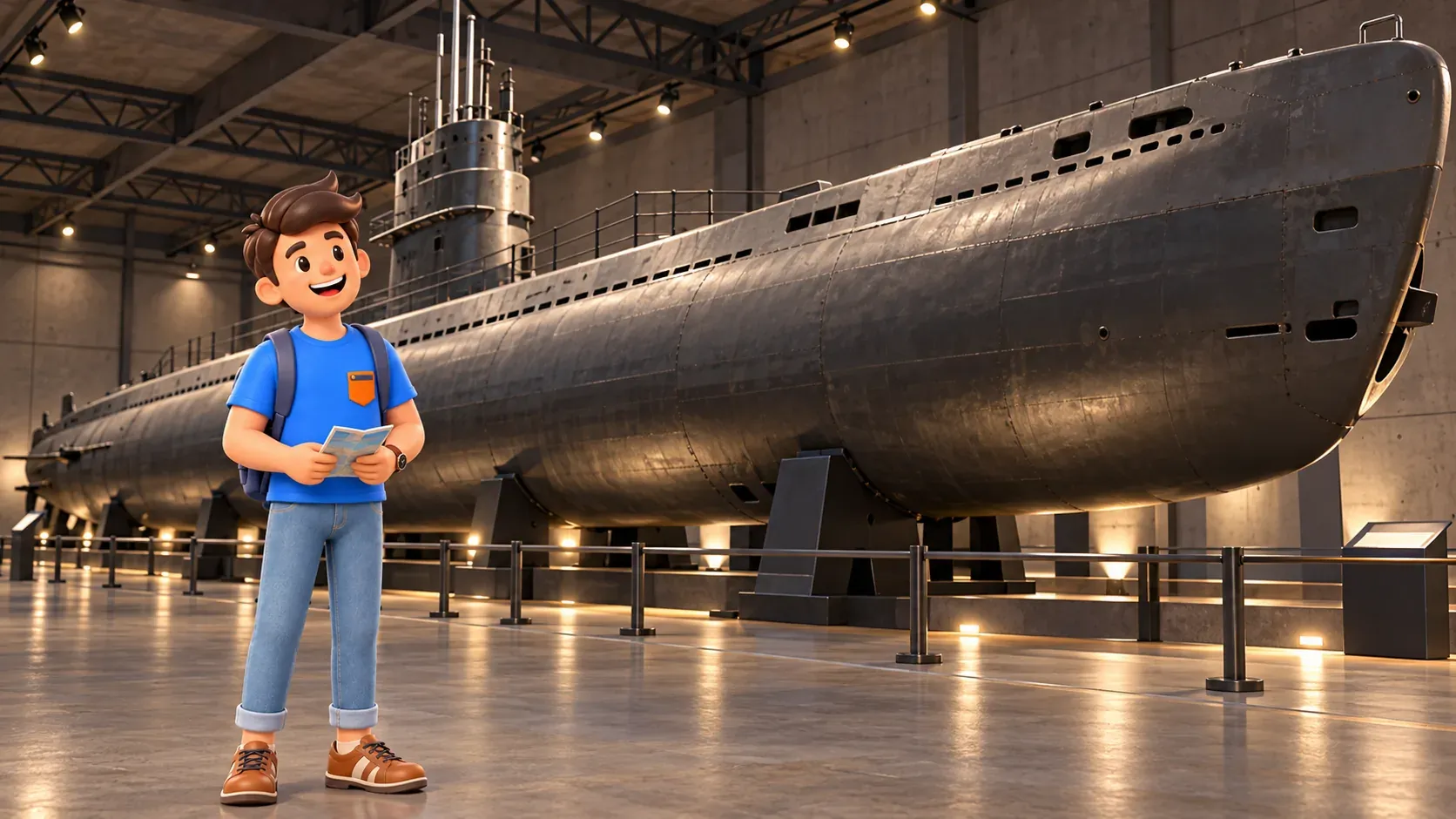
The U-505 exhibition lets you encounter the submarine and the story surrounding it in the museum setting. The optional On-Board Tour takes visitors inside and requires its own timed ticket in addition to general admission. Choose according to the experience you want rather than assuming every ticket with the museum’s name includes access to the vessel’s interior.
The on-board tour currently lasts about twenty-five minutes. Allow additional time to reach its entrance: the museum advises that the walk from the exhibition entrance can take five to ten minutes. Booking ahead helps with limited capacity, but a reservation still requires you to arrive at the correct meeting point on time.
If you do not board, give the surrounding exhibition real attention instead of treating it as a failed substitute. Look at the vessel’s scale and read the context presented around it. Seeing the submarine from outside and walking through its interior are distinct visits; either can be part of a worthwhile museum day when expectations match the ticket.
The on-board route has physical restrictions, including lack of wheelchair and stroller access. Check the detailed conditions if narrow spaces, movement or the wartime content matter to your group. You can retain the museum and exhibition as the main experience without assuming everyone must enter the submarine to take part in the outing.
Give the museum a deliberate finishing point
After the main galleries and any selected tour, decide whether you want one final exhibit or a break. A planned ending can preserve attention better than drifting through rooms because they are still available. Ask each person what has stayed with them; that often reveals whether another gallery would add interest or simply add fatigue.
Take a meal or rest where it is permitted. Check the museum’s current dining arrangements if you intend to eat there, and leave enough time before the garden’s actual closing window. Do not carry the assumption that every pleasant outdoor space welcomes a picnic: Osaka Garden has rules distinct from the surrounding park.
Before leaving the building, check the weather and your onward plan. If wind, rain or tiredness makes the garden less appealing, finish with a short permitted outdoor look or begin the return journey. The museum visit remains the centre of the day; the outdoor continuation should improve it rather than become an obligation.
Walk towards Wooded Island using the open park routes
Osaka Garden lies south of the museum on Wooded Island within Jackson Park. Its park listing uses 5900 South Cornell Drive for orientation. After leaving the museum, use current signs and the paths actually open towards the island. Do not rely on a remembered photograph to establish that a particular bridge or gate is usable today.
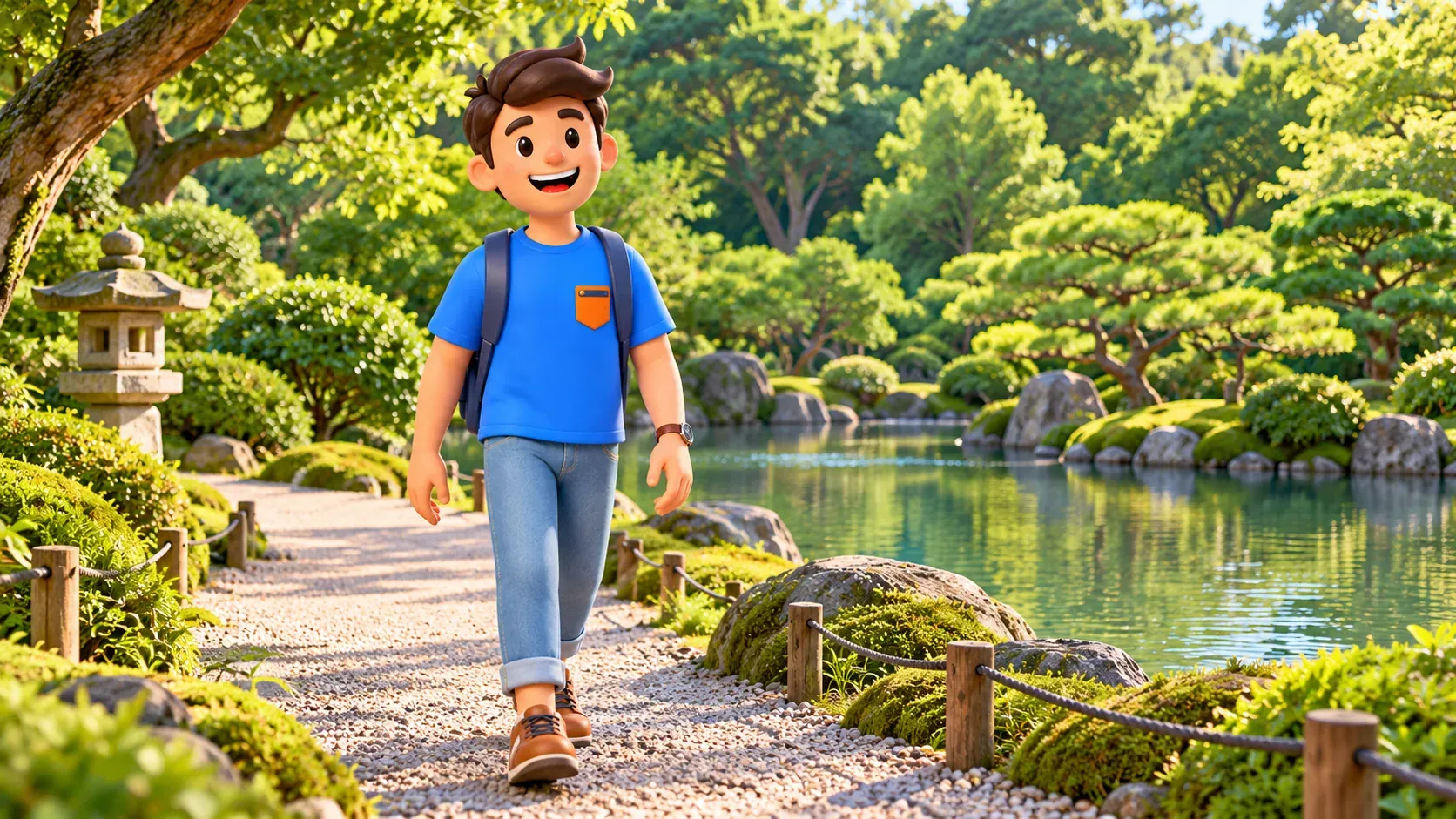
Allow room for orientation and a slower pace after the busy galleries. Water, trees and the relationship between open lawns and more enclosed planting provide a different kind of attention. You do not need to complete a full loop of Jackson Park to appreciate that change, and this plan does not depend on crossing every part of the park.
Respect temporary closures and keep to permitted paths. If an approach is blocked, follow the signed alternative only when it remains comfortable within your time and energy. If access is unclear, shorten the outing. An outdoor ending is most useful when you can enjoy it without rushing back towards a closing entrance.
Visit Osaka Garden at its own pace
Inside the garden, stay on the path and slow down. Watch how water, stones, planting and changes of viewpoint shape the space. The aim is a quiet encounter rather than a sequence of photographs. A short attentive visit can work better than trying to turn a small garden into an hour-by-hour attraction.
Current garden rules prohibit photography, dogs, bicycles, strollers and picnics; check the latest visitor instructions before arrival. Plan any belongings or group needs accordingly, without assuming there will be storage at the gate. These conditions apply to the garden itself and should not be extended automatically to every part of Jackson Park.
If visiting with others, keep conversation considerate and avoid blocking the narrow parts of the route. Follow staff directions and any admission arrangements in force. Do not promise children unrestricted space for running here; choose the garden when a quieter walk fits the group’s remaining attention after the museum.
When the garden is closed, a permitted park walk can provide a calm ending, or you can finish earlier. Be precise about what you have experienced: seeing the island or an exterior gate is different from visiting the garden. Seasonal flexibility makes this combination useful across more trips without pretending that every component is always available.
Leave from the actual final point
Plan the return from the park exit you really use, not automatically from the museum’s entrance. Consult current transport information for that location and the time of day. Travel from the central city belongs outside the on-site budget, and the journey home may begin farther south than your arrival.
RoadMe can give the rest of your trip a pace that matches the interests discovered here. Try placing another large museum or an architectural walk on a separate day, with room for travel, meals and rest between them.
For a different Hyde Park experience, save the university half-day with Robie House or ISAC for another block. This Jackson Park day has its own focus: a substantial science museum, a clearly chosen optional experience and a garden ending that follows the real season and conditions.


