
Italian Bruges: merchant lodges, the Medici bank and the Adornes family

Look for Bruges’ Italian connections in merchant lodges, a former banking house and a family chapel. Traders from Genoa and Florence were part of a city linking different European commercial worlds. Their presence left several kinds of story: collective representation, the business of a bank and a family’s effort to establish its place through a home, faith and remembrance.
A first encounter can stay within the small area north of Markt: the Genoese and Florentine lodges, followed by Hof Bladelin on Naaldenstraat. Treat the Adornes estate in the St Anne district as a separate extension. This keeps the idea manageable instead of turning it into a hurried attempt to find every building associated with an Italian name.
Choose the scale of your Italian Bruges walk
There are two useful versions. The shorter one explores commercial representation and money: two lodges around the former exchange area and an outside look at Hof Bladelin. The longer version adds the Adornes family and Jerusalem Chapel in another part of the centre. Choose according to your interests: buildings and business, or people, devotion and the memory of several generations.
RoadMe makes it much easier to turn this theme into a personalised plan for your whole trip, developed around your interests, available time and pace. Try planning Bruges there so that merchant stories fit naturally alongside your favourite museums, canals and time to rest.
Allow roughly an hour to an hour and a half for the short outside walk, including time to look. This is an editorial allowance, not a measured tour duration. Start where Vlamingstraat, Grauwwerkersstraat and Academiestraat meet, then continue towards Naaldenstraat. Full visits to interiors are additional. If you choose Hof Bladelin or the Adornes museum, give that visit its own time and check access for your date.
The advantage is knowing when the theme has done enough. You do not need an exhaustive account of international finance. Seeing three different settings already provides a framework: a shared merchant headquarters, a private residence used for banking and a family religious estate. Each gives a different answer to the question of how distant connections became part of Bruges.
Genoa and Florence were different communities
Italian is a convenient label for a present-day visitor, but it should not hide the distinctions between historic cities and their trading communities. The Genoese and Florentine organisations were not two branches of a single modern Italian national institution. Their connections and interests differed. A historical trading nation in this context means a form of merchant association, rather than a present-day state embassy.
A lodge was a place associated with commercial representation and business. The name does not automatically refer to Freemasonry. Equally, not every foreign merchant in Bruges belonged to the Hanseatic network. The city brought different networks into contact; Italian communities and Hanseatic merchants reveal different aspects of that wider international setting.
Begin by looking at the group of streets and buildings rather than one façade. The former exchange area may feel surprisingly small compared with the grand square its name suggests. A few minutes considering the buildings together can make its significance easier to grasp. Important commercial relationships did not always require a huge open space or a monumental urban plan.
The Florentine Lodge: a corner with distant connections
The Florentine Lodge stands on the corner of Academiestraat. The building has thirteenth-century origins, with an imposing screen façade and corner turrets added around 1430. That distinction between beginnings and later appearance is useful. The scene in front of you combines building phases rather than preserving a single moment when the institution first arrived.
This was the headquarters of Florentine merchants. For a short stop, connect the name with its function: traders needed a durable presence within another city. The building is more than an attractive house with a southern association. It shows international commerce becoming part of a local streetscape, close to other communities and the places where business was conducted.
Today the building contains a restaurant. That is a separate modern use, rather than a promise of an exhibition about medieval Florence. Looking from the street is enough for this part of the walk. If you wish to enter as a restaurant guest, follow its own arrangements instead of treating a working business as an unrestricted historical museum.
The Genoese Lodge: an old name and a different present
Nearby stands the Genoese Lodge, also known as Saaihalle. The main building goes back to 1399; an adjoining residence for the Genoese consul followed later. Its present façade should not be mistaken for an entirely untouched fourteenth-century surface. Alterations and restoration shaped what you see, including the later curved upper gable.
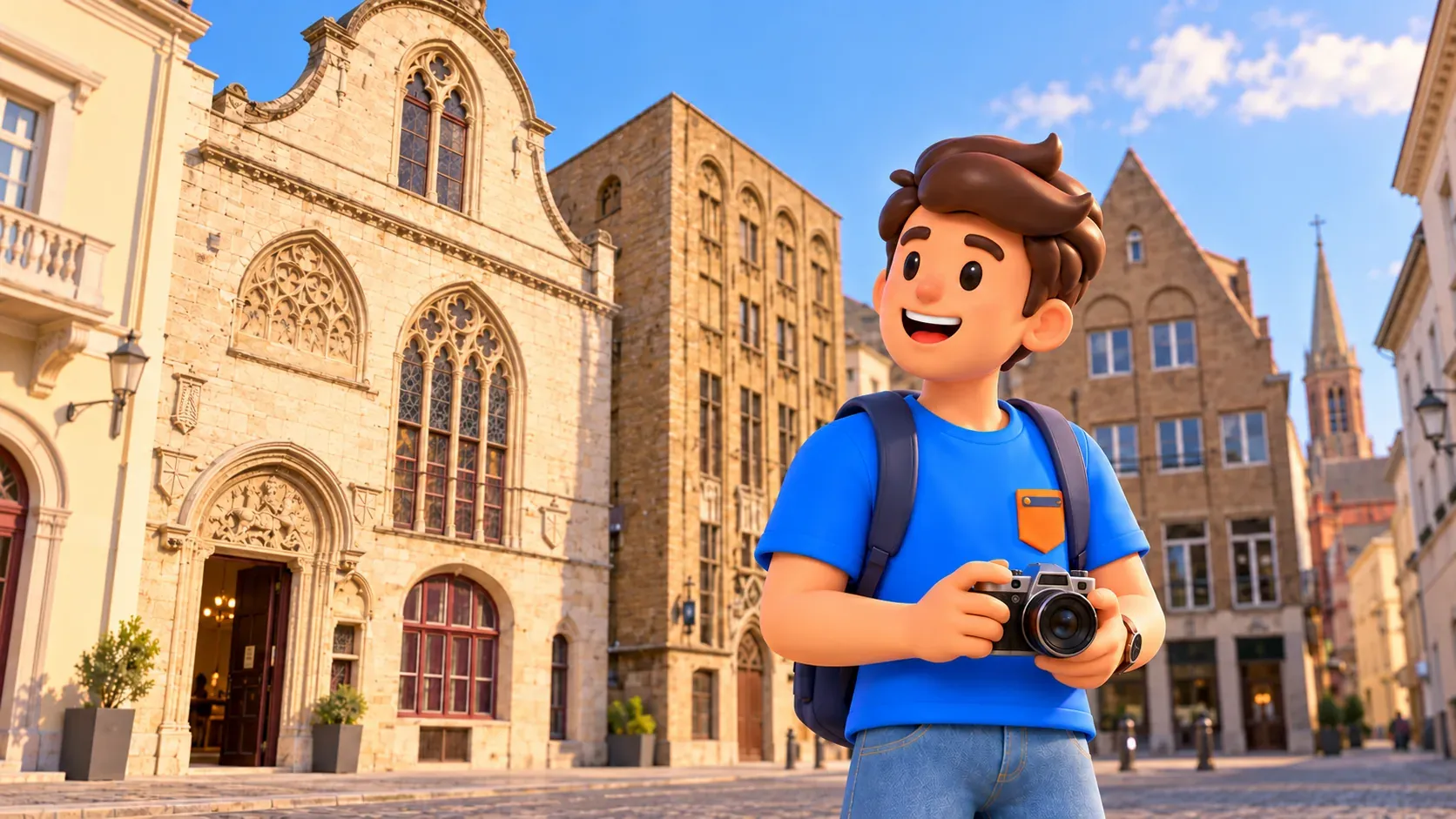
The relief above the entrance depicts St George and the dragon, and Genoese heraldry also appears on the building. The relief has itself been renewed. For a visitor, the useful point is that the connection with Genoa is expressed through more than a modern map label. It is not evidence that every visible detail looks exactly as it did when the first merchants used the lodge.
The building now houses the Frietmuseum, devoted to potatoes and Belgian fries. Its current subject does not make the former lodge a museum of Italian trading history. You can appreciate the architecture and continue, or choose the museum for its own theme. Those decisions need not coincide. A paid museum visit is not automatically included in an outside historical walk.
Compare the two lodges before moving on. The point is not to decide which looks more Italian. Notice instead how trading communities expressed their presence within a Flemish city. A recognisable link with a place of origin did not require an entire neighbourhood to become an architectural copy of Genoa or Florence.
Hof Bladelin: a local palace and a Florentine bank
Hof Bladelin introduces a different kind of connection. Pieter Bladelin, closely associated with the Burgundian court, had his city residence built on Naaldenstraat around 1435–1440. He was an influential local figure, not an Italian founder. The house later passed to the Florentine de’ Medici family, who established a bank branch there.
This moves the story from communal representation to a prestigious building given another purpose. Italian involvement did not always begin with constructing a new house. It could come through renting, buying and reusing an existing residence. The bankers’ connections with the Burgundian rulers help explain why commercial history and court society meet so closely here.
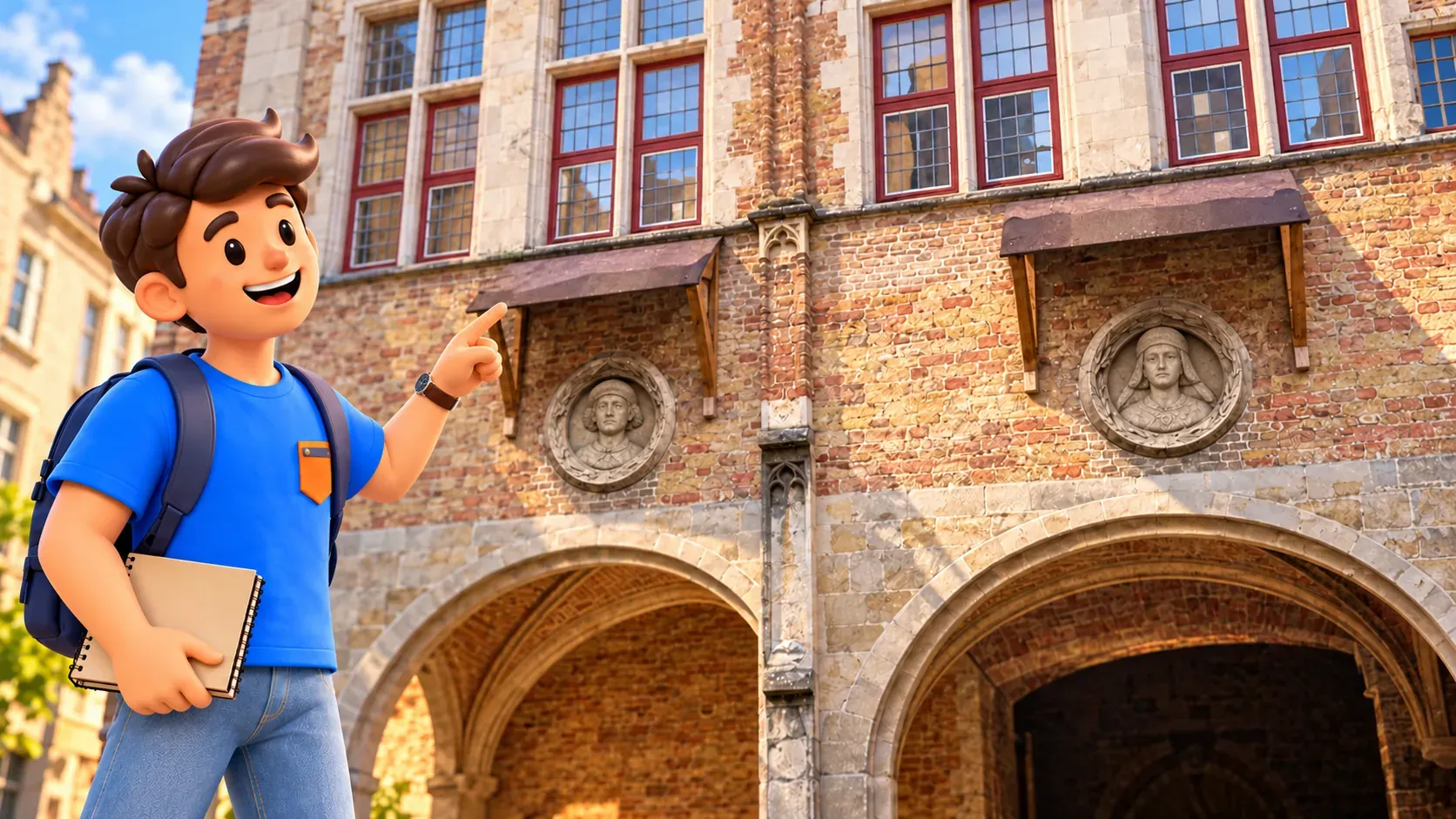
The courtyard contains stone portrait medallions of Lorenzo de’ Medici and Clarice Orsini. These round reliefs, or tondi, give faces to the Florentine connection. A portrait does not prove that the person represented lived permanently in Bruges. It can express family ties and esteem rather than record a resident’s address.
The courtyard, halls and chapel belong to a separate visit under current admission arrangements. Do not assume that every historic courtyard is freely open throughout the day. Even an outside stop can introduce the transition from residence to banking house. For a closer look, choose an interior deliberately and allow it a proper place in the schedule.
Art can extend the theme without requiring another museum immediately. Connections between Bruges and Italy also involved patrons and works that travelled. If you encounter copies of works associated with the Portinari family at Hof Bladelin, distinguish them from originals held elsewhere. A subject’s historical connection with Bruges does not mean the original painting is currently displayed in the city.
The Adornes estate: commerce becomes a family story
The Adornes estate brings the theme into the St Anne district. The Adorno family came from Genoa and established roots in Bruges, participating in its economic and civic life. Their private fifteenth-century estate brings together the Jerusalem Chapel, former almshouses and a residential part. The question is not only where the family came from, but how it became part of Bruges itself.
Anselm Adornes was a merchant and diplomat. His pilgrimage to the Holy Land in 1470–1471 adds another geographical dimension. Genoese roots, life in Bruges, a long journey and remembrance of Jerusalem form a striking sequence. It should not be reduced to commerce alone: devotion and social standing also shaped the family’s decisions and the places through which it is remembered.
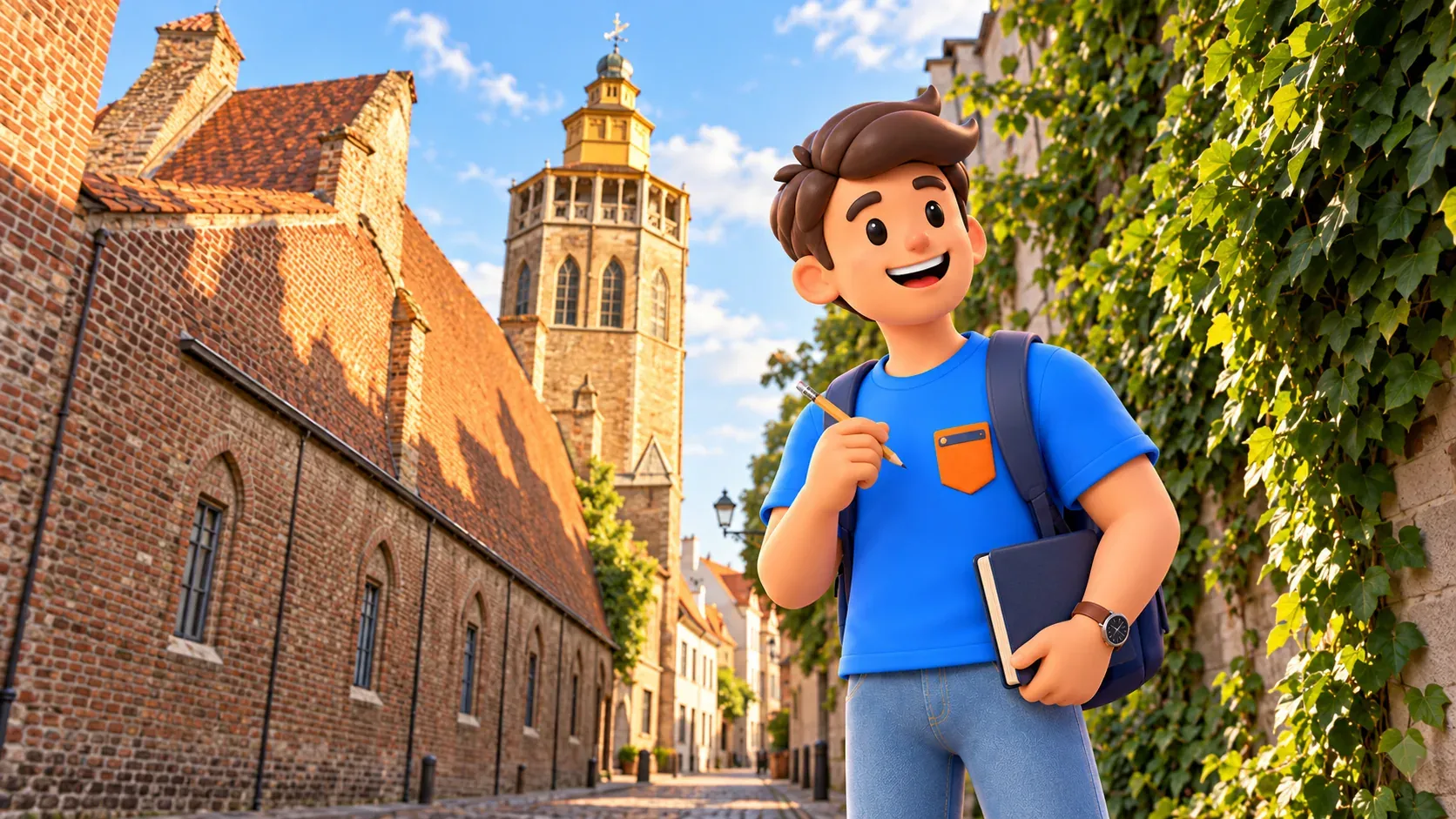
The Jerusalem Chapel takes inspiration from the Church of the Holy Sepulchre. For an outside introduction, appreciate its unusual silhouette from the public street. It is distinct from St Anne’s Church, rather than a communal church serving as the centre of the whole district. Its private family character explains why the story feels more personal than the merchant lodges near the exchange area.
If you decide to visit the estate, it has its own ticket and calendar. Photography is prohibited inside the buildings, and backpacks and large objects must be left at reception. Private residential salons are not an unrestricted part of ordinary admission; separate guided group arrangements apply. Remembering those distinctions is more useful than trying to memorise the names of every room.
Connect the places without overfilling the day
The short version finishes at Hof Bladelin and leaves time for another interest. For the extension, return towards Academiestraat and Jan van Eyckplein, then continue by Spinolarei and Verversdijk towards the St Anne district and Adornes estate. This describes the sequence of areas, not a promise that everyone will cover them in the same number of minutes.
With RoadMe, it is much easier to develop a personalised route or complete trip plan that combines merchant history with the experiences you actually enjoy. Try setting your priorities and preferred pace to turn a few appealing ideas into a coherent journey.
Allow around two hours for the extended outside introduction with pauses, as an editorial estimate. A full Adornes or Hof Bladelin visit needs additional time, as do a café break and reaching the starting point. For a broader commercial neighbourhood walk, use the merchant Bruges itinerary; for a different continuation in the eastern centre, explore the St Anne district walk.
What to remember afterwards
Keep three connections rather than a long list of surnames. A lodge suggests collective representation; Bladelin shows a prestigious house changing function; Adornes brings family remembrance and faith into view. Italian Bruges then becomes a way of reading the city. These stories help explain how a place that looks unmistakably Flemish belonged to much wider European worlds.
With companions, choose one detail each: a façade emblem, a portrait medallion or the chapel’s silhouette. Discuss what it helped you understand. This small exercise makes the outing more engaging without requiring specialist knowledge of banking history. The most interesting discovery is how distant connections acquired local walls, doors and addresses.


