
Hyde Park by the Lake: A Walk to Promontory Point
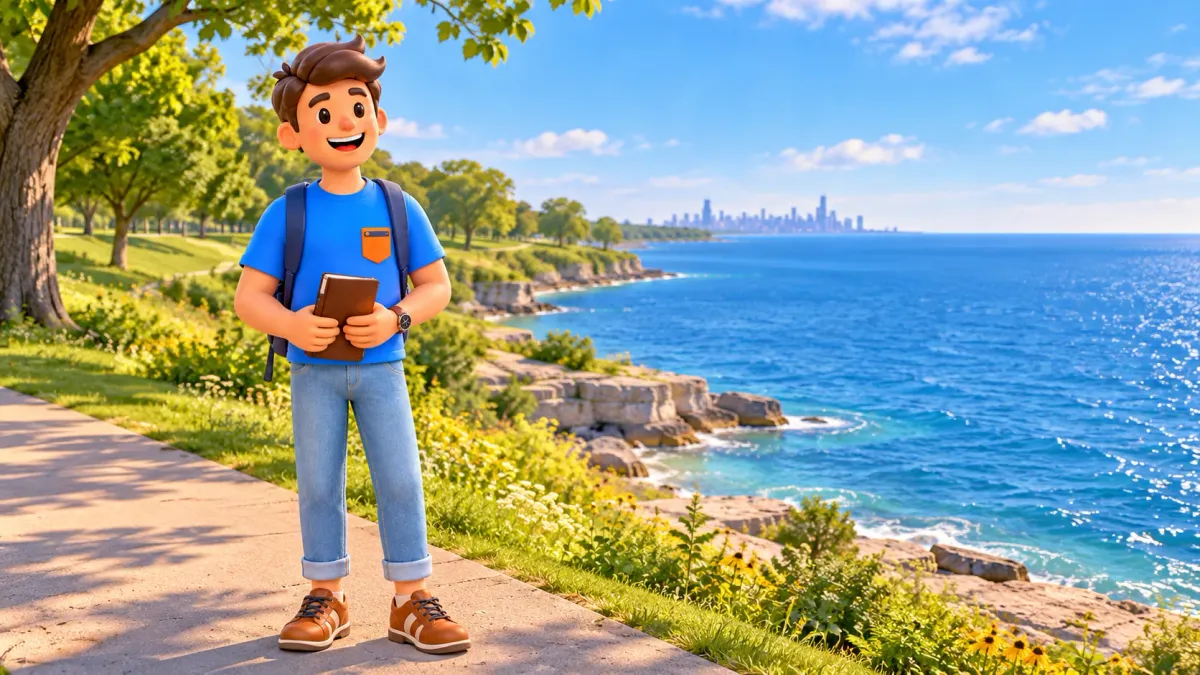
Hyde Park offers a quieter lakeside outing beyond its university campus and major museums. Start with Blackstone Library, consider a short visit to Hyde Park Art Center, then give the largest share of your outdoor attention to Promontory Point. The route moves from neighbourhood streets to Lake Michigan rather than trying to fit another major attraction into an already full day.
Allow around three hours once you reach the first stop, with travel from downtown counted separately. The library interior and art galleries depend on real opening arrangements; the lakefront depends on weather and access. You can shorten either cultural stop to keep the water as the main experience, or finish inland if conditions make the shoreline unappealing.
Decide how much culture belongs in your lakeside walk
This outing suits a day when you want room to look, walk and sit rather than book a sequence of tickets. Blackstone supplies a compact architectural beginning; the Art Center is an optional opportunity to see what is currently on view. Promontory Point remains the destination. Choose how much indoor time you want before assigning the full afternoon to the route.
RoadMe helps shape a complete personal trip around your dates, interests and preferred pace. Try using this quieter lakefront block to balance the museums and architecture you want elsewhere in Chicago, with enough time for travel and rest.
A three-hour allowance can give the library twenty minutes, the Art Center forty-five, movement forty-five, the Point another forty-five and the remaining twenty-five to a pause or delays. These are editorial planning blocks rather than measured walking times. If art is not a priority, move that time to the lake or finish earlier instead of adding an unrelated attraction.
Keep the order simple and the lakefront crossing explicit
Begin at Blackstone Library, 4904 South Lake Park Avenue. Follow public streets towards 50th Street and Cornell Avenue for Hyde Park Art Center at 5020 South Cornell. Continue south through the neighbourhood towards 55th Street, then use the permitted pedestrian approach beneath DuSable Lake Shore Drive to reach the Point when that access is open.
Check current signs and temporary closures before committing to the crossing. The Point’s address refers to the lakeside park; it does not mean a car can drop you at the water’s edge. Do not improvise a crossing of the roadway at street level. A short-looking gap on a map is not a substitute for a real permitted route.
Plan the return from the place where you actually leave the lakefront. You may use the same permitted underpass in the opposite direction, subject to current access, without needing to walk back to the library. Save the first and final addresses separately so the transport plan follows your day rather than forcing an unnecessary loop.
Start with Blackstone’s public face
Blackstone Library opened in 1904 and was designed by Solon S. Beman. Its Classical Revival architecture introduces a different scale from central Chicago’s large cultural buildings. From the public sidewalk, notice how the entrance, columns and compact building mass present a neighbourhood library as a civic place.
Begin with the exterior even if you intend to enter. Compare the approach with the ordinary street around it: the point is not simply to recognise classical details, but to see how a small public building announces its role. A few minutes of looking can provide a useful opening without turning the walk into an exhaustive architectural tour.
The branch remains a working library. Its current hours vary by day, and holidays can change access. Check before travelling if the interior matters to you. The route does not require a scheduled event or a special tour, and the presence of attractive historic spaces does not mean every room is open for sightseeing.
When visitor access allows, a short quiet look inside can add to the exterior. Respect readers and staff, avoid gathering in circulation routes, and follow any photography instructions. If the branch is closed, keep the architectural introduction outside and continue. You can still understand the building’s place in the neighbourhood without claiming an interior visit.

Use the streets between stops as part of the outing
The move towards Cornell is not empty time between attractions. Observe the change between a civic building, residential frontages and local cultural space. Look at entrances, building heights and the rhythm of windows from the public sidewalk. You do not need to identify every house or attach a famous name to make that comparison worthwhile.
Keep a normal neighbourhood pace. Cross at permitted places and let people enter their homes and businesses without a group blocking the doorway. The route is most enjoyable when it feels like a continuous walk rather than a procession stopping across every narrow section of pavement.
Use a brief pause to decide whether the Art Center fits your remaining attention. If everyone is already looking forward to the water, continue towards the lakefront instead. An optional stop works because you can leave it out; there is no need to defend the original list when interests change on the day.
Visit Hyde Park Art Center for what is actually on view
Hyde Park Art Center is at 5020 South Cornell Avenue and offers public galleries with free admission. Check the current exhibitions and holiday arrangements before your visit. Its classes, residencies and events are separate activities; a gallery visit does not automatically grant access to a workshop or an artist’s working space.
Give a short visit one manageable focus. Choose a work or a small group that catches your attention, look before reading, then use the available interpretation to revisit your first impression. You do not need to see every gallery or recognise the artists to have a worthwhile encounter.
If visiting with someone else, compare what each of you noticed rather than trying to agree on a single judgement. Material, scale, colour and placement are useful starting points. A work that does not immediately appeal can still help you notice how an exhibition uses space, but there is no obligation to spend equal time with everything.
Keep the visit proportionate to a lakeside afternoon. Forty-five minutes is a planning option, not a limit imposed by the institution. If an exhibition becomes your main interest, extend it and reduce the outdoor section. If access is unavailable, preserve the distinction between seeing a venue from outside and visiting its galleries.
Make the transition towards 55th Street deliberately
Continue south using public neighbourhood streets, checking the actual route to the open pedestrian underpass near 55th Street. Before crossing towards the lake, look at the weather and the time you want to spend outside. It is easier to adjust the afternoon inland than after everyone has committed to a longer shoreline circuit.
The lakefront can feel different from the streets you have just walked. Wind, spray and exposed conditions matter more than a pleasant view from between buildings suggests. Choose clothing and footwear for the day’s real conditions, and shorten the stop when that makes the outing more comfortable.
Do not assume the full shoreline route or every path is available. Follow current park instructions and any signed detour; ongoing maintenance can alter a familiar approach. If the usable alternative would take too much time or energy, finish the neighbourhood section rather than searching for an unofficial way through a closure.
Give Promontory Point time for more than a quick photograph
Promontory Point belongs to Burnham Park and its naturalistic landscape is associated with Alfred Caldwell. Once you arrive, start on the upper park paths. Notice the relationship between lawn, trees, lake and the changing edge of land. You do not need to descend onto shoreline stonework to appreciate the setting.
Let the first few minutes establish the view before deciding where to walk next. The broad water and the distant city provide different subjects: one emphasises open space, the other the relationship between this neighbourhood and central Chicago. Visibility varies, so a particular skyline photograph should remain a possibility rather than the reason the whole visit succeeds or fails.
Walk only as far around the permitted paths as your time and conditions allow. A complete circuit is not necessary. One viewpoint followed by a place to sit can be more satisfying than trying to photograph every angle before returning immediately to transport.
Stay away from wet, icy or wave-exposed edges and use the upper routes when the shoreline is uncomfortable. This is a walking plan, not a recommendation to swim from the Point. Any separate beach activity requires the applicable designated area, season, lifeguard arrangements and current conditions.
Let a real pause become the final stop
If there is a suitable available bench or other permitted resting place, stop without immediately filling the pause with a new destination. Put the camera away for a while and look at the movement of water and people. After the library and galleries, this change of attention is part of the outing rather than a gap needing another attraction.
Do not rely on access to the pavilion or a particular indoor facility to complete the visit. Buildings may have their own arrangements or events. Keep the plan workable as an outdoor park stop, and use the return journey earlier if weather makes a longer rest unsuitable.
Before leaving, identify the actual exit and the next journey. A long meal, another museum or an evening event belongs in a separate time block. Ending while the walk still feels comfortable can preserve more of its character than extending it until everyone is ready only to get back.
RoadMe can organise the wider trip around the pace that suits you here, balancing cultural visits with open-air time. Try giving another major attraction its own day rather than attaching it to the end of a restful lakefront walk.
For a different Hyde Park day, save the Jackson Park plan with Griffin MSI and seasonal Osaka Garden. This outing has a lighter centre: a neighbourhood library, optional current art and enough time beside Lake Michigan to make the journey worthwhile.


