
How to Pack Fragile Items and Souvenirs for a Flight

For small glass and ceramic souvenirs, protect each piece individually, secure it in a strong box and fit that box into permitted luggage without pressure. Wrapping provides cushioning, the box adds structure, and suitable filling limits movement.
Choose the transport arrangement first. Keep a small valuable purchase with you where screening and airline conditions permit. For large, exceptionally delicate or irreplaceable objects, discuss suitable packing and carriage with the seller before committing.
Include the packaging in your purchase decision
Consider the space needed for the protected item, not just the object on the shelf. The box and padding also add to the luggage weight. A convenient shopping bag does not settle the flight arrangements.
Ask the seller to show the transport packaging. It should support the piece, including vulnerable projections, rather than simply present it attractively.
If you want to check your baggage conditions first, you can save the place to your favourites on your personal map in RoadMe. That makes it easier to return once you have a workable transport plan.
Compare the options for the complete journey:
| Arrangement | When to consider it | What to confirm |
|---|---|---|
| Cabin baggage | A small permitted item you want to keep with you | Packed size and weight, bag count, screening and onboard stowage |
| Checked luggage | The carrier accepts the item and suitable protection fits | Conditions for breakables, complete weight and freedom from crushing |
| Separate delivery | The item is oversized or needs specialist preparation | Packing, full cost, customs arrangements and liability conditions |
Do not assume all airlines accept breakables in the hold. Air New Zealand lists fragile and delicate goods among items that do not belong in checked-in baggage. Apply your carrier’s conditions to the actual purchase.
Give every packing material a job
For an ordinary small souvenir, gather a strong box with room for protection, suitable cushioning, dividers where needed and packing tape.
| Material | Purpose | Check |
|---|---|---|
| Bubble wrap or packing foam | Cushion the object | Are edges, base and vulnerable details covered? |
| Fitted insert or divider | Support and separate pieces | Does it fit without loading delicate parts? |
| Strong box | Separate the contents from other belongings | Is it sound, correctly sized and able to close freely? |
| Clothes around the closed box | Add an outer buffer within the suitcase | Is there soft separation on different sides? |
Keep original transport inserts if they fit and remain intact. Avoid a weakened or damaged box.
A fabric pouch can group belongings without providing a rigid protective shell. Keep breakables out of any bundle you will compress. The packing cubes and compression bags comparison explains how those accessories differ.
Protect the object before boxing it
Work on a clear surface. Inspect the purchase for cracks, damaged rims and loose attachments while you can still resolve a problem with the seller.
Identify the vulnerable part: a mug’s handle, a plate’s rim or a figurine’s projection. Support it gently with suitable soft material. Wrapping should not pull a thin detail or force it against the body.
Then wrap the complete piece. Support the main body when lifting a wrapped mug instead of suspending the bundle by its handle. Protect removable fragile lids separately.
Prepare every purchase individually. Nested bowls or stacked dishes need suitable separation between all hard surfaces; fitting together does not establish adequate protection.
Ask for a fitted insert or professional packing if a detail is too delicate to support without pressure.
Secure the pieces inside the box
Add cushioning underneath, then position the protected objects with a buffer between them and the box walls. Use dividers for multiple purchases.
Fill gaps without forcing material against the contents. Add protection above them and close the lid without pressure.
Hold the closed package and slowly change its position. A knock or noticeable shift means the arrangement needs adjustment. Do not drop or vigorously shake the package to test it.
Make the packing accessible for inspection and possible reassembly. Keeping the inserts and some spare tape available can help restore the protection if the package must be opened.
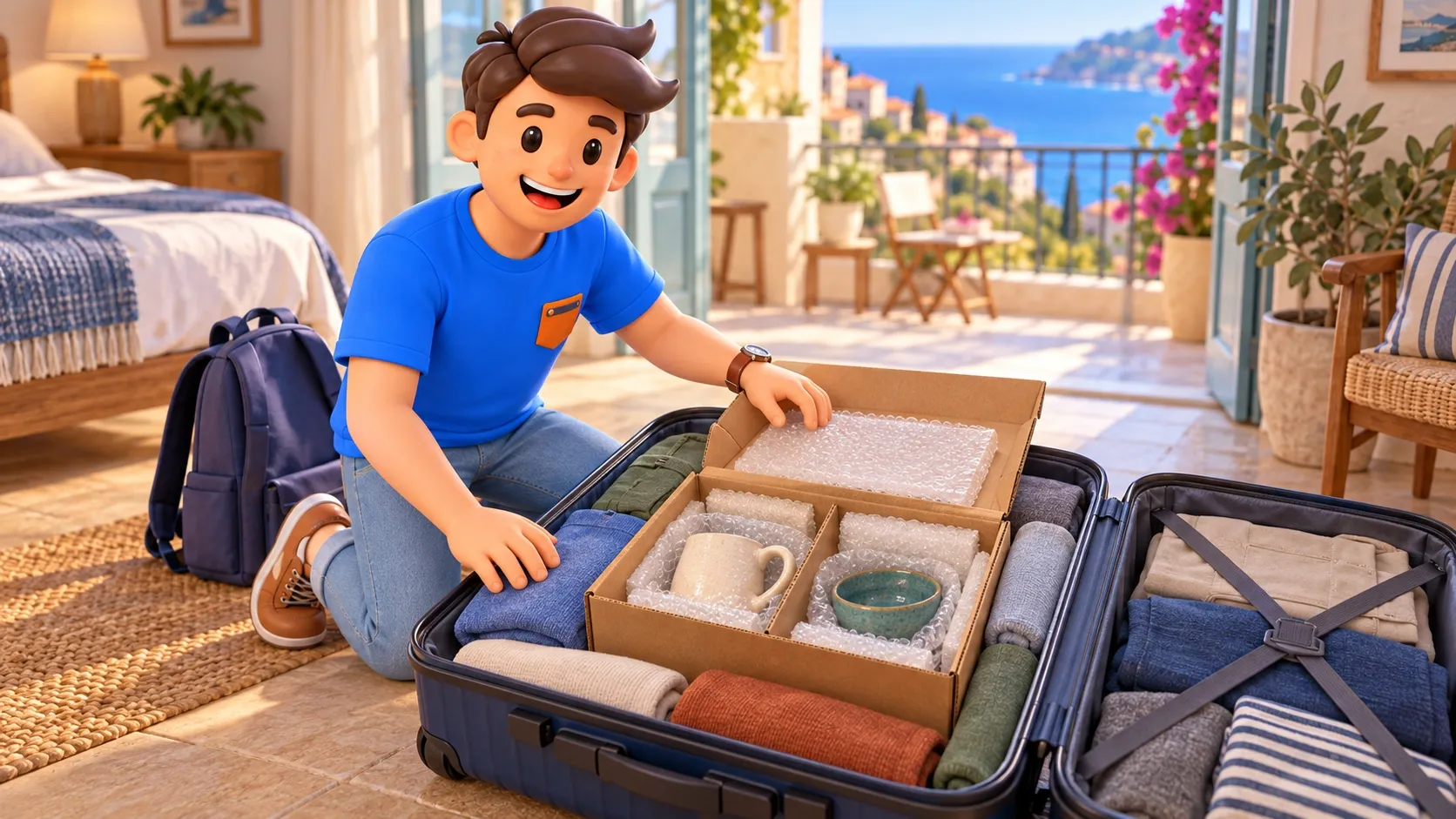
Example: a ceramic mug and a small bowl
Imagine packing two pottery purchases. This is an illustrative arrangement, not a tested package.
Wrap the pieces separately, support the mug’s handle and protect the bowl’s rim. Place them in separate compartments with a divider and cushioning.
Before closing, check that they do not touch each other, press against the walls or project into the lid. Add the top protective layer.
If your airline allows these purchases in checked luggage, surround the closed box with clothes in the suitcase. The illustration shows it open to explain the arrangement; close it before transport.
Prevent pressure inside the suitcase
Move heavy footwear, buckles and other rigid belongings away from the package. Separate it from the suitcase shell and internal fittings with soft layers. Check whether neighbouring objects could shift onto it as the bag changes orientation.
The case should close normally. If you need to press on the lid, tighten straps hard over the ceramics or squeeze the package into a gap, reconsider the contents. A hard shell does not remove pressure inside.
Weigh the complete bag after adding purchases and packaging. For a trip without checked luggage, use the carry-on-only packing guide to assess the whole kit.
Check bottles as containers and as contents
Protect a bottle’s neck, base and body. Add a suitable closable bag to separate a possible leak from other belongings. It does not replace impact protection and may be damaged by broken glass.
Keep an intact factory closure. A bottle already leaking needs attention before it goes into luggage.
Check screening conditions, carrier restrictions and import rules for the contents separately. Careful packing does not establish permission to transport any liquid.
For duty-free purchases, check onward screening. UK rules, for example, specify a sealed security bag with the receipt visible and require it to remain closed until the final destination. Ask for impact protection before the shop seals it.
Confirm how the purchase counts towards your bags as well. Lufthansa includes duty-free shopping in its permitted cabin allowance.
Allow time to pack and prepare for inspections
Pack breakables before leaving your accommodation. Last-minute wrapping makes it harder to find a missing box or revise an overfilled suitcase.
If the final city day is too crowded, you can remove or replace visits in RoadMe. Leave the recovered time for packing purchases and checking the complete bag.
If staff ask to check your cabin bag at the gate, explain that it contains a fragile purchase. Plan beforehand whether its protected package fits a permitted personal item. An extra box is not automatically exempt from the allowance.
Photograph the objects and their packing, and retain receipts. A “Fragile” label identifies the contents without adding cushioning or structural protection.
On arrival, inspect the case and check the purchases if it shows damage. Report a problem promptly, preferably before leaving baggage reclaim. Keep the baggage tag, photographs and packaging, and check the carrier’s procedure and deadlines.
Finish with four checks: permitted transport, individual protection, no rattling or pressure, and a complete packed bag that meets your booking’s conditions.


