
Hong Kong in one day: a route around two harbour shores
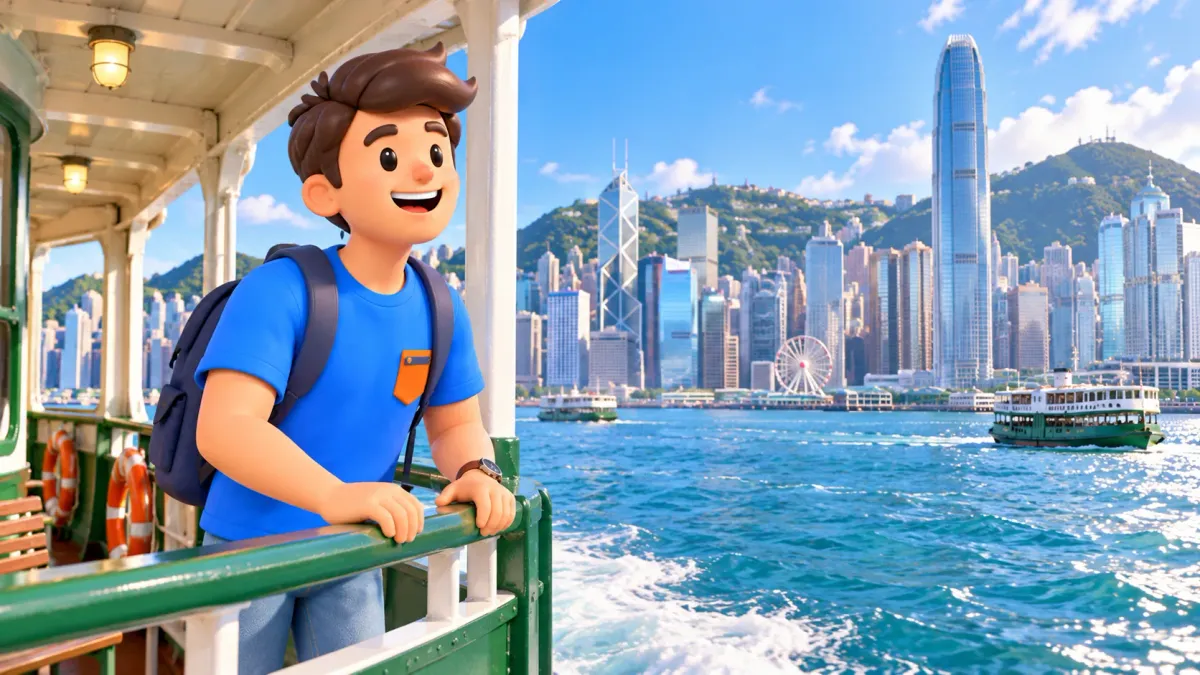
One day in Hong Kong works well around two shores of Victoria Harbour: begin among Central's buildings, cross on the Star Ferry and continue in Tsim Sha Tsui. This route brings together recognisable architecture, the history of a port city and open waterfront views. It gives a first visit variety without distant excursions or a constant change of transport.
The main sequence is straightforward: Statue Square and neighbouring buildings, the walk to the ferry, the crossing, the Clock Tower and 1881 Heritage, then the promenade. An indoor museum visit is an option rather than a requirement. The time blocks below are planning estimates for an unhurried day with stops, not measured journey times or a promise about queues.
Give the day a clear structure
Start in Central during the morning and keep the afternoon for Kowloon. The order matters: first you see the city from its streets, then from the water, and finally from the opposite shore. Your perspective changes without adding another distant attraction. That makes the day feel varied even with a manageable number of stops, and leaves space to notice connections between them.
Choose whether walking or one substantial indoor visit is the priority. If you want several hours at the Museum of Art, shorten the morning architecture loop and keep a smaller waterfront section afterwards. If the cityscape matters most, concentrate on exterior stops. Making that decision early is more useful than trying to fit everything in once you reach the museum entrance.
It is more convenient to shape this day around your own interests in RoadMe: the app builds a personal route plan using your dates and preferred pace. Try choosing architecture, history or waterfront walks as your priorities so the programme suits your particular trip.
| Part of the day | Main idea |
|---|---|
| Morning, roughly two hours | Central and a few architectural stops |
| Late morning and lunch | Reach the pier, cross the harbour and take a food break |
| Early afternoon | Clock Tower and 1881 Heritage |
| Remaining time | Waterfront or one museum according to your interests |
Begin at Statue Square in Central
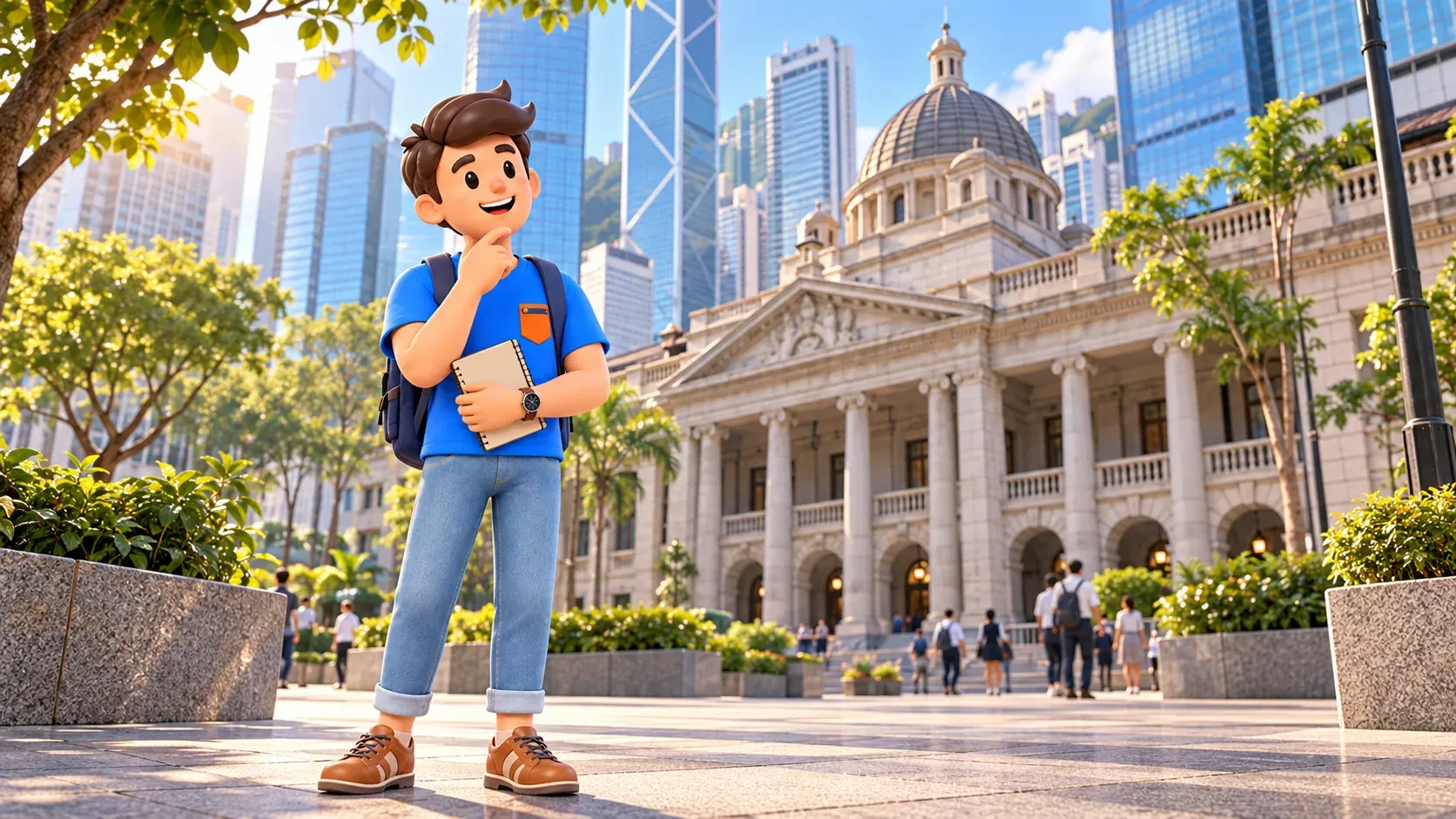
Statue Square gives the walk a useful starting point because several architectural periods sit close together. It is an easier introduction than immediately setting out on a long street circuit. Pause, choose the buildings that interest you and establish your direction. A complete tour of Central's architecture would need its own outing; today the aim is a few revealing contrasts.
The former Supreme Court stands out through its granite columns and calmer proportions beside the surrounding towers. The building is now associated with the Court of Final Appeal. Look at how a public building presents itself to the street, then compare that approach with the larger structures nearby. You can appreciate the contrast without making your day depend on access to the interior.
The HSBC Main Building offers a different architectural language, with prominent structural elements and a larger scale. Look at the space around its base before returning your attention to the older court building. One comparison that you actually spend time understanding can be more memorable than passing ten facades whose names blur together by the end of the afternoon.
Add the Bank of China Tower if the morning allows
If you have the energy, make an additional exterior stop at the Bank of China Tower. Diagonal lines and a stepped silhouette help distinguish it from nearby high-rises. The design is associated with architect I. M. Pei. For this short route, noticing the form and comparing it with HSBC is enough; a detailed architectural survey can wait for another visit.
Treat this as an extension whose suitability depends on your pace and the slope. St John's Cathedral offers another possibility for travellers interested in older architecture. Do not turn both suggestions into compulsory additions. The next important movement is towards the water. If the morning is hot or you already feel tired, taking a steady route to the pier is a sensible choice.
This part of the day is based on exterior viewing. It does not promise access to offices, observation areas or other indoor spaces. If a particular interior is important to you, check its arrangements beforehand and allow more time. Public streets already provide a useful introduction to Central's skyline without turning the day into a sequence of admission decisions.
Walk towards the Star Ferry piers
After the morning loop, head towards Central's ferry piers. The journey from the familiar buildings to boarding is a section of the route in its own right. You need to reach the waterfront, find the correct direction and enter the terminal. A ferry crossing is not an instant connection between two map pins, so leave enough room for the approach.
This itinerary uses the regular Central–Tsim Sha Tsui service. It is different from sightseeing cruises around the harbour: choose the destination and service type rather than simply a picture of a ferry. Check the operator's current arrangements before travelling and be ready to use an accepted payment method. You do not need a separate harbour cruise to experience the city from the water.
If you are hungry, take a break before boarding or after arrival instead of expecting the crossing to accommodate lunch. Give the day clear stages: finish the morning walk, rest, then change shores. A short pause can preserve your curiosity for the next neighbourhood. It is more useful than arriving on the Kowloon side already exhausted and hurrying through the places you came to see.
Use the crossing to change perspective
The Star Ferry remains part of the city's transport between Hong Kong Island and Kowloon. From the water, individual facades become a continuous shoreline, while the green slopes reveal how closely the buildings relate to the terrain. The crossing can be an experience in itself even though it takes only a modest part of your available day.
Resist trying to photograph every tower while planning all the next stops at the same time. Settle where you will not obstruct other passengers, then spend a few minutes looking. Wind, marine traffic and boarding arrangements can affect the journey. Treat it as a change of viewpoint rather than a guaranteed photo opportunity from one particular position at one exact moment.
After arriving, there is no need to rush straight into the streets of Kowloon. Nearby landmarks let you begin the second shore gradually. The Clock Tower and Cultural Centre provide clear starting references. You can then decide what should lead the afternoon: historic architecture, a museum visit or a longer promenade walk. Keeping that choice manageable is part of the route's appeal.
The Clock Tower and 1881 Heritage
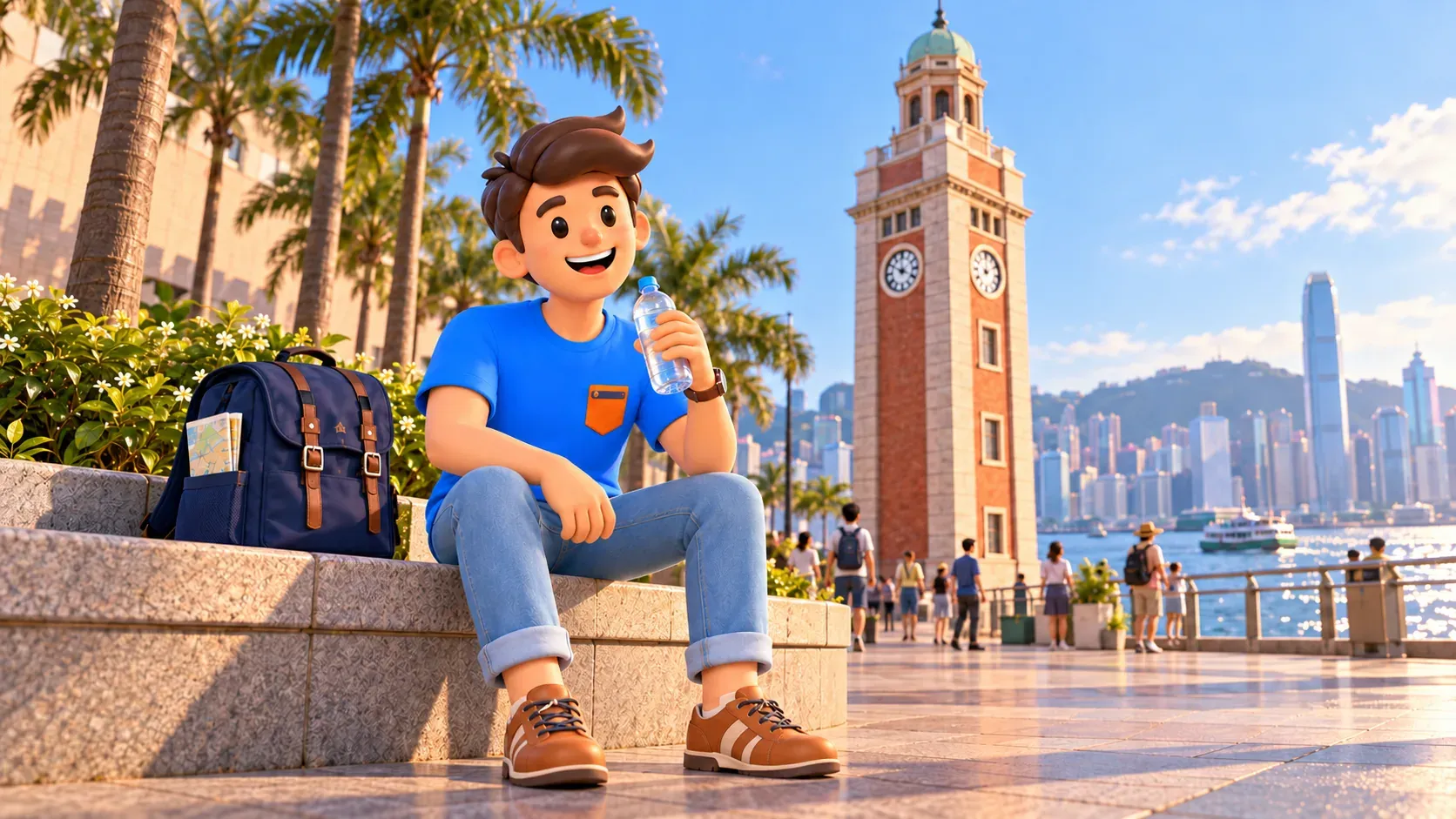
The Clock Tower survives from the former Kowloon–Canton Railway station. Its red brick brings an earlier transport story into the modern waterfront, recalling a relationship between rail travel and the harbour. An exterior stop is sufficient for this itinerary. There is no need to arrange an ascent or make the rest of the afternoon depend on entering the tower.
Continue the historical theme at 1881 Heritage. The complex occupies the former Marine Police headquarters, giving its buildings a connection with the administration of the port city. Arcaded verandas and older structures reveal another layer of Tsim Sha Tsui beyond contemporary shops and museums. The name of the complex is not necessarily the construction date of each building within it.
You do not need to examine every component. Use accessible public areas, notice the character of the architecture and return towards the waterfront. Viewing the ensemble from outside is different from entering particular rooms or commercial premises. If one doorway is closed, the main structure of your day should remain intact rather than depend on that single point of access.
After lunch: choose one museum or more walking
The Hong Kong Museum of Art sits beside the water and can become the main indoor visit of the afternoon. Its subject offers an introduction to art and the city's visual history. Choose it because the exhibitions interest you, rather than only because the building is convenient. Even a museum nearby still needs time if you want to engage with the collection.
One museum decision is enough for this first day. Do not automatically add the Space Museum or other institutions simply because they are in the district. Check the opening arrangements, programme and admission conditions of the place you choose. Then give it the time it needs, shortening the rest of the day instead of rushing through the galleries to satisfy the original list.
If a museum does not appeal today, leave more room for the promenade, food and rest. The route still makes sense: you have experienced business-city architecture, the harbour and its historic shore. An additional admission is not a requirement for a worthwhile day. An unallocated hour with a good view may stay with you longer than another substantial programme.
The Avenue of Stars and an open skyline
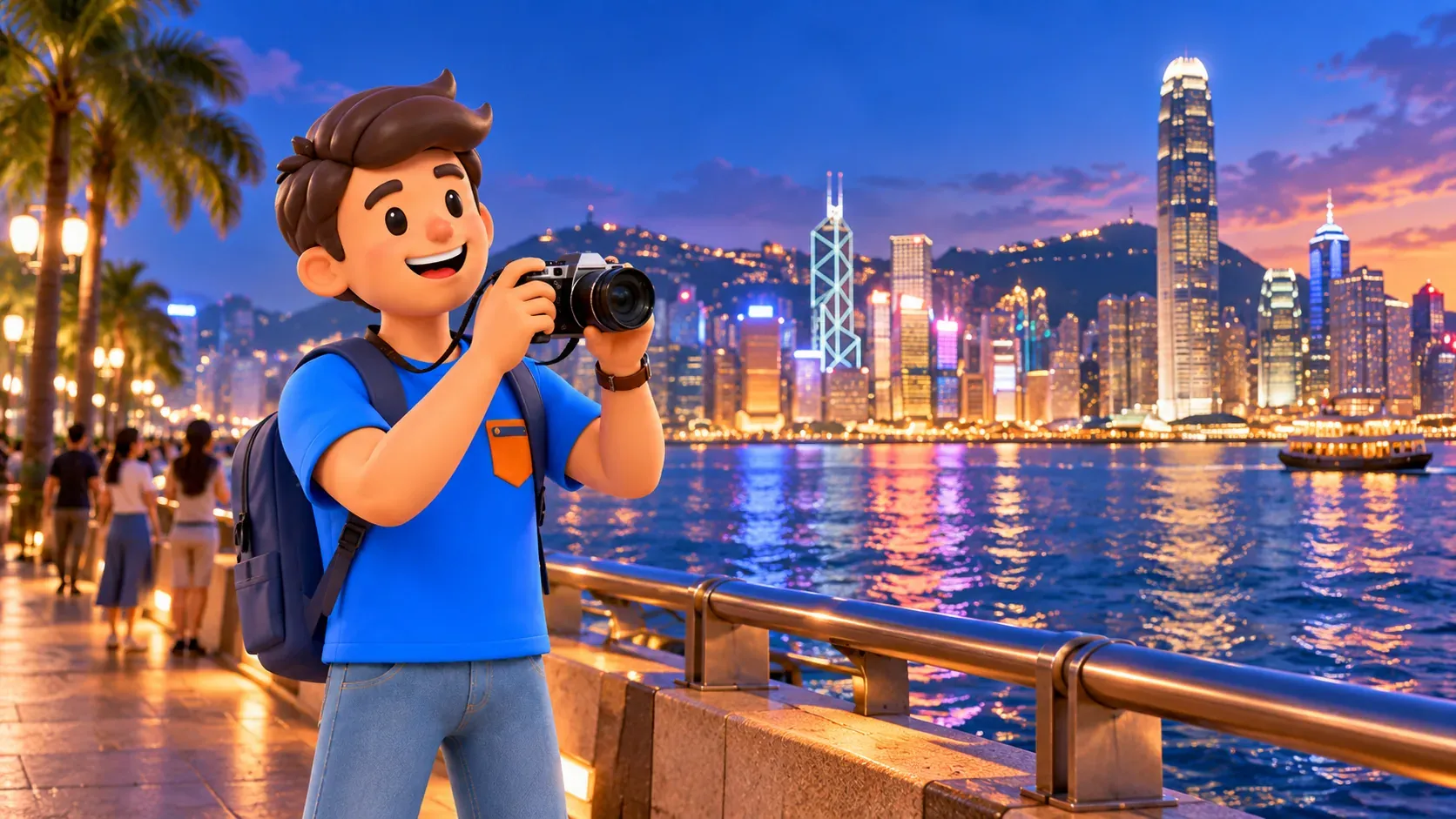
Continue along the waterfront towards the sculptures of Bruce Lee and Anita Mui. They provide a small introduction to the influence of Hong Kong cinema and music. You do not need detailed biographies to appreciate their place here. It is enough to notice how cultural memory shares the waterfront with ordinary strolling and the everyday life of the harbour.
From this side, look back towards Central, where your morning began. The buildings you saw at street level now form part of a larger landscape. This brings the day's theme to a natural conclusion: streets, water and the opposite panorama become a coherent sequence. Decide how long to stay according to conditions and energy, without making a particular evening event compulsory.
Think about your return journey before the final walking section. You do not need to retrace the whole waterfront or make a second crossing simply to give the route symmetry. The most convenient finish depends on where you are staying and what comes next. Checking that connection early makes it easier to adjust the remaining walk without an awkward extra journey.
Make the route personal
For a gentler version, omit the Bank of China extension and keep only a few exterior stops in Central. With children, allow more time for the crossing, breaks and a flexible waterfront walk. If art is the priority, shorten the morning architecture in favour of the museum. These choices change the emphasis while preserving the main sequence of the two shores.
Rain is a reason to reconsider exposed sections rather than mechanically complete the original plan. An indoor museum block may help when its visiting arrangements suit you; significant weather disruption can require a different transport and walking programme altogether. Reduce the ambition of the day when necessary. A comfortable itinerary remains useful only while it responds to the actual conditions around you.
It is more convenient to work out a personal day in RoadMe around your interests, pace and budget than to arrange visits manually while walking. Try building your trip plan in the app so you can give more attention to Hong Kong itself.
The Peak, Big Buddha and distant islands have deliberately been left out because each needs its own time. If you later have more days, our guide to choosing neighbourhoods for a first Hong Kong visit offers a way to expand the trip. Begin with two shores, then build on the experiences that appeal most to you.


