
Hong Kong legends: Amah Rock, Lovers’ Rock and a pirate cave

Sometimes a place stays with us because of a story rather than its size or age. People recognise a woman carrying a child in a rocky outline, bring hopes of love to an upright stone, or connect a narrow granite crevice with pirate treasure. Such accounts make landscape personal. Behind a natural shape appears a feeling, an expectation or an adventure that changes how we look.
Hong Kong offers three expressive examples: Amah Rock near Sha Tin, Lovers’ Rock above Bowen Road and Cheung Po Tsai Cave on Cheung Chau. They lie in different directions and do not form one short walk. A theme connects them on the page; choose one for an actual outing. The useful starting point is to enjoy a tradition without turning it into a confident statement about a proven event.
A legend reveals meaning without replacing history
A natural feature can have a geological origin, a local name and a transmitted story at the same time. Those layers answer different questions. The rock exists physically, while the account explains why people notice it and which feelings they attach to it. A tradition need not become a literal explanation of how a landform originated in order to be interesting or moving.
RoadMe makes it easier to turn an interest in unusual stories into a personal trip plan, connecting suitable walks, nature and neighbourhoods with your interests and a comfortable pace.
Ask three separate questions: what can I actually see, what is told about it, and what is established independently of that account? They do not spoil the experience. They leave room to enjoy an image without demanding impossible proof. You can feel the sadness of a waiting woman’s story while understanding that the object before you is a natural rock rather than a person who literally turned to stone.
A tradition is not a promise of results either. Visiting somewhere associated with wishes does not guarantee good fortune or meeting a partner. A historical pirate’s name does not make every attributed cave a confirmed treasure store. Expressions such as “according to legend”, “associated with” and “believed to” are not merely cautious decoration. They preserve the kind of story being told.
Before leaving, choose what attracts you: a striking rocky silhouette, a hillside walk above the city or an island day with maritime storytelling. That choice matters more than completing a collection. One landscape with time to look and reflect can offer more than several points reached in a hurry. The article’s shared theme does not remove the different journeys needed to visit them.
Amah Rock: a silhouette shaped by a story of waiting
Amah Rock, also known as Mong Fu Shek, stands on a hill in southwestern Sha Tin. Its shape suggests a woman carrying a baby. In the local legend, she waited for a fisherman husband who sailed away and never returned. A storm transformed mother and child into stone. This is the traditional account attached to the shape, rather than an established explanation of how the rock formed.
Waiting gives the story its emotional force. Without the account, you may see only an unusual outline. With it, the same shape suggests a human feeling. It is a useful example of a shared narrative changing attention to landscape. The rock need not contain a clearly carved face or every part of a body for people to recognise a figure and pass the association to others.

Do not expect an identical resemblance from every angle. Distance, viewpoint and imagination affect how natural shapes appear. Noticing a broad relationship between a larger and smaller form can be enough to understand the association. You do not need to leave the path, climb onto an outcrop or approach the silhouette closely to obtain the supposedly correct photograph.
Amah Rock is not a city sculpture beside an MTR exit. Visiting involves hilly terrain and a chosen walking approach. Consider the whole route, ascent, weather and return rather than only the minutes spent looking at the feature. A point on a map does not establish that a climb suits every companion or every level of fitness on a particular day.
Give Sha Tin its own place in the plan and choose combinations according to energy. Sha Tin offers district ideas, but another ascent should not be added automatically. If you mainly want urban experiences, keep the legend for another journey. A story remains interesting even when you decide not to reach every physical place associated with it during the present trip.
Lovers’ Rock: hope above the urban neighbourhoods
Lovers’ Rock stands on the hillside above Bowen Road in Wan Chai. The natural upright stone is associated with local beliefs about wishes for marriage and a suitable partner. Its story works differently from Amah Rock’s. Rather than explaining a transformation in the past, it expresses hope directed towards the future and a relationship people create with a particular place.
You can understand it as part of a living cultural landscape without treating a belief as a proven mechanism. A respectful visitor need not repeat a practice or demonstrate faith. Recognising that a stone can mean more to someone else than an unusual walking stop is enough. Their personal relationship with it does not become a performance that tourists may request on arrival.
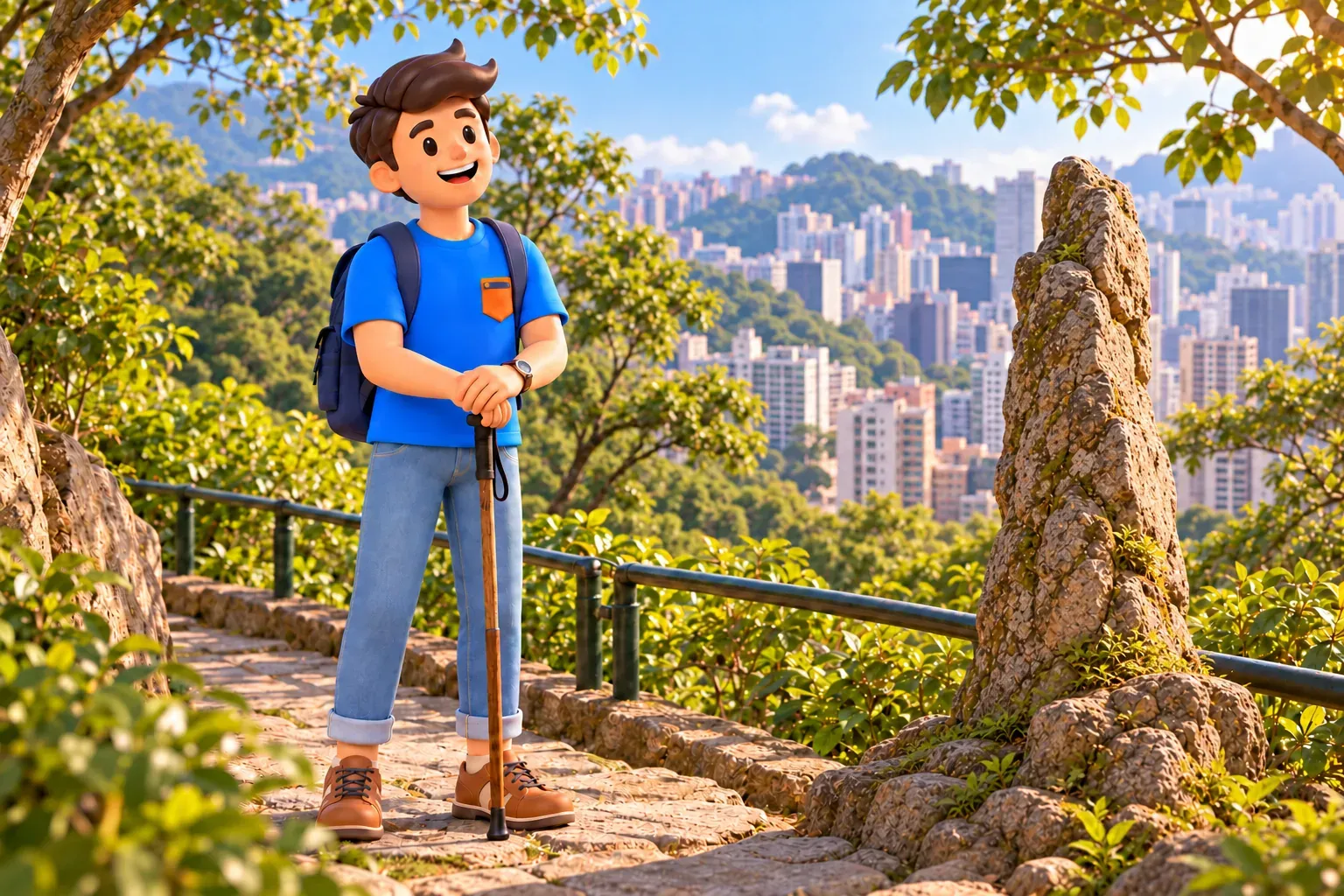
Do not leave bottles, ribbons or other objects to stage your own participation. Descriptions of such actions in local accounts are not instructions for visitors to reproduce them. Looking, pausing and reflecting allow you to encounter the tradition without altering the surroundings. If people are worshipping nearby, leave space and do not take close photographs without their consent.
This walk differs from Wan Chai’s waterfront. Being in the same district does not make the hillside an effortless continuation of a level promenade. Assess the approach and return separately. Wan Chai provides urban context, but connect it with Lovers’ Rock according to your energy and time. A shared administrative district cannot replace a realistic understanding of the terrain between two places.
A couple might use the visit to talk about hopes; a solo traveller might consider how people connect personal questions with landscape. Neither needs a staged romantic scene or a particular photograph. The walk’s value comes from attention rather than matching a familiar script about who is supposed to visit a “love rock”. Curiosity is enough,.
Cheung Po Tsai Cave: a pirate story without promised treasure
On southwestern Cheung Chau, a narrow granite cave is associated with Cheung Po Tsai, a pirate active in the early nineteenth century. A historical person and a specific hiding-place tradition are different things. Visitor accounts describe a possible hideout, but that does not prove treasure was stored here. Maritime history can remain compelling without producing a discovered chest or a fully documented cave episode.
The place does not have to resemble a spacious adventure-film chamber. It is a small natural crevice among granite. Expecting a huge cavern can make you miss the interesting relationship between stone, coast and imagination. A short tradition gives the outing a theme; it does not turn a natural feature into a set designed to meet every visual expectation of the pirate genre.
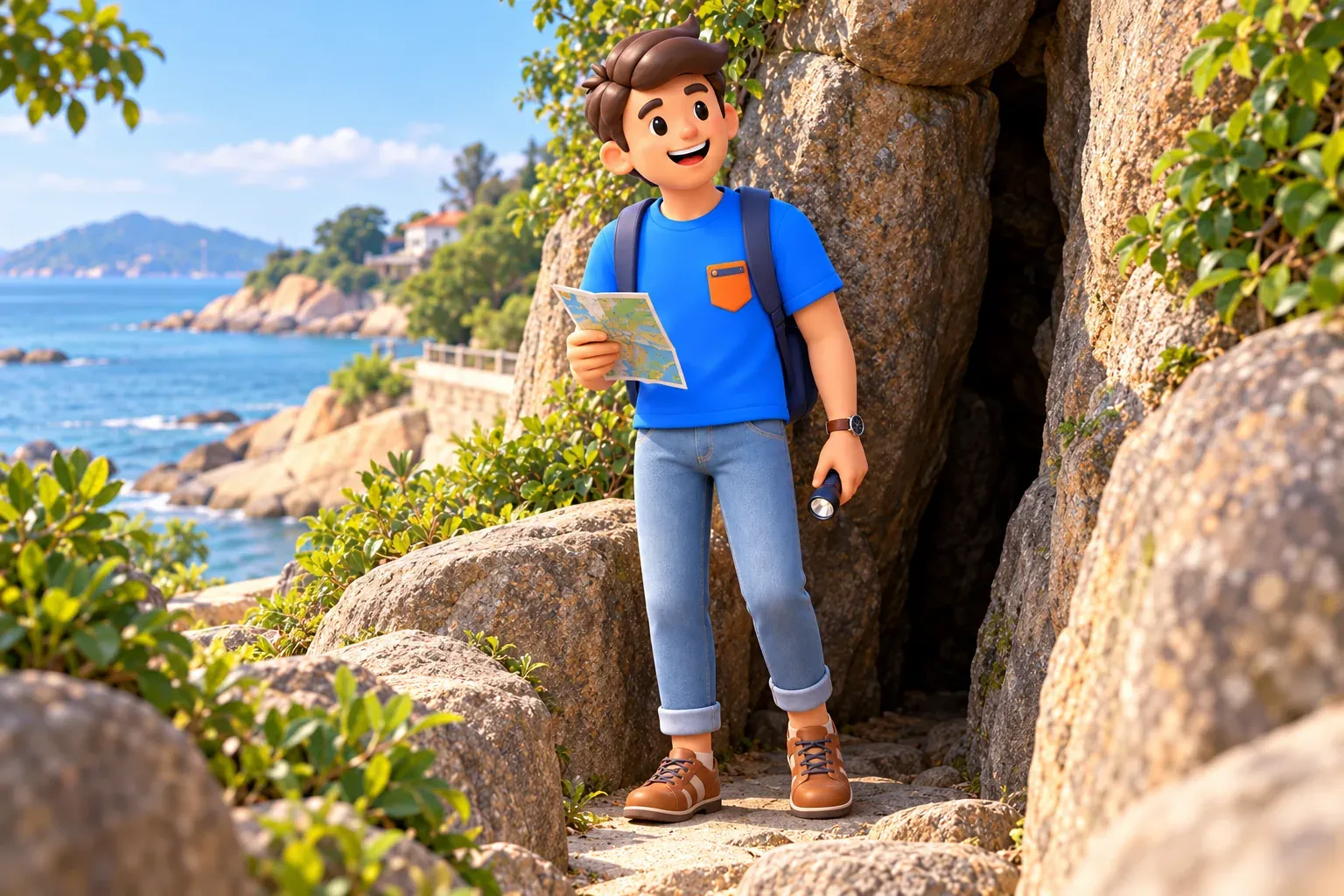
Going inside is optional. Narrowness, darkness and surface conditions matter regardless of the story’s excitement. Follow current restrictions and actual conditions, avoid squeezing through when uncertain, and do not treat passage as a courage test. Looking from outside and continuing along the coast is a complete way to encounter the place.
Plan the island day and return ferry first. A brief cave stop does not mean a brief excursion from central Hong Kong: travel, walking and waiting need additional time. Cheung Chau offers a starting point for Cheung Chau. Treat the cave as an optional extension of a suitable day rather than a reason to rush towards a distant shore immediately after getting off the ferry.
Do not search for a cache or move stones. The absence of treasure does not make the account meaningless. It reveals how maritime history and a pirate’s figure became attached to an island’s identity. For a traveller, noticing that connection is more useful than staging an excavation or adding new “evidence” that exists only in your own imagination rather than in the site’s documented history.
Three places evoke different human feelings
Amah Rock suggests waiting and loss; Lovers’ Rock, hope; the cave, adventure and concealment. This is a useful comparison of stories, not a claim that every resident understands the places identically. Traditions can have versions and personal interpretations. There is no need to assign one compulsory emotion to everyone who arrives to see a natural feature or knows a different account from family memory.
Try looking at the shape first, then recalling the story. What changes in your attention? The object may remain exactly the same while new directions of thought appear. A legend becomes a way of relating to a place. You need neither prove it as a historical document nor immediately reject it in order to keep a rational understanding of the physical world around you.
With children, use clear distinctions: “this is what people tell”, “this is what it looks like” and “we do not know that”. They preserve imaginative enjoyment while explaining different kinds of account. You might invent a family story for another rock and honestly call it a game. Do not confuse that new invention with a local tradition or repeat it later as information about Hong Kong’s culture.
A photograph is also a choice rather than proof. Light can alter the rock’s appearance and an image can exaggerate a cave’s size. Describe what you actually encountered instead of promising a future visitor more than the site offers. A drawing or a short note about the feeling can sometimes communicate the experience better than chasing the most dramatic possible frame at any cost.
It is worth agreeing on expectations with companions. Someone may enjoy the account but dislike a long uphill approach; another may value the walk without feeling attached to the story. These preferences can coexist in one travel plan. Choosing a suitable outing respects both, while insisting that every legend needs an immediate visit often creates fatigue rather than a stronger connection with the city.
Choose one story for a suitable day
For rocky silhouettes, choose the Sha Tin direction with a considered walking approach. For a hillside outing above the city, look at Bowen Road and Lovers’ Rock. For an island day, keep Cheung Chau, where the cave can be optional. These are three independent decisions. Do not combine them simply because an article brings them together under one theme or because the individual stops appear brief.
RoadMe helps develop a personal route for your whole trip around your interests. The app makes it easier to balance unusual stories, walking, travel and rest than assembling a journey manually from scattered lists of places.
Check access, weather and the return before setting out. Choose daylight for slopes and a clear transport plan for the island. A worthwhile outing need not end with a fulfilled wish or a solved mystery. It is enough to notice how real stones and coastal forms become part of human memory, adding another, more personal layer to the Hong Kong you thought you already knew.


