
Wan Chai in two hours: the Blue House and everyday old Hong Kong
Older Wan Chai offers a different scale from Central's banking towers. Balconies project above the street, a modest public building recalls an everyday service, and a temple continues to serve its neighbourhood. A two-hour walk can connect the Old Wan Chai Post Office, the Blue House cluster and Pak Tai Temple without turning the district into a long list of attractions.
The subject is ordinary urban life, rather than a collection of colourful walls. View the houses from public areas and leave private entrances, staircases and homes alone. Public interior displays or a guided visit are separate choices requiring current arrangements. Two hours is a relaxed allowance with pauses, not a promise to see every room within a fixed time.
A small route with one clear subject
Start at the Old Wan Chai Post Office on Queen's Road East, continue towards Stone Nullah Lane and the Blue House, compare the neighbouring Yellow and Orange houses, then head to Pak Tai Temple on Lung On Street. Select the Wan Chai temple when using a map: Hong Kong has other temples with the same deity's name, and reaching one of those would make a different outing.
Wan Chai station is a useful possible arrival point, with the exit and crossing chosen according to your real journey. Allow roughly twenty minutes for the post office exterior, thirty for the house cluster and twenty-five for the temple. Keep the remainder for walking, street observation and a break. These are estimates; a substantial guided interior visit needs more time or fewer other stops.
To plan around your interest in architecture or urban history, try RoadMe: the app creates a short personal route at your preferred pace. Choosing a relaxed rhythm makes it easier to give small places the attention that brought you here.
Compact does not mean entirely level. Slopes and steps appear towards the southern part of the district, and the suitable line depends on your chosen streets. If avoiding stairs is essential, check the exact connection in advance. This article does not certify a continuous step-free route. Three main stops are better than a complicated search for every side façade.
The former post office: public service on a modest scale
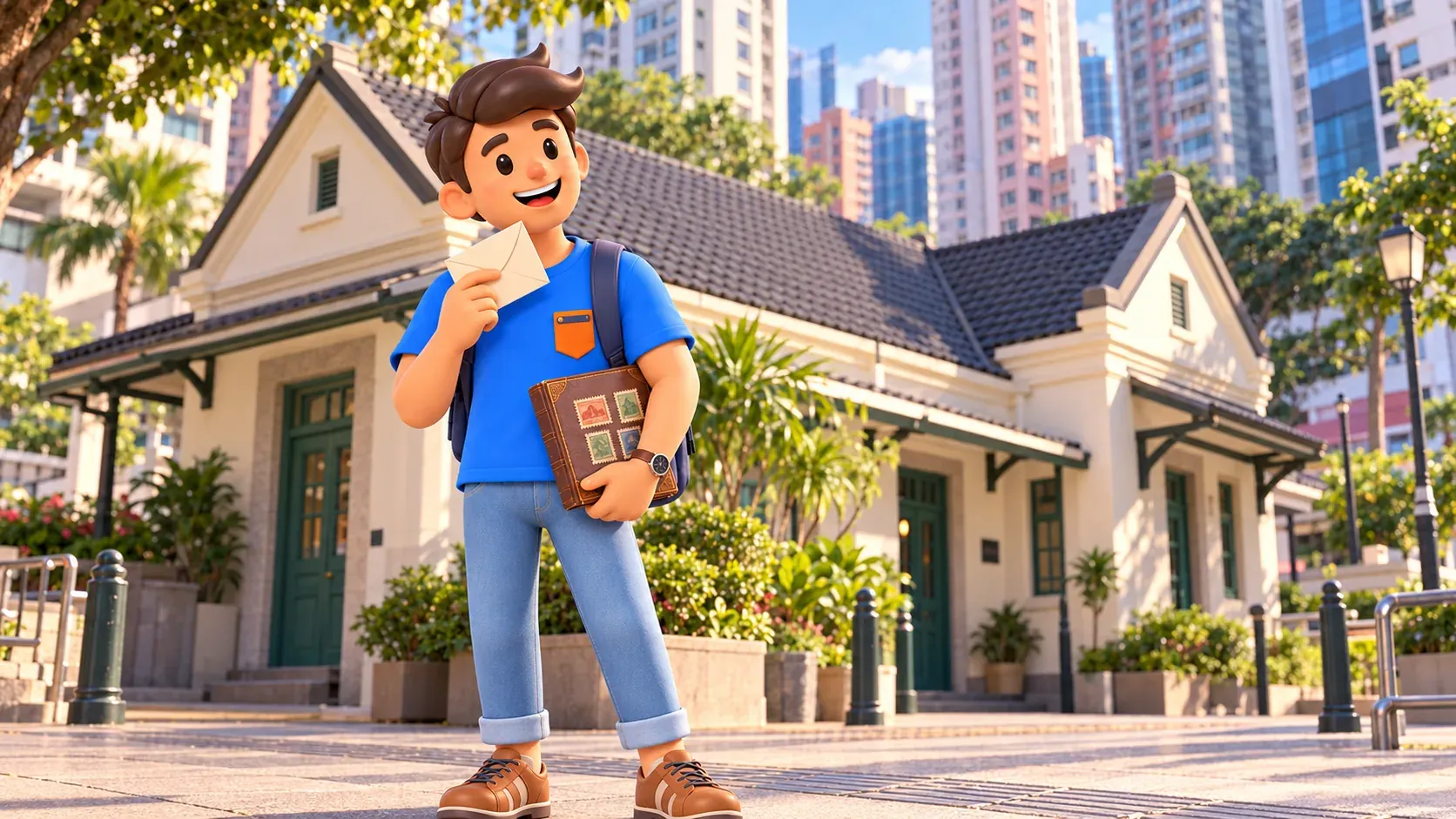
The Old Wan Chai Post Office is an early twentieth-century building surviving within much denser development. It now has an educational role as kNOw Carbon House. Do not arrive expecting a working postal counter: sending a postcard is not part of this stop. The former name describes its history rather than the service available today.
Look at the pitched roof, gables and size of the building against its surroundings. It was not designed to compete with the height of modern towers. Its purpose lay in an understandable public service, a place residents visited for ordinary business. That small scale can make the earlier district easier to imagine than a construction date on its own.
An exterior view is enough for this route. If the current educational programme interests you, check visiting or booking conditions separately. Preserving a historic building does not guarantee open access to every room. Its new function is also part of the story, so it need not be treated as an obstacle to finding the supposedly real old post office.
A useful question is what familiar tasks required a place like this before digital communication. You do not need a detailed history of the postal system. Imagine a letter, a counter and the need to come to a particular address. That prepares a gentle transition from a service building to homes, where another form of everyday life shaped the architecture.
The Blue House: notice balconies as well as colour
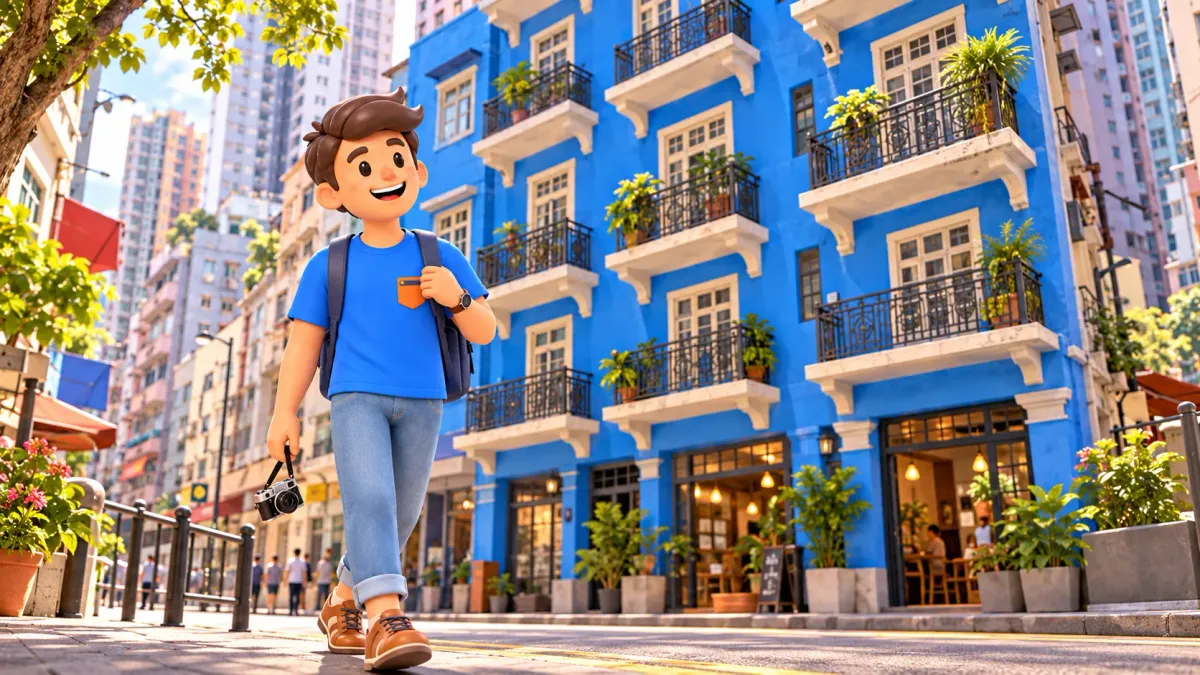
It is easy to stop at a frontal photograph of the Blue House on Stone Nullah Lane. The row of 1920s buildings is more revealing as an example of tong lau, the close relationship between street-level uses and homes above. Projecting balconies make that arrangement visible. The colour helps you recognise the place, but the form explains why it matters.
Look at repeated windows, balcony doors, metal railings and the projecting slabs. These details show how a house negotiates tight urban space. You do not have to find a symbolic explanation for every shade of paint. A sense of scale and the connection between dwelling and street already offer a strong introduction to the district.
Continuing residential life is an important feature of the cluster's conservation. Treat it as somewhere people live, rather than scenery with unrestricted access. Do not peer into windows, follow residents through a doorway or take close images of domestic scenes without permission. A famous façade does not remove the privacy of the people behind it.
If a public display space is available, you can consider it after checking the programme and rules. Do not extend that possibility to the whole building. Taking part in a community initiative and walking uninvited up residential stairs are different actions. The basic outing remains worthwhile outside, even when an interior visit is not part of your day.

Yellow and Orange houses: a cluster can contain differences
The nearby Yellow House and Orange House turn one attractive wall into a small urban ensemble. They belong to different periods: the Yellow House is associated with pre-war development, while the Orange House represents a post-war phase. That distinction matters because a conserved neighbourhood does not have to reproduce a single chosen year.
Compare the width of the units, the window rhythm and the overall treatment of each façade. A simpler later building is not an unnecessary addition. It shows that the area kept changing, and that residential history includes more than the oldest or most decorated structures. You can understand that point without trying to photograph every house in exactly the same way.
A few minutes from permitted public positions are enough. There is no need to devise a route through internal passages simply to collect all three colours. If work or an event affects one area, stay with the available view. The useful comparison concerns buildings and present life, rather than the number of images you can gather.
In a group, invite everyone to choose one detail. One person may notice a balcony, another a narrow frontage, another the relationship between old and new windows. A brief exchange makes the stop personal without requiring equal enthusiasm for architecture. Keep doorways and the pedestrian flow clear while you discuss it.
Towards Pak Tai: keep the walk unhurried
Continue to Lung On Street using the permitted crossings. The temple is near the historic housing, but proximity on a map does not guarantee a direct passage through the block. Use streets rather than private courtyards or service stairs. A small rest before the final main stop is entirely compatible with the route.
This connection highlights the relationship between daily functions. A post office, homes and a place of worship met different needs within the same district. You do not have to reconstruct every detail of former life. Noticing those links already shows that historic urban fabric consists of more than individually listed façades.
For the wider stay, preparing the whole trip in RoadMe is more convenient: the app distributes your days around dates, interests, budget and pace. That helps this quieter walk find its place without manually assembling separate suggestions or filling successive days with similar outings.
If you would rather finish after the houses, keep the temple for another visit. Current conditions or weather may make that the better choice. A shortened outing does not lose its value. Two sections seen with attention can offer more than three stops where the only remaining aim is to say you reached them.
Pak Tai Temple: a living tradition in the district
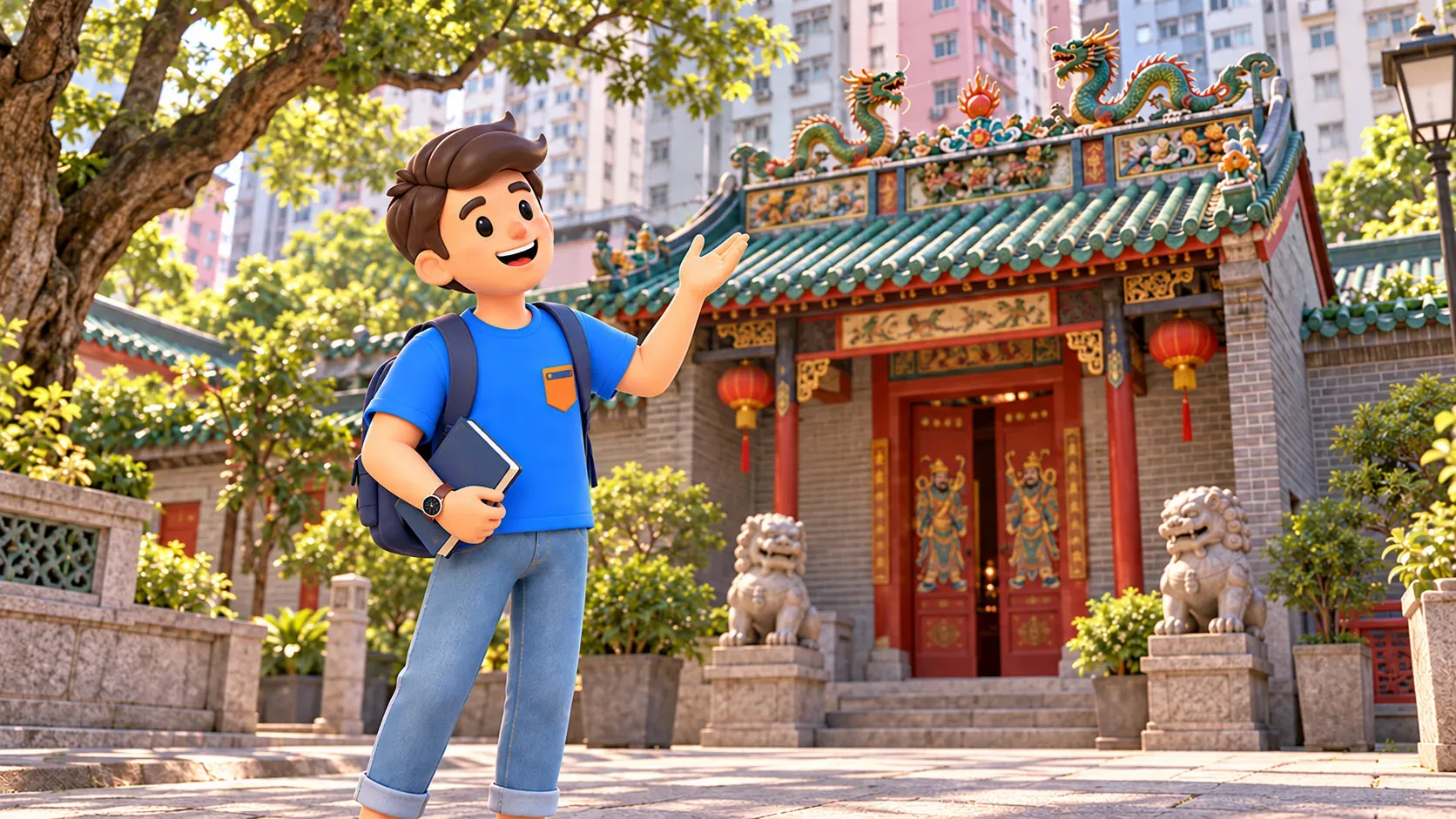
The Wan Chai temple, also called Yuk Hui Temple, was completed in 1863 and is dedicated to Pak Tai, the Northern Emperor. For a first encounter, its community connection and neighbourhood scale matter more than a full inventory of sacred objects. It adds a religious layer beside the public service and residential architecture already seen.
If open to visitors, enter quietly and leave worshippers room to continue at their own pace. Follow signs and staff directions, leave offerings untouched and do not occupy a passage for a photograph. Shorten the visit if it is busy or incense bothers you. Looking from outside can still explain the temple's position within the quarter.
Roof details and the entrance arrangement provide enough for a short period of attention. Choose one noticeable form, then look at the building as a whole. There is no need to explain every symbol from memory or assign a meaning you have not checked. Interest in a tradition can comfortably include recognising that some aspects deserve a separate, deeper introduction.
Follow current photography rules. Permission to photograph architecture is not permission for close portraits of worshippers. Avoid copying ritual movements for a joke or treating decoration as a prop. These simple choices allow a short visit to remain respectful without intruding on the place's primary purpose.
A pause and a few photographs in a residential area
Give photography a limited brief: an overall Blue House view, one balcony detail and the small public building against taller development. That selection shows differences without making every new angle compulsory. Before composing, check that you are in a safe position rather than beside traffic or in a doorway. The picture should fit the space available.
Do not depend on empty streets. People work, live and move here independently of the walk. If a view is occupied, wait briefly or choose another detail. Avoid asking residents to alter ordinary activities for your picture. Paying attention to how the quarter is used fits the subject better than trying to remove everyone from it.
Plan food or a drink after the main walk, or as a genuine pause rather than a snack on residential steps. One café is not essential to the itinerary: small places change hours and an available table cannot be guaranteed. Choose according to appetite and circumstances. With children, comparing old-house height to newer neighbours can provide a simple observation task without a long explanation.
Finish with an idea for continuing
After the temple, decide whether you want another city block or have enough impressions. Heat and rain are good reasons to reduce the programme. Postpone the exterior walk in severe conditions; short distances do not automatically make façades and open crossings comfortable. Rushing every stop is not a useful way to compensate for poor weather.
Choose onward transport from your finishing position. Returning to the former post office just to make a loop is unnecessary. For the whole visit, the three-day Hong Kong plan keeps quieter neighbourhood walks, big views and museums as separate building blocks. Each activity can then have the time it needs.
Leave with one question: what survives with a building besides its walls? At the Blue House, it may be residential life; at the former post office, a public role; at the temple, continuing worship. That relationship makes older Hong Kong more understandable. Two hours are enough to notice it and choose which part you want to explore more deeply next time.


