
Beyond Bruce Lee: discovering Hong Kong through cinema

It is easy to reduce cinematic Hong Kong to a single image: Bruce Lee, a familiar stance and the harbour skyline. That is a useful entrance, but a much larger world lies beyond it. Actresses and singers, directors and editors, audiences and the people who preserve films all belong to the story. A visit becomes richer when you look at the connections surrounding a celebrity as well as the celebrity alone.
The Avenue of Stars on Kowloon’s waterfront is enough for a first encounter. Memorials to Bruce Lee, Anita Mui and the Hong Kong Film Awards introduce three aspects of culture: international recognition, local emotional memory and the collective work of an industry. The Film Archive at Sai Wan Ho adds preservation. It deserves its own part of the day rather than being treated as the next door along the same promenade.
Choose the Hong Kong you want cinema to reveal
You do not need to arrive with expert knowledge of local film history. One interest is enough: a performer, music, urban surroundings or the way a film survives its own period. That choice gives direction without turning cinema into another long checklist. The useful question is not how many names you recognise, but whether you are willing to notice people, work and audiences behind them.
RoadMe makes it much easier to turn an interest in cinema into a personal travel plan, connecting cultural places, neighbourhood walks and rest with your interests and preferred pace.
Separate a commemorative place from a filming location. An actor’s statue expresses their importance to the city; it does not prove that a particular scene was shot beside it. An attractive harbour view does not authenticate every similar-looking screen image either. Keeping that boundary allows you to enjoy the walk without attaching an invented production story to a place merely because the connection sounds appealing.
Before setting out, you might choose one film or musical performance to discover, if you have lawful access and feel interested. There is no compulsory homework programme. Sometimes learning who someone was and why they are remembered is enough. The monument then becomes an encounter with a specific cultural legacy rather than a test of how thoroughly you prepared for a holiday.
If companions have different interests, agree on a short shared section. For one person it may be a cinema conversation, for another a waterfront walk and city view. Those experiences can coexist. Leave the option to finish the theme early or continue later at the archive, when a suitable programme and enough attention are genuinely available rather than forced into a crowded day.
Bruce Lee: a figure that became an international symbol
The bronze Bruce Lee statue was unveiled in 2005. Its recognisable stance was chosen with fans’ involvement, and the memorial recalls the actor and martial artist’s influence far beyond Hong Kong. For a traveller, it shows how a screen image becomes part of urban memory. A person is gone, while a gesture remains legible to new generations who encounter it through photographs, films and the city itself.
Set aside the familiar idea of repeating the pose for a moment. Look at the direction of the gaze, the figure’s tension and its relationship with the open space. The monument conveys movement through a still material. It is neither a martial arts lesson nor a complete reproduction of a live performance. It is an artistic selection that makes someone recognisable without a long explanation.
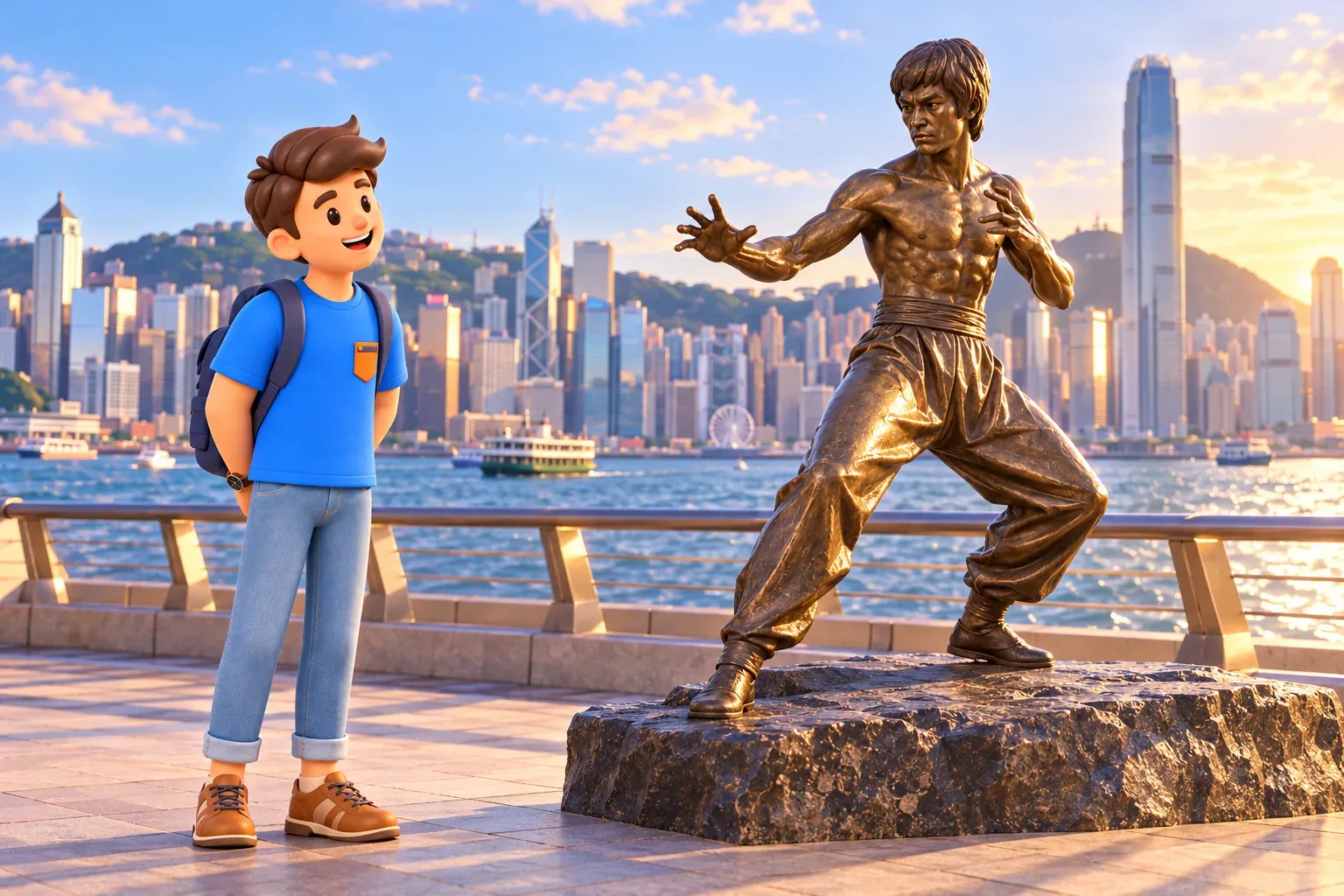
International fame offers an accessible beginning, but it should not hide the rest of the city’s cinema. If Bruce Lee is the only name you know, the walk can already prompt another question: which other kinds of roles and audience feelings existed alongside martial arts films? You do not need an immediate list of dozens of titles. Continue towards another memorial and a different image of performance.
Leave space for other visitors instead of turning the sculpture’s surroundings into your own stunt stage. A brief, calm photograph is compatible with looking carefully. When the area is busy, walk further and return, or view it from the side. The memorial’s meaning does not depend on securing a perfectly empty patch of ground or reproducing the pose with exact accuracy.
Anita Mui: the city remembers more than action heroes
Anita Mui’s memorial recalls a popular culture connecting cinema, song, stage image and audiences’ personal attachments. She was both a singer and an actress, so her presence broadens a film-themed walk. Urban memory holds more than a familiar strike or an impressive action sequence. It can also preserve a voice, the feeling of a role and a sense of closeness to a performer across different forms of entertainment.
Flowing-water motifs appear at the sculpture’s base. They provide a reason to consider how a memorial connects a figure with a performing legacy rather than relying solely on facial likeness. Ask what the artist has chosen to emphasise. Movement, clothing or a base can communicate something about a person that a name alone cannot, giving even an unfamiliar visitor a way to begin looking.
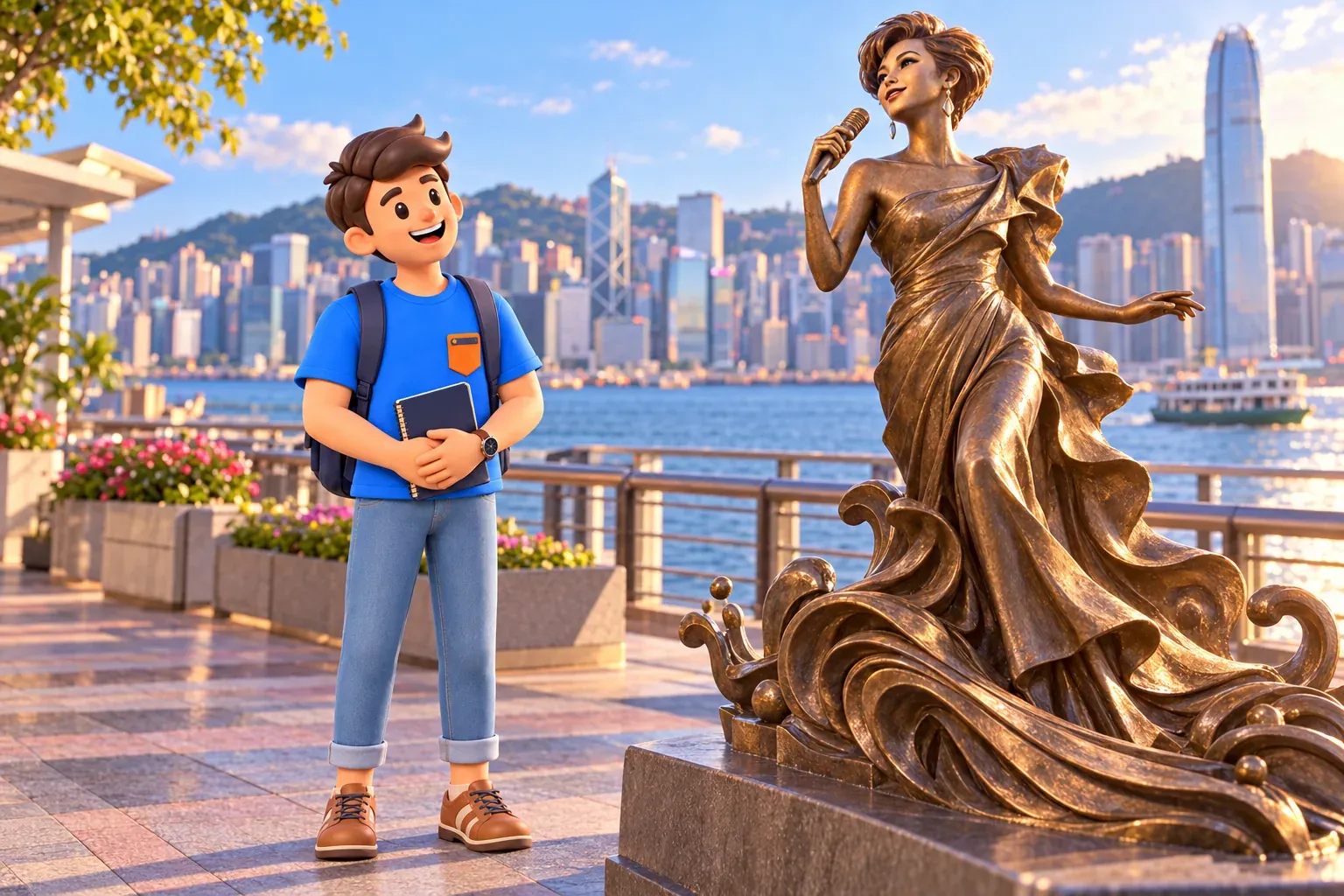
There is no need to compare the two memorials by deciding who matters more. They express different relationships between a performer and an audience. One traveller recognises a name, another remembers a family connection with a song, and someone else is encountering the artist for the first time. Those forms of attention can exist together without requiring you to pretend to be a fan before you have explored the work.
If you want to continue afterwards, choose one Anita Mui performance or film according to your interest and availability. Do not turn the choice into an obligation to master an entire career during a trip. Opening a new cultural door is enough. Even recognising that a familiar promenade commemorates both a singer and an actress can change your understanding of the place beyond its scenic views.
A film award points towards work outside the frame
The Hong Kong Film Awards sculpture depicts a female figure holding a pearl. The awards have been held since 1982 and recognise contributions to the city’s film industry. On a walk, the figure offers a transition from individual stars towards collective production. A film involves many professions even when audiences mainly remember its leading faces and the moments those performers make visible.
Try mentally unpacking one familiar shot. Who developed the action, arranged the lighting, shaped the sound, prepared the costume and assembled the edit? You need not know every name to understand the collective result. Beside an awards memorial, that question restores some visibility to labour that usually disappears behind the apparently seamless impression of a finished screen story.
A trophy figure on the waterfront does not mean an awards ceremony takes place there every day, nor that visitors gain access behind the industry’s scenes. It is a public symbol of recognition encountered during an ordinary walk. Follow actual announcements if an event is taking place. Do not build the day around an imagined meeting with celebrities or accidentally arriving on a working film set.
The three memorials fit a relaxed waterfront walk of roughly an hour to an hour and a half, including pauses. That is a planning guide, not a timed sequence you must follow exactly. Tsim Sha Tsui provides ideas for a wider district day. Every pause need not be filled with another museum: the harbour, a walk and a rest can continue the cultural conversation perfectly well.
The Film Archive: helping films live beyond their era
The Hong Kong Film Archive is at Sai Wan Ho on the island side. Its permanent building opened in 2001. It preserves films and related material while presenting exhibitions and programmes for audiences. Unlike a monument’s immediate image, an archive introduces another value: cultural memory depends on selection, description, care and opportunities for people to encounter a work again rather than merely remember its name.
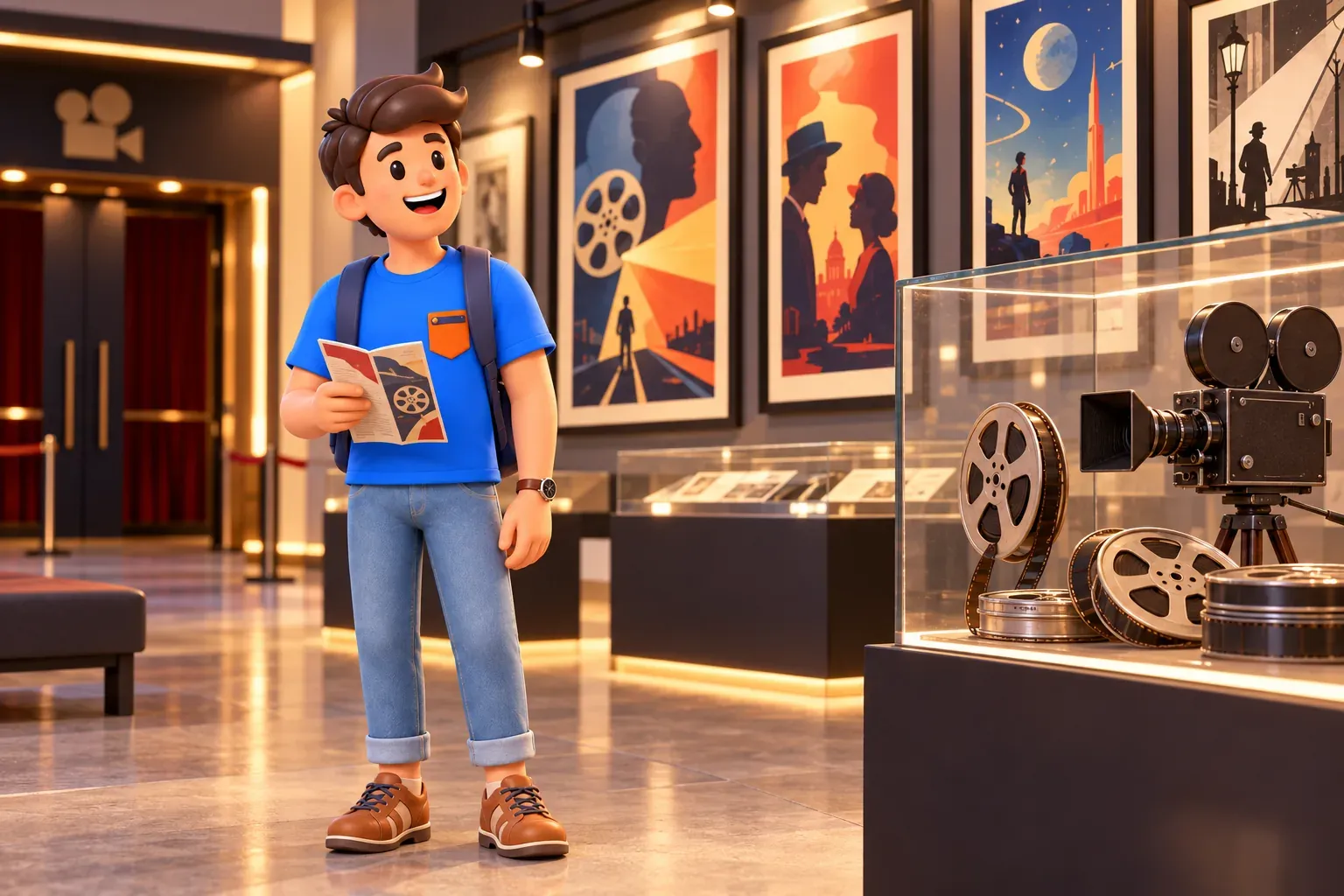
Do not imagine a warehouse where anyone can walk in and handle film reels. Collection vaults and working laboratories are not a routine tourist route. For a first visit, choose the public exhibition area or a specific screening. If the resource centre interests you, check its separate hours and rules; they differ from the general building timetable, and some materials have particular access conditions.
The archive normally closes on Tuesdays except public holidays. Watching a film depends on a programme, time and ticket; an open building does not guarantee a suitable screening. Before choosing, read the language, subtitle information, running time and entry conditions. This matters especially when a companion does not understand the original language. A promising title is not enough to confirm a comfortable shared viewing experience.
Roughly an hour to an hour and a half can guide a public exhibition visit, with a screening’s duration and travel added separately. Do not attach the archive mechanically to the three statues. A city journey separates Kowloon from Sai Wan Ho. If your day already takes you to the island’s east, Quarry Bay & Sai Wan Ho offers a more natural neighbourhood context for a cultural stop.
Follow the archive’s photography rules. Video and audio recording are prohibited, and parts of an exhibition may restrict photographs. Even where photographs are allowed, do not use flash or equipment contrary to the conditions. A visit’s value is not measured by how much material you record. One closely examined poster or one complete film can leave more than a gallery of hurried pictures.
Preservation also changes what “seeing cinema” can mean. You may arrive expecting only a screen and discover the importance of a poster, a programme or a production document. These objects do not replace a film. They reveal the work and circulation around it. Choose one connection to understand instead of assuming that every item available in an archive belongs in today’s display.
A promenade, exhibition or one carefully chosen film
For a first encounter, keep the waterfront film walk short. For greater depth, choose an exhibition or screening at the archive and organise a separate part of the day around it. You need not visit all four points in succession for the interest to count as serious. A good plan fits your curiosity, time and willingness to absorb a new story.
RoadMe helps develop a personal route for your whole trip around your interests. The app makes it easier to combine cinema, neighbourhoods, travel and rest than assembling a holiday manually from separate thematic lists.
After the walk, ask not only whom you saw in bronze but what you now want to watch on screen. One new name, an interest in a profession or a chosen film already makes the encounter with the city more meaningful. Cinematic Hong Kong opens through attention to different voices, continuing far beyond the familiar photograph beside Bruce Lee and the harbour skyline.


