
Half a day in the Jordaan: canals, streets and markets

A half day in the Jordaan works best when it has room for ordinary city scenes: someone choosing vegetables, a canal appearing beyond a side street, a shop window that makes you stop. You do not need a long checklist. A few connected streets, two possible markets and a proper pause give this neighbourhood a more memorable shape.
Saturday morning offers the fullest market version, with Noordermarkt and neighbouring Lindengracht. Monday has a different shopping pattern, while other days put the emphasis on canals and streets. The route below allows roughly four hours. It includes exterior church stops, walking and a simple lunch break; museum visits and tower climbs need a separate plan.
Choose the day before choosing the stops
For fresh produce, flowers and a lively market morning, choose Saturday. The organic farmers’ market on Noordermarkt operates from 9am to 4pm, alongside a separate general market with goods and antiques. Lindengracht also has its own Saturday market nearby. Starting around ten puts the trading part first, before the canals and a later lunch, without requiring an especially early departure.
RoadMe makes it easier to get a personal plan for the walk or your entire trip, built around your interests, dates and pace. Tell the app whether you prefer markets, history, small museums or time beside the water, and use a complete route it has worked out for your visit.
Monday is a better match for browsing goods, books, vintage items and fabrics. Begin at Noordermarkt in the morning, then move to Westerstraat. Its Monday market, also known as the Lapjesmarkt, runs from 9am to 1pm. Keep both trading stops before lunch rather than assuming that an afternoon or evening walk will offer the same stalls and atmosphere.
On Sunday or another day without these markets, retain the same neighbourhood landmarks and reduce the shopping allowance. Give the spare time to a café or a closer look at the canals. The Jordaan remains rewarding without stalls, but the programme changes. Check date-specific arrangements around public holidays instead of treating the weekly pattern as a promise for every visit.
A half-day route from Noordermarkt to Westerkerk
Start on Noordermarkt by Noorderkerk, continue to Lindengracht, and work through the smaller streets towards Westerstraat. Head south to Egelantiersgracht and Bloemgracht before finishing outside Westerkerk on the edge of the canal belt. Markets come first, water and architecture later. Calculate your journey from accommodation to the starting square separately; it is not part of the four hours.
| Approximate time | Part of the walk |
|---|---|
| 10:00–10:50 | Noordermarkt and Noorderkerk exterior |
| 10:50–11:40 | Lindengracht market on Saturday, or the street |
| 11:40–12:15 | Small streets and Westerstraat |
| 12:15–13:15 | Egelantiersgracht and Bloemgracht, with pauses |
| 13:15–14:00 | Westerkerk exterior and a simple lunch break |
These are planning estimates, with local walking included in each block, not timings from a measured track. On Saturday, a market may hold your attention longer. Shorten the next section or finish later instead of rushing. On Monday, see Noordermarkt and Westerstraat first, then return to the remaining route, so the textile-market stop happens before its early-afternoon closing.
This is a self-contained morning within a longer trip. If you are still choosing the overall structure of a weekend, our two-day Amsterdam itinerary connects the centre, canals and museum area. Use the Jordaan as a closer look at one neighbourhood, keeping a major museum for another part of the visit rather than squeezing everything into this half day.
Noordermarkt: two kinds of browsing around a church
Find Noorderkerk before exploring the stalls. Built between 1620 and 1623 to a design by Hendrick de Keyser, the church connects the square to the neighbourhood’s seventeenth-century development. An exterior view is enough for this route. An interior visit, concert or service has its own arrangements and deserves a separate allowance rather than an assumed slot between purchases.
On Saturday, organic produce and general goods occupy neighbouring parts of the square. You might start with food, then look at books, ceramics or vintage clothing. Choose a subject that interests you instead of covering every stall in order. The fifty-minute block includes the square, church exterior and initial browsing; a serious shopping expedition could easily take a much larger share of the morning.
Think about what will actually be useful during the trip. A small snack or an old postcard may be a better purchase than something chosen simply to prove you visited a market. Compare ingredients, size and price at the stall, and ask the seller about payment. Do not assume every trader accepts exactly the same methods or offers the same conditions.
This is a good place for a small bite if you want to leave lunch until the end. Keep your choice flexible: no particular tasting or prepared dish is guaranteed. When you have finished browsing, step aside before taking photographs. It is easier to appreciate the market when you leave people enough room to carry out their everyday shopping.

Lindengracht: make the second market different
Continue from Noordermarkt to Lindengracht on public streets. Saturday brings a separate general market, rather than an endless extension of the same set of stalls. Change your focus if you like: move from second-hand objects to flowers and produce, or spend longer with whichever subject you prefer. Allow around fifty minutes including the approach; you do not have to walk every trading row.
On another day, treat Lindengracht as a street stop without expecting Saturday’s market. Notice its width and the narrower connections branching into the neighbourhood. The changing scale gives the walk a rhythm: an open perspective gives way to a doorway, a window or a turn, before the city opens again. Such details can be enough without entering every shop you pass.
The Jordaan’s past deserves a little context beyond its attractive houses. It developed during the city’s early-seventeenth-century expansion and became home to craftspeople; later, many residents endured overcrowding and difficult living conditions. Present-day charm should not be projected backwards as if those circumstances were comfortable. You only need that distinction to see the neighbourhood with more understanding, rather than turning the walk into a lecture.
If shopping has already become tiring, leave the market section earlier. Make any bag comfortable to carry and remember that more walking lies ahead. A heavy or fragile souvenir can change the feel of the remaining hour. Let the things you buy fit the day you are having, instead of allowing an impulsive purchase to dictate every later decision.
Westerstraat, then a change of pace beside the water
Westerstraat changes with the day of the week. On Monday its market is associated with fabrics and clothing. In the Saturday version, it is primarily a street linking this part of the neighbourhood with the next. Do not expect Monday’s stalls on every visit. Allow roughly half an hour for the approach, windows and short stops, increasing it if shopping becomes the main activity.
Then take a public route south towards Egelantiersgracht, using the smaller connecting streets around Tweede Egelantiersdwarsstraat and checking direction on your own map. The purpose is a transition from market activity to looking more slowly at the city. Collecting every nearby lane is unnecessary; choosing one connected sequence keeps the walk enjoyable and reduces repeated backtracking for a missed façade.
Beside the canal, choose one bank for a gentle walk and a safe place to pause. Look at reflections, the differences between neighbouring houses and how a bridge reveals the next view. A simple question helps: what has changed since the open square where the morning began? You can notice proportions and atmosphere without knowing specialist terms for every architectural detail.

The neighbourhood’s courtyard houses, or hofjes, may be intriguing, but this route does not depend on access to them. An open gate should not be treated as an invitation into every residential space. If a particular courtyard matters to your visit, check its specific visitor arrangements. Public streets and canal banks already provide a complete walk, without relying on an uncertain private passage.
If you want these quieter sections to fit naturally alongside museums and markets, RoadMe can prepare the whole plan around your interests and available time. Using a route the app has worked out for your trip is much more convenient than repeatedly joining separate recommendations yourself.
Bloemgracht and a clear finish by Westerkerk
Continue south from Egelantiersgracht towards Bloemgracht through available smaller streets. The two canals share an allowance of roughly an hour, including connections and pauses. You can compare several views without walking the full length of both waterways. Choose a connected section and work towards the eastern side, where Prinsengracht and the next landmark give the walk a clear ending.
Westerkerk provides a strong vertical presence at the meeting with the larger canal belt. Brought into use in 1631, the church links the quieter streets to Amsterdam’s seventeenth-century growth. The basic plan remains an exterior stop. Entering the church and climbing its tower should not be treated as one automatically available activity; each would need its own access check and additional time.
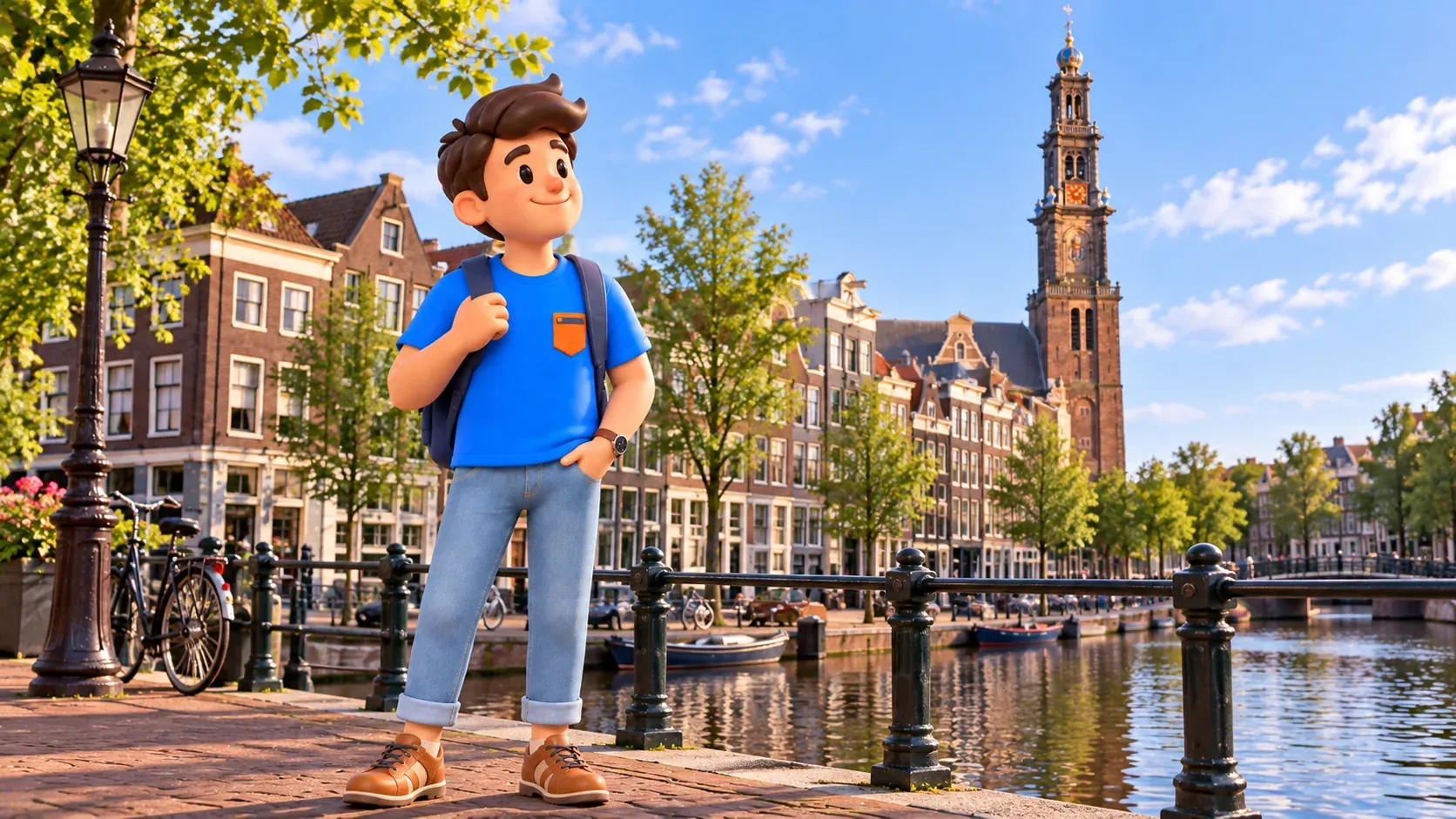
Leave room for lunch nearby after the exterior stop. The final forty-five minutes are a guide for a short look and simple food, not a guaranteed table in a popular restaurant. If a specific booking or an unhurried meal with several courses matters to you, enlarge this block. A satisfying pause can be the whole conclusion, without another sightseeing obligation afterwards.
The Anne Frank House is close, but requires a different planning approach. A museum visit needs a ticket with a start time bought through the museum’s official website. Choose an available admission first, then adjust the walk around it. Passing the building is not equivalent to visiting the museum, and spare time before lunch does not provide access to the interior.
Let the neighbourhood be enough for half a day
You do not have to continue directly into the Nine Streets, a major museum and an evening tour. The Jordaan already offers a complete progression: a market square, adjoining streets, canals and a distinctive church at the finish. If you are travelling with people who enjoy different things, agree on one shared break and a realistic amount of shopping time before setting out.
In rain, reduce stationary canal stops and allow a longer indoor pause after checking the place you choose. Assess bridges, surfaces and narrow pavements against your own needs; this route has not been evaluated as step-free. Your journey back to accommodation or to the next activity sits outside the four-hour block. Finish with enough energy to enjoy that next part of the day.


