The Great Chicago Fire: surviving traces and legends worth questioning
Chicago’s Great Fire is often reduced to two images: a cow beside a lamp and a small stone tower standing amid destruction. Neither image is enough to understand the event or the city that followed. The fire of October 8–10, 1871 left physical traces, rebuilt places and a large body of stories. Those are different kinds of evidence.
A useful way to look today is to distinguish what survived, what was reconstructed around surviving parts and what was created later to remember the disaster. The Water Tower, Chicago Avenue Pumping Station, St. James Cathedral, St. Michael in Old Town and Pillar of Fire offer examples. They belong to a shared subject, not to one short walking circuit.
Begin with three kinds of trace
A surviving wall is material from an earlier building. A reconstructed interior is a later response to loss. A memorial tells you how another generation chose to remember. All three can be meaningful, but they answer different questions. Treating them as identical makes a dramatic story simpler while making the city itself harder to read.
Build a personal Chicago trip with RoadMe around the stories that interest you, your dates and preferred pace. Give historic places time within a whole trip rather than trying to collect every related address at once.
Start by asking what the place can actually show. Does it preserve original fabric, incorporate an older fragment, or mark a site through later art? You do not need to become an architectural investigator. A clear distinction between those possibilities already changes how you look at a familiar landmark and what you expect from it.
It also keeps the practical visit honest. A church remains a place of worship, a pumping station is not automatically an open engineering museum and a fire academy is not a public attraction inside. Historical interest does not provide unrestricted access. Choose a respectful public viewpoint and check a specific interior visit separately if that is what you want.
The cow story is not an established explanation
The precise ignition of the Great Chicago Fire remains unknown. The familiar account of Mrs. O’Leary’s cow kicking over a lamp should not be presented as a demonstrated cause. The National Archives describes dry conditions, strong winds and abundant fuel as factors in the disaster’s spread. A memorable animal story does not explain that wider urban vulnerability.
Separate the place associated with the outbreak from certainty about the first spark. A site can be historically important even when the exact initiating act is unresolved. You do not improve the story by replacing the cow with another confident accusation drawn from an attractive theory. Uncertainty is part of the historical account, not a gap that needs a new culprit.
Look at how a legend works. It offers a single action, an easily pictured scene and someone to blame. The larger conditions are less convenient to illustrate, yet they matter for understanding how a local fire became a city disaster. Reading the city carefully means resisting the version that is easiest to remember when its evidence is weak.
An old illustration of the barn can therefore be interesting without being a record of what happened at the instant of ignition. Ask whether an image documents a place, reconstructs an event or repeats a popular explanation. The same caution applies to a modern artistic illustration: it can introduce a subject without becoming historical evidence.
The Water Tower survived, but it was not the only building
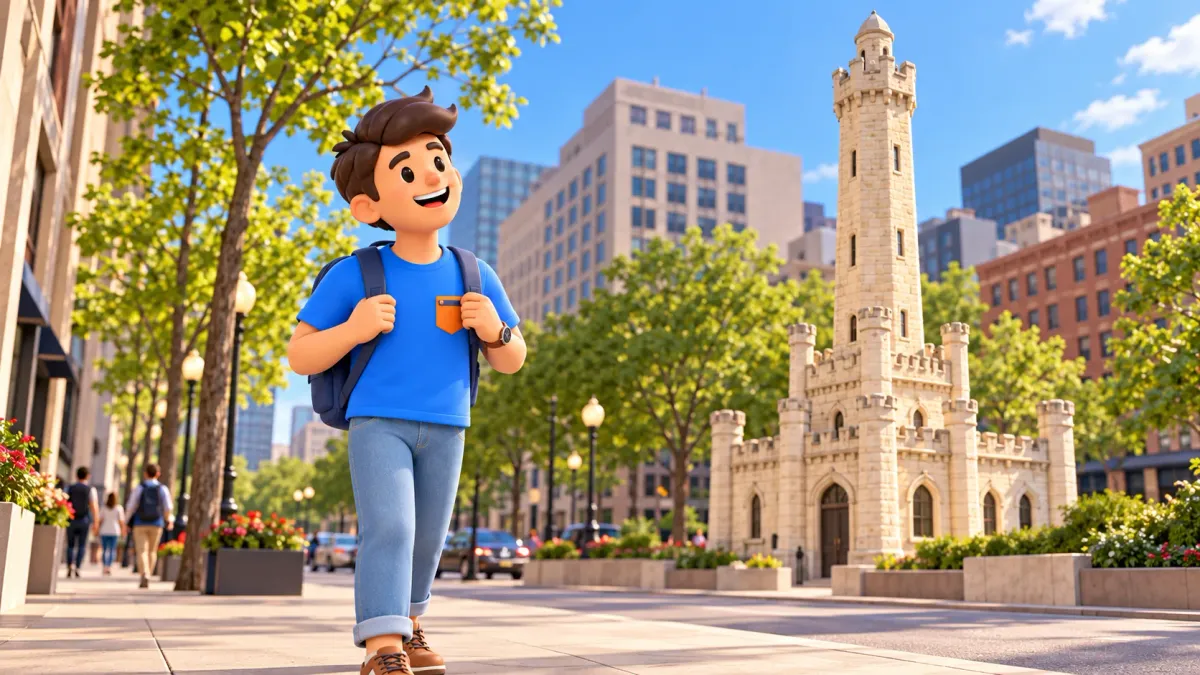
The Chicago Water Tower is the best-known surviving emblem, not the sole building left anywhere in Chicago. Significant parts of the city lay outside the burned area. The tower and the Chicago Avenue Pumping Station belong together as surviving public structures in that devastated district. Keep the scope of the claim precise rather than turning a local survivor into the only remnant of the whole city.
The tower’s historic function also matters. It housed a standpipe associated with controlling pressure fluctuations in the water system; the pumping machinery was in the neighboring station. Its castle-like appearance can distract from that practical role. It was an infrastructure building with an architectural expression, not a medieval fortress transported into a modern street.
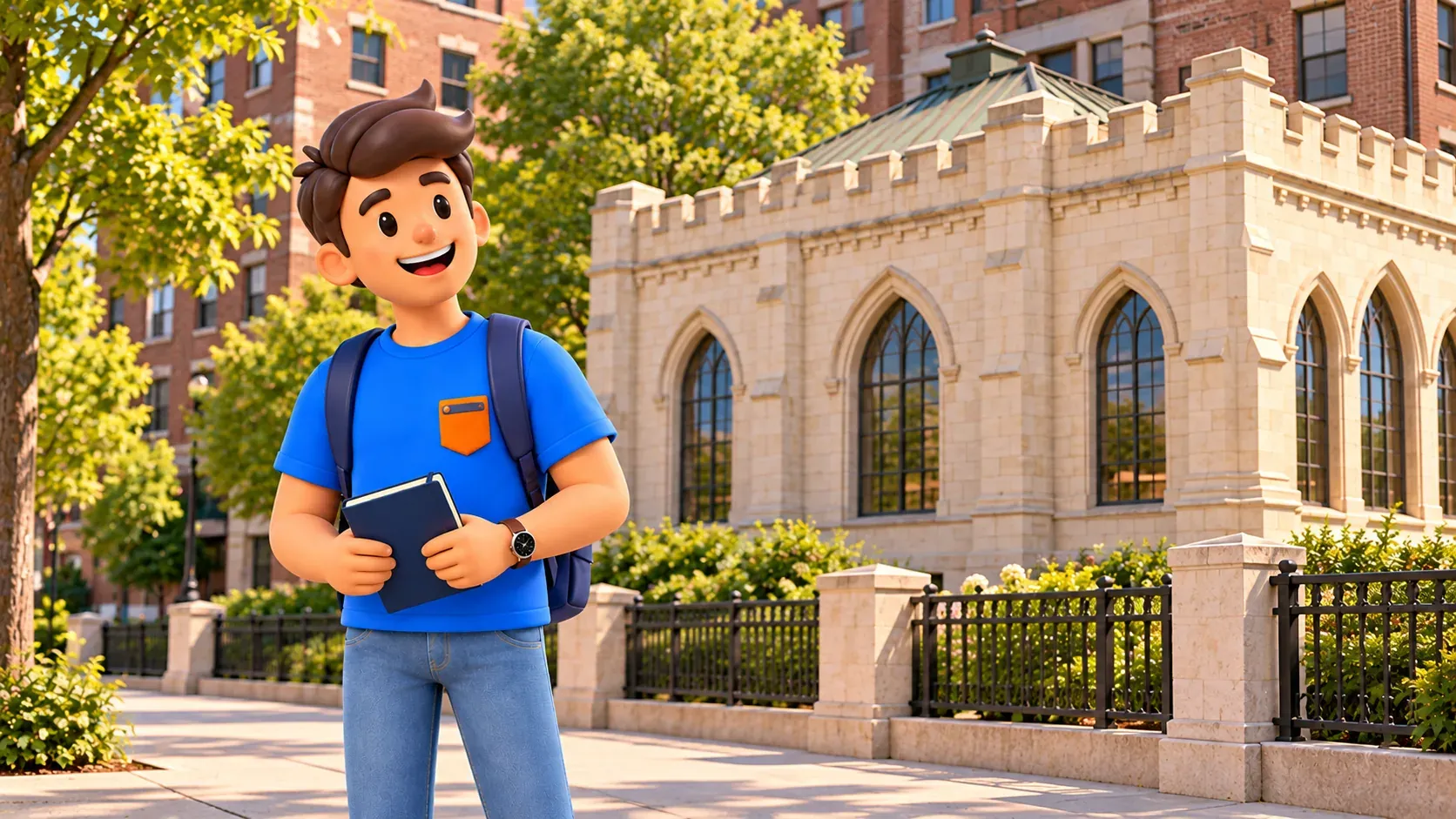
Survival is not the same as escaping all damage. The historic building record notes the effects of the fire’s heat on the tower’s ornament. Avoid imagining an untouched object that somehow stood completely outside the event. What makes the place interesting is its continuity through the disaster and the later city, including repair and changing use.
From a public sidewalk, compare its scale with the surrounding modern development. That contrast is a useful way to notice time in the city without claiming that every nearby building appeared immediately after 1871. The present streetscape contains many periods. The historic Water Tower is also distinct from the modern development called Water Tower Place.
The pumping station shows why “survived” needs explanation
Across Michigan Avenue, Chicago Avenue Pumping Station adds an important qualification. Its masonry remained, but that does not mean the machinery and interior escaped the disaster. A contemporary city engineer’s account preserved by the Chicago History Museum describes devastated works and standing walls. Calling the entire station undamaged would erase the difference between an exterior remaining and a system continuing to operate.
This is a good place to practice a more precise vocabulary. A structure can survive as walls, be repaired and resume a role later. That is different from functioning throughout a fire without interruption. The word “survivor” does not settle which of those things happened; it needs a subject and an explanation.
The tower and station are close enough to compare as a pair, but they should not collapse into one building in your understanding. One helped manage pressure, the other housed pumping operations. Their architectural relationship makes them visually connected. Their separate functions help explain why looking at only the picturesque tower leaves part of the story out.
Observe from public areas and treat any interior access as a separate question. The historical subject is water infrastructure and the fire’s aftermath, not a promise that you can inspect operating machinery whenever you arrive. A careful exterior comparison can already show why material survival and functional survival are different ideas.
St. James and St. Michael: fragments within rebuilt places
St. James Cathedral’s own history records surviving stone walls, its bell tower and the Civil War Memorial after the fire. The present church should therefore be read with reconstruction in mind, rather than described as an entirely unchanged pre-fire interior. A surviving component can remain important inside a place that has continued to develop.
St. Michael in Old Town presents another version. The parish says that only the church walls remained after the fire; the rebuilt church was rededicated in 1873. Work on the later spire began in 1887. Do not point to every part of its present silhouette as something that stood through the flames in 1871.
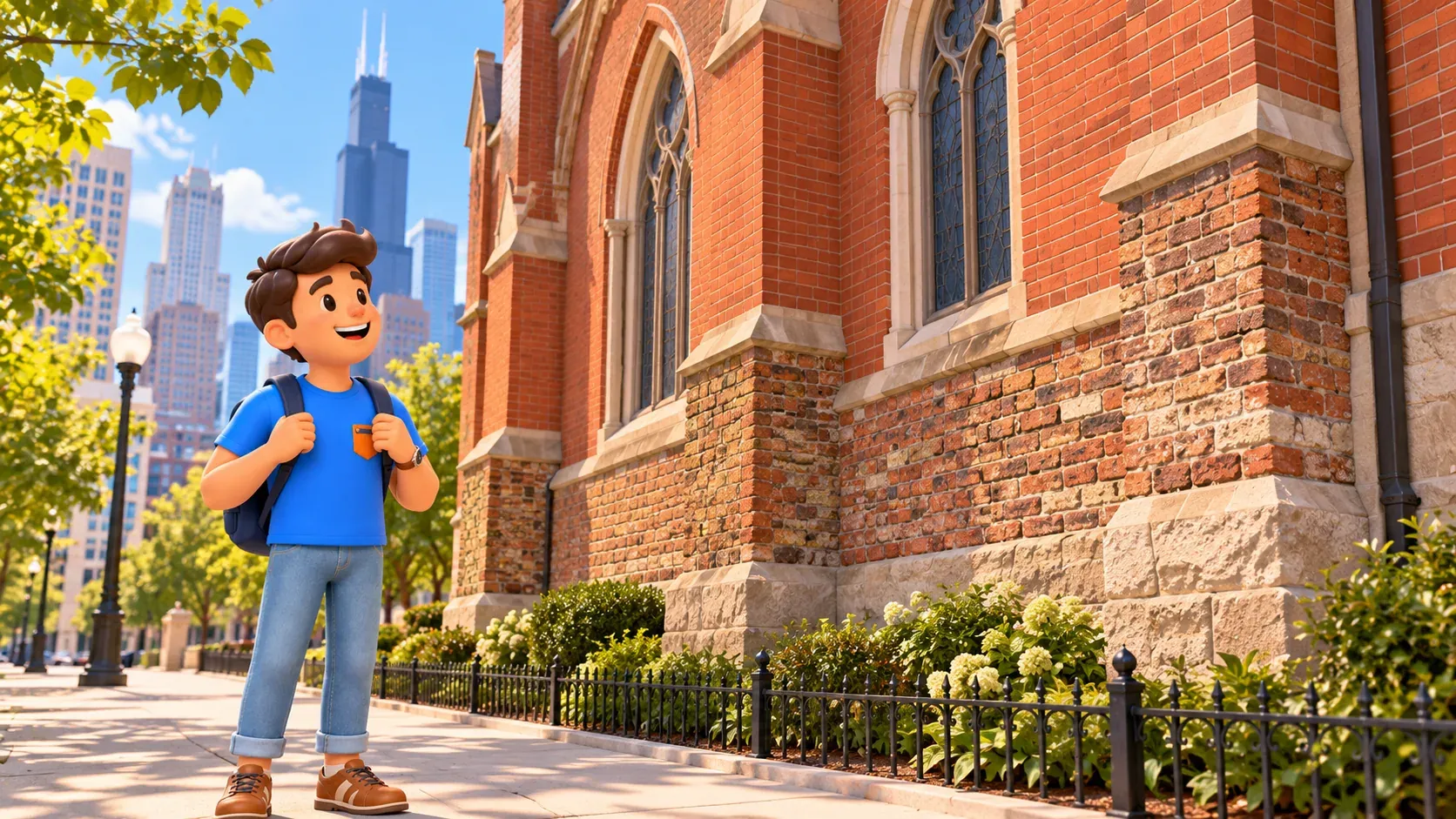
These examples make “old” a more useful word when followed by a question: old in which part? A building can contain continuity and replacement at once. That does not make it less authentic as a place of community life. It makes its history more layered than a simple division between original buildings and later copies.
For a visit, remember that services and other parish activities take priority over sightseeing. Check any public opening arrangements, remain quiet and follow the site’s rules. You can understand the basic distinction from an exterior observation without promising an interior encounter or assuming that a church door is open for tourists throughout the day.
Pillar of Fire is memory made later
Pillar of Fire, the bronze sculpture by Egon Weiner at the fire academy site on West DeKoven Street, dates to 1961. It commemorates the event rather than surviving from 1871. The site connects you with the history of the outbreak, while the artwork belongs to a later act of remembrance. It does not establish who or what ignited the fire.
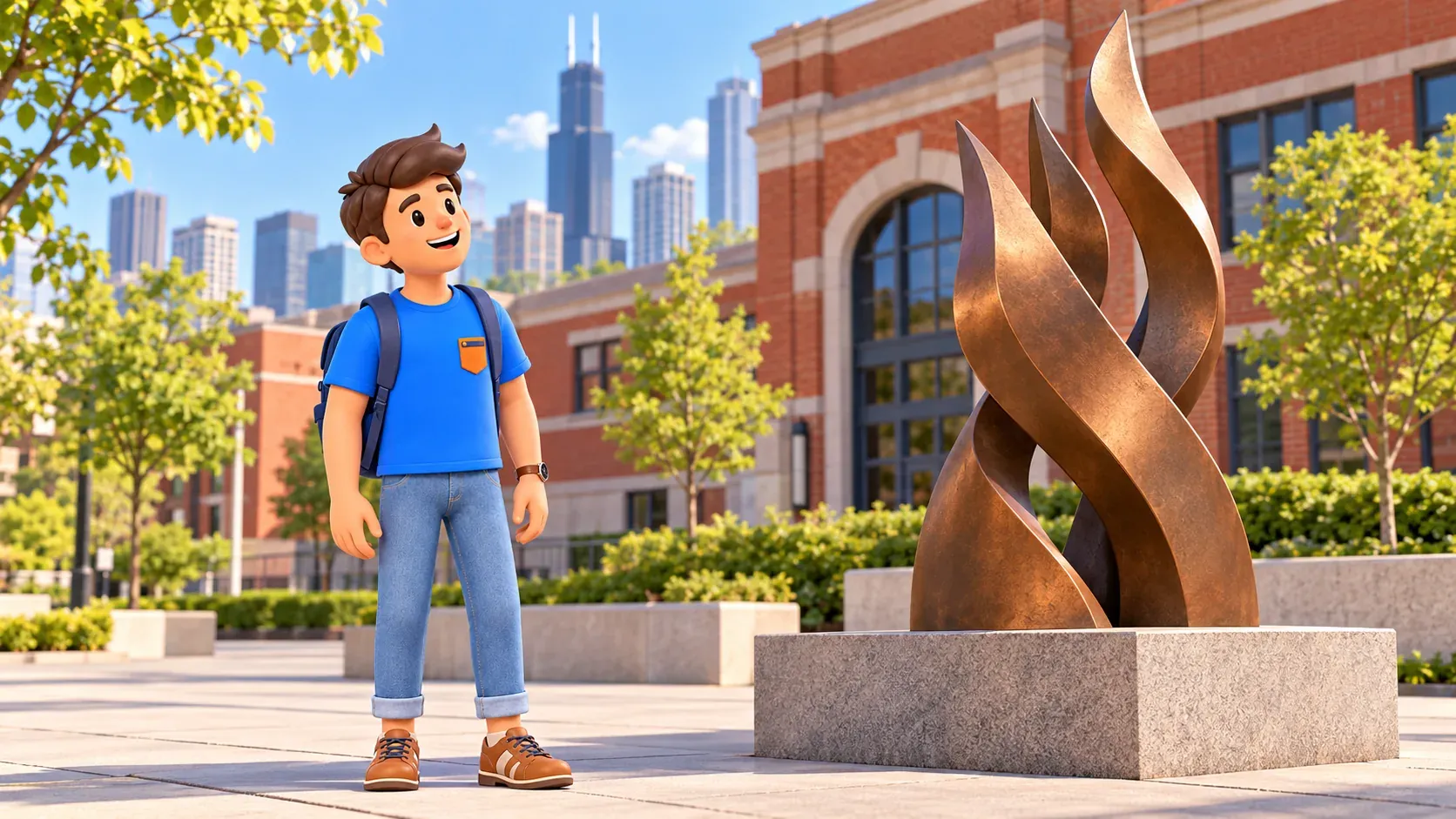
Look at the difference between a physical remnant and a chosen symbol. An abstract flame can express memory without reconstructing an exact scene. You do not need to treat the work as a frozen eyewitness account to value it. Its later date is part of its meaning, showing that remembering the fire continued long after rebuilding.
Use RoadMe to shape your whole personal trip around the history, neighborhoods and pace you enjoy. Choose the related places that add meaning to your days, with room for travel and pauses.
When reading a short plaque, notice what its words actually describe. “Survived” may refer to a wall, while “rebuilt” may describe the place you now enter. Compare those statements before drawing a conclusion from the building’s overall appearance. The aim is not to distrust every account, but to give each claim the right scale and avoid asking it to prove something broader.
Read the traces without turning them into a compulsory route
The waterworks pair, the churches and the academy site occupy different parts of the city. Decide which observation fits the day you are actually planning. A shared theme does not make the addresses a short circuit, and a working institution does not become public inside because a memorial stands outside it.
Carry three questions away: what remains from before the fire, what was rebuilt, and what was added to remember? If you also want another story about the city’s infrastructure, read why Chicago reversed its river. The fire’s traces become more interesting when they reveal a city made through survival, loss and later choices, rather than a legend with a single easy explanation.