Why Chicago reversed its river, and how the story changes the view

From the Riverwalk, the Chicago River can look like an elegant foreground for the city: water, bridges, boats and tall buildings. One piece of history changes that view. Chicago deliberately changed the river’s usual direction of flow, using a canal system to carry water away from Lake Michigan instead of letting the polluted river empty into it.
The lasting reversal associated with the Chicago Sanitary and Ship Canal dates to 1900. Its purpose was to protect the lake as a drinking-water source. This was not a decorative intervention or a trick performed by the bridges. It was a response to a city whose growth had made the relationship between water supply and waste impossible to ignore.
Look at the river as part of a city system
Before studying the mechanics, hold two ideas together. The lake supplied the city with water, and the river carried the effects of urban activity toward that same lake. The engineering question therefore belonged to everyday life: where should the city’s unwanted water go? Once you know that question, the riverfront becomes more than a setting for photographs.
Build a personal Chicago trip with RoadMe around the stories and places that interest you, your dates and your pace. A river visit can become part of a whole trip shaped by curiosity.
You do not need to tour every canal or memorize the entire waterway network to understand the central idea. Start with the connection between the visible water and the less visible decisions behind it. The buildings receive much of the attention downtown, but the river is also a piece of infrastructure with a history and an ongoing operation.
This changes a simple pause by a railing. Instead of asking only which tower appears in the reflection, you can ask how a waterway serves a large city, what has been altered and which parts remain outside the view. Those questions make an ordinary riverfront stop rewarding without turning it into a technical inspection.
What changed in 1900
The Sanitary and Ship Canal created a route toward the Des Plaines River and onward through the Illinois and Mississippi river system. The central intervention worked through the waterway’s gradient: water could move toward a lower downstream route. It was not a matter of continuously pumping the whole downtown river uphill with a machine hidden under a bridge.
Earlier attempts and pumping arrangements had already altered flow before 1900, including work associated with the older Illinois and Michigan Canal in the nineteenth century. Calling 1900 the beginning of every attempt would flatten that history. It marks the major canal-based solution for which the reversal is now known, rather than a single idea arriving from nowhere.
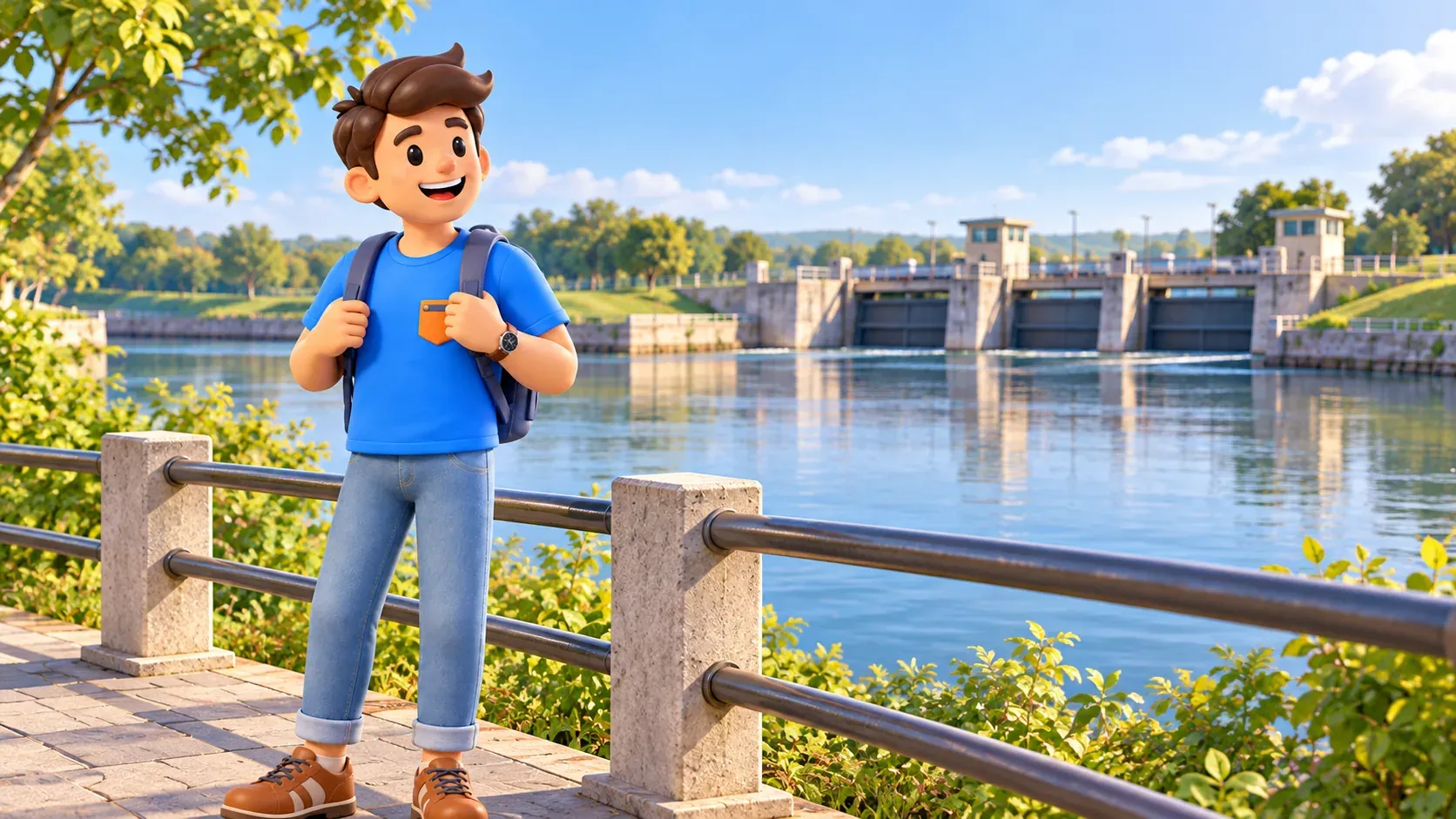
Think of it as changing connections and levels in a landscape. You cannot see the whole intervention from one downtown viewpoint. The canal’s significance lies partly beyond the postcard scene, in the route that water takes after leaving it. An attractive bridge is an understandable place to begin looking, but it is not the device that explains the entire system.
The result also makes a useful distinction between a landmark and a cause. A structure can help you notice a story without having created the event. That distinction matters along this river, where bridges, later public spaces and modern boats all belong to the present view but come from different moments in the city’s development.
The problem did not disappear when it moved downstream
Sending waste away from the lake did not make it vanish. Downstream communities objected to the burden Chicago was transferring. The reversal is therefore more interesting than a simple account of a city winning a contest against nature. It raises a continuing urban question: when one place solves a problem, who else experiences the consequences?
That question does not require treating the engineering achievement as unimportant. It asks you to understand both its purpose and its limits. Protecting a local water source and creating a new downstream responsibility can be true at the same time. The direction of flow tells only part of the story; what the water carries matters as well.
Later wastewater treatment belongs to a different part of that history. Changing a route is not the same operation as cleaning water. Keep those ideas separate when reading museum panels or hearing a short tour explanation. Otherwise, a memorable sentence about a river running backward can wrongly suggest that the environmental problem was solved completely in one step.
For a visitor, this broader perspective adds depth without demanding a complete history of sanitation. Look at the river as a connection between places, not only a boundary between buildings. The water leaving the scene continues somewhere else, and that unseen continuation is part of the meaning of the view.
DuSable Bridge is a viewpoint, not the reversal mechanism
DuSable Bridge carries Michigan Avenue across the river. The bridge dates to 1920, after the major reversal of 1900. That chronology immediately prevents one common confusion: the bridge did not turn the river around. It belongs to another layer of the city’s engineering, allowing movement across a waterway that also has to accommodate navigation.
Stand on a permitted public walking area and separate the layers in front of you: crossing traffic, the channel below, the riverfront path and the buildings beyond. You do not need to identify every decorative detail. The useful observation is that several city systems share a small piece of space and must function together.
The bridge can open, but a lift is not guaranteed during an ordinary visit. Its movement creates clearance for vessels; it does not reverse the current. If watching a lift is your particular interest, use the actual announced arrangements rather than treating a bridge photograph with raised leaves as the normal condition you will encounter.
Do not infer the river’s overall direction from a passing boat, wind-driven ripples or a floating object beside the bank. Those observations do not reveal the full operation of the waterway. A calm surface can be a good reason to pause, but it is not a reliable diagram of all the connections downstream.
The Bridgehouse Museum makes one hidden mechanism visible
The McCormick Bridgehouse & Chicago River Museum occupies the southwest bridgehouse at DuSable Bridge, reached at river level on the Riverwalk. Its gear room provides a way to understand a movable bridge. Keep the subject precise: those gears operate the bridge. They are not the machine that reverses the river.
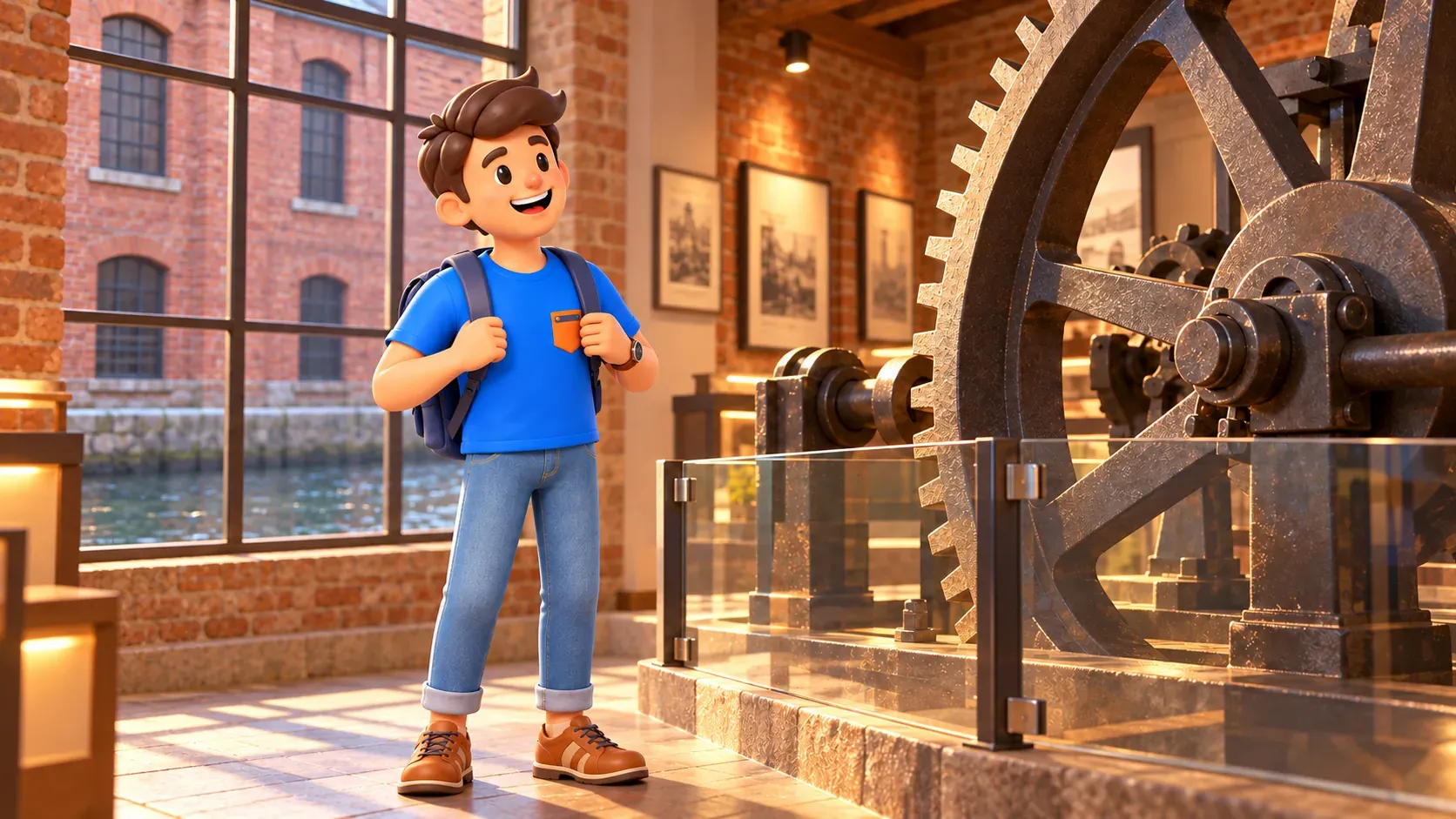
The museum is seasonal. Its published 2026 season runs through October 25, Wednesday–Sunday, 10am–5pm. For a later date or another year, check the new calendar rather than carrying that schedule forward. A closed museum does not remove the riverfront viewpoint, but it changes the kind of visit you can make.
Access also differs by level. The first floor and gear room are wheelchair accessible, while the upper exhibition floors require stairs; comparable digital material is available below. Clarify the visit that suits you instead of describing the whole building as either fully accessible or completely inaccessible. A historic tower has more than one way to contribute to the story.
Inside, connect the small mechanism you can inspect with the much larger history explained around it. One room may make the bridge’s physical operation easier to grasp, while the exhibits place the river in a wider narrative. The value is the relationship between close observation and context, not the claim that a single room contains the whole engineering system.
A managed river is not a river with one unchanging rule
The present waterway is operated through levels and control structures. Under normal conditions, water moves away from the lake. In extreme storms, when river levels are high enough, operators can release floodwater toward the lake. “Reversed” describes the major engineered arrangement; it does not mean every part flows the same way under every possible condition.
This helps explain why a historical intervention remains a present responsibility. The city did not finish dealing with water in 1900. Operating decisions continue, and different conditions call for different responses. From a visitor’s perspective, the important change is to see management as an ongoing activity rather than imagine a switch was thrown and never touched again.
Use RoadMe to build your whole personal trip around the subjects you want to understand and the pace you enjoy. Leave room for a river pause as well as the museums and neighborhoods around it.
Wells Street adds another layer to the same view
At Wells Street Bridge, rail traffic above road traffic makes the sharing of space especially visible. It offers another way to read the river as a working urban corridor. The bridge’s role is crossing and navigation clearance, not water treatment or control of the canal gradient. Keep those functions distinct as you look.
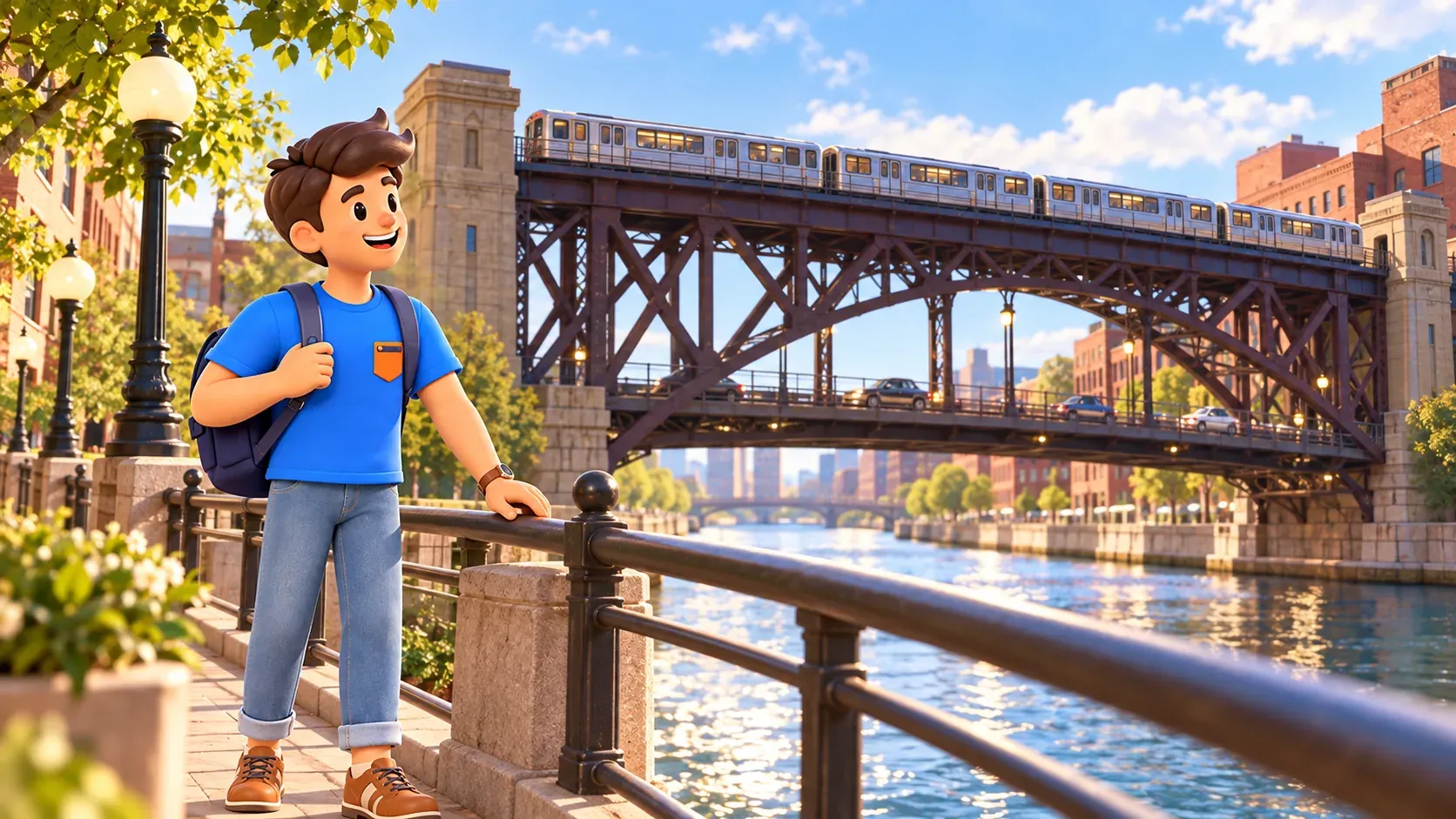
You can use these observations independently. This article does not require a continuous walk between every example, a timed bridge lift or a canal excursion. Choose a public viewpoint that fits your day, stay clear of operating areas and leave yourself time to look. The history is useful even when the observation is short. Give yourself one question to carry away: which part of the view now seems more deliberate than before? That small change in attention can matter more than adding another stop to the day.
If you are fitting that pause around museum days, the guide to distributing Chicago museums across the trip offers a practical starting point. The river reversal gives the city another dimension: beneath the skyline lies a system of connections, choices and consequences that remains part of Chicago’s daily life.